

Executive decision summary
Content type is only one layer of an IPTV-box procurement decision. Operators evaluating live television, video on demand, catch-up television, pay-per-view, recording, applications and operator-managed content must also select the Android platform, processor, memory, storage, digital-rights architecture, conditional-access system, network transport and lifecycle controls. A consumer review that measures a retail application interface cannot establish whether a platform supports operator-grade multicast, tiered CAS entitlement, signed firmware, remote diagnostics or regulatory evidence.
- Separate service catalogue from delivery platform. Live channels, VOD, catch-up, PPV and operator applications require different back-end systems and rights workflows; the set-top box is the controlled endpoint, not the complete IPTV service.
- Use the DataMax model evidence, not generic chipset assumptions. The published DM21P specification confirms Android 11, Amlogic S905Y4, 2 GB DDR with an optional 4 GB configuration, 8 GB eMMC with optional 16/32/64 GB configurations, HDMI 2.0b, 100M Ethernet and dual-band 2×2 Wi-Fi 6. Other listed products have incomplete specifications that must be confirmed against the production datasheet.
- Choose the operating-system control boundary. AOSP supports the deepest operator-owned launcher and image customization but requires the operator to own more application-distribution and compliance work; Google TV with GMS provides a certified consumer ecosystem; EDLA certification defines an additional operator-oriented framework whose requirements and current application must be confirmed with the relevant programme.
- Match rights enforcement to the business model. Widevine L1 or L3, PlayReady, HDCP 2.2/2.3 and CAS products such as Irdeto address different layers of the content-security chain. They must be evaluated separately rather than treated as interchangeable.
- Budget for the fleet lifecycle. Unit cost is only one TCO component. Spare units, field replacement, operator support, OTA bandwidth, certification, packaging, RMA logistics and end-of-life recovery can change the cost of each active subscriber over the fleet’s operating life.
- Gate volume awards on evidence. Require golden samples, signed release artefacts, model-specific RF/EMC/safety files, DRM/CAS proof, factory AQL records, traceability, firmware rollback, enrollment procedures and measurable field KPIs before accepting production units.
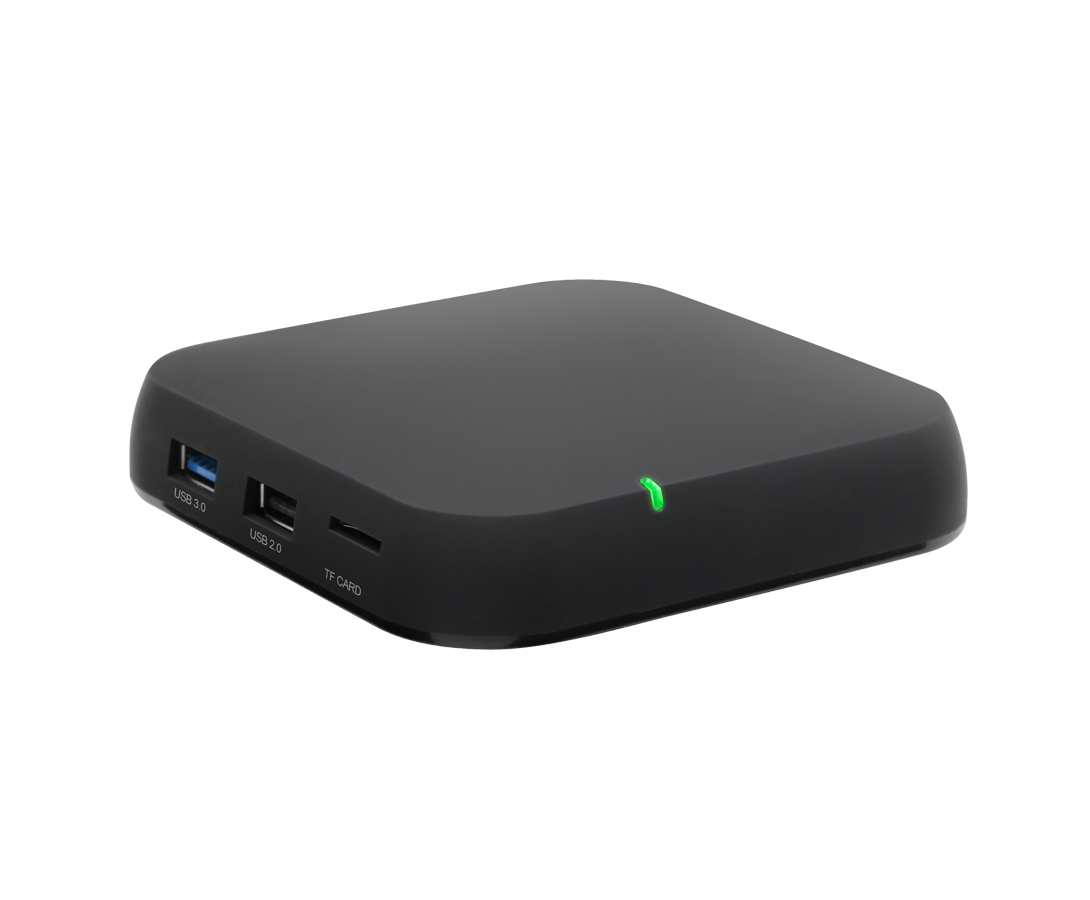
Content service and operator decision context
An IPTV box can expose at least 7 content classes: live linear TV, VOD, catch-up or replay, subscription PPV, transactional PPV, operator-specific applications, and local or network file content. The source article also refers to pause, rewind, recording, parental controls and games. These are not equivalent platform capabilities. Pause and rewind generally require an operator time-shift backend with buffer policy and storage controls. Network recording requires server-side entitlement, retention and advertising-policy integration. PPV requires a purchase or entitlement service, possibly a CAS event interface. Parental control requires identity, PIN or profile management and consistent policy enforcement across live, VOD and application entry points.
| Content class | Endpoint requirement | Operator control that must be tested | Primary failure mode |
|---|---|---|---|
| Live linear TV | Low-latency stream, channel lineup, EPG and service selection | Multicast/unicast policy, IGMP handling, channel map, parental tiers and outages | Channel loss, latency drift, incorrect entitlement or unstable audio |
| VOD and series | Manifested adaptive bitrate playback and catalogue | Expiry, geo rights, download rules, resume state and CDN failover | Manifest failure, inconsistent DRM or broken resume |
| Catch-up and replay | Time-shifted live windows and archive playback | Availability windows, rights, subtitles, trick-play controls and telemetry | Expired segments or inconsistent entitlement |
| PPV | Purchase workflow, event entitlement and purchase reporting | Pin handling, renewal, refunds, event mapping and CAS or DRM linkage | Double charging, entitlement leak or event blackout |
| Operator applications | Signed packages, launcher placement and identity integration | Allow listing, version policy, permissions, data collection and offline behaviour | Unsupported API, outdated package or app-launch failure |
| Local content | USB, TF or approved network-share policy | File whitelist, malware controls, indexing and copyright policy | Unsupported format, unsafe path or service disruption |
Business-model implications
For an IPTV/OTT hybrid operator, the box normally bridges operator-managed multicast television with internet-delivered VOD and applications. The procurement specification must distinguish operator content from Google Play or third-party catalogue access. For a wholesale broadcaster or MVPD, branding, launcher, regional channel line-up, CAS, middleware and remote management may be tenant-specific. For an ISP or telco, zero-touch activation, TR-069 or an equivalent device-management system, household identity binding and network service activation may be more important than general application freedom.
A fleet-TCO model should use operational variables rather than generic claims. A practical unit formula is:
Lifetime cost per active subscriber = hardware purchase cost + logistics + activation + certification/NRE allocation + support + replacement + OTA distribution + RMA + recovery, divided by active subscriber-months.
Consumer-TV-box reviews are therefore unsuitable as the primary comparison. They generally omit carrier acceptance, multicast behaviour, CAS integration, production image signing, recovery procedures, RF evidence, manufacturing consistency and long-term software governance. They also lack fleet-level measures such as first-week activation rate, monthly online rate, crash-free sessions, reboot rate and field-return reason.
Hardware architecture and DataMax platform comparison
The processor decision affects decode capability, thermal limits, memory bandwidth, device lifecycle and firmware maturity. Amlogic, Realtek and Rockchip are common Android TV SoC families, but the supplied DataMax evidence identifies only Amlogic silicon in the available model records. No Realtek or Rockchip DataMax model may be represented as a supported alternative. Model names also must not be treated as sufficient evidence: S905D, S905X2, S905X3 and S905Y4 are different generations with different decoder, firmware and certification implications.
| DataMax model | Confirmed hardware and platform | Connectivity and outputs | Software, rights and content evidence | Procurement status |
|---|---|---|---|---|
| DM21P | Amlogic S905Y4 quad-core Cortex-A35; Mali-G31 MP2; 2 GB DDR, optional 4 GB; 8 GB eMMC, optional 16/32/64 GB | Wi-Fi 6, 2.4/5 GHz, 2×2, BT 5.4; 100M Ethernet; HDMI 2.0b; 2× USB 2.0; S/PDIF; 3.5 mm AV; TF; 5 V/2 A | AOSP Android 11; optional Widevine L1/PlayReady/HDCP 2.2; optional Dolby Digital 5.1; AV1, VP9, H.265 up to 4K×2K@60; H.264 up to 4K×2K@30 | Detailed production evidence supplied. Confirm selected memory, storage, licences and Android build against the orderable production datasheet. |
| Product 254 | Amlogic S905X2; Android 9/10 indicated | Not specified | Dolby license indicated; detailed codec, I/O, memory and rights configuration not supplied | Confirm against production datasheet. Dolby licensing alone does not establish Widevine level, HDCP version or certified Google TV status. |
| Product 255 | Amlogic S905D; DVB-T2 tuner; Android 9/10 indicated | Tuner function confirmed; other I/O not specified | Detailed decoding and DRM evidence not supplied | Confirm production tuner, RF front end, regional broadcast specifications and complete platform configuration against the production datasheet. |
| Product 257 | Amlogic S905X3; Google TV indicated | Not specified | Irdeto CAS indicated; Widevine level, PlayReady, HDCP and codec limits not supplied | Confirm licensed CAS generation, smart-card or secure-module route, Google certification and production hardware against the production datasheet. |
| Product 258 | Amlogic S905X2; hybrid OTT S2 platform; Android 9/10 indicated | Other I/O not specified | Detailed codec, memory, DRM, CAS and output-protection evidence not supplied | Confirm the meaning and configuration of hybrid OTT/S2 and every production option against the production datasheet. |


Memory, storage and interface decisions
The DM21P’s 2 GB DDR and 8 GB eMMC baseline should be treated as a configuration choice, not automatically sufficient for every operator middleware stack. Operators should test the production image, launcher, middleware, telemetry agent, DRM plugin and update agent together. Storage segmentation matters because Android system, application data and A/B or recovery partitions can reduce usable capacity. The supplied evidence confirms optional 16/32/64 GB eMMC, but not specific partition layouts or endurance ratings.
HDMI 2.0b supports the 4K×2K@60 formats stated for AV1, VP9 and H.265 on DM21P. H.265 and AV1 are separate decoder claims: an operator should not infer H.265 Main10 or AV1 certification from the presence of a codec logo alone. H.266/VVC is not stated for any supplied DataMax model and must not be claimed.
For network selection, 100M Ethernet is adequate for many sub-100 Mbit/s household services, but Wi-Fi 6 does not guarantee that the installed access network, signal strength or contention permits the required bitrate. Wi-Fi 6 requires a compatible client, radio and regulatory approval in the destination market; the supplied record confirms Wi-Fi 6 capability but does not provide RF test evidence.
No supplied DataMax record confirms a 4G or 5G SIM variant. Cellular requirements should therefore be treated as a development option or separate model request. Its modem, band plan, antenna, SIM interface, carrier certification, thermal load and regulatory approval cannot be assumed.
Vendor families in procurement language
| Vendor family | Procurement relevance | Evidence required from the actual device | Decision risk |
|---|---|---|---|
| Amlogic | Relevant to all 5 supplied DataMax models; DM21P provides a complete S905Y4 reference | Exact SoC revision, BSP, Android build, codec limits, bootloader and update path | Model-name equivalence does not guarantee feature parity |
| Realtek | No DataMax model in the supplied evidence | Would require a separately offered model, full datasheet and certification package | Including it in a scored comparison would create a fabricated product option |
| Rockchip | No DataMax model in the supplied evidence | Would require a separately offered model, full datasheet and certification package | Generic chipset capability cannot be attributed to DataMax |
AOSP, Google TV/GMS and EDLA control model
| Platform route | Control and launcher | Application policy | Certification burden | Operator fit |
|---|---|---|---|---|
| AOSP | Operator can own the launcher, boot flow, system image and much of the user experience | Operator controls preloads, permissions, package policy and whether Play Store distribution is present | Operator must manage applicable Android compatibility, security, legal and destination-market obligations | Strong control for operator-specific IPTV, managed-device or wholesale deployments |
| Google TV with GMS | Google TV provides the certified platform baseline; launcher and operator experience can be extended within programme rules | GMS and Google Play policy add third-party application availability and compatibility controls | Device, GMS and application licensing/certification must be completed; EDLA may also apply where claimed | Useful when broad catalogue access and established application distribution are required |
| EDLA | Operator experience remains constrained by the certification scheme’s normative requirements | Application, launcher, privacy and network behaviour are evaluated under scheme rules | Obtain the current EDLA specifications, test plan and certification agreement for the exact device and software release | Relevant to operators requiring a certified operator-oriented baseline |
DM21P is listed as AOSP Android 11, while Product 257 is listed as supporting Google TV with Irdeto CAS. The supplied data does not confirm GMS licensing status for DM21P, full Google TV certification for Product 257, or EDLA certification for any model. “Apps download freely from Playstore” appears in the DM21P record, but it does not by itself prove a certified GMS/Google TV build. Confirm this against the production datasheet and certification report.
For procurement, the operating-system route changes both customization freedom and ownership of work. AOSP may reduce third-party licensing constraints but increases the need for secure image construction, application distribution, device-owner policy, account integration, compatibility testing and support ownership. Google TV/GMS reduces some ecosystem work but adds licence, policy and compatibility dependencies. EDLA adds a certification gate; its exact current requirements must not be inferred from older programme summaries.
- Define the required launcher, operator identity, EPG, payment, parental control and service-desk journeys.
- Classify each application as operator-signed, preloaded, Play-distributed, sideloaded or removable.
- Map required APIs and hardware features to the selected Android platform and SoC.
- Obtain the certification and licence documents for the exact model, radio, software build and shipment destination.
- Run regression after any launcher, Android security patch, bootloader, middleware or codec change.
Content security, DRM, CAS and output protection
DRM and CAS solve different problems. DRM protects access to encrypted content through licence issuance and policy enforcement. CAS protects subscriber entitlement and channel access, commonly through smart cards, secure modules or operator-specific client processes. HDCP protects content transmitted over HDMI. A box may therefore require both a CAS component and a DRM component, but each needs independent test evidence.
| Control layer | Technical role | Supplier evidence required | Operator acceptance test |
|---|---|---|---|
| Widevine L1 | Hardware-assisted secure decrypted path for protected streaming | Current security-level report, module, firmware and device binding evidence | Playback through the production DRM server; prohibited output paths and downgrade behaviour verified |
| Widevine L3 | Software-oriented security level for selected content paths | Current L3 report and device list entry where applicable | Required streams start with the intended security level and output policy |
| PlayReady | Microsoft DRM licence and protected playback path | Device certificate, licence-server compatibility and OEM declaration | Valid and expired licences, HDCP enforcement and account behaviour tested |
| HDCP 2.2/2.3 | HDMI output content protection | Source/sink compatibility, repeater route and current implementation declaration | 4K protected playback, sink detection, retry, black-screen and downgrade paths |
| Irdeto/Verimatrix/Nagra-class CAS | Subscriber/channel entitlement and event authorisation | Exact CAS product, version, card/module, head-end interface and licence model | Provisioning, authorised/unauthorised channel, PPV, diagnostics and card replacement tested |
DM21P states optional Widevine L1, PlayReady and HDCP 2.2 support. Widevine L3 is not stated for DM21P, even though the L3-versus-L1 distinction materially affects stream contracts; confirm against the production datasheet. Product 257 identifies Irdeto CAS, but its Widevine level, PlayReady status, HDCP version and CAS generation remain unconfirmed. No supplied product confirms Verimatrix or Nagra-class CAS, so those are architecture options rather than available DataMax claims.
- Licence provenance: obtain licence-holder, product scope, deployment rights, expiry or renewal process and source identifiers.
- Build control: identify whether the DRM/CAS implementation is in SoC firmware, bootloader, system image, middleware or a smart-card interface.
- Server compatibility: provide the operator’s DRM URL, licence protocol, device identity format, certificate rotation and CAS head-end test environment.
- Output protection: record the HDCP version in the shipped configuration and test 4K60, 1080p60 and SDR paths separately.
- Failure evidence: retain licence failure logs, DRM error codes, CAS return codes and screen-state evidence from golden samples.
Operator customization and the OEM/ODM boundary
Operator customization must be separated into contractual deliverables, software responsibilities and manufacturing assets. A boot-logo file, launcher package, preload set, remote-control protocol and private-label enclosure have different revision-control and acceptance criteria.
| Customization | Typical owner | Required frozen artefact | Change-control control |
|---|---|---|---|
| Boot logo and animation | ODM software team, approved by operator brand team | PNG sequence, resolution, frame count, colour profile and target build | No silent replacement; boot regression and factory-reset test |
| Launcher | Operator middleware team with ODM Android integration | APK/AAB or image component, API contract, signing certificate and compatibility matrix | Version pinning, staged rollout and rollback plan |
| Preload apps | Operator or ODM depending on service ownership | Package list, version, permissions, network policy and removal rule | Whitelist freeze and malware/source verification |
| RCU | ODM hardware team; firmware interface shared with Android team | IR protocol, key map, Bluetooth/USB profile and button test sheet | Change affects both hardware and device acceptance |
| Casing and private label | ODM manufacturing; operator supplies approved artwork and regulatory data | Mechanical drawing, artwork, labels, packaging and golden sample | PCN required before enclosure or label changes |
| Firmware signing | ODM build infrastructure under defined key custody | Key policy, signed image, verification commands and key-access log | Production and update keys separated; rotation rehearsed |
An OEM programme owns the specified product and production process. An ODM programme allows the DataMax supplier to design or manufacture to operator requirements, but the operator must still define the specifications, acceptance gates, supplier quality process and ownership of software services. “White label” by itself does not establish the legal or technical allocation of certification, source-code access, signing-key custody, vulnerability response or long-term support.
Before signing a custom programme, freeze 8 control artefacts: industrial design, electrical schematic or equivalent, Android build definition, launcher build, middleware version, preload manifest, remote-control protocol and approved regulatory configuration. Any change to these items should enter PCN review. Private-label artwork must also be checked against the nameplate, model identifier, radio label and market-access documentation so that labels do not contradict the certified unit.
Fleet provisioning, identity, OTA and RMA
Zero-touch enrollment requires the unit to arrive with a predictable identity, a secure bootstrap path and a server-side state transition from “manufactured” to “activated.” The serial number, MAC addresses, secure-element identifier, DRM/CAS identity and manufacturing ledger should be linked but not exposed as interchangeable identifiers.
- Manufacture: record hardware revision, memory/storage option, Android image, radio configuration and test results against a unique serial number.
- Warehouse scan: capture the shipping label, serial number and shipment batch without exposing permanent credentials.
- Bootstrap: obtain a short-lived enrolment credential from the operator platform and install the device certificate.
- Activation: bind household, account, operator, region and service package through an authenticated workflow.
- Steady state: monitor online status, version, health counters, storage, memory pressure, crash data and DRM/CAS faults.
- Return: revoke or retire identities, erase subscriber data, record failure code and route the unit for diagnosis, refurbishment or disposal.
| OTA stage | Required control | Release gate | Field action on failure |
|---|---|---|---|
| Discovery | Device checks current target, campaign, network policy and battery/thermal state where applicable | Correct campaign and model/memory/storage eligibility | Retry with bounded backoff and telemetry event |
| Download | HTTPS with authenticated device identity; package signature and anti-rollback policy | Expected hash, signer and version | Quarantine invalid package |
| Staging | Differential or full A/B partition strategy with verified inactive boot | Boot-health checks and application compatibility | Switch to inactive slot where supported |
| Activation | Atomic version marker, update history and forced reboot policy | Post-boot probe and minimum KPI threshold | Automatic rollback to last known-good version |
| Recovery | Recovery partition, rescue application or factory-reset path | Recovery tested on every golden hardware configuration | Dispatch replacement under warranty SLA |
Useful fleet KPIs include enrolment success rate, time from power-on to live service, crash-free session rate, weekly reboot rate, OTA success rate, rollback rate, mean time to recovery, active-device rate and RMA rate by root cause. Thresholds must be set from an operator baseline rather than an unsupported industry constant. Remote management should support staged campaigns, percentage rings, maintenance windows, device groups and kill switches.
An RMA record should capture the serial number, reported symptom, event timestamps, remote diagnostics, software version, rights configuration, thermal history and physical inspection result. “No video” and “no boot” are insufficient root causes. Parts and refurbished units should retain traceable identities, a controlled firmware baseline and a documented data-sanitation step.
Network selection, multicast, QoS and last-mile diagnostics
IPTV transport design must separate operator multicast from internet-delivered OTT. Multicast reduces repeated unicast traffic for live channels, but it requires controlled IGMP snooping or proxying, suitable switch capacity, multicast filtering, channel-plan governance and accurate channel-to-group mapping. A box’s Ethernet or Wi-Fi link alone does not prove correct multicast behaviour.
| Access method | Best-fit deployment | Capacity and latency control | Primary diagnostic |
|---|---|---|---|
| Wired Ethernet | Managed IPTV and commercial installations with predictable LAN access | Apply QoS to IPTV multicast/unicast flows; validate switch port and IGMP behaviour | Port counters, DHCP, ARP, IGMP membership, packet loss and multicast forwarding |
| Wi-Fi 6 | Retrofitted homes where wired delivery is unavailable | Measure RSSI, noise, channel utilization, retries and application throughput rather than link rate alone | Driver logs, survey, ping, DNS timing, TCP/UDP loss and multicast-to-unicast behaviour |
| 4G/5G cellular | Only where a separately approved cellular model is offered | Band plan, SIM, APN, bearer policy and carrier allowance require separate qualification | Registration, attach, signal metrics, bearer loss and subscription status |
Bandwidth planning should use measured bitrate distributions rather than codec labels alone. For an illustrative VOD planning model, each concurrent 4K stream at an assumed 20 Mbit/s consumes approximately 2.5 GB per hour before protocol overhead. At an assumed 8 Mbit/s, the same hour consumes approximately 1 GB. These are planning assumptions, not DataMax decoder or network guarantees; validate against actual encoded ladders and traffic capture.
For multicast planning, one subscriber receiving the same channel may not create equivalent uplink traffic to the subscriber, unlike internet OTT. The internal switch must still handle the subscribed multicast groups and must not flood unwanted traffic. A controlled test should verify join latency, leave latency, rapid zapping, channel-map changes and recovery after router or switch reboot.
- VLAN: separate subscriber, management and multicast services where the operator network design requires isolation.
- DNS: use operator-controlled resolvers with explicit IPv4/IPv6 behaviour and measured lookup latency.
- NTP: synchronize entitlement windows, EPG, telemetry and certificate validity through authenticated or network-controlled time sources.
- IGMP: document version, snooping, querier, proxy and rapid-channel-change behaviour.
- Diagnostics: distinguish Wi-Fi association failure, DHCP failure, DNS failure, TLS failure, server failure, DRM failure and decode failure.
Certification, homologation and market-access evidence
Certification is model-, variant- and destination-market-specific. A processor capability, operator approval or laboratory report from another model does not establish compliance of the production unit. The compliance schedule should assign an owner and evidence type to every obligation.
| Evidence area | Applicable requirement framework | Required record | Release gate |
|---|---|---|---|
| Radio and EMC | Destination-market radio and electromagnetic-compatibility rules; exact scheme varies by country | Test report, model numbers, frequency bands, radio configuration and declarations | Production radio and antenna match the tested sample |
| Electrical safety | Applicable national or international product-safety standard and market rules | CB or recognized test report, technical file, markings and warnings | Power supply and enclosure match the construction used in testing |
| Google licensing | Google Play, GMS, Android compatibility and device-programme requirements applicable to the shipped build | Licence correspondence, device listing, CTS/VTS evidence and shipping approval where applicable | Do not ship an unlicensed production image containing Google proprietary components |
| DRM | Widevine and PlayReady programme requirements | Device reports, security-level declarations, certificates and server compatibility results | Exact model, firmware and licence server match the production configuration |
| CAS | Exact CAS supplier certification and operator head-end agreement | CAS version, card/module evidence, integration report and entitlement tests | CAS package, secure module and head end match |
| Operator homologation | Operator network, RF, middleware and service-provisioning requirements | Approved golden sample, certification matrix, operator test report and exception list | Production hardware, firmware and supply chain remain within the approved configuration |
DM21P’s optional Dolby Digital 5.1 entry requires licence documentation for the exact shipped SKU. Product 254’s Dolby reference is not a substitute for DRM, HDCP or operator homologation evidence. For Product 255, DVB-T2 claims must be checked against the relevant broadcast standard and regional spectrum plan; the supplied data does not identify the tuner generation, demodulator standard edition or channel bandwidth.
The compliance file should preserve serial-level traceability for factory units, sample seals and retained golden samples. Any SoC, PCB, antenna, adapter, enclosure, software build or memory-storage change should be assessed for whether it requires retesting or a new declaration. The document set should name the laboratory, standard revision, model identifier, sample quantity and any production-line antenna-provider rules.
OEM/ODM commercial process, quality control and supply continuity
The commercial agreement should convert technical scope into controlled, auditable deliverables. NRE, minimum order quantity and lead time must be quoted as project variables; they are not assigned numerical values in this guide. The RFQ should define the memory/storage mix, licence mix, certification destinations, packaging and deployment profile because each can alter the quoted commercial terms.
| Commercial stage | Supplier deliverable | Operator control | Acceptance evidence |
|---|---|---|---|
| RFQ | Configuration-controlled quotation, compliance map, sample plan and NRE breakdown | Define exact Android build, licences, connectivity, quantity bands and destinations | Clarification log and commercial response matrix |
| Design freeze | Specification, schematics or controlled hardware document, software baseline and BOM | Approve operator-specific artwork, launcher, RCU and packaging | Signed specification and golden-sample definition |
| EVT/DVT/PVT | Engineering, design-validation and production-validation samples | Run functional, RF, thermal, DRM/CAS, network and OTA gates | Stage exit report with open defects |
| Production qualification | AQL plan, calibrated test equipment and trained operators | Set defect classes, sampling plan and critical zero-acceptance rules | Approved AQL plan and first-production report |
| Mass production | Serial traceability, firmware hash, packing list and quality records | Ship against approved model/SKU mix; control deviations | Batch acceptance, image hash and packing verification |
| End of life | Last-time-buy, spare-part, support and disposal plan | Define fleet migration, data sanitisation and recycling evidence | EOL notice and completed transition record |
AQL is a statistical sampling control method, not proof that every unit is defect-free. Critical failures such as boot failure, incorrect firmware, missing licence features or non-compliant radio construction should be handled under the agreed zero-acceptance policy. End-of-line testing should nevertheless verify serial identity, boot, display, network, remote control, storage configuration, image hash and factory reset as applicable.
The golden sample is a controlled production reference, not the first prototype. Its serial number, hardware revision, memory/storage options, Android image, bootloader hash, launcher version, middleware version and accessories should be recorded. At least 1 golden sample should be retained under the supplier’s quality process, with an agreed quantity and custody controlled by the commercial agreement. Spares should match the shipped configuration, not an obsolete build, and must receive the same image-signing and update controls.
- Issue the RFQ against 2-5 product candidates with incomplete fields marked for datasheet confirmation.
- Normalize responses to the same memory, storage, OS, rights, certification and delivery assumptions.
- Score technical and commercial evidence separately before negotiation.
- Approve golden samples and test procedures before mass production.
- Contract PCN, BOM consistency, batch traceability, RMA, spare units and end-of-life responsibilities.
Weighted RFP scoring and ordered selection decision tree
| RFP criterion | Weight | Scoring rule | Evidence |
|---|---|---|---|
| Hardware and media capability | 15% | 0=unverified, 3=partial, 5=documented | Datasheet, codec test report and 4K streams |
| Android and operator UX | 12% | 0=unverified, 3=partial, 5=documented | Image specification, launcher demo and compatibility result |
| DRM/CAS/HDCP | 18% | Zero for an unverified mandatory right | Device reports, licence scope and server test |
| Network and IPTV | 12% | 0=unverified, 3=partial, 5=documented | IGMP, QoS, Wi-Fi, Ethernet and zapping results |
| OTA and fleet management | 13% | 0=unverified, 3=partial, 5=documented | Signed staged update, rollback and enrollment evidence |
| Certification and quality | 15% | Zero for missing mandatory destination evidence | Model-specific reports, AQL and traceability records |
| Lifecycle and TCO | 8% | 0=unverified, 3=partial, 5=documented | Support, spare, RMA, EOL and recovery plan |
| Commercial and supply governance | 7% | 0=unverified, 3=partial, 5=documented | Quotation, NRE, MOQ, lead time, PCN and BOM controls |
The weights total 100%. Mandatory failures, including absent mandatory licence evidence, an uncertified production radio configuration or an unproven signed rollback path, override the weighted score. This prevents a strong commercial presentation from compensating for a non-compliant product.
- Is multicast linear TV mandatory? If yes, require Ethernet/Wi-Fi IGMP, zapping and switch-interoperability evidence. If no, document whether OTT-only delivery is acceptable.
- Is operator CAS required? If yes, require the exact CAS generation, secure-module path and head-end proof. If no, evaluate only operator DRM and app-level entitlement, while documenting any channel-access limitation.
- Is broad third-party app distribution required? If yes, require Google TV/GMS certification and licensing evidence. If no, favour an AOSP operator image with controlled preloads.
- Does the content contract require L1 hardware-backed DRM or HDCP 2.3? If yes, reject a product that only documents L3 or HDCP 2.2.
- Is cellular required? If yes, require a separately offered and carrier-certified model. No supplied DataMax record currently satisfies this branch.
- Does the deployment require zero-touch activation and fleet OTA? If yes, retain only products that pass the enrollment, staged update and rollback acceptance sequence.
- Can the production configuration and destination evidence be frozen? If no, place the product in qualification rather than awarding volume supply.
Laboratory and production acceptance matrix
Acceptance limits should be agreed before samples are supplied. The following values are initial engineering gates for project definition; production limits must be validated against the operator’s network, television set, content ladder and field baseline.
| Test area | Procedure | Initial acceptance criterion | Required record |
|---|---|---|---|
| Boot and cold start | Power on to operator-defined live-service state; repeat after factory reset | Target ≤30 seconds for a controlled reference network; segment timings captured | Video capture, timestamps and build hash |
| Zap and channel change | Sequence through 50 channel changes including repeats and rapid changes | No crash; target ≤3 seconds for defined IPTV channels; tune separately for OTT | Channel map, IGMP logs and video evidence |
| 4K playback | AV1, VP9 and H.265 at 4K×2K@60 where contracted, plus H.264 4K×2K@30 | No visible corruption in reference clips; audio/video sync and frame rate pass | Media stream, codec probe, display model and duration |
| DRM/CAS | Valid, expired, revoked and offline licences; authorised and unauthorised channels | Correct playback denial, error code and entitlement state; no bypass | Server logs, device logs and licence identifier |
| Wi-Fi and Ethernet | RSSI matrix, throughput, packet loss, DHCP, DNS and IGMP under load | Meets contracted bitrate and channel-change criteria; no sustained loss in test window | Survey, packet capture, counters and client logs |
| Thermal | Run 4K decode for the agreed endurance interval in the defined enclosure and ambient condition | No reboot, thermal shutdown or visible unacceptable frame loss | SoC, board, ambient and enclosure temperature logs |
| OTA and rollback | Download, stage, boot, cancel, corrupt package and forced rollback cases | Only signed target installs; known-good version returns on failure | Package hash, image version, telemetry and recovery video |
The DM21P specification supports 4K×2K@60 for AV1, VP9 and H.265 and 4K×2K@30 for H.264. Those are stated codec limits, not proof that every 4K profile, colour format, HDR mode, audio object or television will pass. The reference clip set must reflect actual operator content.
Field troubleshooting matrix
| Symptom | Likely layer | Diagnostic action | Escalation trigger |
|---|---|---|---|
| No boot or boot loop | Power, bootloader, image or storage | Check 5 V/2 A supply, LED state, recovery partition and last successful OTA | Recovery cannot complete or fault repeats after signed known-good image |
| Stuck at boot animation | Launcher, boot service or corrupted data | Capture logcat equivalent, package state and data partition; execute approved factory reset | Failure persists after reset and known-good launcher |
| Wi-Fi visible but no IP address | DHCP, authentication or driver | Check credentials, DHCP lease, band, IP assignment and driver error | Lease fails on controlled network with approved driver build |
| Wi-Fi connects but video stalls | Signal, congestion, DNS or CDN | Measure RSSI, noise, retries, retransmissions, DNS time and segment fetch rate | Packet capture shows persistent loss or server-side failure |
| Live channel unavailable | IGMP, channel map, entitlement or source | Inspect group subscription, membership, source continuity, CAS state and EPG mapping | Source is stable but no group or entitlement exists |
| VOD plays black screen | DRM, codec, display or server | Capture DRM response, media probe, decoder log and HDMI/display state | Valid licence and supported media still produce no video |
| Audio only | Audio routing, HDMI or decode | Test S/PDIF and HDMI, audio format, passthrough setting and display negotiation | Reference clip fails in both outputs |
| App missing after OTA | Package policy, partition or migration | Compare preload manifest, package version, storage and policy state | Approved package absent after clean signed update |
| Device offline in fleet console | Power, network, heartbeat or enrolment | Check last heartbeat, WAN route, DNS, device certificate and clock | Certificate or identity mapping is invalid |
| Overheating or random reset | Thermal, power or component fault | Log temperatures, voltage, reboot reason and ambient condition | Temperature exceeds the approved component limit or reset persists |
Deployment and use-case profiles
IPTV/OTT hybrid operator
Conditions: live multicast channels coexist with adaptive-bitrate VOD and operator middleware. Architecture: operator-controlled launcher, channel map, CAS, DRM, DNS/NTP, VLAN or IGMP design, signed A/B OTA and fleet management. Risks: switch IGMP misconfiguration, entitlement divergence between CAS and app services, insufficient Wi-Fi throughput, and multi-vendor middleware incompatibility. Require an end-to-end channel-line-up and rights test before subscriber launch.

Wholesale broadcaster or MVPD
Conditions: one hardware platform serves multiple operators, brands, regions or channel packages. Architecture: tenant-specific launcher and configuration, operator-specific CAS, remote management, regional preload control and traceable software builds. Risks: tenant configuration leakage, shared fleet telemetry, incompatible remote-control protocols and proliferation of bespoke firmware branches. Use a common base image with signed configuration packages and explicit tenant identifiers.
ISP and telco residential deployment
Conditions: subscriber identity is tied to an existing broadband or mobile relationship, and support must be integrated with CRM and network operations. Architecture: zero-touch enrollment, TR-069 or an equivalent remote-management layer, automated activation, firmware campaign controls and router diagnostic integration. Risks: activation failure caused by inaccurate MAC or serial data, unsupported home routers, weak Wi-Fi and excessive field support. Validate through the actual production ecosystem rather than a laboratory-only network.

Hospitality installation
Conditions: many rooms share a controlled LAN, identity is tied to property management, and remote support matters more than unrestricted app installation. Architecture: Ethernet-first deployment, captive or property portal where required, operator-managed content, reset-to-enrolment workflow and room-level device inventory. Risks: guest-access settings drifting, room mapping errors, Wi-Fi interference and slow factory reset. The relevant engineering reference is the hotel TV-box supplier guide.

Field technician and enterprise deployment
Conditions: installations occur at dispersed sites and fault resolution cannot rely on physical access. Architecture: serial-level activation records, remote diagnostics, staged OTA, spare-unit pooling and failure-code taxonomy. Risks: false-positive RMA replacement, version fragmentation and technicians loading unapproved firmware. Give technicians a constrained workflow based on device lookup, guided diagnostics and a signed recovery path.
Retail or branded Android TV programme
Conditions: the product must appear in a retail channel with defined packaging, private label, consumer support and Google ecosystem expectations. Architecture: certified Google TV or the applicable operator/device certification route, production image governance, retail activation and aftersales process. Risks: unlicensed GMS, mismatched carton claims, weak update ownership and incomplete recovery instructions. The product 257 route is relevant, but its Google certification status must be confirmed.
Lifecycle, TCO and operational cost structure
Fleet economics should be measured by active subscriber-month rather than purchase price. The procurement model needs separate cost pools for hardware, software licences, NRE, certification, test equipment, fulfilment, activation, support, replacement, OTA distribution, RMA and recovery. NRE and certification should be allocated across the contracted volume, but allocation must not hide the cash requirement required before shipment.
| Cost driver | Measurement method | Primary control | Failure consequence |
|---|---|---|---|
| Device acquisition | Unit cost by memory, storage, licence and destination variant | Configuration freeze and volume forecast | Excess specialised SKUs and fragmented inventory |
| NRE and certification | Approved project hours, test fees, sample builds and amendment cost | Reuse compliant platform; control change triggers | Late launch and duplicated testing |
| Provisioning | Enrolment attempts and support contacts per activation | Validated identity chain and self-service diagnosis | Mass activation failure |
| Software maintenance | Builds per release, regression hours and security-patch latency | Long-term support policy and automated regression | High release cost and delayed security fixes |
| OTA and support | Campaign traffic, help-desk contacts, mean time to recovery | Staged rollout, rollback and telemetry | Large simultaneous field impact |
| RMA and spares | Returns per 1,000 active units and scrap rate | Failure taxonomy, repair and refurbishment controls | Unnecessary device replacement |
| End of life | Data-sanitation, recycling and disposal cost per unit | Certificate-based deprovisioning and certified disposal | Security, privacy or environmental non-compliance |
Illustrative fleet planning should model at least 3 scenarios: baseline traffic, peak multicast and degraded-home-network operation. The numerical bitrate, activation rate, contact rate and replacement rate must come from operator measurements. A product that boots quickly in a laboratory but cannot complete reliable multicast joins or remote recovery will have a higher support cost than its procurement price suggests.
Frequently asked questions
What content types can an IPTV box access?
An operator IPTV box can provide live linear TV, VOD, catch-up TV, PPV, operator applications, local files and network-based content where the backend, rights and device policy support each type. A codec list alone does not grant access to a commercial channel service.
What is the difference between DRM and CAS in an IPTV box?
DRM secures encrypted content licences and playback policy, while CAS governs channel or service entitlement. A deployment can require both. DM21P lists optional Widevine L1, PlayReady and HDCP 2.2; Product 257 identifies Irdeto CAS, but the complete rights matrix must be confirmed against the production datasheet.
Does Widevine L1 guarantee the same content access as L3?
No. Widevine security level can determine which streams and output paths a commercial content contract permits. Operators should test the exact L1 or L3 implementation, display path and licence server rather than accepting a model-name claim. The operator analysis in the Widevine L1 versus L3 guide sets out the decision criteria.
Should an operator select AOSP or Google TV?
AOSP provides greater control over the launcher, image and application policy; Google TV/GMS provides a certified application ecosystem with additional licensing and compatibility dependencies. DM21P is listed as AOSP Android 11, while Product 257 is identified as Google TV. The decision should follow the operator’s application, certification and ownership model.
Does the DM21P support AV1, H.265 and H.266?
The supplied DM21P data states AV1 [email protected] and H.265 HEVC [email protected] up to 4K×2K@60 fps, plus VP9 and H.264 support. H.266/VVC is not stated for the supplied DataMax models and must not be represented as supported.
Can the DataMax IPTV boxes use Wi-Fi 6 or cellular service?
DM21P confirms 2.4/5 GHz, 2×2 Wi-Fi 6 with Bluetooth 5.4 and 100M Ethernet. No supplied DataMax model confirms 4G or 5G SIM capability, so cellular deployment requires a separately qualified model and carrier or market approval.
How should a large IPTV box fleet be updated?
Use authenticated enrollment, signed packages, version-aware staged rollout, post-boot health checks and tested rollback. Operators should also monitor OTA success, rollback rate, active-device rate and crash-free sessions, with a field workflow that distinguishes application, DRM, network and hardware faults.
Which certification evidence should be required before shipment?
Require model-specific RF, EMC, safety, software/licensing, DRM/CAS, operator-homologation and market-entry documents for the exact production configuration. A report for a similar enclosure, different radio, different memory SKU or earlier firmware build is not sufficient. The compliance matrix should identify the laboratory, standard revision and production linkage.
How should an operator compare IPTV box suppliers beyond price?
Score hardware, Android control, rights, multicast and QoS, OTA, certification, lifecycle support and supply governance using a weighted matrix, then apply zero-score exclusions for missing mandatory evidence. Compare lifetime cost per active subscriber using measured activation, support, RMA and replacement data. For IPTV programme guidance, see the IPTV operator box guide and the Android TV box for ISPs guide.
Engineering consultation and RFQ
Operators can request an engineering consultation and RFQ against the actual channel plan, rights matrix, Android distribution model, destination markets, subscriber volume and fleet-management environment. A useful submission includes the exact DataMax model or candidate set, required licences, network assumptions, certification destinations and acceptance targets, allowing suppliers to identify missing evidence without substituting generic platform claims for production data.




