
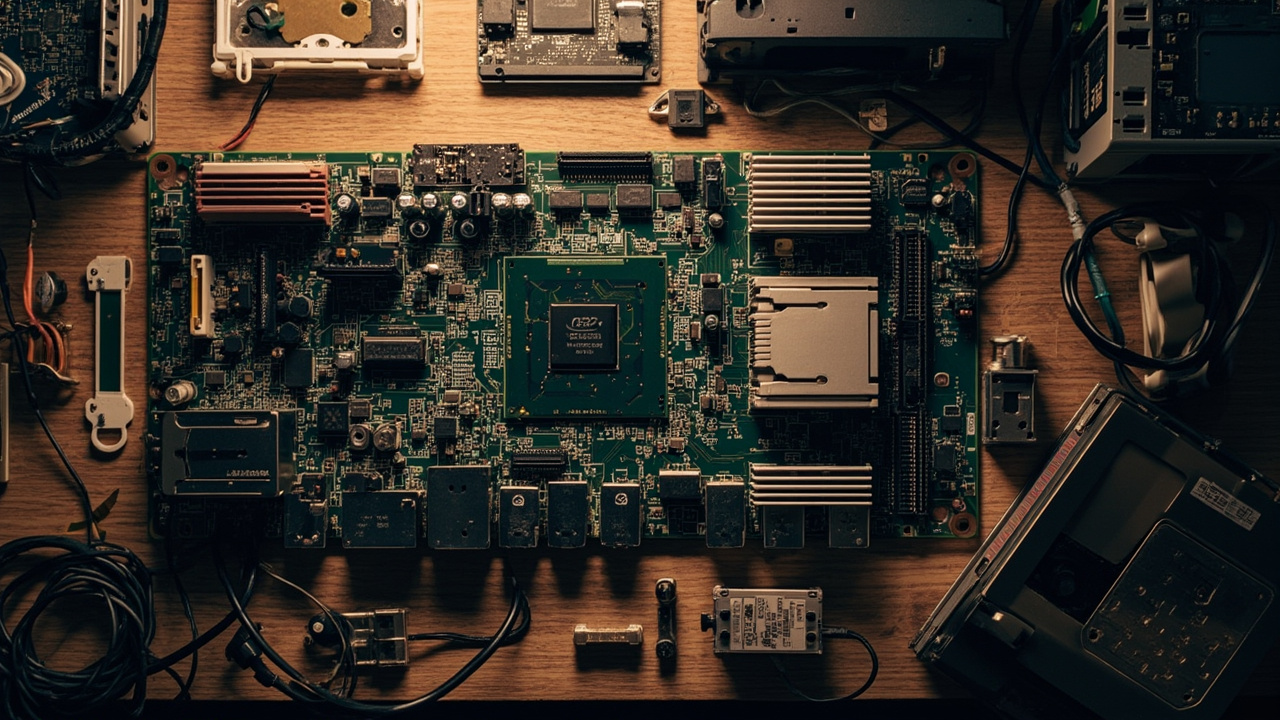
The procurement answer in one screen
Before approving an android tv box comparison between DataMax DM21P and an RK3588-based proposal, confirm six commercial and engineering items: the exact SoC and memory configuration, the operator software baseline, DRM and output claims, certification scope, customization depth and production evidence. The quotations are not comparable until each line names the same deliverable and acceptance test.
DataMax states the DM21P specifications in its production-facing product record. The device uses an Amlogic S905Y4 with quad Cortex-A35, AOSP Android 11, and 2GB/8GB as the listed configuration. Its video claims include AV1 [email protected], VP9/H.265 4K@60 and H.264 4K@30. DRM is listed as Widevine L1 / PlayReady with HDCP 2.2 optional. No RK3588 configuration appears in the supplied DataMax facts, so it must be treated as the competing proposal—not as a DM21P alternative specification.
Verification follows the quotation. Request a BOM and SoC marking evidence for DM21P; require the competitor’s exact RK3588 board revision, Android version and build identifiers; map licensed DRM to the operator’s service; obtain certification reports; list each firmware or enclosure modification; and tie acceptance to serialisable production evidence. DataMax’s product pages are the starting point for specification review. Submit an RFQ to DataMax containing the target operating system, memory, DRM, middleware, port configuration and evidence package required for this comparison.
The practical sign-off rule is straightforward: the DM21P baseline must remain traceable to its production datasheet, while every RK3588 line must identify the finished device rather than the processor family. A representative device comparison becomes decision-grade only when the operator middleware, memory population, protected-content path, physical ports and market-specific certification are equivalent on the quotation line. That prevents a higher-positioned RK3588 processor name from substituting for proof that the complete box meets the programme.
Options placed side by side
The practical comparison is not “Amlogic versus Rockchip.” It is a defined operator delivery against a proposed RK3588 delivery, with both sides assessed against the same workload and acceptance criteria.
| Decision item | DataMax DM21P direction | RK3588 proposal | Evidence required |
|---|---|---|---|
| Published product baseline | Amlogic S905Y4, quad Cortex-A35 | Exact board revision and RK3588 SKU | BOM, board photos and SoC marking |
| Software baseline | AOSP Android 11 | Android version, build and middleware branch | Build information and release procedure |
| Operator workload | 4K IPTV / operator middleware set-top box | Stated IPTV, OTT or workload profile | CPU soak test, codec matrix and app certification |
| DRM | Widevine L1 / PlayReady / HDCP 2.2 optional | Licence level and supported service path | Device-level probe and licence flow test |
| Change scope | Operator-specific configuration to be quoted | Hardware or firmware branch to be quoted | BOM delta, source handover and test plan |
| Memory definition | 2GB / 8GB listed; 4GB; 16/32/64GB optional | RAM type, populated capacity and usable storage | Production BOM and device information report |
| Physical interfaces | HDMI 2.0b out x1; USB2.0 x2; TF; S/PDIF; 3.5mm AV; RJ45 100M | Exact port population and option status | Approved port map and production sample |
| Connectivity | Wi-Fi6 2x2 + BT5.4; DC 5V/2A | Module vendor, antenna path and regulatory configuration | Module BOM, RF evidence and antenna layout |
| Release ownership | To be defined for the operator branch | Party maintaining the Android and middleware images | Branch owner, update path and rollback procedure |
A second dimension is customization depth. The following scores are an editorial planning scale, not measured performance. They indicate planning complexity, not product quality or measured capability.

The same figures, in searchable form:
| Engagement model | Editorial score | Planning meaning |
|---|---|---|
| Logo print only | 30/100 | Mechanical branding with limited software scope |
| Boot logo plus launcher | 55/100 | Presentation changes and launcher configuration |
| Firmware feature branch | 78/100 | A maintained software variation with defined engineering ownership |
| Joint hardware/software ODM | 93/100 | Coordinated board, enclosure, firmware and validation scope |
For procurement, the score converts into engineering governance. A logo change requires artwork control. A firmware branch needs a version owner, merge path and regression suite. A joint hardware/software ODM requires board revision control, software baselines, certification impact review and a traceability plan. Apply the same depth categories to both sides of the android tv box comparison.
One commercial example shows why this distinction matters. An operator ordering a neutral enclosure and launcher from the same supplier can compare firmware branches with a defined update owner. An operator commissioning a custom board, PCB, enclosure and middleware requires coordinated change control because a memory substitution can affect regulatory, thermal and certification evidence. The editorial scores do not say that one platform is faster or superior; they identify where additional review effort belongs.
Definitions a buyer cannot outsource
The words “4K,” “Android TV,” “DRM” and “certified” do not define a product by themselves. Each requires a testable boundary.
4K output means the HDMI mode actually negotiated with the television, including resolution and refresh rate. 4K decoding means the platform can decode the specified compressed stream; it does not prove that the output path, display, application chain and content service all support the same mode. The DM21P record lists H.264 4K@30 and VP9/H.265 4K@60, with AV1 [email protected]. An RK3588 proposal should state its exact codec profile and output mode rather than use “8K” as an umbrella label.
AOSP Android 11 identifies the base software stack, not operator middleware, boot policy, update mechanism, Google certification or device certification. Android TV certification is assessed against Google’s Android TV device requirements and compatibility process; an AOSP statement alone does not demonstrate it. The broader operational baseline includes Android CDD/CTS behavior where the programme requires those checks.
Widevine L1 and PlayReady describe DRM ecosystems and levels, but implementation evidence must show whether the deployed device actually obtains a licence for the intended service. HDCP 2.2 concerns protected output path requirements, yet an optional implementation must be identified on the quotation and test media. Certification scope must name the exact model, hardware revision, firmware build and destination market.
RK3588 is a processor family, not a finished set-top box. Its suitability depends on the board, memory, Android image, thermal design, regulatory configuration and operator middleware. Two products quoting RK3588 can still differ in boot security, wireless module, port implementation and validation. The comparison should be between bill-of-material revisions and firmware builds, not processor labels.
For every android tv box comparison, use four control documents: an immutable configuration sheet, a requirements-to-evidence matrix and a signed acceptance plan. The fourth control is the change log defining who may modify hardware, firmware and certification after approval.
The requirements-to-evidence matrix should use one row per verifiable claim. For example, “operator boot” maps to an approved boot image, boot sequence recording, recovery procedure and pass criterion. “Wi-Fi6 2x2” maps to the production module, antenna configuration, regulatory evidence and throughput test. “Widevine L1” maps to a device-level probe and a successful licence transaction for the intended content service. This structure exposes unsupported claims before a purchase order is issued rather than after deployment.
Real DataMax platforms, field by field
The supplied DataMax facts identify four relevant platforms. Each model is listed by its own fit, so selection must begin with workload rather than headline processor branding.
| Model | SoC and OS | RAM / ROM | Decode and DRM | Ports and fit |
|---|---|---|---|---|
| DM21P | Amlogic S905Y4, quad Cortex-A35; AOSP Android 11 | 2GB / 8GB (4GB; 16/32/64GB optional) | AV1 [email protected]; VP9/H.265 4K@60; H.264 4K@30. Widevine L1 / PlayReady / HDCP 2.2 optional | HDMI 2.0b out x1; USB2.0 x2; TF; S/PDIF; 3.5mm AV; RJ45 100M; Wi-Fi6 2x2 + BT5.4; DC 5V/2A. Fit: 4K IPTV / operator middleware set-top box |
| DM21S | Amlogic S905Y5, quad Cortex-A55; AOSP Android 14 | 2GB / 16GB (2/4/8GB; 16/32/64GB optional) | AV1 / H.265 [email protected] 4K@60. Widevine L1 / PlayReady optional; Dolby Vision/DTS | HDMI 2.0b out; S/PDIF; AV; USB2.0 x2; TF; RJ45 100M (1G optional); Wi-Fi6 2x2 + BT5.4. Fit: 4K Android TV box for IPTV/OTT white-label |
| DM21T | Amlogic S905X5, quad Cortex-A510 (ARMv9); AOSP Android 14 | 4GB / 64GB (family options) | H.266/VVC [email protected] 4K@120; AV1/VP9/H.265 4K@120; AVS3 4K@120; H.264 4K@60; inline AI-SR. Widevine L1 / PlayReady optional | HDMI 2.0b out (no HDMI in); USB2.0 x1 + USB3.0 x1; TF; S/PDIF; AV; RJ45 100M (1G opt); Wi-Fi6 + BT5.4. Fit: Premium UHD / cloud-gaming box |
| DM22Q | Amlogic S905X5M, quad Cortex-A55 up to 2.5GHz; AOSP Android 14 | 4GB / 64GB (2/4/8GB; 16/32/64GB optional) | AV1/H.265 L5.1 4K@60; inline AI-SR (no NPU TOPS stated). Widevine L1 / PlayReady optional; Dolby Vision/DTS | HDMI 2.0b out; USB2.0 x2; TF; S/PDIF; AV; RJ45 100M (1G opt); Wi-Fi6 2x2 + BT5.4. Fit: Gaming-oriented Android TV box |
DM21P is the direct DataMax reference for this question. Its published configuration does not establish it as an RK3588 derivative. An RK3588 alternative should be shown as a separate platform with its own board revision, Android build, thermal and regulatory file.
DM21S shifts to a newer Android baseline and white-label fit. DM21T and DM22Q target different performance-oriented scenarios, but their listed output and decode claims must not be extrapolated to DM21P. All unresolved configurations—particularly optional memory, Ethernet, HDR and output modes—remain “confirm against the production datasheet.”
The DataMax selection request should preserve the distinction between standard and optional fields. A quotation that changes an option, firmware build or port population must create a new configuration identifier. Without that identifier, an android tv box comparison can drift after the purchase order.
For example, a DM21P request may quote the listed 2GB/8GB baseline while the operator requires a different listed optional memory configuration. That does not justify silently assigning 4GB/16GB to the device, nor treating an optional Ethernet speed as fitted. The RFQ should use explicit identifiers such as “selected RAM/ROM: confirm against production datasheet” and “fitted Ethernet: 100M.” The same discipline applies to the RK3588 candidate, where processor capability and populated components remain separate decisions.
The operator, the integrator and the venue
The buyer with the strongest requirements usually has the clearest acceptance test. An IPTV operator focuses on service integration and device management. An AV integrator focuses on signal compatibility and installation. A venue or brand owner focuses on identity, maintainability and rollout control.
| Situation | Primary requirement | Model direction | Acceptance focus |
|---|---|---|---|
| IPTV operator | Operator middleware and predictable device configuration | DM21P direction; an RK3588 board only if its middleware baseline is qualified | Middleware image, service licence, boot policy and recovery procedure |
| OTT or brand channel | White-label launcher, boot presentation and update control | DM21S direction | Launcher, branding, signed update path and application regression |
| Premium UHD or cloud-gaming venue | Higher listed decode modes and performance | DM21T direction | Exact codec profile, output mode, thermal soak and input limitation |
| Gaming-focused installation | Gaming workload and stated 4K decode capability | DM22Q direction | Game catalogue compatibility, frame presentation, sustained load and HDMI mode |
| Custom operator programme | Coordinated hardware, firmware and certification scope | DataMax custom-development route | Approved baseline, change control, traceability and factory evidence |
| Multi-room AV installation | Stable HDMI and audio integration across controlled displays | Select by measured output and installation interface requirements | EDID behaviour, audio path, reboot recovery and remote-control workflow |
| Hospitality or retail rollout | Asset identity, recovery policy and update consistency | DM21S or DM21P direction subject to middleware fit | Serial tracking, reset policy, kiosk launcher and fleet update recovery |
The operator should test the complete service path. Install the production middleware and content service, exercise a licence renewal, simulate network interruption, reboot during a session and confirm that the device returns to the expected state. The RK3588 processor’s compute capability does not remove those acceptance obligations.
The integrator should test the actual display chain, including HDMI negotiation, EDID handling and the selected audio path. A specification that says “HDMI 2.0b” still requires confirmation of the firmware-supported mode, cables, television settings and installed configuration.
The venue owner should distinguish visual customization from product configuration. Boot logo, launcher, packaging, serial-number scheme and asset registration must be versioned separately. That prevents a cosmetic update from obscuring an OS, middleware or certification change.
A production scene should include the human inspection step, not only a polished product shot. The following real-world configuration illustrates the evidence needed: an inspector places a small black device into a test jig while shelves of burn-in units sit behind the station.

For broader buyer context, see the canonical guide to Android TV box for sale explained for buyers. That page covers the general sourcing framework; this page remains focused on the DM21P-versus-RK3588 ownership question.
A site-wide rollout adds another acceptance layer. A hospitality group may require a locked launcher, a fixed update window and a documented reset procedure. An integrator may require the unit to recover into a known channel after power interruption. A venue with several television generations needs EDID and scaling behavior tested against each installed model. These requirements should select and qualify a platform rather than follow a processor-brand preference.
How to choose, step by step
Convert the comparison into a controlled selection process. The output of each step becomes an input to the next, with unresolved items kept visible rather than resolved through verbal assumptions.
- Lock the workload State IPTV, OTT, gaming, signage or another operating mode; identify the content formats, middleware, DRM, update method and display equipment. Reject any comparison that uses only “4K Android box” as the requirement.
- Build candidate configurations Use the DataMax DM21P as the published reference and require every RK3588 candidate to identify its exact board revision, memory, Android build and wireless module. Confirm every variable against the production datasheet.
- Map certification Identify the destination market, Android TV programme position, EMC, RF and radio requirements, HDCP implementation and operator security requirements. Link each certificate to the exact hardware and firmware revision.
- Run the workload test Exercise the production middleware or application, codec assets, DRM licence acquisition, update, reboot and recovery. Include sustained playback and the required display mode rather than a generic boot test.
- Price the change scope Separate standard platform cost from enclosure, logo, launcher, firmware branch, operator middleware, certification and lifecycle support. The unit quotation is not the complete program cost.
- Freeze the baseline Issue a signed configuration sheet with model, SoC, RAM/ROM, OS build, middleware build, ports, accessories, firmware hash, certificate list and permitted variations.
- Approve production evidence Define SMT, AOI, functional test, burn-in or aging, dark-room display inspection, RF, audit, packing and traceability deliverables. Attach acceptance criteria to each evidence item.
- Approve a configuration-controlled sample Tie the sample to the frozen baseline, record its hardware revision and firmware build, and execute the same test script used for production acceptance. Do not accept a generic showroom sample as the production reference.
and constraints
configurations
and test map
baseline
evidence
The RFQ should ask each candidate to answer the same questions. Include: “State the SoC and board revision; provide RAM/ROM; identify the AOSP or distribution version and build; list decode modes, output modes and DRM; name certifications; define middleware and update ownership; enumerate all modifications; and map proposed evidence to acceptance criteria.” This prevents an RK3588 processor specification from appearing more complete merely because it uses a newer platform label.
When requesting samples, send the first message through the sample request form with target model, quantity, application, required ports, memory, OS, DRM, middleware, certification market and required test evidence. Do not leave “latest configuration” as a procurement line.
Turn the RFQ into a pasteable specification table rather than a paragraph request. One row should identify the processor and board; another the selected memory; another the OS and middleware build; another the display and codec modes; another DRM and protected output; another physical ports and wireless configuration; another certification scope; and another customization and change-control obligations. The response should use “not applicable,” “not stated” or “confirm against the production datasheet” where information is absent. Blank or optimistic assumptions do not belong in a quote because they may survive into the purchase order.
What goes wrong after the PO
Most divergence appears after verbal agreement, when the quotation, production sample and firmware image no longer describe the same object. The cost is not only replacement hardware; it is repeated certification, delayed field deployment, duplicated artwork and test cycles.
Field trap
The quotation says “RK3588, Android, 4K, Widevine L1.” The delivered unit can still use a different board revision, RAM population, firmware build or protected-output configuration. Require a configuration identifier and configuration-controlled production sample; a family name and a logo photograph are not adequate acceptance evidence.
A second failure is confusing decode capability with output capability. A platform may decode a high-frame-rate 4K stream while the product HDMI output, firmware mode or application presentation path remains at another mode. The supplied DataMax records show that each model has its own explicit decode list. Validate the exact profile, resolution and refresh rate end to end, including the television and installed middleware.
DRM divergence has a similar pattern. “Widevine L1 / PlayReady” without service-level licence evidence leaves the content path untested. “HDCP 2.2 optional” creates two possible configurations. The purchase order must identify whether the option is present and require the applicable test.
Field trap
Certification can also detach from the shipped unit. A report for an earlier board or Android build may not cover the production configuration. State that evidence must identify the model, hardware revision, firmware build, test laboratory, report number and market scope.
Software ownership is another common fault line. If the supplier, operator and middleware vendor each maintain a separate branch, the operator may face an unstable upgrade path. Specify the release owner, sign-off rights, rollback procedure and support window. A joint hardware/software ODM raises the engineering depth of the android tv box comparison because board, firmware and certification dependencies must be governed together.
Finally, verify change control. Memory substitutions, module changes, enclosure revisions and Android updates can alter the test envelope. Require advance notice, impact analysis and approval before any such change reaches the line.
Other post-order failures arise from incomplete accessories and logistics. A quotation may omit the power adapter, remote-control implementation, HDMI cable or mounting arrangement needed for installation. A revised enclosure can alter airflow or antenna clearance. A different Ethernet component can change the regulatory file even if the nominal speed remains 100M. Each accessory should carry a part number, and each mechanical revision should have an impact assessment covering thermals, RF, external interfaces and service documentation.
A second common error is accepting a firmware hash only at prototype stage. The production image may include another launcher, a different regional boot setting, revised certificates or an updated middleware branch. Require the hash or release identifier from the production unit, together with the build date and the configuration sheet it implements. If the factory cannot reproduce the approved software from a controlled source, the device may pass the sample test yet fail fleet deployment.
Verification you can ask for on paper
Ask for an evidence package indexed by device serial number or production lot. The package should connect the approved configuration to what was built, tested and shipped. For this topic, the key is chain-of-custody, not a generic statement that quality control was performed.
- Incoming and assembly evidence Request component traceability, SMT stencil or placement records where applicable, AOI results, and records for substitutions. The minimum record must connect the lot to the approved BOM revision.
- Functional test evidence Require results for power, boot, Ethernet, Wi-Fi, Bluetooth, USB, TF, AV, HDMI, audio, storage and operator workflows. Include the test software version and pass/fail criteria.
- Display and codec evidence Request dark-room images or reports using the required test pattern, supported output modes and representative codec assets. Confirm the unit, display, cable and firmware used.
- Aging and burn-in evidence Request duration, chamber or rack conditions, workload, sample coverage, fault definition and disposition. Do not accept “aged” without measured conditions and recorded results.
- Compliance file Obtain the applicable EMC, RF/radio, Android TV, DRM/HDCP and destination-market evidence, linked to the production model and revision. Regulatory or certification fees may be quoted separately, but certification claims must remain product-specific.
- Audit and release evidence Request factory-audit records, line-test summary, nonconformance handling, packing traceability and release approval. Align sampling rules with the operator’s quality agreement.
- Configuration reconciliation Reconcile the production BOM, board revision, memory population, wireless module, Android build, middleware build and certificate list against the signed baseline. Record every deviation and disposition before release.
- Traceability retention State how serial numbers, production lots, test records, firmware identifiers and packing records remain linked. Define the responsible record owner and the process for retrieving evidence during field investigation.
For a DM21P-led programme, the comparison dossier should contain the approved Amlogic S905Y4 configuration, the AOSP Android 11 baseline, the selected RAM/ROM option, selected port population, DRM choice, certification map, workload results and lot-linked production evidence. Any unresolved field must read “confirm against the production datasheet,” not be silently converted into an assumed capability.
DataMax can make the factory side reviewable through a video factory audit or a request for SMT/AOI/aging evidence tied to this device programme. Use DataMax factory quality or the manufacturing capability page to define the evidence request. A first RFQ message should contain the target DataMax model, exact application, proposed memory and port configuration, required DRM, middleware, certification markets and the evidence package requested.
A paper-based request should specify the artifact, coverage and acceptance rule. For SMT, request the approved placement or stencil revision and line setup record. For AOI, request the inspection result and defect disposition for the relevant lot. For functional testing, request the fixture list, test software revision and failure rate summary. For aging, request conditions, duration, workload and fault classification. For dark-room display inspection, request the test pattern, output mode, unit identifier and photographic record. A general quality report cannot substitute for these linked records.
This sequence completes the android tv box comparison at procurement level: published specifications identify the DM21P baseline, the RK3588 quotation must supply its own exact configuration, and acceptance depends on frozen requirements plus traceable production records. For general market and sourcing context, return to the canonical Android TV box for sale explained for buyers guide.
Further reading
- Android TV Box For Sale: Catalogue Versus Commissioned
- DRM compliance solutions
- Telecom solutions
- OEM services
- Custom hardware and software development
- DataMax DM21P specifications and fit
- DataMax DM21S specifications and fit
FAQ
Does the DM21P use RK3588?
No RK3588 specification appears in the supplied DM21P product facts. DM21P is listed with an Amlogic S905Y4 and quad Cortex-A35, running AOSP Android 11. Treat an RK3588 quotation as a separate candidate whose exact board, memory, firmware and certifications require verification. Do not describe either platform as equivalent without test evidence.
Which DataMax model is the closest published comparator?
DM21P is the direct reference because its stated fit is a 4K IPTV and operator middleware set-top box. DM21S is positioned for 4K IPTV/OTT white-label applications, while DM21T and DM22Q address premium UHD, cloud-gaming or gaming-oriented scenarios. Confirm the selected model’s production datasheet because optional configurations are not all equivalent.
Does 4K decoding guarantee 4K output?
No. Decoding, application rendering, firmware mode selection, HDMI output, display negotiation and the connected television are separate parts of the signal path. Validate the exact codec profile, output resolution and refresh rate on the production configuration. The supplied model records list different decode and output specifications for each platform.
What evidence should accompany an RK3588 quotation?
Request the exact SoC and board revision, BOM, RAM/ROM, Android build, ports, DRM implementation, certification list, middleware version, customization list and proposed test plan. A processor name alone does not define the product. Require evidence to reference the production hardware revision and firmware build rather than a generic family report.
Can logos and launchers be treated as the same customization?
No. Logo printing is a mechanical artwork change, while a launcher and boot presentation involve software configuration and regression testing. A firmware feature branch requires an owner, version baseline, merge process and test suite. Record each customization separately in the android tv box comparison and freeze the resulting configuration before production.
Which factory evidence should be included in the RFQ?
Request SMT records, AOI results, functional test summaries, display or dark-room evidence, aging or burn-in conditions, lot traceability, audit records and nonconformance procedures. The RFQ should define acceptance criteria and identify which evidence covers which production lot. This makes the comparison auditable after the purchase order rather than dependent on verbal assurances.
When should an RK3588 proposal be rejected?
Reject the proposal if it cannot identify the board revision, populated memory, Android build, DRM implementation or certification scope. Also reject a sample that boots but cannot pass the production middleware, display, licence, recovery and update tests. An unverified processor label is not a technical offer, and an optional field without a configuration decision is an unresolved deliverable.




