The short answer first
If the application is an unattended industrial installation with 4G/5G outdoor operation and continuous signage duty, evaluate the DataMax DM33DS first. If the application is a wall-mounted hospitality display, a bank or hotel self-service kiosk, or a retail portrait desk sign, the DS43H, DP810U, or DP104R is the closer architectural fit. Most buyers are managing a repeatable hardware programme rather than a one-off media appliance, so the decision should follow display form, connectivity, operating system, certification evidence, and installation constraints—not processor naming alone.
The direct answer to the signage player selection question is that no model is the universal best choice. The correct unit is the deployed display system: panel and enclosure, signal path, power, network, thermal environment, application runtime, and content-security obligations. The four DataMax platforms in scope cover materially different positions. DM33DS is an industrial Android device for outdoor 4G/5G signage; DS43H is a 43-inch integrated hospital, hospitality, and restaurant wall display; DP810U is a compact desktop self-service kiosk; and DP104R is a portrait L-shaped retail or hospitality desk sign.
For procurement, start with the output and input requirements, then lock the SKU-level evidence. Do not approve a configuration from a catalogue image, category label, or family-level claim. The supplied product records contain material conflicts, including operating-system versions, Bluetooth versions, TF-slot counts, panel orientation, and power descriptions. Each conflict must be closed in the production datasheet and purchase order.
A further risk is confusing the Android baseline with the complete commercial platform. AOSP Android 14, Android 11, or Android 9 identifies a software base, but it does not establish the presence of Google Play Services, the approved application distribution method, update ownership, DRM implementation, or remote-management capability. A buyer must state those requirements separately.
The term signage player also needs careful scope. For the broader device taxonomy, see commercial display player: what it is and what it is not. This guide covers only selection among the specified DataMax platforms and the sourcing controls needed to make that selection defensible.
The traps in this category
The first trap is treating an Android badge as proof of an Android TV or streaming-platform programme. AOSP Android 14 on DM33DS is not equivalent to an Android TV certification claim. AOSP Android 9, Android 11, or “Android 11 or above” identifies a software base, but buyers still need to establish device form-factor eligibility, application distribution, system-image behaviour, update ownership, and any platform-specific obligations. If the application assumes Google Play Services, an AOSP baseline may not provide the same environment as a commercially managed Android build. State the required services and deployment controls explicitly rather than inferring them from the OS label.
The second trap is allowing a display-oriented product to drift away from the panel that will actually ship. DS43H has a specific integrated-panel configuration, while DP810U and DP104R are compact touch products with stated panel classes. A brochure conflict over RK3562, memory, luminance, Android 14, Bluetooth 5.4, TF-card count, portrait versus landscape resolution, or AC versus DC power is not harmless marketing noise: each difference can alter enclosure design, thermal performance, application behaviour, certification evidence, and installation instructions.
Field trap
Do not release a purchase order against conflicting source images. For DS43H, the catalogue and production PDP conflict on SoC, memory, brightness, and power. For DP810U, the hero material and datasheet conflict on Android, Bluetooth, and TF slots. The cost of leaving these fields open is rework across firmware, enclosure, power, packaging, and certification—not merely a late document correction.
A third trap is confusing decoding with the complete content chain. DS43H is specified for 1080P@60 plus VP9 10-bit and no 4K/AV1. That is adequate only if the content package matches the stated decode path. DP810U and DP104R have different decode profiles. Buyers must also specify aspect ratio, colour handling, audio, subtitles, DRM, update policy, boot behaviour, and recovery requirements. The codec line alone does not define a deployable signage workflow.
A fourth trap is leaving the display signal direction undefined. DS43H lists HDMI input and LVDS input, while DP810U and DP104R list HDMI output. A buyer who treats these products as equivalent Android boxes may approve the wrong cable, source device, control interface, and installation topology. The RFQ must state whether the device drives an integrated panel, receives content from an external host, or supplies an output to a separate display.
A fifth trap is assuming that a declared display size creates a common enclosure and mounting standard. The DS43H dimensions, panel construction, and wall-mounting implications differ from the compact desktop formats of DP810U and DP104R. Procurement should require dimensional drawings, mounting drawings, centre positions, cable exits, service clearance, and packaging limits. A model can satisfy the content requirement and still fail site installation if those records are omitted.
Finally, procurement teams often ask for a “certification package” without defining which certification applies to which SKU, market, radio configuration, or power supply. A generic compliance PDF is not an auditable compliance matrix. The RFQ should identify the target market, installed configuration, evidence owner, and acceptance method for every certificate. For a signage player programme, this distinction prevents a factory from supplying evidence for an earlier hardware revision that does not match the shipment.
How the factory controls the variable
Factory control begins before component soldering. The approved SKU must have a frozen bill of materials, firmware baseline, panel or digital-signage configuration, power definition, packaging definition, and approved connectivity options. Any catalogue discrepancy becomes a controlled engineering disposition before the build, with one owner and one dated record. This prevents a “family” from becoming several unreviewed products behind one model name.
- Freeze the configuration Assign a unique SKU to the exact SoC, OS, memory, panel, ports, power, radio, storage, and certification scope. Record the intended deployment rather than accepting an option matrix.
- Control board assembly Review SMT paste, placement, reflow, AOI coverage, programmed identifiers, and component-replacement rules. Require lot traceability from incoming inspection through final test.
- Verify software identity Record the AOSP build, application package, network configuration, boot mode, update method, and factory test artifacts against the approved configuration.
- Run burn-in and display checks Use the approved aging procedure, exercise the intended ports and network paths, and retain samples from the tested lot. Dark-room display inspection belongs where the product includes a display or optical output.
- Audit the evidence trail Match serial numbers to production records, test results, firmware versions, packing records, and shipment documents. Sample the audit trail; do not accept a presentation-only quality claim.
The incoming-inspection step must address more than general workmanship. For a signage player programme, the approved part number, panel supplier, memory configuration, power supply, radio module, and display interface should be checked against the frozen configuration before components enter the line. Any substitute should require a documented engineering disposition and, where relevant, renewed sample testing. The purchasing record should make clear whether a substitute is prohibited, conditionally permitted, or already approved.
SMT/AOI evidence should demonstrate process coverage, not merely show a camera positioned over a board. The useful review points include inspection coverage for the component types used, treatment of polarity and marking checks, programmed identifiers, and the rule applied when a defect cannot be repaired automatically. If the signage player includes an integrated panel, panel handling and optical inspection also need a defined path, because a clean board does not establish a defect-free display.
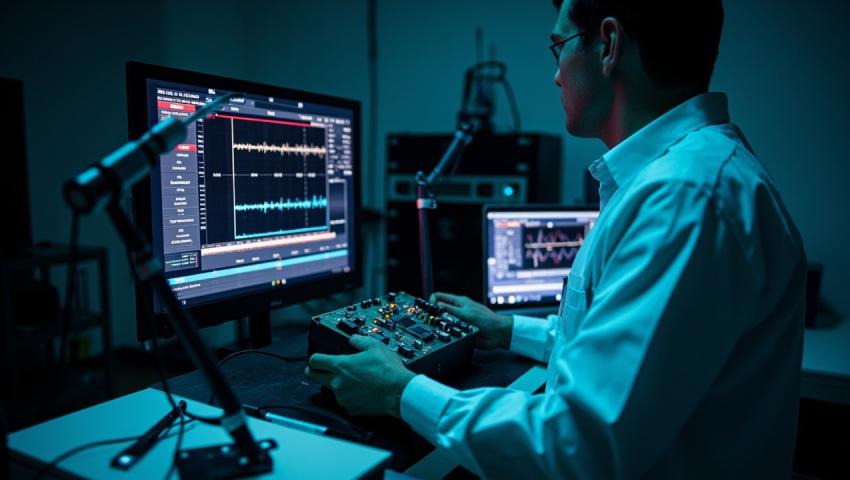
The aging procedure should reproduce the intended installed configuration. A display unit should run the accepted image, input path, brightness mode, network profile, and operating duration. A kiosk should include touch, USB, storage, and application workflows. An industrial unit should exercise the accepted connectivity and recovery behavior. Test duration, environmental conditions, sample count, failure criteria, and disposition must appear in the test record.
Evidence request: Ask DataMax for a video factory audit, an SMT/AOI process summary, and lot-level aging evidence for the proposed SKU. The factory quality programme is the appropriate starting point, but the audit scope should name the actual line, model, and acceptance criteria. Generic photographs cannot substitute for traceability.
The evidence chain should also separate three approval gates. The engineering gate confirms that the hardware and firmware match the frozen specification. The compliance gate confirms that the delivered configuration matches the target-market and radio scope. The operations gate confirms that the receiving site can identify the unit, install it, update it, diagnose it, and trace it. A unit that passes electrical test but has the wrong Android image, power supply, panel orientation, or network option is still a failed configuration.
The operations gate deserves a dedicated acceptance script. For each signage player SKU, operators should test cold start, scheduled reboot, network loss, network restoration, application launch, content playback, touch response where applicable, output detection, storage mounting, and firmware update or recovery. A defect ticket should include the serial number, hardware revision, software build, network details, and reproduction steps. Without that context, recurring field failures cannot be separated into application, firmware, network, and hardware causes.
For repeat-volume programmes, the control variable is not merely the processor. It is the repeatable combination of component sourcing, assembly process, firmware identity, optical output, thermal load, packaging, and evidence. The manufacturer capability review should therefore ask who owns each deviation, how a change is approved, and how the purchasing record identifies the exact unit shipped.
A practical release file should include the approved BOM, firmware hash or build identifier, wiring diagram, test plan, label artwork, packing list, certificate index, and change log. If a document changes after approval, the receiving engineer must know whether the change is administrative, a new option, or a revision requiring revalidation. That classification matters because an administrative label correction and a new power supply can carry entirely different qualification consequences.
Two routes, one bill of differences
Two procurement routes commonly conflict. Route A buys visible capacity quickly from a general trader or sourcing agent and then closes technical gaps. Route B appoints a single-line factory or full-process OEM/ODM and freezes a controlled SKU with traceable production evidence. Route B usually carries more coordination work at the start but creates a clearer bill of differences for repeat-volume hardware.
The editorial comparison below is a planning aid, not measured supplier performance. It scores four supplier types against a repeat-volume hardware programme using factors such as configuration control, production evidence, engineering responsibility, and change governance.
The bill of differences is concrete. A general trader may route a request to several sources and offer a low entry barrier, but programme ownership and configuration evidence may be fragmented. A sourcing agent can coordinate quotations and suppliers, yet the factory performing assembly may not be the entity holding the integration knowledge. A single-line factory may provide stronger production consistency when the platform is stable. A full-process OEM/ODM can own hardware, firmware, testing, and change control across the product lifecycle, but requires clearer specifications and governance from the buyer.
For this category, the route decision should follow complexity. A DS43H programme needs strict panel, power, and OS reconciliation. A DP810U programme needs conflict closure around Android, Bluetooth, and TF slots. A DP104R programme needs portrait geometry and camera-option governance. DM33DS needs confirmation of exact ports and temperature range against the production datasheet before it enters a technical quotation.
Do not choose the route by supplier label alone. Require a responsibility matrix showing who owns component substitution, firmware signing, application deployment, certification updates, panel supply, warranty routing, and serial-number traceability. Then compare the proposed SKU against the final RFQ line by line.
| Control point | General trader | Sourcing agent | Single-line factory | Full-process OEM/ODM |
|---|---|---|---|---|
| Specification ownership | Often fragmented across suppliers. | Coordination role; engineering ownership must be named. | Usually controlled within the stable platform. | End-to-end ownership can be contracted explicitly. |
| SKU and BOM freeze | Risk of indirect substitution. | Can manage documents across several factories. | Direct control of an approved product platform. | Direct control across hardware, software, and production. |
| Software identity | May be quoted as a generic Android configuration. | May coordinate images but not retain integration knowledge. | Stronger continuity when the platform is stable. | Boot image, application, updates, and recovery can be specified as one package. |
| Production evidence | Availability varies by source. | Evidence can span multiple suppliers. | Line records can be reviewed directly. | Evidence chain can be tied to one programme. |
| Conflict closure | Buyer may receive incompatible descriptions. | Agent should maintain one approved configuration matrix. | Factory can resolve line-level differences. | Engineering disposition and change control are part of the scope. |
| Best use in this category | Low-complexity, low-repeat sourcing. | Multi-supplier market access with named engineering control. | Stable platforms with a narrow option set. | Repeat-volume deployments requiring one accountable production route. |
A practical way to test the routes is to submit the same frozen specification to each candidate. The comparison should then show which party identifies catalogue conflicts, supplies serial-linked evidence, owns the firmware baseline, and accepts the final test procedure. If several parties merely forward the same unresolved RFQ, nominal route differences do not create real control. The signage player requirement must remain traceable through one responsibility matrix from quotation to shipment.
The chart values below are editorial planning scores, not audited performance data. They are useful for deciding where to allocate diligence, not for declaring a supplier technically superior.

The same figures, in searchable form:
| Supplier type | Editorial score | Source context |
|---|---|---|
| General trader | 28 | DataMax editorial team, qualitative planning scale, not audited or measured data. |
| Sourcing agent | 44 | DataMax editorial team, qualitative planning scale, not audited or measured data. |
| Single-line factory | 72 | DataMax editorial team, qualitative planning scale, not audited or measured data. |
| Full-process OEM/ODM | 89 | DataMax editorial team, qualitative planning scale, not audited or measured data. |
The mechanism behind the spec
A signage player sits between content and display. Its essential mechanism is a boot chain that acquires power, loads the approved software, connects to the network, retrieves or retains content, decodes it, and delivers it through the intended video path. The relevant architecture may be a fixed integrated display, a kiosk with touch and optional peripherals, or a compact Android module connected to external equipment.
For DM33DS, the stated architecture is Allwinner H618 with AOSP Android 14. Its product fit includes Industrial 4G/5G outdoor 24/7 signage duties. That makes connectivity, unattended operation, enclosure thermal design, and remote recovery central selection dimensions. The exact port list and temperature range must be confirmed against the production datasheet before quoting.
For DS43H, the stated SoC is Hisilicon Hi3751 quad 32-bit A53 with Mali-450, running AOSP Android 9 per the datasheet. The product is a 43-inch TFT LED panel with HDMI input and LVDS input. That input architecture is useful when the product operates as a panel controller or receives an external source, but the buying team must still define which path drives the commercial display.
DP810U uses Rockchip RK3562 with a quad A53 CPU up to 1.2GHz and Mali-G52 1-Core-1EE, with AOSP Android 11. It is positioned for desktop self-service use and includes capacitive touch. Its decode profile covers H.265 4K@60 and H.264/VP9 1080P@60. DP104R uses Rockchip RK3566 with quad A55 and Mali-G52 1-Core-2EE, with AOSP Android 11 or above. It provides H.265/H.264/VP9 4K@60 decode, 1080P encode, and an 8M ISP.
A buyer should specify the mechanism at each arrow. “Content and policy” includes source URL, offline cache, scheduling, authentication, and DRM obligations. “Android runtime” includes OS baseline, application permissions, update method, kiosk mode, and remote administration. “Decode path” includes codec, resolution, frame rate, colour, and audio. “Panel or external display” includes native panel versus HDMI/LVDS input or output, orientation, touch, and installed resolution. Without these lines, the processor name contributes little to deployability.
The Android runtime also determines how the device behaves after a network or content failure. For an unattended signage player, specify whether cached content remains available, whether the application retries automatically, what appears on screen after boot failure, and how an operator restores service. Kiosks need stronger application-state control, including permitted navigation, session expiry, input restrictions, and remote application replacement. These are operational requirements derived from the system architecture, not optional details hidden behind the SoC line.
The content path must distinguish decode from display conversion. A decoder may accept a 4K@60 H.265 stream, while the panel, output device, application renderer, or installed display mode may operate at a lower native resolution. Buyers should require an end-to-end playback test using their actual media files, frame rate, colour space, aspect ratio, audio, subtitles, and playback loop. That test will expose problems that a codec table alone cannot.
Network design should also be written at two levels. The first defines the physical and logical connection: Ethernet, Wi-Fi, or accepted 4G/5G option. The second defines behavior: DHCP or static addressing, DNS, proxy, certificate trust, content authentication, bandwidth limits, roaming, failover, and remote recovery. For a distributed signage player fleet, these fields determine whether a device can be diagnosed after arrival or requires a site engineer to rebuild its configuration.
Finally, security is a chain rather than a product label. Application signing, secure boot if required, credential storage, network certificate validation, DRM, update authorization, and remote-access policy should be stated separately. An AOSP version does not answer these questions by itself. The RFQ should identify the required platform features and the evidence expected for each one.
Which DataMax models actually sit here
The supplied DataMax facts describe four distinct positions. They should not be treated as interchangeable members of one hardware ladder. Verify all selected fields against the production datasheet and SKU-specific purchase order.
| Model | Fit | SoC | OS | Recorded configuration |
|---|---|---|---|---|
| DM33DS | Industrial 4G/5G outdoor 24/7 signage player | Allwinner H618 | AOSP Android 14 | Exact ports and temperature range: confirm against the production datasheet. |
| DS43H | Hospitality/hospital/restaurant wall signage | Hisilicon Hi3751 quad 32-bit A53, Mali-450 | AOSP Android 9 (datasheet) | 1GB / 8GB; 1080P@60 + VP9 10-bit; no 4K/AV1. |
| DP810U | Bank/government/hotel desktop self-service kiosk | Rockchip RK3562 quad A53 up to 1.2GHz, Mali-G52 1-Core-1EE | AOSP Android 11 (datasheet) | 2GB / 16GB, 4GB optional; 8-inch/10.1-inch capacitive touch; 1280x800 or 1920x1200. |
| DP104R | Retail/hospitality portrait L-shape desk sign | Rockchip RK3566 quad A55, Mali-G52 1-Core-2EE | AOSP Android 11 or above | 2GB / 16GB, 4GB optional; 10.1-inch IPS capacitive touch; portrait 800x1280 or 1200x1920. |
Field trap
Do not merge the conflicting catalogue claims into the table above. DS43H title material and catalogue claims differ from the production PDP, including Android 11 versus Android 9, DC12V/2A versus AC100-240V<=85W, and RK3562/2+32/500nit versus Hi3751/1+8/300nit. DP810U hero material differs on Android 14/BT5.4/TFx1 versus Android 11/BT5.0/TFx2. DP104R hero material differs on landscape resolution versus portrait and Bluetooth 5.4 versus 5.0. Resolve each item against the production datasheet and fix the accepted configuration in the SKU purchase order.
Additional recorded details remain SKU-specific. DS43H lists HDMI in, LVDS in, USB2.0 x4, RJ45 100M with 1G optional, DC12V/2A, and 989x578.5x60.3mm. Its panel is 43-inch TFT LED at 1920x1080, 300 cd/sqm, 1500:1, 6ms, 89deg, 50,000-hour backlight, and 0-50C. Confirm the power option before quoting.
DP810U lists HDMI out, USB2.0 x2, TF x2 up to 128GB, 3.5mm, RJ45 100M, DC12V/2A, and Wi-Fi + BT5.0. DP104R lists HDMI out, USB2.0 x2, TF x2, 3.5mm, RJ45 100M, DC12V/2A, and Wi-Fi + BT5.0, plus an optional 5MP camera. These fields must remain tied to the cited datasheet versions rather than hero assets.
The field differences should shape the RFQ rather than be silently normalized. A DS43H buyer who accepts the production PDP baseline is selecting the Hisilicon Hi3751, 1GB / 8GB, 300 cd/sqm, and 1080p panel definition. That is materially different from the conflicting RK3562/2+32/500nit catalogue description. A DP810U buyer must settle the AOSP version, Bluetooth version, and TF-card count. A DP104R buyer must settle portrait resolution and the Bluetooth version. DM33DS buyers must obtain exact ports and temperature information rather than infer them from the outdoor positioning.
A comparison worksheet should have one row per field and one column per candidate source. It should show the production datasheet, current catalogue, approved engineering disposition, and final purchase-order wording. When a field cannot be closed, the worksheet should carry an owner and deadline. A signage player is not production-ready when a field contains two incompatible answers, even if both answers came from legitimate DataMax materials.
Deployment scenarios and the spec each needs
Start from the physical and operational scene. A loading yard, hospital corridor, bank lobby, hotel reception, restaurant wall, and retail desk have different failure consequences and installation constraints. The matrix below maps common buying situations to the controlling requirement and the appropriate DataMax model direction; it does not replace site discovery.
| Situation | Controlling requirement | Model direction | Acceptance evidence |
|---|---|---|---|
| Outdoor industrial information display with cellular continuity | 4G/5G fit, unattended operation, outdoor enclosure and thermal design | DM33DS | Frozen connectivity and power configuration; production datasheet; aging and traceability records. |
| Hospital corridor wall display | 43-inch integrated panel, wall format, stable 1080P content path | DS43H | Accepted panel and input path; 1GB / 8GB baseline; reconciled Android and power records. |
| Hotel self-service kiosk | Desktop form factor, touch interaction, 4K or 1080P media capability | DP810U | Approved 8-inch/10.1-inch panel option; application performance test; reconciled OS, BT, and TF configuration. |
| Government service kiosk | Managed Android runtime, touch, optional peripherals, long service life | DP810U | Kiosk-policy checklist, update procedure, interface test, and SKU-specific evidence. |
| Retail counter or menu display | Portrait geometry, compact desk format, touch or camera option | DP104R | Portrait resolution acceptance; touch test; optional camera validation; reconciled Bluetooth configuration. |
| Hospitality or restaurant wall signage | Continuous wall display, integrated construction, specified content depth | DS43H | Panel and backlight specification; 1080P content test; power-option confirmation. |

The photograph shows the deployment endpoint rather than the deciding specification: neutral brown cartons on pallets entering a container truck. At that point, SKU ambiguity becomes shipment ambiguity. The receiving team needs a packing list, serial range, model name, hardware revision, OS baseline, power configuration, radio configuration, and certificate reference for each pallet.
Vertical conditions also determine the right controls. Outdoor industrial use needs weather protection, heat management, power resilience, and connectivity recovery, but the supplied DM33DS facts do not include an ingress rating or exact temperature range; both must be confirmed against the production datasheet. Hospital and hospitality use may prioritize cleanability, mount design, and continuous display hours. Bank and government kiosks require application security, identity peripherals, update control, and support procedures beyond the processor specification. Retail desks prioritize orientation, touch accuracy, footprint, and optional camera integration.
An outdoor industrial programme should document the enclosure and mounting system as part of the signage player requirement. The RFQ should identify the display’s orientation, service access, cable route, antenna placement, power source, heat-transfer path, and recovery procedure. Because the supplied facts do not establish the exact ports or temperature range for DM33DS, those fields must remain confirmation items. The buyer should not infer an environmental limit from the “outdoor 24/7” fit description.
For a hospital or restaurant wall installation, the scene brief should capture viewing distance, wall construction, service corridor, cleaning exposure, mounting hardware, and the content source that will feed HDMI or LVDS. If an external controller supplies media, the buyer must decide whether the wall unit is managed as a display endpoint or as an autonomous Android system. That choice affects the signage player application scope, cabling, and operational support model.
For a bank or government kiosk, the acceptance test should include session timeout, restricted navigation, encrypted or authenticated content where required, peripheral behavior, application update, and recovery from a forced restart. A touch response check alone is insufficient. For a retail portrait desk sign, the buyer should verify the actual portrait resolution, viewing angle in the intended orientation, camera option if selected, countertop footprint, and cable management. These checks prevent a visually similar catalogue asset from creating an incompatible installation.
A complete scene brief records installation dimensions, viewing distance, ambient conditions, mounting method, available power, network type, content resolution, operating hours, service access, and acceptance owner. These inputs determine which model direction is technically credible and which variants require engineering confirmation. The brief should also identify who owns the installed configuration after handover, since the factory can validate the product while the site operator owns power, network, and content continuity.
Turning the question into a spec line
Convert the deployment brief into a pasteable RFQ. The sequence below prevents a display model, panel specification, software baseline, and certification scope from being treated as one uncontrolled phrase.
The first RFQ line should identify the installed scene rather than use the broad category name. For example: “Supply one industrial outdoor Android signage player model for unattended cellular operation in a fixed enclosure.” The following lines should then define the accepted hardware, software, content, connectivity, environmental, compliance, and test requirements. A category label in the first line can create false equivalence; the frozen SKU later in the document supplies the actual commercial definition.
A pasteable line for the industrial route can read: “Supply the DM33DS as a frozen industrial 4G/5G 24/7 signage player SKU using Allwinner H618 and AOSP Android 14. Exact ports, temperature range, power, radio configuration, and target-market certification must be confirmed against the production datasheet and stated in the purchase order.” For DS43H, add the accepted Hi3751, AOSP Android 9, 1GB / 8GB, 43-inch 1920x1080 panel, decode profile, input architecture, and power option. For DP810U or DP104R, add the accepted RK3562 or RK3566 configuration, Android baseline, memory, portrait where relevant, Bluetooth and TF-slot configuration, and display options.
The acceptance schedule should assign a test method and owner to every line. A display test should state the content file, resolution, frame rate, duration, panel mode, and defect threshold. A network test should state the service expectation and recovery interval. A boot test should state the number of cold starts and expected application state. A touch test should state the panel option, interaction sequence, and acceptance rule. An aging record should identify the production lot and tested units. This converts a list of features into evidence that can be accepted or rejected.
Do not release unresolved conflicts as alternatives in the RFQ. If the catalogue and production datasheet differ, label each as “option pending approval,” name the engineering owner, and set a document cut-off. A purchase-order line should name one accepted configuration, not several mutually exclusive descriptions. An approved change-control record should then connect the final SKU to the factory test, packaging, label, certificate index, and shipped serial range.
For a video factory audit, request the manufacturer capability walkthrough plus SMT/AOI and aging evidence specific to the proposed model. For engineering review, the certification scope and compliance evidence should be mapped to the exact SKU and target market. Before production release, send DataMax the approved SKU list, target-market certification matrix, and middleware/DRM checklist, then email [email protected] with those attachments plus the final RFQ and firmware baseline. The inquiry workflow can collect the technical package, while sample ordering provides a practical stage before a repeat-volume commitment.
Further reading
- Commercial Display Player: What It Is and What It Is Not
- Dolby Atmos Android TV box guide
- TV box vendor selection checklist
- AOSP vs GMS solution notes
- Telecom and pay-TV operator solutions
- DataMax DM33DS specifications and fit
- 43-inch hospital digital signage
FAQ
Is DM33DS the right choice for every signage player deployment?
No. DM33DS fits industrial 4G/5G outdoor 24/7 duties, but its SoC, operating system, ports, temperature range, and other quotation details must be confirmed against the production datasheet. DS43H targets integrated wall signage, while DP810U and DP104R target compact touch kiosks and portrait desk signs.
What should be written into a signage player RFQ?
Write the deployment, exact SKU, SoC, memory, display configuration, orientation, touch, ports, power, connectivity, OS baseline, decode profile, application requirements, certifications, test evidence, and acceptance procedure. Avoid leaving contradictory catalogue and datasheet fields open.
Why can an AOSP Android version create procurement risk?
AOSP identifies the software baseline but does not establish every commercial application requirement. The RFQ should separately define Google or third-party services, application signing, kiosk mode, updates, content security, DRM, and remote management. These obligations determine whether the stated platform is operationally suitable.
Which model fits a touch-based bank or hotel kiosk?
DP810U is positioned for bank, government, and hotel desktop self-service kiosks. It is specified with AOSP Android 11, 2GB / 16GB memory with 4GB optional, capacitive touch, and the listed connectivity and ports. Confirm the selected panel and resolve all hero-versus-datasheet conflicts before ordering.
What evidence is needed for a repeat-volume programme?
Require a frozen BOM and firmware baseline, incoming and assembly records, SMT/AOI evidence, aging records, display or burn-in tests, serial-number traceability, packaging records, certification mapping, and an approved change-control process. A generic factory presentation is not a substitute for model-specific records.
Can a prototype determine the production signage player specification?
A prototype can validate application performance, display output, touch, network behaviour, and installation assumptions. It cannot close every production issue unless it represents the exact production SKU. Close the datasheet discrepancies, freeze hardware and firmware, and identify the configuration by model and hardware revision before release.
When should a buyer request a video factory audit?
Request it before approving a repeat-volume route, especially when catalogue and production documents disagree. The audit should cover the proposed signage player model, assembly line, SMT/AOI process, aging procedure, test records, and serial traceability rather than generic factory facilities.
How should unresolved datasheet conflicts be handled?
Assign an engineering owner, record each source discrepancy, and identify one accepted configuration in the purchase order. A conflict can remain an option only during the approval stage; it should not survive production release as an unresolved field. @@END@@