

Executive reference for operator procurement
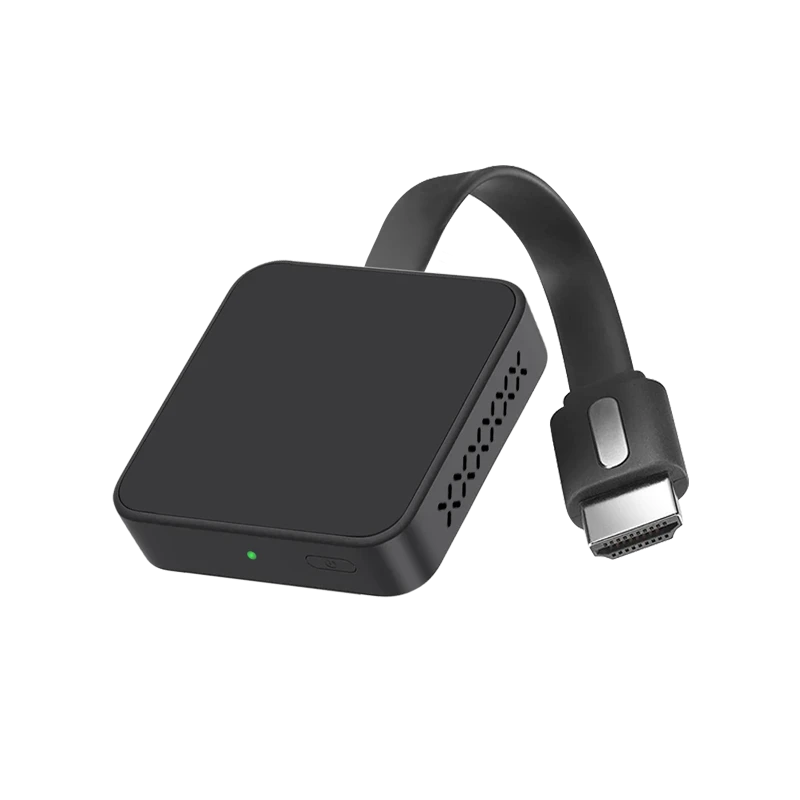
A TV dongle is a replaceable HDMI client, whereas a smart TV combines a display, tuner, speakers, platform software and application stack in 1 assembly. For a subscriber program, that architectural difference changes replacement cycles, device identity, network management, DRM evidence, field logistics and ownership of the household television. A dongle fleet can be replaced independently of the panel; a smart-TV fleet generally requires coordinated panel, platform and content-service support.
- Select by service architecture: use an external client for an existing managed TV estate, a set-top box for operator-controlled IPTV or hybrid delivery, and a smart TV when the operator controls the panel and application distribution.
- Separate chipset evidence from platform claims: AOSP Android 14, Google TV and an EDLA-certified Android TV device are different approval layers. Confirm production software, model identifiers and certification status against the production datasheet.
- Budget for the fleet, not the unit: include identity and PKI, CMS/ACS integration, CAS or DRM licensing, OTA capacity, certification, spare units, reverse logistics and 5–8 year support obligations rather than comparing retail device prices.
- Require model-level acceptance: boot time, 4K frame-rate limits, DRM output mode, radio throughput, thermal stability, recovery after network loss and signed-OTA rollback must be measured on production hardware and software.
- Match connectivity to use: Ethernet is preferred for IPTV multicast and fixed installations; Wi-Fi 6 suits unmanaged access networks; DM33H cellular variants suit temporary or unfixed sites, subject to destination-market radio approval.
- Do not infer missing DataMax specifications: S905X3, S905X2, S905D and H618 products have different capabilities. CPU count, memory, tuner, CAS, Android release and cellular support cannot be assumed to transfer between models.
Operator decision context and business models
Consumer-TV-box reviews optimize for retail price, benchmark scores and subjective interface judgments. Operator procurement instead evaluates 5–8 years of service continuity across identity, entitlement, broadcast delivery, content security, remote support, homologation and certified software maintenance. A device that passes a shop test can still fail a 20,000-unit deployment if its identity duplicates collide, its bootloader cannot enforce signed images, or its Wi-Fi antenna design varies by production lot.
| Business model | Preferred terminal architecture | Primary control point | Central procurement risk |
|---|---|---|---|
| IPTV/OTT hybrid | Operator STB or hybrid Android TV box | CAS entitlement, multicast tuning, launcher and OTA | Broadcast-network variation and legacy-TV interoperability |
| Wholesale MVPD/ISP | Low-cost HDMI client or branded Android TV dongle | Subscriber onboarding, billing relationship and device identity | Distributor configuration drift and support responsibility |
| MVNO or telco bundle | Cellular-capable dongle, fixed CPE companion or STB | SIM policy, roaming, network steering and zero-touch activation | Radio certification, SIM logistics and uncontrolled data consumption |
| Hospitality and managed AV | Room-based Android TV dongle or STB | Property-management workflow, channel lineup and telemetry | Shared-device privacy and rapid room turnover |
| Retail digital signage | Android TV box or signage player | Content schedule, device grouping and kiosk policy | Long operating hours and display compatibility |
Fleet TCO should be modeled as TCO = acquisition + NRE/certification + logistics + platform services + licensing + support + replacement + reverse logistics. For planning only, model annual replacement exposure of 2–5% for controlled indoor deployments and higher rates for portable or consumer-owned equipment; validate against field data rather than treating these as DataMax product claims.
Hardware architecture and chipset selection
The terminal stack comprises an SoC and memory subsystem, secure boot and key storage, display and audio interfaces, tuner or CAS boundary, Wi-Fi/Bluetooth radio, Ethernet or cellular option, Android framework, drivers, middleware and operator applications. Procurement must test the complete image because a codec claim at SoC level does not prove that the enabled decoder, Android media framework, output path and DRM pipeline operate together.
| Vendor | Architectural relevance | Procurement checks | Do not infer |
|---|---|---|---|
| Amlogic | Widely used in Android TV boxes and STBs; specific capability depends on the exact S905D, S905X2 or S905X3 device image | Exact core/accelerator configuration, Android build, tuner, CAS, HDMI behavior, thermal profile and production IC revision | That one S905 generation or DataMax model supplies every capability of another |
| Realtek | Alternative TV/OTT controller family | Exact RT-series part, AV1/H.265 support, Android certification, memory layout and driver maturity | Parity with Amlogic based on vendor family alone |
| Rockchip | Alternative Android media processor family | Exact RK part, codec limits, firmware branch, ISP/media integration and OTA support | That chipset-level decode capability equals a certified 4K playback result |
| Allwinner | DM33H uses H618 rather than the Amlogic devices listed separately | Measured CPU/GPU capacity, thermals, 4K60 H.265 Main10 behavior and cellular coexistence | Amlogic tuner, CAS, Dolby or Google features on DM33H |
Memory choice is a workload decision, not a speed claim. 2 GB DDR4 can be sufficient for a tightly constrained launcher, while 4 GB may be justified for browser-heavy OTT, VPN or telemetry applications. eMMC affects boot, application swapping and write endurance; NAND qualification should cover sustained update cycles rather than capacity alone.
Dense DataMax model comparison
| Product | Stated platform | Display and media | Connectivity and security | Procurement status |
|---|---|---|---|---|
| #257 Amlogic S905X3 Android TV Box | Google TV; exact Android version, CPU/GPU and memory not supplied | Not supplied; 4K60 and AV1 are not established by the available data | Irdeto CAS; HDMI, Ethernet, Wi-Fi, tuner and radio details not supplied | Confirm against the production datasheet |
| #252 DataMax DM33H | AOSP Android 14; Allwinner H618 quad-core ARM Cortex-A53; G31 MP2 GPU | HDMI 2.0b; H.265 8K24, H.265 Main10 L5.1 4K60, H.264 and VP9 Profile 2 4K30; AV1 not stated | 2 GB DDR4, 16 GB eMMC, 4 GB optional; Wi-Fi 6 802.11ax 2T2R; one 4G SIM data slot; Quectel EG915N regional variants; 5G optional | 32 GB eMMC and 4 GB DDR4 require an order-specific production configuration |
| #254 Amlogic S905X2 4K Android TV Box | Android 9/10; exact release per production image not supplied | Dolby license stated; exact decoder modes, frame rates and HDMI version not supplied | DRM level, CAS, tuner, Ethernet and Wi-Fi details not supplied | Confirm against the production datasheet |
| #255 Amlogic S905D DVB-T2 Android TV Box | Android 9/10 | 4K designation stated; codec, tuner standard details and HDMI version not supplied | DRM, CAS, Ethernet and wireless specifications not supplied | Confirm tuner and production configuration against the production datasheet |
| #258 Hybrid OTT S2 Android TV Box | Amlogic S905X2; Android 9/10 | Hybrid OTT S2 stated; exact receiver, codec and display limits not supplied | DRM/CAS, tuner, HDMI and network details not supplied | Confirm against the production datasheet |



AOSP, Google TV, GMS and EDLA control
| Software layer | Operator control | Certification or licensing obligation | Primary limitation |
|---|---|---|---|
| AOSP Android TV | High control over firmware, launcher, preload, APIs and operator services | Device still requires applicable Android compatibility and destination-market approvals | Google Play, Play Services and Google TV behavior cannot be assumed |
| Google TV / GMS | Supports Android TV apps and policy integration, subject to Google agreements | EDLA certification or applicable Google licensing; CTS/VTS and partner-policy testing | Launcher, GMS components, signing keys and update behavior may be governed by Google |
| EDLA-certified Android TV | Compatibility through certified platform and tested application behavior | Current EDLA requirements, device approval and production firmware equivalence | Less freedom for unapproved system changes or boot customization |
| Operator AOSP image | Maximum control over branding, boot, kiosk and middleware | Operator must own maintenance, CTS strategy, security updates and application compatibility | Commercial Play distribution may require separate app and service arrangements |
AOSP permits a controlled launcher or Android TV Launcher for LEANBACK, signed firmware partitions and operator middleware. Google TV/GMS changes distribution, policy, certification and update governance. A boot-logo request is not equivalent to unrestricted AOSP modification: protected partitions, verified boot, key custody and Google approval may prevent arbitrary replacement. Capture the permitted customization boundary in the technical contract.
For DM33H, the supplied record states AOSP Android 14 and “Apps download freely from Playstore,” but it does not establish Google Play licensing, Google Play Services, EDLA certification, CTS status or Google TV approval. Confirm these against the production datasheet and current partner evidence.
CAS, DRM, HDCP and content-security evidence
IPTV broadcast entitlement and OTT DRM solve related but distinct problems. CAS systems such as Irdeto, Verimatrix and Nagra validate subscription entitlement through a conditional-access headend and client. Widevine, PlayReady and output-protection rules govern protected OTT media. A hybrid terminal may implement both, but coexistence must be tested with the television, splitter, scaler, converter and capture path.
| Control | Required evidence | Acceptance method | Risk if omitted |
|---|---|---|---|
| Widevine L1 | License request records, device model/ID mapping, policy callback and security level from the production build | Stream protected 4K content and verify resolution, frame rate and output path | Resolution restriction, playback failure or contractual non-compliance |
| Widevine L3 | Security-level declaration and output limitation analysis | Verify allowed resolution and protected-path behavior | HD/UHD commercial rights may not be met |
| PlayReady | License URL, certificate/provisioning design, domain or persistent-license behavior | Test playback after token expiry, reboot and license recovery | Authentication interruption in long-lived service |
| HDCP 2.2/2.3 | Component listing and sink/source compatibility report | Inspect SDP/EDID handshake and confirm protected playback at the required resolution | Black output, downscaling or content leakage risk |
| Irdeto/Verimatrix/Nagra CAS | CAS module version, headend pairing, card/module entitlement and renewal procedure | Test legitimate, expired, moved and unauthorized-access cases | Subscriber denial or unauthorized access |
Widevine L1 does not mean L3 is a hardware designation: the reported security level depends on the complete device, firmware, secure path and service configuration. Collect a screenshot and machine-readable license trace for each production firmware and hardware revision. Product #257 states Irdeto CAS; products #254–#258 do not provide sufficient CAS, Widevine or PlayReady evidence.
Operator customization and OEM/ODM boundaries
Customization must be assigned to an accountable owner. The OEM controls component sourcing, PCB, mechanical tooling, factory calibration, radio modules and hardware revisions. The ODM may integrate Android BSP, drivers, middleware, applications, signing, certification and OTA. A brand owner or operator may specify the launcher, visual identity, channel policy, entitlement flow and cloud service, but actual responsibility depends on the contract.
| Customization item | Typical control mechanism | Evidence required | Boundary |
|---|---|---|---|
| Boot logo or animation | Boot-image partition or OEM service | Golden sample and signed image hash | Verified boot may restrict modification |
| Launcher | Android TV LEANBACK launcher, APK and policy profile | UI test on target TV models plus navigation performance | Google-approved components may constrain replacement |
| Preload apps | System/product partition, Play-managed or operator store | Install manifest, removal policy and version inventory | Regional carrier agreements may limit app inclusion |
| RCU | Bluetooth/IR profile, keymap and pairing service | Pairing, reconnection and accessibility test | Radio and battery compliance still applies |
| Casing and private label | Mechanical tooling and artwork package | EVT/DVT/PVT samples and artwork approval | Tool ownership and change control must be contractual |
| Firmware signing | Offline HSM or controlled signing service | Key-custody procedure, certificate inventory and revocation plan | Vendor must not receive long-lived operator root keys without policy approval |
Define golden samples at EVT, DVT and PVT stages. Record SoC revision, PCB revision, DDR/eMMC supplier, radio module, tuner, CAS module, Android build, bootloader key ID and enclosure artwork. A marketing-equivalent sample is not sufficient if any of those fields can change.
Zero-touch provisioning and signed OTA
Zero-touch enrollment should map a unique hardware identity to an operator account before the subscriber receives the device. The manufacturing record imports serial number, MAC addresses, IMEI, module band set and certificate identifiers into the device-management platform. Dispatch can then select campaign, firmware, launcher, channel package and conditional-access entitlement without a technician loading software by USB.
- Manufacture: generate immutable identity records and bind hardware, MAC, IMEI and production batch.
- Register: upload a signed inventory file to the enrollment service and reconcile the count against the packing list.
- Enroll: claim the device with a one-time activation code or operator QR/NFC workflow.
- Assign: apply tenant, store, region, firmware channel, launcher policy and service package.
- Authorize: obtain DRM/CAS entitlement and issue device or subscriber credentials.
- Monitor: check heartbeat, update state, crash count and network quality before activation.
| OTA control | Implementation requirement | Verification |
|---|---|---|
| Signed staging | Separate stable, pilot and lab channels with percentage thresholds and maintenance windows | Reject altered package and verify signed metadata |
| Atomic update | A/B slots or an equivalent mechanism where supported | Power loss at multiple update phases must not brick the unit |
| Rollback | Automatic retry, known-good image and server-side suspension trigger | Boot-blocked fleet and failed releases return to a usable image |
| Dependency control | Minimum battery, power, free storage, signal and CAS/DRM compatibility gates | Device must defer unsafe rollout or recover after reconnection |
| Remote diagnostics | Crash logs, boot reason, memory state, update state and playback trace | Support can correlate one device across 3–7 days |
Minimum fleet KPIs are enrollment success rate, first-boot success, update completion, rollback rate, mean time to recovery, crash-free sessions, weekly active devices, repeated offline count and RMA cycle time. Set thresholds by program baseline rather than a universal number. RMA triage should preserve a 1–3% incident-reproduction sample and quarantine device identities, logs and accessories until failure classification is complete.
IPTV networking, QoS and last-mile diagnostics
IPTV broadcast delivery normally uses IP multicast and IGMP/MLD between access network, home gateway and STB. OTT sessions use unicast delivery. Traffic policy must protect multicast continuity without allowing a single endpoint to flood an access node, and QoS mapping must match the operator’s upstream design.
| Access type | Preferred deployment | Bandwidth and queueing consideration | Primary failure mode |
|---|---|---|---|
| Ethernet | Fixed IPTV, hotel and managed-dongle installations | Stable multicast path; keep multicast VLAN and IGMP snooping configured | Bad VLAN or switch configuration rather than terminal radio failure |
| Wi-Fi 6 | Unmanaged television or retrofit installation | Measure 5 GHz RSSI, retries, channel congestion and multicast-to-unicast behavior | Interference, power save and poor signal cause stalls |
| LTE Cat 1 | Temporary or cellular-only endpoint on DM33H variants | Cellular plan, APN, coverage and data-cap policy require operator approval | Coverage loss, roaming cost or unsupported local band |
| Optional 5G | DM33H 5G order-specific configuration | Module, modem, antenna, firmware and certification must match | Do not infer production readiness from the option statement |
A worked multicast profile is: 8 Mbps HD channel requiring 10% headroom gives 8.8 Mbps planning demand; 3 concurrent HD channels give 26.4 Mbps before overhead. A 50 Mbps service rate can support that example, but storage, VOD, Wi-Fi and overhead require separate provisioning. Validate with packet capture at the access edge, not from a speed-test server.
- Assign service VLANs, access-control lists, IGMP snooping and multicast boundaries at the network design layer.
- Use DNS and NTP from controlled infrastructure; verify clock offset because certificate, entitlement and analytics failures can follow time errors.
- Capture join/leave timing, multicast loss, retransmissions, DHCP lease, DNS response, TCP retransmission and RF telemetry.
- Separate LAN, internet and service-provider routes to prevent captive portals from blocking license or activation endpoints.
Deployment and use-case profiles
IPTV/OTT hybrid access
Conditions: controlled subscriber premise, installed service and operator authorization. Architecture: Ethernet plus IPTV tuner/CAS and unicast OTT; product #258 states Hybrid OTT S2 with S905X2, but its detailed receiver and CAS configuration must be confirmed. Risk: channel-zap time, IGMP variation and mismatched conditional-access provisioning.

Wholesale ISP or MVPD television service
Conditions: distributor sells or manages the service, subscriber retains an existing television. Architecture: OEM-branded HDMI dongle with AOSP or approved Google distribution and operator-managed launcher. DM33H is dimensioned at 70×70×17 mm and uses HDMI, but Google certification and DRM evidence are not supplied. Risk: support ownership, cloned identities and unauthorized Play distribution.

Temporary or cellular-connected telco endpoint
Conditions: no reliable fixed access or an unfixed television location. Architecture: DM33H with Quectel EG915N 4G module, operator-controlled SIM and optional 5G subject to production configuration. Risk: coverage, data expenditure, APN failure, regional band mismatch and IMEI provisioning. The stated 4G slot does not itself establish active 5G support.
Hospitality and serviced-apartment deployment
Conditions: high turnover, shared television and controlled property staff. Architecture: network-restricted AOSP client, short-lived guest session and central checkout/reimage workflow. Risk: saved account data, casting exposure and inconsistent television firmware. The DM33H Bluetooth RCU and HDMI extender should be tested as a matched accessory set.
Enterprise and retail digital signage
Conditions: 16-hour or 24-hour operation and centralized content scheduling. Architecture: kiosk-mode Android TV box, Ethernet where available and remote telemetry. Risk: thermal throttling, display EDID incompatibility, screen burn-in and unattended reboot failure. Long-life testing must use the actual display and content profile.
Certification, licensing and market-access evidence
Certification is destination-market and model-specific. A factory report covering one radio module, antenna layout and firmware build does not automatically cover a private-label housing, modified cellular band set or changed power configuration.
| Evidence area | Typical document | Scope check | Acceptance gate |
|---|---|---|---|
| RF and radio | Test report and market authorization for Wi-Fi/Bluetooth/cellular | Exact model, antenna, bands, firmware and host configuration | Valid in each destination before shipment |
| EMC | Emissions and immunity report | AC adapter, cables, enclosure, ports and emissions configuration | Production BOM and samples match tested configuration |
| Electrical safety | Applicable safety assessment and supplier declaration | Mains adapter and system boundary | Approved adapter shipped with production units |
| EDLA or relevant Google licensing evidence, if applicable | Device model, firmware and application distribution | No production shipment with an unlicensed claim | |
| Operator homologation | Network, CAS, DRM, IR and backend integration report | Subscriber network, account system and service region | Field-pilot pass before general activation |
| Content security | Widevine, PlayReady, HDCP and CAS test reports | Production firmware, output mode and content profile | Protected-stream evidence retained for contract audit |
US, EU, UK and other markets have distinct radio, EMC, safety and cybersecurity obligations; identify the exact legal and operator requirements for each shipping destination rather than treating a generic “CE” or “FCC” statement as fleet approval. Also evaluate applicable consumer cybersecurity, privacy and connected-product requirements for the launch market.
- AOSP Android TV implementation for operators
- Android TV deployment guidance for ISPs
- Android TV architecture for telco operators
OEM/ODM commercial process and continuity
The commercial package should separate NRE from recurring unit costs, even though no price or currency values appear in this guide. NRE covers engineering, tooling, firmware, application integration, certification, lab fixtures, certification retest and launch support. Unit commitments affect allocation of memory, storage, casings, tuner modules and packaging; change fees depend on where the change occurs in the EVT–DVT–PVT sequence.
- Requirement freeze: define service, country, content protection, network, television compatibility, lifecycle and update obligations.
- RFP and technical sample: request evidence-backed responses; reject claims that cannot map to an exact hardware and software revision.
- Design and certification plan: identify long-lead radio, tuner, CAS, display and mechanical components.
- EVT/DVT/PVT: test electrical, RF, thermal, playback, network, update and recovery behavior with representative displays.
- Golden sample approval: freeze BOM, artwork, firmware hashes, certificates, accessories and packaging.
- Pilot deployment: operate a controlled cohort through onboarding, activation, content, updates and RMA.
- Production release: reconcile serial inventory and retain a production-equivalent archive.
| Variable | Procurement treatment | Required control |
|---|---|---|
| NRE | Amortized across the committed program volume, not compared with retail hardware price | Milestone acceptance and IP handover |
| MOQ | Apply per SKU, memory option, module region, casing and packaging line | Forecast by 12–18 months and avoid fragmented SKUs |
| Lead time | Track component, firmware, certification and logistics milestones separately | Buffer constrained parts; prohibit unapproved substitutions |
| AQL | Define sampling by incoming, in-process and final inspection | Use an agreed standard and defect classification |
| PCN | Require advance notice and written change approval | Identify IC, PCB, module, memory, tuner, firmware and artwork impact |
| Spares | Base on failure rate and recovery time, not blanket percentages | Maintain serial traceability and firmware compatibility |
Request 1–2% golden spares only as an illustrative planning starting point and validate against actual RMA data; no DataMax spare ratio is specified. Spare units must use the same approved image, hardware revision and regional radio configuration as the active fleet.
Weighted RFP and ordered decision tree
| RFP domain | Weight | Evidence-based question | Scoring rule |
|---|---|---|---|
| Hardware and media | 20% | Show model-specific 4K codec, frame-rate and sustained playback evidence | 5: production proof; 3: sample only; 0: unsupported claim |
| Content security | 15% | Provide CAS/DRM/HDCP license and output-protection evidence | Reject material contractual gaps |
| Software and certification | 15% | Identify Android, Google and destination-market approvals | Exact model and build required |
| OTA and identity | 15% | Demonstrate signed enrollment, staged rollout and rollback | 5: operator-scale trial; 3: documented design |
| Network and QoS | 10% | Test multicast, Wi-Fi, Ethernet or cellular as applicable | Use target access profile |
| Manufacturing continuity | 10% | Submit BOM, PCN, AQL, golden-sample and spare strategy | Weight written controls, not promises |
| Support and lifecycle | 10% | Provide security-update, RMA and 5–8 year support plan | Require named deliverables |
| Commercial and IP | 5% | Define NRE ownership, licenses, tooling and source/IP escrow | Exclude unresolved ownership gaps |
The score is 100 × Σ(weight × rating/5). Apply security, safety, legal and production-equivalence failures as gates before ranking weighted bids.
- Gate 1: reject missing destination-market evidence, unlicensed Google claims or production BOM mismatch.
- Gate 2: require the intended Android build, CAS/DRM mode and exact interfaces.
- Gate 3: pass signed OTA, rollback, enrollment and recovery demonstration.
- Gate 4: rank remaining suppliers using the 100-point weighted score.
- Gate 5: complete golden-sample and pilot approval before volume release.
Lab and field acceptance matrix
| Test | Procedure | Pass condition | Evidence |
|---|---|---|---|
| Boot and zapping | Measure cold boot to operator UI; execute 20 channel transitions at fixed TV and signal conditions | Meet operator-defined P50/P95 limits; no black screen exceeding approved channel-change window | Timed video and system trace |
| 4K playback | Test 4K60 and 4K30 profiles supported by the exact model, including H.265 Main10 where applicable | Stable audio/video for 2 hours with no decode or frame-rate regression | Stream manifest, codec trace and logs |
| DRM/CAS | Test L1/L3, PlayReady or stated CAS as contracted; include expired, offline and recovery cases | Entitlement and output behavior match service policy | License report, module version and device mapping |
| Wi-Fi 6 | Measure 2.4/5 GHz association, throughput, RSSI, retries and 2-hour playback | Meets target access-network QoS without unacceptable stalls | Driver counters and RF survey |
| Thermal | Operate in closed enclosure at 25°C ambient for 8 hours and at maximum rated ambient for 2 hours | No reboot, corruption or specified frame-rate loss | Temperature, reboot and soak logs |
| OTA | Interrupt power during download and installation; deny storage, network and battery gates | Device rolls back or recovers without factory reset | State-transition and signature logs |
| Zero touch | Deploy 100 representative units with no manual image load | All identities map once and receive the correct policy | Enrollment report and exception list |
Field troubleshooting and escalation
| Symptom | First 3 checks | Likely classification | Action |
|---|---|---|---|
| No image after HDMI connection | Power, source selection, cable/port, handshake logs | Hardware, EDID/HDCP or firmware | Capture TV model and retry on the approved golden TV list |
| TV displays but app is absent | Account, country policy, APK version, device approval | Distribution or app compatibility | Verify Play licensing status and permitted-device policy |
| IPTV channels stall | VLAN, IGMP join, packet loss, Wi-Fi retries | Access network or RF | Compare Ethernet and Wi-Fi traces; escalate multicast loss upstream |
| 4K stream downscales | DRM security level, HDCP sink, codec profile, output path | Content security or compatibility | Retest with an approved protected sink and attach license logs |
| Cellular activation fails | SIM/APN, IMEI, module band, coverage and plan | SIM provisioning or coverage | Verify destination band support and cellular carrier configuration |
| Device disappears from fleet | Power, network, heartbeat, identity and certificate clock | Connectivity, PKI or management policy | Do not factory-reset before preserving identity and diagnostics |
| Update rollback loop | Source cohort, app signature, storage, A/B state and crash logs | OTA or application defect | Suspend channel, retain affected hashes and deploy corrected image |
| Controller input lost | Pairing mode, battery, Bluetooth profile and RCU revision | Accessory or pairing | Compare against the approved accessory BOM |
Escalation packages should contain device identity, hardware revision, firmware hash, uptime, last boot reason, network trace, DRM/CAS module version and reproducible media. Do not collect payment data or retain subscriber credentials inside diagnostic payloads.
Eight expert procurement FAQs
Is a TV dongle always cheaper for an operator?
No. A dongle can avoid television replacement, but operator TCO includes NRE, certification, identity, license servers, OTA, support and RMA. For 10,000 units, a 5% annual replacement rate creates 500 replacement events per year before new subscribers are counted; the actual model requires failure and renewal assumptions.
Is a smart TV necessarily faster than a TV dongle?
No. Performance depends on the exact SoC, DDR, storage, thermal design, firmware and television interaction. A documented 2-hour 4K playback test on the production model is more useful than a cross-family benchmark.
Can one dongle serve every legacy television?
No. The television must provide a compatible HDMI input, EDID/HDCP behavior, supported audio format and sufficient port accessibility. Maintain a tested television matrix covering major panel suppliers and firmware revisions.
Does AOSP Android 14 automatically provide Google Play and Google TV?
No. DM33H is stated as AOSP Android 14 and separately states that apps can be downloaded freely from Play Store. Google Play distribution, Google Play Services, Google TV and EDLA certification require separate licensing and approval evidence.
Does the DM33H SIM slot provide 5G automatically?
No. The supplied data states one 4G SIM data slot and optional 5G. The Quectel EG915N options listed are LTE Cat 1 regional variants; the active modem, bands, antenna, certification and IMEI must match the production order.
Does “8K” mean the DM33H can decode every 8K service?
No. DM33H is stated as H.265 8K at 24 fps, H.265 Main10 Level 5.1 at 4K60, and several 4K30 formats. Service compatibility still depends on profile, level, reference frames, color format, output path and decoder configuration; AV1 is not stated.
Is Irdeto CAS the same as Widevine?
No. Irdeto is a conditional-access system for entitlement; Widevine is an OTT DRM system. A product may support one, both or neither, so CAS, DRM security level, HDCP and playback outputs must be evidenced separately.
When should an operator choose a smart TV instead?
Choose a smart TV when the operator controls panel supply, logistics, service activation and a common firmware baseline, or when bundling reduces installation failures. A dongle is generally more suitable when the installed television estate must be retained or replaced independently.
Engineering consultation and RFQ scope
A defensible RFQ should identify the 5 destination countries, subscriber volume, IPTV/OTT and CAS/DRM model, television compatibility matrix, network profile, 5–8 year lifecycle target, exact DataMax model under consideration, customization boundary and acceptance thresholds. An engineering consultation can translate those inputs into a model-specific datasheet request, certification matrix, laboratory protocol, golden-sample specification and weighted OEM/ODM comparison without substituting assumed DataMax capabilities for verified production data.




