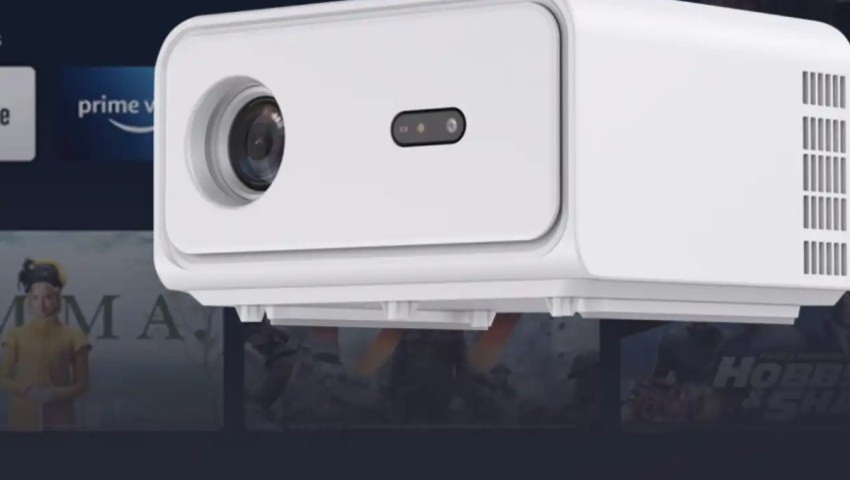
Commercial decision context
A home-projector buying guide optimizes packaging, convenience and subjective picture appeal. An installed commercial program instead has to control geometry, mounting tolerances, source compatibility, network exposure, recovery after power loss, maintenance access and unit-to-unit consistency. A 100-inch image produced at 0.24:1 may require only 240 mm from the projection surface, but that optical advantage does not remove the need to measure the cabinet depth, wall plane, screen material, ambient light and airflow path.
The supplied DataMax range does not represent one homogeneous ultra-short-throw category. Only GP8 has a stated 0.24:1 throw ratio and 0.23-inch DMD. GP96-GTV and GP98-PRO are specified with 1.2:1 and 1.35:1 ratios and LCD display sizes, while GP93B is specified with a 3.5-inch LCD display. Product #288 is described only as a 4K smart DLP outdoor projector with a 10000 mAh battery and Android 9; its resolution, native panel type, brightness, throw ratio and I/O are absent. GP96-GTV and GP98-PRO carry dust-free design claims, but the evidence boundary requires confirmation against the production datasheet.
- Installed AV: require measured image geometry, source EDID control, audio routing, wall or ceiling structure, service clearance and acceptance photographs.
- Fleet operations: require device identity, inventory mapping, remote telemetry or a documented manual process, configuration backup and rollback.
- Hospitality: require PMS or IP-control integration, safe recovery, simplified guest operation and protection against unauthorized application changes.
- Retail and corporate signage: require scheduled content delivery, watchdog behavior, evidence of update policy and measurable uptime obligations.
- OEM procurement: require controlled firmware, golden samples, traceability, AQL, PCN notice, spare parts and warranty failure coding.
Optical and measurement fundamentals
Projection distance must be derived from the manufacturer’s optical specification rather than an “ultra short throw” label. For a stated throw ratio TR and diagonal image width W, the approximate lens-to-screen distance is:
D ≈ TR × W. For a 16:9 image, W = diagonal × 16 ÷ √337, with √337 ≈ 18.358. Thus, a 100-inch 16:9 image is approximately 1.871 m wide. At 0.24:1, the calculated distance is approximately 449 mm. GP8 also states a 15–116 cm range and 30–200-inch image range, but its geometry tolerance, screen-plane offset and usable mounting envelope must be confirmed against the production datasheet.
ANSI lumens measure output under a standardized test procedure rather than a guaranteed field level. Illuminance on the screen depends on lumens, screen area and optical distribution. A useful first-order estimate is:
E ≈ L / A, where L is useful projector lumens after losses and A is image area in square metres. For a 100-inch 16:9 image, area is approximately 3.56 m². Delivering 500 useful lumens yields only about 140 lux before screen-gain, ambient-light and uniformity effects, so controlled-lighting use cases are not interchangeable with retail or daylight-facing installations.
| Parameter | Engineering interpretation | Procurement evidence |
|---|---|---|
| Native resolution | 1920×1080 provides 2,073,600 addressable native pixels; “4K decoding” does not establish 3840×2160 native panels. | Physical panel mode, input timing and 4:2:0/4:2:2 chroma support. |
| Throw ratio | Lens distance divided by image width; it is not the same as projection distance divided by image diagonal. | Optical-engine drawing with front, rear, ceiling and cabinet-clearance limits. |
| Contrast ratio | Manufacturer-defined full-on/full-off or related condition; it does not predict ANSI contrast. | Test method, ambient conditions and sample distribution. |
| Keystone | Digital geometry correction reduces usable pixel area and may alter brightness or fan acoustics. | Correction limits, non-rectangular support, bypass mode and saved presets. |
| Focus | Auto focus must be repeatable across temperature, screen material and aging conditions. | Focus range, screen compatibility and manual override. |
| Light-source life | LED hours are not the same as warranty life; brightness depreciation and color shift matter. | L70 or L50 definition, test condition, warranty exclusions and replacement policy. |

Real DataMax model comparison
The table below separates stated facts from procurement gaps. Conflicting or incomplete entries are retained and flagged rather than normalized by inference.
| Model | Optical and display facts | Platform and connectivity | Mechanical, power and decision status |
|---|---|---|---|
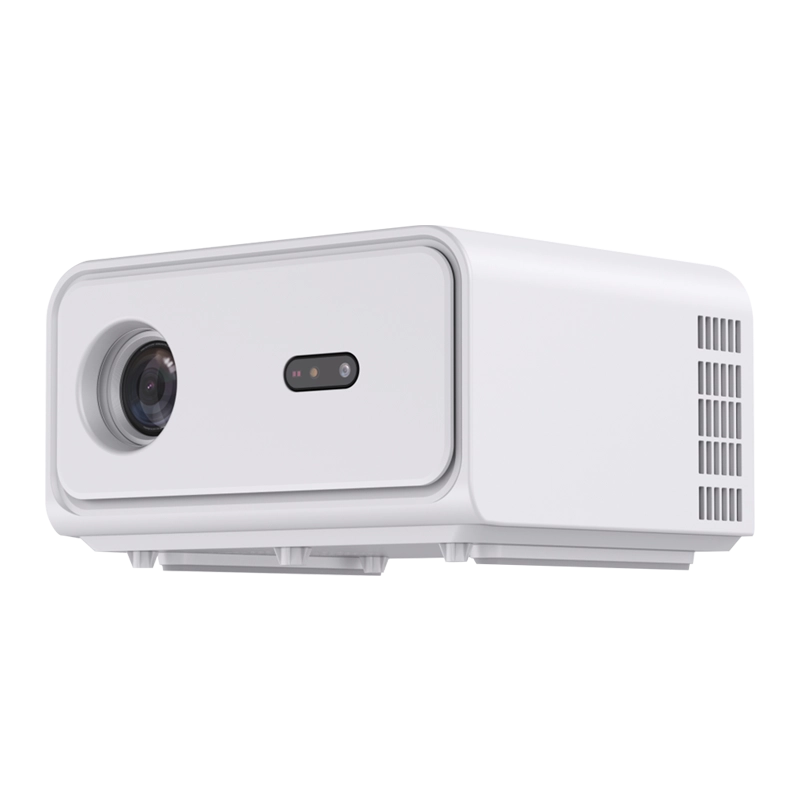
| GP8 | 450 ANSI lumens; native 1920×1080; 1200:1; 0.24:1; 0.23-inch DMD; 30–200 inches; 15–116 cm; Auto Focus; Auto Keystone. | Amlogic T972; Android 9; 2 GB RAM; 32 GB ROM; dual-band WiFi 6; Bluetooth 5.0; one HDMI; two USB 2.0; 3.5 mm audio; AirPlay, Miracast and EShare listed. | 89 W; 30 dB; front projection; 94×71×190 mm; 0.88 kg. Title says 400 ANSI but specification says 450 ANSI: confirm against production datasheet. |
| GP96-GTV | 1000 ANSI lumens; native 1920×1080; 1600:1; 1.2:1; 80–120 inches; 1.26–3.5 m; Auto Focus, Auto Keystone, Auto Screen Alignment and Auto Obstacle Avoidance. | Projector section lists Allwinner H137, 128 MB DDR3, 256 MB SPI Flash and 4.45-inch LCD; Google TV dongle section separately lists Android 11 or 14, S805X2/RTD1332, 1 GB DDR4 and 8 GB eMMC. One HDMI, one USB, mini-jack audio and IR. | 130 W; 32 dB; 256×203×140 mm; 2.95 kg. Dust-free design appears in the product title, but optical panel and seal construction conflict with other supplied DLP entries: confirm against production datasheet. |
| GP98-PRO | 800±20 ANSI lumens; native 1920×1080; 1500:1; 1.35:1; 29–150 inches; 1.15–5 m; Auto Focus, Auto Keystone, Auto Screen Alignment and Auto Obstacle Avoidance. | Allwinner H137; XuanTie C906; 128 MB DDR3; 16 MB SPI Flash; 4.0-inch LCD. Network section says Linux, while separate entries say Google TV 11 or 14 and list dual-band WiFi 6/Bluetooth 5.4 or Bluetooth 5.0. One HDMI, one USB, 3.5 mm earphone and S/PDIF. | 86 W; 32 dB; 263×263×305 mm; 2.42 kg. Platform, storage and optical-classification conflicts require confirmation against production datasheet. |
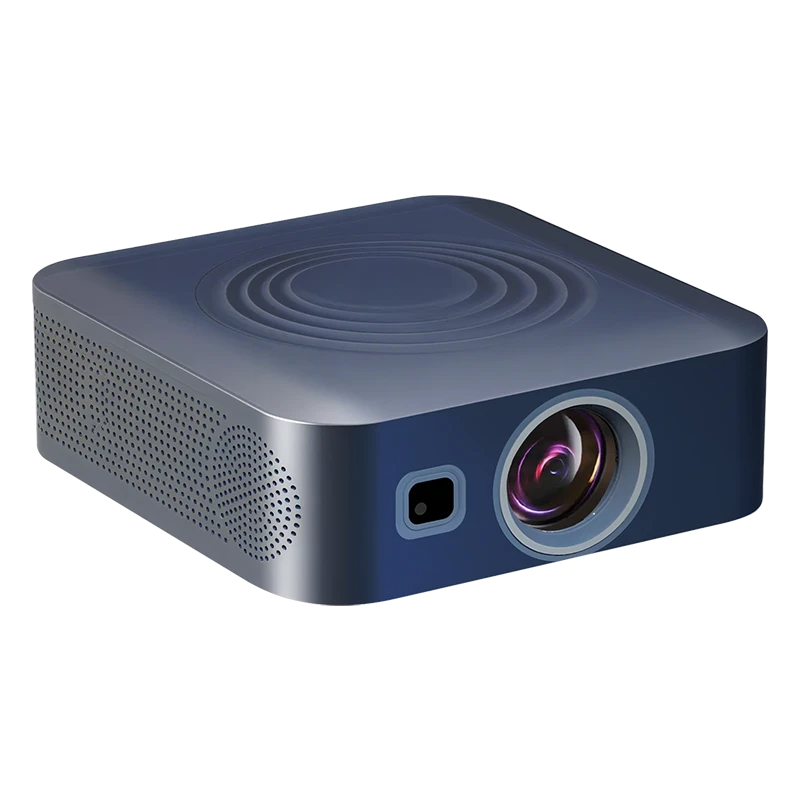
| GP93B | 240 ANSI lumens; native 1920×1080 with 4K decoding; 1200:1; 1.2:1; 32–120-inch best image; best projection distance 1.2–3.5 m; Auto Focus and Auto Keystone. | Allwinner H723 quad-core ARM Cortex-A53; Android 14; 2 GB RAM; 8 GB ROM; dual-band WiFi 6; Bluetooth 5.4; one HDMI, one USB, 3.5 mm audio and screen mirroring. | 49 W; 28 dB; 194×194×66 mm; 1.04 kg. Dust-free appears in the title, while the supplied display field says 3.5-inch LCD: confirm against production datasheet. |
| Product #288 | Only the description “4K Smart DLP Outdoor Projector” is supplied. Native resolution, ANSI brightness, throw ratio, contrast, image size and light-source life are not supplied. | Android 9 and 10000 mAh battery are supplied. WiFi, Bluetooth, HDMI, USB, DRM, OTA and management details are absent. | No dimensions, weight, ingress rating, operating temperature or noise figure are supplied. Confirm against the production datasheet; do not use for final design without it. |
Quantitative selection method
Selection should begin with measured room conditions rather than a screen size. Capture screen width and height, projector-to-screen distance, screen gain, wall color, controlled illuminance, window daylight, viewing angles, ceiling height, cabinet depth, cable routes and ambient noise. Calculate image width from the intended diagonal and aspect ratio, then compare the resulting D ≈ TR × W value with the model’s specified range. A valid mechanical fit alone is insufficient: keystone should remain disabled for final acceptance where possible.
A worked example considers a 100-inch 16:9 corporate training room. Width is 100 × 16 ÷ 18.358, or 87.15 inches, approximately 2,214 mm. GP8 at 0.24:1 predicts a lens-plane distance of 531.5 mm. Its stated minimum distance of 150 mm corresponds to about 62.5 inches of width, or 114.6-inch diagonal, so a 100-inch image should sit comfortably inside the numerical range. The wall plane must still be verified because obstacle avoidance, chassis depth and alignment tolerances are not supplied.
For brightness, assume the application requires 300 lux at a 100-inch screen, uses a 0.9-gain matte surface and has an installation loss factor of 0.80. Required useful lumens are 300 × 3.56 ÷ (0.9 × 0.80) ≈ 1,483 lumens. No supplied model is proven to meet that requirement with adequate margin. GP96-GTV’s stated 1000 ANSI lumens would require a darker target, lower ambient level or a different screen and image size. ANSI output must not be treated as guaranteed delivered lumens without validation.
| Room or use condition | Measured gate | Initial candidate | Required confirmation |
|---|---|---|---|
| Controlled meeting or training room | 100 inches; 2,214 mm image width; approximately 150–300 lux ambient | GP8 for minimum space; GP96-GTV for higher stated brightness if distance permits | Delivered ANSI lumens, uniformity, text legibility and input black level. |
| Bright hospitality suite | Window daylight quantified; blackout effectiveness recorded | GP96-GTV conditionally | Daylight testing, color shift, auto screen alignment and hotel-control API. |
| Compact executive room | Projection-plane clearance below 600 mm | GP8 | 450-versus-400 ANSI conflict, chassis tolerances and screen-receiver exclusion zone. |
| Retrofit with 1.2–3.5 m throw path | Measured lens distance and cabinet depth | GP93B or GP96-GTV | Whether the product is DLP or LCD and whether “dust-free” means sealed optical path. |
| High-ambient retail or lobby | Target delivered lux exceeds model headroom | No production selection from supplied data | Obtain a higher-output optical engine and measured installation evidence. |
- Measure: record three illuminance readings at screen height with the intended operating mode.
- Calculate: derive width and projected distance for each valid aspect ratio.
- Screen model: obtain lumens, screen gain, viewing half-angle and flatness for the actual surface.
- Apply losses: use an engineering loss factor pending photometric validation.
- Check geometry: compare projected distance, chassis depth and tolerance with the optical drawing.
- Run a pilot: validate color, focus, uniformity, input switching, source wake and service controls.
Deployment profiles
Hotel and hospitality
Use GP96-GTV or GP98-PRO only after their Google TV platform configuration and control interfaces are confirmed. Conditions include variable curtains, frequent source changes, guest privacy and 24-hour service expectations. Architecture should provide a fixed display input, local IR or network control path, route audio through the room AV system, and prevent guests from changing provisioning. PMS integration normally maps room-service events to display wake, input and volume commands, but no PMS protocol or DataMax API is supplied.
Corporate presentation and training
Conditions include 50–200 inch images, Windows laptops, video conferencing, 16:9 presentation content and limited tolerance for geometric correction. GP8 fits only where its 0.24:1 geometry is physically appropriate; GP96-GTV or GP93B suit longer 1.2:1 paths. Mount front-facing where possible, disable auto keystone after stored calibration, isolate direct speaker audio and route 3.5 mm, S/PDIF or mini-jack audio only where the production interface is verified.
Education
Conditions include 8-hour daily use, frequent whiteboard interaction, vandalism exposure and central administration. Android 14 and WiFi 6 on GP93B may assist content delivery, but classroom lockdown, Google certification status, MDM enrollment and OTA behavior are not supplied. Mechanical risks include ceiling structure, cable abuse and alignment drift after repeated student interaction.
Retail signage
Conditions require 16:9 or portrait installation, unattended playback, automatic restart, scheduled media and remote inventory visibility. None of the supplied records establishes watchdog timing, scheduled playback, kiosk mode or a management API. Android or Google TV branding alone is not evidence of enterprise fleet management. Select only after a 72-hour endurance test and written update-policy review.
High-ambient hospitality, lobby or education
Conditions require measured screen illuminance above approximately 500 lux, controlled black level and no direct sunlight on the image plane. None of the supplied products can be accepted from headline brightness alone. Require ANSI output, uniformity, color and 72-hour ambient testing. High-contrast DLP claims also require verification because several supplied entries identify LCD display components.
Platform and integration architecture
Google TV is an Android TV platform and application environment, not proof of enterprise manageability. AOSP provides a source foundation, while Android TV, Google Play, Widevine licensing, casting and device certification are separate implementation obligations. For commercial streaming, Widevine L1 generally supports hardware-backed DRM paths where the SoC, display path and licensing implementation support them; L3 is typically software-only. No DataMax record supplies Widevine security level, CDD/CTS status, EDLA status, Google certification or Netflix certification, so each must be confirmed.
| Layer | Required design control | Acceptance evidence | Main failure mode |
|---|---|---|---|
| Application | Signed player, URL allow-list, kiosk or managed-launch mode | Playback from approved WAN and captive portal; restart test | Unauthorized apps or credential exposure. |
| DRM | Widevine security level, HDCP path and license-server integration | License acquisition, renewal, expiry and HDCP enforcement logs | Playback failure after token or key-server outage. |
| Device management | Android Management API, MDM enrollment or documented manual process | Enrollment, policy assignment, update ring and rollback | Fleet drift and silent update regression. |
| OTA | Signed packages, staged rollout, health gate and recovery partition | Interrupted-update and rollback test | Bricked or partially upgraded device. |
| Network | Dual-band WiFi or wired path, VLAN, DNS, NTP and proxy | Roaming, latency, captive portal and certificate-renewal test | Intermittent streaming or clock drift. |
| Room control | IR, CEC, PMS/IP API, RS-232 or external control gateway | Command matrix for power, source, volume and blackout | Wake failure or conflicting control owners. |
- Power: measure 130 W maximum stated draw for GP96-GTV, 89 W for GP8, 86 W for GP98-PRO and 49 W for GP93B; add UPS and surge-margins separately.
- Thermal: retain 32 dB or lower stated noise as a procurement datum, not a field guarantee; obtain sound-pressure measurement distance and weighting.
- Mechanical: verify cabinet dimensions against wall, ceiling and service clearance rather than image size alone.
- Connectivity: single HDMI and one USB on GP96-GTV limit redundant source paths; confirm whether HDMI supports CEC and which formats are accepted.
- Optical safety: obtain IEC 62471 classification and interlock evidence; lamp-free operation does not by itself prove eye-safety compliance.

Compliance, evidence and lifecycle economics
Compliance evidence must match the exact production SKU, firmware, power supply, radio module and destination market. Applicable obligations can include EU RED, EMC and LVD rules, FCC or ISED radio requirements, UKCA where applicable, RoHS and REACH. For smart products, unresolved Google GMS, Android CDD, CTS and EDLA requirements affect app distribution and fleet consistency; certification IDs are not supplied.
- Identity: match declaration documents to model number, hardware revision and firmware baseline.
- Electrical safety: review applicable IEC 62368-1 conformity, isolation and power-supply reports.
- EMC: review conducted and radiated emissions plus immunity for the final enclosure and cable configuration.
- Radio: review antenna, band, module and regional test evidence; firmware must retain required radio functionality.
- Optical safety: request IEC 62471 test results and user documentation for the production light source and optical engine.
- Environmental claims: request seal construction, dust-ingress procedure and maintenance interval for any “dust-free” claim.
- Cybersecurity: request component lifecycle, update-signing policy, vulnerability process and secure-boot evidence where claimed.
| Cost or risk element | Calculation method | Decision data required |
|---|---|---|
| Capital asset | Confirmed unit and installed-system cost, excluding prices from this article | Quotation, quantity break and tax treatment. |
| Installation labor | Survey hours + mount labor + cable hours + commissioning hours | Rate card, travel policy and site access window. |
| Energy | Measured average watts × operating hours × local tariff | Power meter result and annual operating profile. |
| Cleaning and inspection | Visits per year × technician hours + access equipment | Dust level, filter status and optical-engine service policy. |
| Failure | Units × annual failure rate × swap labor | Field-return rate and mean time to repair. |
| Depreciation | Replacement interval versus image and light-source limits | L50/L70 definition, warranty and residual-use policy. |
LED service life must be treated as a reliability distribution, not a guaranteed duration. Obtain the manufacturer’s L70 or L50 definition, ambient-temperature boundary, duty-cycle assumptions and color-shift criterion. A site operating at 10 hours per day, 250 days per year, reaches 2,500 annual hours; projected life divided by 2,500 yields a theoretical operating interval before warranty eligibility, which may be shorter or longer than practical replacement economics. The supplied “10,000–10,500 lumens” wording for GP96-GTV and GP98-PRO appears to describe light-source output rather than rated service hours; confirm against the production datasheet.
OEM/ODM and sourcing process
Commercial sourcing should separate a standard catalogue shipment from a project-customized device. Standardization reduces firmware branches, certification duplication and spare-parts complexity. Customization can include an optical lens, enclosure, bracket, power supply, logo, packaging, remote, connector set, preinstalled application, update policy or regional radio configuration. Each change can alter mechanical drawings, EMC behavior, thermal performance, regulatory evidence and the approved golden sample.
- Specification freeze: record model, SoC, OS, panel, brightness, throw ratio, I/O, dimensions and accessories as controlled line items.
- Feasibility review: resolve every contradiction before tooling or firmware freeze.
- Golden sample: approve a serialized unit for optics, color, noise, thermal performance and interfaces.
- Validation: run engineering, reliability, safety, compatibility and pilot-site tests.
- Production control: bind firmware, test software, calibration data and packing labels to work-order revision.
- Change control: require advance PCN approval for optics, panel, SoC, OS, power supply, radio, firmware and packaging changes.
Use ISO 2859-1 or an agreed equivalent sampling plan, but define defect classes and the acceptance decision. Critical defects include safety, non-emission, unusable image, missing required interface or inability to update. Major defects include material brightness, geometry, focus, noise or connectivity deviations. Minor defects include cosmetic and labeling issues. The final AQL must be agreed for lot size, inspection stage and shipment destination.
| Commercial instrument | Minimum control | Evidence before approval |
|---|---|---|
| Specification | Rev-controlled functional and mechanical requirements | Signed data sheet and deviation register |
| Golden sample | One serialized production-equivalent unit | Measurement report and photographs |
| Quality agreement | AQL, defect classes, traceability and rejection handling | Signed quality plan |
| PCN agreement | Advance notice and approval rights for controlled changes | Change form, impact analysis and validation plan |
| OTA policy | Release cadence, staging, rollback and end-of-support date | Tested update package and recovery procedure |
| Warranty plan | Failure codes, RMA evidence and turnaround target | Serial lookup, depot process and spare policy |
Spare planning should link to fleet criticality rather than generic stocking. For each site, record serial number, room, firmware, MAC address, mount and screen distance. Maintain pilot spares for high-use rooms and a monitored pool for failed units. Warranty planning should define DOA, optical, power, software-update, accidental-damage and environmental exclusions in writing, with evidence retained for every return.
Weighted RFP scoring and ordered decision tree
| Criterion | Weight | Scoring method | Minimum gate |
|---|---|---|---|
| Optical and image performance | 25% | 0–5 against measured room target | Must pass brightness, focus and geometry pilot. |
| Reliability and thermal design | 15% | 0–5 from test and field data | 72-hour pilot without thermal shutdown. |
| Integration and control | 15% | 0–5 for API, CEC, IR, network and audio | Required room-control commands must pass. |
| Fleet management and OTA | 15% | 0–5 for MDM, rollback and telemetry | Interrupted update must recover. |
| Compliance evidence | 12% | 0–5 for complete, SKU-matched documents | No unresolved mandatory destination-market item. |
| Manufacturing and quality | 10% | 0–5 for AQL, traceability and PCN | Quality agreement and PCN process approved. |
| Service and spares | 8% | 0–5 for RMA, lead-time and stock plan | Service workflow documented. |
- Confirm product identity: if any critical DataMax specification remains contradictory, hold selection pending production-datasheet confirmation.
- Reject infeasible geometry: calculate D ≈ TR × W; if the measured path is outside the stated range, reject or add a new model.
- Test brightness: reject if measured delivered lumens miss the calculated requirement by the project margin.
- Test controls: require wake, source, volume, network and recovery commands to pass through the proposed integration.
- Test governance: reject an unattended fleet deployment without OTA rollback, identity mapping and update ownership.
- Commercial award: rank only compliant finalists by weighted score, then confirm capacity, warranty and PCN commitments.
Acceptance testing and troubleshooting
Site acceptance should use the same operating state intended after handover. Record serial, firmware, screen, source, color mode, room illumination and test date. A photograph alone is not evidence of geometry, brightness or update recovery.
| Acceptance check | Procedure | Pass criterion | Evidence |
|---|---|---|---|
| Image size and squareness | Measure width, height and diagonal after final alignment | Within approved drawing; no unintended keystone | Dimension sheet and site photograph |
| Brightness | Measure multiple screen points in the operating mode | Meets calculated lux target and project margin | Lux readings with instrument ID |
| Focus and uniformity | Display 100% focus and white grids | No unacceptable softness, dead zone or visible hotspot | Grid capture and inspection record |
| Color and text | Display gray ramp, color patches and 5–10 pt text | No unacceptable tint, banding or illegible line | Signed visual checklist |
| Sources | Cycle HDMI, network and control paths | Each approved source selects and plays | Test matrix |
| Power recovery | Cycle AC power and network loss | Device returns to defined state without technician | Recovery log or video |
| Noise and thermal | Operate at rated mode for 72 hours | No shutdown, abnormal noise or stated-limit breach | Temperature and acoustic notes |
| Management | Test enrollment, policy, update and rollback | Documented result for every fleet function | MDM and OTA records |
| Symptom | Ordered diagnosis | Corrective action |
|---|---|---|
| Black image with power present | Check selected input, source handshake, HDMI cable, EDID and DRM path | Restore approved input; replace cable; capture EDID; retest player and license server. |
| Persistent keystone | Compare final mounting with reference image and correction history | Stop repeated auto correction, realign mechanically, save final offset and inspect obstacle detection. |
| Uneven brightness | Measure screen grid and repeat with keystone bypassed | Clean only per service procedure; replace screen if nonuniform; escalate optical assembly. |
| WiFi instability | Test RSSI, channel width, DHCP, DNS, NTP and captive portal | Use wired path where available, correct RF survey and repair certificate or DHCP configuration. |
| No room-control response | Verify IR/CEC/network ownership, standby state and command syntax | Disable competing control paths and re-test the approved command matrix. |
| Update failure | Preserve logs, power state, version and package signature | Use approved recovery image or depot swap; root-cause before reinstating fleet. |
| Thermal shutdown | Log inlet and outlet temperature, altitude, operating mode and airflow blockage | Clear approved obstruction, restore clearance and escalate if the condition persists. |
| Playback authorization failure | Separate application, token, license-server and DRM security-level issues | Validate token renewal and device identity; use only approved content and keys. |
Expert FAQs
Q1: Is GP8 the only supplied ultra short throw model?
Yes, among models with complete optical data, GP8 is the only one stated at 0.24:1 with a 0.23-inch DMD. GP96-GTV, GP98-PRO and GP93B state ratios of 1.2:1, 1.35:1 and 1.2:1 respectively, so they should not be treated as equivalent UST products without the production datasheet.
Q2: Does “4K decoding” mean native 4K?
No. GP8 and GP93B state native 1920×1080 with 4K decoding in their supplied records. Decode capability describes supported input formats, not physical native pixel count. Confirm the input timing and chroma format before specifying 4K content.
Q3: Which supplied model has the highest stated brightness?
GP96-GTV has the highest stated figure at 1000 ANSI lumens, followed by GP98-PRO at 800±20 ANSI lumens. Actual site illumination still depends on image area, screen gain, calibration mode, ambient light and losses.
Q4: Are these models suitable for daylight-lit lobbies?
Headline brightness alone is insufficient. A 100-inch 16:9 screen has about 3.56 m² of area, and ambient light can exceed projector output. Require site photometric testing. No supplied record proves any model suitable for uncontrolled daylight.
Q5: Can Google TV be centrally managed as an enterprise device?
Not automatically. Google TV 11 or 14 is listed for GP96-GTV and GP98-PRO, but Android Management API support, kiosk mode, OTA rollback and MDM APIs are not supplied. Require an enrollment and recovery demonstration before fleet approval.
Q6: Which licensing and DRM levels are verified?
None. The records list Dolby support and decoding, but do not identify Widevine L1 or L3, HDCP versions, streaming-service certification or license flow. See the reference on Widevine L1 versus L3 for the engineering distinction.
Q7: What should be checked before claiming a sealed or dust-free optical engine?
Request the seal architecture, dust-ingress test, environmental cycling report, filter or airflow design and service policy. “Dust-free design” in a title does not establish IEC 60529 ingress rating or zero dust deposition.
Q8: How should warranty spares be planned?
Map each serial to site and firmware, classify warranty exclusions, and hold spares according to room criticality and demonstrated failure rate. Define RMA evidence and failure codes before deployment; generic warehouse stock does not guarantee rapid replacement.
For a controlled room, brightness, control and recovery evidence, the ANSI projector brightness guide can support early calculations, while a structured projector OEM/ODM process should govern production validation and change control. Submit a site survey, required image geometry, room illuminance, control protocol and fleet size for an engineering review and RFQ against the current production datasheet.