

Enterprise licensing and device-program context
Google Enterprise Software Licensing, commonly associated with Enterprise Device Licensing Agreement (EDLA), governs a licensed device program rather than a conventional per-seat software subscription. For Android TV, OTT, signage, kiosk and managed-device projects, the procurement question is whether the shipped model has the required Google certification, whether the brand and chipset manufacturer hold the applicable authorizations, and whether the production build preserves the certified configuration. A Play Store statement or a model described informally as “Google-certified” is not sufficient evidence of that chain.
The economic distinction matters because a device can carry Android 14, support Widevine L1 and HDCP 2.3, yet lack the model-level Google approval needed for the intended commercial deployment. Conversely, a certified device remains exposed to launch delay when the final hardware revision, firmware branch, region, application policy or update process diverges from the tested configuration. Buyers should contract against the exact production model number, hardware revision and software build rather than a development-board name or a generic chipset platform.
- Operators and service providers: determine the Play/EDLA model, region, account type, recovery process and minimum deployment fleet before accepting a device program.
- Distributors: map every shipped carton label, SKU and firmware version to an auditable certification record.
- Brand owners: decide whether Google distribution, application access and enterprise branding are necessary before committing the BOM.
- System integrators: validate the production image, DRM path, account enrollment, kiosk policy and recovery behavior at the actual installation site.
- Device vendors: preserve the approved build, maintain security updates, manage factory provisioning and support post-shipment evidence requests.
License, eligibility and certification obligations
EDLA is a Google device licensing mechanism for enterprises and service providers that manage fleets of Android devices. Its exact permissions, administration portals and contractual obligations are defined by the agreement version executed with Google and the associated device requirements; they should not be inferred from the EDLA acronym alone. GMS certification is a related but distinct product-compliance regime used for devices that require Google Mobile Services and approved Google applications. A procurement file should identify whether the program is EDLA, GMS, Android Enterprise, Google Play distribution, or a combination, because each creates different configuration, branding, data and audit duties.
Eligibility normally depends on the applicant type, device form factor, projected deployment volume, geographic coverage, application needs and the ability to meet the applicable Android compatibility and security requirements. Google may require the applicant to be the legal owner or authorized licensee of the brand and to provide a complete production unit, not merely a prototype. For Android TV and other constrained devices, the tested hardware, firmware and packaging can determine whether the model remains within the approved certification record.
| Program element | Procurement meaning | Required evidence | Audit consequence if absent or changed |
|---|---|---|---|
| EDLA agreement | Defines licensed devices, enrollment, administration and use conditions. | Executed agreement, licensee identity, model list and administrator contacts. | Fleet may be unlicensed or incorrectly enrolled. |
| GMS certification | Supports Google applications and Play Store distribution for certified models. | Model-specific approval letter or Google Partner Console evidence. | Store publication, application access or certification can be withdrawn. |
| Brand authorization | Establishes who may request certification and apply the brand. | Trademark authorization and manufacturer declaration. | Ownership dispute, storefront suspension or blocked certification review. |
| Production equivalence | Links the approved design to the delivered unit. | Hardware revision, firmware build and regional SKU matrix. | Shipped devices may fall outside the tested configuration. |
| Security maintenance | Requires sustained patch and update capability. | Patch policy, release records and incident-response contact. | Compliance status can lapse under the applicable agreement. |
Auditability is a contractual and operational requirement. The licensee should retain enrollment records, administrator actions, recovery procedures, device assignments and exception logs according to its internal retention policy. The manufacturer should retain test reports, Google review outcomes, release records and traceability between approval records and production hardware. The exact audit cadence and remedies depend on the signed agreement; buyers must review those provisions rather than assume that approval is permanent or cost-free to correct.
Technical requirements imposed on the device
Google certification turns into hardware and firmware controls at three interfaces: platform compatibility, protected-media delivery and product experience. The Android Compatibility Definition Document (CDD) defines platform behavior required for compatibility, while Android Compatibility Test Suite (CTS) provides repeatable test execution. A GMS build must also satisfy Google Mobile Services and application requirements applicable to the form factor. The manufacturer must freeze and validate the production image; an engineering sample passing CTS does not prove that the retail SKU passes the same test.
DRM is a separate commercial control. The DM21RTD production data states Widevine L1, PlayReady and HDCP 2.3 support, but a procurement team must obtain test results for each licensed codec, resolution and protected-content path. The DM33DS record does not state Widevine, PlayReady or HDCP support, so those capabilities must be confirmed against the production datasheet and Google certification file before it is compared with a DRM-dependent OTT program.
| Control area | Engineering requirement | Buyer acceptance evidence | Operational risk |
|---|---|---|---|
| OS and build identity | Approved OS version, build fingerprint, security patch level and update channel. | Production build report and sample output from each shipment lot. | Store publication or fleet enrollment mismatch. |
| Compatibility | Applicable CDD requirements and CTS/VTS results for the final configuration. | Self-declaration or lab report tied to the model and build. | Application behavior differs across hardware revisions. |
| DRM and HDCP | Correct secure-media implementation, key delivery and output-path support. | Widevine/PlayReady security-level evidence and HDCP test matrix. | Protected playback fails or exposes insecure output paths. |
| Secure boot and updates | Verified boot, signed images, controlled update path and patch operation. | Release procedure, signing controls and patch history. | Compromise or unsupported deployed base. |
| Default apps | Only permitted preinstalled applications and compliant setup flow. | Preinstall inventory and approval evidence. | Application approval may be withdrawn. |
| Network and identity | Stable Wi-Fi, Ethernet, DNS, TLS, account and factory-reset behavior. | 90-day or deployment-representative network soak report. | Enrollment failure after installation. |
| Device identity | Unique device identity, ownership transfer and deprovisioning path. | Identity and wipe test evidence. | Stale credentials or profile leakage. |
Branding constraints may cover the device boot screen, launcher, setup experience, product label, preinstalled applications and customer-facing identity. EDLA or GMS approval should not be treated as permission to add an unrelated launcher, replace Google services, alter device branding or ship a modified firmware without review. The approval holder must identify which elements are contractual, which are merely recommended and which changes require a new test or notification.
Roadmap, BOM, lead time and launch sequencing
Certification changes the project from a hardware design into a controlled configuration. The chipset and memory choice can determine driver maturity, codec support, certification history and the amount of validation required, but an existing platform does not remove approval work. A late change to eMMC, Wi-Fi module, display output, tuner, enclosure, remote-control software or regional radio configuration can create a new sample and test cycle.
- Program definition, weeks 0–2: select the required Google program, target region, application model and deployment ownership.
- Design freeze, weeks 2–6: lock the SoC, module set, industrial design, output paths and target OS baseline.
- Integration, weeks 6–14: complete drivers, certified services, account flows, update mechanism, recovery and operator branding.
- Validation, weeks 14–20: run internal regression, CDD/CTS or applicable suites, DRM tests, RF/EMC checks and pilot-site soak testing.
- Google review and release, weeks 20–30: resolve findings, obtain model evidence, configure the production update channel and approve golden units.
- Ramp, weeks 30–36: pilot, traceability checks, staged scale and post-shipment monitoring.
These durations are illustrative, not a DataMax lead-time commitment. The schedule should be gated by evidence, not calendar dates: golden-unit approval, production image freeze, certification closure, pilot acceptance, logistics readiness and operator enrollment must each have an exit criterion. The most costly BOM errors are often missing approvals rather than missing components.
| Roadmap decision | Cost or delay mechanism | Procurement control | Launch disposition |
|---|---|---|---|
| Certification-capable SoC and reference design | Higher NRE and potentially larger PCB than an uncertified design. | Compare total compliant BOM, not unit silicon price. | Commit after application and DRM validation. |
| Module substitution | New RF, EMC, driver and certification validation. | Prior written approval with exact module part number. | Hold substitution until evidence is accepted. |
| Operator customization | Launcher, setup, account and branding changes may affect review. | Maintain a configurable-versus-restricted matrix. | Launch baseline first; add changes later. |
| Production image timing | Late application or policy changes can freeze build tools. | Version-lock toolchain, signing keys and binaries. | Do not ship unlocked firmware. |
| Update capability | Requires build pipeline, signing, QA and long-term staffing. | Contract an update period and escalation SLA. | Budget support before pilot approval. |
DataMax product comparison for Google-class programs
The supplied DataMax data contains two directly named GMS-class products and two development or generic-certified platforms. Only DM21RTD has a complete model-level hardware record in the supplied data. Product #269 is identified as a 4G/5G LTE media player with Play Store download support, while its title says Google EDLA and its product title says GMS-certified; the precise certification basis must be confirmed against the production datasheet. Product #264 names Google EDLA, but its complete model, OS and memory configuration are absent.
| DataMax item | Stated Google/program position | Hardware and memory | Software and media | Interfaces | Procurement disposition |
|---|---|---|---|---|---|
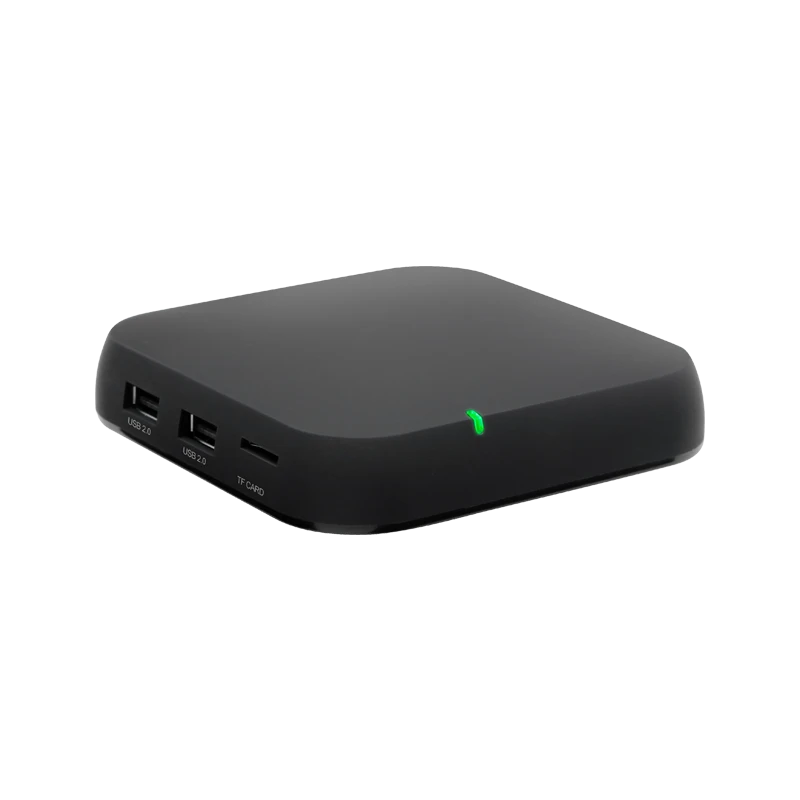
| DM21RTD | GMS-certified; Play Store downloads and voice search stated. | Realtek RTD1325 quad-core Cortex-A55; 1GB DDR; 8GB eMMC. | AOSP Android 14; Widevine L1, PlayReady, HDCP 2.3; AV1 Level 5.1 and licensed Dolby Vision/HDR10+ paths. | HDMI 2.1a, 100M LAN, 2×USB 2.0, S/PDIF, 3.5mm AV, TF. | Best-defined OTT baseline in the supplied data; confirm exact GMS approval scope and region. |
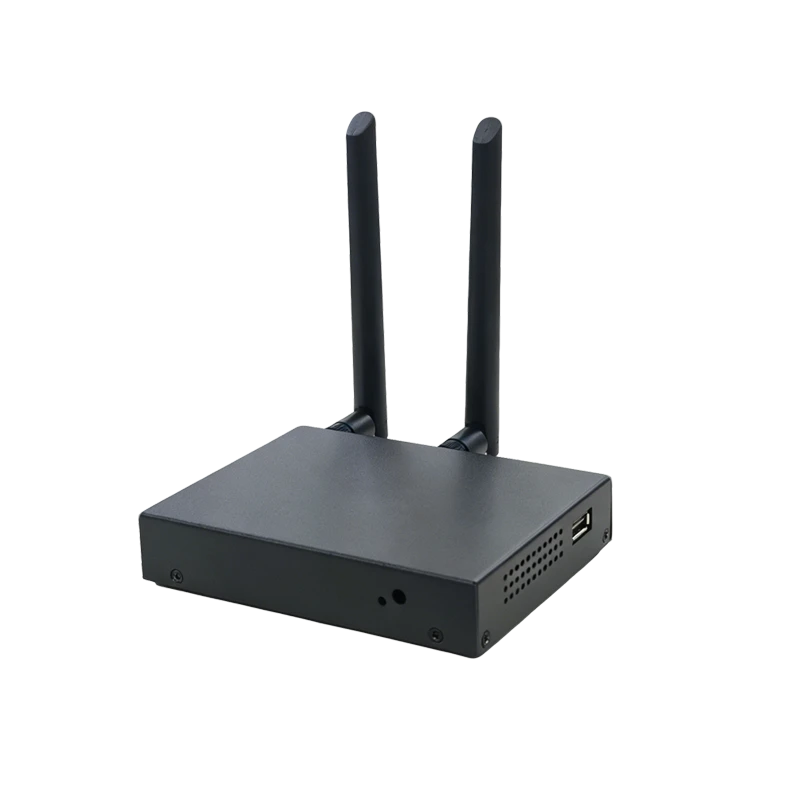
| DM33DS | Title states GMS-certified; Play Store downloads stated. EDLA scope is unresolved in supplied data. | Allwinner H618 quad-core Cortex-A53; 2GB DDR4, 4GB optional; 16GB eMMC, 32GB optional. | AOSP Android 14; H.265 8K@24fps and H.264/VP9/AVS2 4K@30fps; DRM not stated. | HDMI 2.0b, Wi-Fi 6, LTE CAT1 with Quectel EG915N-series, optional 5G and GNSS, dual Type-C. | Use for cellular signage only after EDLA/GMS, Widevine, HDCP, radio and update evidence are confirmed. |
| Product #264 RK3399 development board | Google EDLA and audio switching stated in title. | RK3399 development platform; exact memory and production configuration not supplied. | EDLA stated; OS version, Play Store scope and DRM not supplied. | Audio switching stated; full I/O not supplied. | Development reference only; do not equate it with a certified retail model. |
| Product #261 Pure OTT box | Google certification stated; Android TV 9.0/10.0 appears in the supplied image path/title context, but no production OS field is supplied. | S905X platform; memory and storage not supplied. | Exact Google applications, DRM levels and update policy not supplied. | Not supplied in the product record. | Legacy candidate; confirm current certification, OS support and lifecycle before nomination. |


Manufacturer evidence package and model-specific confirmation
A bid should be rejected if it provides only “GMS certified,” “EDLA certified” or a marketing page without a model identifier. The approval record must connect the legal manufacturer, brand, model number, hardware revision, region and build. Buyers should also obtain evidence that the units in the shipment are the same product, not a look-alike derived from a development board or an earlier retail generation.
- Identity: model, revision, SoC, memory, storage, display/output path, wireless module and regulatory configuration.
- Approval: Google review outcome, approval date, authorized brand, distribution region and covered firmware branch.
- Software: production OS version, build fingerprint, security patch level, Google service versions and update channel.
- Compatibility: applicable CDD declarations, CTS/VTS results, waivers and unresolved deviations.
- DRM: Widevine security level, PlayReady status, HDCP version, 4K/HD path and test content results.
- Security: verified boot, signed update, factory reset, credential erasure and patch-history samples.
- Operations: enrollment guide, administrator roles, recovery process, RMA process and support escalation path.
- Lifecycle: security-update duration, EOL notice, migration plan and long-term component availability.
Model-specific confirmation is mandatory where the source data is silent or internally ambiguous. For DM21RTD, the supplied record is strong on hardware and DRM but does not identify the exact Google approval identifier. For DM33DS, it states both GMS-certified in the product title and EDLA in the item title; those labels should not be treated as interchangeable. For the RK3399 board and Pure OTT box, production OS, certification scope and lifecycle data are absent from the supplied record.
Market access, audit risk and consequences of non-compliance
The immediate commercial effect of a certification gap may be rejection from Google Play, inability to enroll the device, failure to pass the operator’s content-security acceptance, or a requirement to disable applications. A corrected issue after shipment can require replacement units, reflash campaigns, re-enrollment, retailer notification and reputational exposure. The severity depends on whether the fault affects one lot, a regional SKU or the entire certified model.
| Risk event | Detection point | Business impact | Corrective control |
|---|---|---|---|
| Unauthorized preinstall or removed Google component | Build inspection or store review | Certification suspension or unavailable applications. | Signed-image audit and golden-unit comparison. |
| Hardware revision drift | Incoming inspection or operator pilot | Model appears different from approved configuration. | Serialized hardware-revision traceability. |
| Expired security patch commitment | Monthly fleet audit | Contract breach or inability to satisfy fleet security policy. | Patch dashboard, exception register and escalation SLA. |
| DRM downgrade | Content playback test | HD playback fails or content is blocked. | Protected-content regression suite on golden units. |
| Brand-owner license lapse | Quarterly license review | Devices cannot be lawfully administered. | Contract alerts and renewal owner. |
| Radio or EMC non-compliance | Lab or market surveillance | Import, sale or use restrictions. | Module control and market-specific reports. |
Google program compliance is only one part of market access. Depending on the destination and product class, the buyer also needs applicable radio, EMC, electrical-safety, environmental and cybersecurity documentation. FCC and CE are not interchangeable approvals: FCC is relevant to the United States, while CE is an EU conformity framework with applicable directives and documentation. For cellular SKUs, the radio module, host integration and final-product SAR/EMC evidence must match the shipped configuration. See the EMC, ESD, CE and FCC pre-compliance guide for the wider qualification workflow.
Consequences should be written into the supply agreement: correction notice, root-cause report, firmware or hardware remedy, freight and rework allocation, field replacement, certification re-entry cost, and termination rights for unresolved material breach. A buyer should not assume that a certificate transfers automatically when the brand, owner, factory or selling entity changes.
OEM, manufacturer, brand and operator responsibilities
The contract should use a responsibility matrix rather than “OEM” as an ambiguous catch-all. The chipset or module supplier, contract manufacturer, firmware developer, brand owner, licensee and deployment operator may control different parts of the evidence chain. An approval can exist even when an operator remains responsible for account administration, content authorization, network security and acceptable-use policy.
| Role | Primary control | Deliverable | Audit obligation |
|---|---|---|---|
| Chipset/module supplier | Drivers, BSP quality and reference-platform support. | Security fixes, compatible BSP and declaration data. | Provide evidence for affected production revisions. |
| Contract manufacturer | PCB assembly, calibration, configuration and serial traceability. | Build record and golden-unit comparison. | Prevent unauthorized substitutions. |
| Firmware integrator | Android build, services, applications, signing and OTA pipeline. | Approved image, release notes and test results. | Retain toolchain and artifact integrity. |
| Google licensee/brand owner | Agreement, brand authorization and certified model list. | License and model/application records. | Administer users, devices, recovery and exceptions. |
| Operator or integrator | Deployment, content, network and endpoint policy. | Site acceptance and enrollment records. | Monitor patch level, account access and device return. |
| Distributor | SKU mapping, chain of custody and customer disclosure. | Serialized shipment and model evidence. | Escalate certification or region mismatches. |
Accountability requires named owners. The certificate holder, software release owner, factory quality lead and fleet administrator must be different functions even if one enterprise supplies all roles. The operator remains responsible for its own password policy, user access, content classification and incident response, even when the OEM controls the platform.
Deployment profiles: conditions, architecture and risks
Operator-controlled OTT and IPTV set-top box
A DM21RTD-class fleet requires protected playback, deterministic provisioning, operator middleware and account enrollment. The architecture separates the device-local Android/DRM layer from the operator headend, identity service, activation service, entitlement platform and OTA management. Preloaded operator applications must be covered by the approved configuration. The primary risks are Widevine/HDCP path mismatch, chipset decoder limitations, insufficient 1GB memory under continuous use, regional Google application differences and model confusion between the DM21RTD and legacy Pure OTT SKU.
- Use 100M Ethernet for deterministic IPTV delivery where available.
- Validate 4K AV1 and licensed Dolby Vision content against the exact service requirement.
- Require recovery from expired licenses, network loss and forced reboot.
- Use the 2×USB 2.0 ports only after defining service-versus-user storage policy.

Cellular outdoor digital-signage fleet
The DM33DS architecture combines Android 14 signage software, Wi-Fi 6, LTE CAT1, optional 5G/GNSS and remote device management. The supplied regional EG915N module bands differ by EU, LA and EA variants; the procurement specification must name the exact module and destination, not merely “4G.” Power must be engineered around two Type-C ports, one specified for 5V/2A and the other for data. Because the record does not state Widevine or HDCP, protected-content use remains unverified.
- Choose the module by target-country bands and carrier coverage.
- Define LTE data caps, roaming prohibition and SIM lifecycle controls.
- Test thermal behavior, reconnect logic and unattended reboot recovery.
- Use scheduled OTA windows with remote rollback and content-cache protection.

Hospitality room device and shared kiosk
A shared hospitality device requires fast identity assignment, session cleanup, signed-out state and remote policy enforcement. A DM21RTD-based design can use HDMI 2.1a for a guest-room display, but only after confirming 4K output, HDCP, scaler compatibility and service-provider account ownership. Shared-use risk is credential leakage rather than ordinary device theft. Acceptance tests must verify that a previous guest’s tokens are removed and that factory reset does not remove operator-managed provisioning unintentionally.
Retail and enterprise self-service terminal
A self-service terminal should use dedicated-mode Android, a restricted launcher, NFC/payment peripherals and a payment-processing boundary. The supplied DM33DS and DM21RTD records do not confirm payment-terminal certification, NFC, printer, scanner or USB peripheral support, so no payment deployment should be inferred. Procurement should add a peripheral-interface schedule, PCI/PIN or regional payment requirements where applicable, and physical tamper controls. The architecture separates payment processing from signage content and restricts Google account use to approved enrollment workflows.

System and integration architecture
Google certification validates the device layer; it does not validate the operator ecosystem. Architecture reviews should map trust boundaries, ownership, update paths and failure behavior before the first pilot. The table below provides a procurement-grade reference for a managed Android TV or signage fleet.
| Layer | Representative components | Owner | Control and failure requirement |
|---|---|---|---|
| Device hardware | SoC, eMMC, RAM, Wi-Fi/LTE, HDMI, USB and secure elements. | Manufacturer | Freeze revision; detect unauthorized substitution. |
| Android platform | AOSP/Google build, framework, drivers, CTS/VTS coverage. | Firmware integrator | Signed image and patch baseline. |
| Google services | Play, account, licensing, DRM and approved applications. | Brand/licensee | Scope approval by model and region. |
| Device management | Enrollment, policy, application deployment, telemetry and remote wipe. | Operator or OEM | Separate role from application distribution. |
| Content/entitlement | IPTV EPG, CAS/DRM entitlement, CMS and URL signing. | Content provider | Revoke access without affecting device ownership. |
| OTA and patch | Update server, build pipeline, signing, staging and rollback. | Shared | No unsigned update; retain last known good image. |
| Operations | Monitoring, audit log, support, RMA and incident response. | Operator/distributor | Define escalation times and ownership. |
For AOSP-versus-certified distinctions, see the AOSP and Google Android TV comparison. For fleet licensing assurance, pair it with the Widevine L1 certification guide. Both are prerequisites in a compliant OTT design, but neither replaces the Google approval file for the production model.
Weighted RFP scoring and decision process
RFQs should ask for evidence rather than narrative claims. A 100-point model makes model identity, certification evidence, platform quality and lifecycle support explicit. Scores must be tied to documents and pilot results, and certification claims without model-level evidence should receive zero for the relevant criterion rather than partial credit.
| Criterion | Weight | Scoring rule | Mandatory evidence |
|---|---|---|---|
| Model-specific certification scope | 20% | 5 when exact model, revision, region and build are covered; otherwise 0. | Google approval record and model list. |
| Production traceability | 12% | 5 for serialized mapping of hardware revision and firmware. | Golden-unit and shipment records. |
| Android compatibility and security | 12% | 5 for final-build test results and documented patch process. | CTS/VTS, CDD, patch and OTA evidence. |
| DRM/HDCP performance | 12% | 5 for full service-content matrix at contracted resolution. | License levels and protected-content logs. |
| Hardware reliability | 10% | 5 for a 500-hour or deployment-representative soak test. | Thermal, reboot and memory-stability report. |
| Network and management | 10% | 5 for enrollment, recovery, rollback and remote wipe. | Operator test results. |
| Lifecycle and support | 12% | 5 when update and EOL commitments meet the operator’s policy. | Support schedule and release plan. |
| Compliance and manufacturing | 7% | 5 for market-specific reports tied to final configuration. | EMC, RF, safety and change-control records. |
| Commercial transparency | 5% | 5 for complete BOM, lead-time and responsibility mapping. | Supply-chain and responsibility matrix. |
The decision tree should be applied in this order:
- Eligibility: exclude any model without an exact Google approval record covering the proposed region and commercial configuration.
- Configuration: exclude any build with missing, expired or divergent security patches, prohibited preinstalls or unapproved hardware.
- Technical fit: reject devices that fail the required codec, DRM, HDCP, output, network or peripheral tests.
- Lifecycle: reject devices without a funded update, EOL and migration plan.
- Supply continuity: reject platforms vulnerable to unannounced module or component substitution.
- Commercial award: rank the remaining bids by weighted score, then negotiate warranty, recovery, audit cooperation and launch conditions.
Acceptance and laboratory testing plan
Acceptance should use production-representative units, not engineering samples. The test plan must cover identity, build, security, application, media, network, management and lifecycle. A 100-unit pilot is an illustrative size for a 1,000-unit program; the final sample should reflect the production-lot risk and the operator’s confidence requirement. Acceptance criteria should use binary pass/fail outcomes and retain serial-number traceability.
| Test | Procedure | Acceptance criterion | Evidence |
|---|---|---|---|
| Identity and revision | Compare carton, label, serial number, model and hardware revision with the approval matrix. | 100% match for the sampled lot. | Incoming inspection record. |
| Build integrity | Capture OS build, patch level, services and preinstalled apps. | Matches the approved golden image. | Build comparison report. |
| Application flow | Install, update, launch and remove each approved application. | No sign-in or policy error in 20 consecutive cycles. | Application test log. |
| DRM playback | Test licensed HD/4K content, including HDCP where required. | Correct license acquisition and uninterrupted playback for 60 minutes. | Protected-content result and DRM logs. |
| Network resilience | Interrupt WAN, DNS, DHCP and access point for 30 minutes. | Automatic recovery without manual reflash. | Network trace and uptime log. |
| Thermal soak | Operate at rated ambient temperature with 4K playback for 500 hours. | Zero unrecovered crashes and no contract-limit thermal shutdown. | Thermal and crash report. |
| Update and rollback | Deploy staged, fleet-wide and failed updates. | Signed installation, no unauthorized rollout and successful rollback. | OTA audit record. |
| Reset and deprovision | Remove user, sign out and factory-reset test units. | No prior-user credential or token remains. | Forensic account inspection. |
| Patch cadence | Compare production patch level with the update SLA. | Zero units beyond the contractual grace period. | Fleet patch dashboard. |
| Regulatory sample | Retest final radio and host configuration in each market. | Valid reports for the exact shipping SKU. | Lab reports and declarations. |
Troubleshooting certification and fleet failures
Operators should separate platform, identity, entitlement and content failures before escalating to the OEM. A Play Store installation error is not automatically a hardware defect, and a DRM failure may result from an expired entitlement or a missing service entitlement rather than a missing Widevine implementation. The first diagnostic step is therefore to compare the complete model, build fingerprint and regional configuration against the Google approval record.
| Symptom | Likely checks | Procedure | Escalation trigger |
|---|---|---|---|
| Store app missing or install fails | Model approval, region, Play certification and account policy. | Capture build fingerprint and error code; compare with approval matrix. | Failure on every approved unit after account check. |
| Protected playback fails | License server, token expiry, Widevine level, HDCP sink and codec. | Run licensed test content on a reference display and capture DRM logs. | Certified build cannot obtain a license or negotiate HDCP. |
| Device cannot enroll | Clock, certificate, DNS, policy service and device identity. | Verify time synchronization and network reachability, then retry. | All units on one firmware lot fail. |
| App crashes after update | ABI, permissions, background policy and application version. | Compare installed package version with approved manifest; reboot and retest. | Crash rate exceeds 1% on one hardware lot. |
| LTE drops in the field | Module variant, band plan, carrier coverage, SIM profile and antenna. | Log registration and attach events at the installed site. | Device attaches on one network but fails on all target carriers. |
| Update bricks a pilot group | Signed package, staged rollout, storage and bootloader state. | Hold fleet rollout, recover the last known good build and compare checksums. | Any field unit cannot be recovered. |
| Certification review opens a finding | Build delta, preinstall list, branding and test evidence. | Freeze shipments, reproduce on the golden unit and prepare a corrective build. | Finding affects production rather than documentation. |
Lifecycle, operational cost and total-cost structure
The compliant unit price excludes several program costs. Total cost of ownership should include certification review, engineering remediation, factory provisioning, secure key custody, OTA hosting, application licenses, field support, spares, security patches, regression testing, certification changes and eventual device withdrawal. Google Workspace or enterprise application seats, where used, are a separate operating expense from device certification and should not be conflated in the BOM.
| Cost element | One-time component | Recurring component | Control metric |
|---|---|---|---|
| Program and certification | Legal review, lab testing, remediation and re-review. | Model or territory re-certification. | Cost per approved production revision. |
| Engineering | BSP, Google-service integration, branding and test fixtures. | Application and policy maintenance. | Engineer-days per release. |
| Factory operations | Provisioning fixtures and golden-unit setup. | Serial capture, QA sampling and traceability. | Defect rate per 1,000 units. |
| Software distribution | CI/CD, signing and management integration. | Bandwidth, monitoring and storage. | Update completion within 24 hours. |
| Fleet support | Runbooks and technician training. | Help desk, RMA, replacement and field travel. | Mean time to recover. |
| Security lifecycle | Threat review and initial hardening. | Patches, regression and incident response. | Percentage within patch SLA. |
| Application licensing | Commercial setup. | Per-account, per-device or usage charges where applicable. | Cost per active endpoint. |
A worked program comparison illustrates the difference between cheap certification claims and usable fleet economics. A 2,000-unit operator rollout over 24 months has a planned replacement rate of 8%, producing 160 replacement units; 3% of the original fleet, or 60 units, may be retained as spares. If each field visit costs 90 minutes and a technician handles four units per day, the original 160 replacements create 40 visit-equivalents, while the 60 spares can reduce repeat logistics. These are illustrative calculations and must be validated against the operator’s service data.
Patch governance should be scored independently: at 1,000 endpoints, a 1% patch-overdue rate equals 10 endpoints; at 100,000 endpoints it equals 1,000. That simple relationship supports a release threshold: halt expansion when overdue devices exceed 0.5%, any critical finding remains open for 7 days, or a signed-build failure affects more than 0.1% of the fleet. The 0.5%, 7-day and 0.1% values are illustrative operating thresholds, not Google requirements.
OEM/ODM sourcing and commercial process
DataMax should be evaluated as a device-development and manufacturing partner, not as the party automatically responsible for the operator’s Google agreement. The commercial sequence is:
- Program definition: agree target regions, fleet size, annual forecast, OS baseline, application model, DRM requirements and EOL period.
- Technical due diligence: compare the supplied models, request golden units and audit production traceability.
- RFQ: request a compliant BOM, NRE, recurring unit cost, certification ownership, tooling, warranty and support schedule separately.
- Prototype validation: run the acceptance tests and review firmware source access, signing procedures and update ownership.
- Contract: define evidence deliverables, audit cooperation, change notification, defect remedies, field-service credits and end-of-life migration.
- Pilot: deploy 50–200 representative units for at least 30 days across real homes, rooms or sites.
- Release: approve a golden unit, lock the image, authorize production and retain lot-level records.
- Lifecycle: review patch compliance, failure rates and forecast quarterly; terminate or migrate through an agreed wind-down plan.
The contract must allocate Google-review delay and remediation cost, especially where the operator requests branding or application changes. It should also cover tool ownership, signing-key custody, source or build escrow where required, third-party licensing, regulatory changes and the transfer of approval if the brand or production partner changes. Distributors should receive serial-level traceability, not just a carton-level certificate.
Expert FAQ
Is EDLA the same as GMS certification?
No. EDLA is an enterprise device-licensing program, while GMS certification concerns Google Mobile Services and application requirements. A model may be described through either label without identical rights, so the approval record must identify the actual program.
Does AOSP Android 14 mean a device is Google certified?
No. DM21RTD and DM33DS are stated as AOSP Android 14, but the OS version alone does not establish GMS or EDLA approval. Certification must be verified by exact model, build and region.
Does listing an app in the Play Store prove certification?
No. The product record saying “apps download freely from PlayStore” is not equivalent to an approval letter. Buyers should request the Google review record and covered SKU list.
Can a development board represent a certified retail product?
Not by itself. Product #264 states Google EDLA, but its complete production configuration is absent. The buyer must match the final model, hardware revision, firmware and accessories to the certification record.
Does Widevine L1 replace Google device approval?
No. Widevine L1 is a DRM security capability. DM21RTD states Widevine L1, PlayReady and HDCP 2.3 support, but those capabilities do not by themselves establish GMS or EDLA compliance.
Can an operator change the launcher and preload its own apps?
Only within the applicable Google requirements and the approved device configuration. The requester must obtain written review or authorization where required, then regression-test the final image before production release.
What happens if a shipped firmware differs from the approved build?
The difference can place the unit outside the certification record and may block store distribution, enrollment or application availability. The operator should quarantine affected stock, obtain the approved build, reproduce the issue and agree correction, replacement and audit costs.
How long must security updates be maintained?
The required period is determined by the agreement, operator policy, device use case and applicable Google requirements. No universal duration should be assumed; request a written patch and EOL schedule tied to the exact model.
Engineering consultation and RFQ
For an operator, distributor or brand preparing a Google-class device program, the useful consultation covers the exact model, target region, fleet quantity, application model, DRM content matrix, update commitment and certification evidence. A DataMax engineering RFQ can be structured around those inputs, including production traceability, validation samples, deployment architecture and lifecycle controls, without presuming a certification outcome for an unverified SKU.


