

What the answer hinges on
An operator-tier android tv box should be selected by workload, software-control requirements and evidence quality—not by the word “operator.” A device can decode 4K yet fail an IPTV deployment because its Ethernet path, DRM entitlement, update policy or factory traceability does not match the operating model. The sharp judgment is that the tier represents a procurement commitment: the closer the buyer sits to production, the more responsibilities DataMax assumes for configuration control, inspection evidence and repeatability.
Within the supplied portfolio, five production SKUs form different control points. DM21P targets 4K IPTV and operator middleware. DM21RTD addresses GMS-certified AOSP requirements. DM21S serves IPTV and OTT white-label programs. DM21T addresses premium UHD and cloud-gaming workloads. Their suitability depends on exact configuration, certification evidence and deployment requirements, not merely their headline decode capability.
For broader architecture and selection context, see the canonical Android TV box for ISPs topic. This page narrows the decision to the operator tier, its SKUs, factory evidence and RFQ language.
The procurement implication is concrete. A tender should identify who owns middleware qualification, who approves the software image, who provisions device identity, who licenses DRM services, who supports field returns and who retains production records. If these owners remain “the supplier,” a sample approval can proceed while deployment ownership stays undefined. Every android tv box quotation should therefore connect the model suffix to a software baseline, interface configuration, acceptance matrix and named evidence owner.
“Operator tier” is also not a universal grade, certification or performance class. It is a commercial shorthand whose contents must be expanded into technical and operational obligations. The useful question is not whether a quotation sounds operator-grade; it is whether the buyer can prove that the delivered configuration satisfies the operator’s service, compliance and recovery requirements.
Where the terminology comes from
“Operator tier” normally describes the commercial and operational scope of a hardware program. It can cover private-label hardware, certified software, middleware integration, operator-controlled provisioning, volume manufacturing, and post-deployment support. It is not a platform certification, and it does not by itself imply GMS, Widevine L1, PlayReady, HDCP 2.2 or a specific Android version. Those are separate attributes that must appear in the procurement specification and acceptance evidence.
The hardware baseline is an AOSP-based set-top box platform. AOSP provides the Android framework and source components; an AOSP versus Google Android TV comparison helps distinguish the base OS from a Google TV product configuration. A device described as “GMS-certified AOSP” must therefore be evaluated through its certification record and approved software image, not inferred from the presence of Google Play services in a demonstration unit.
DRM is a separate chain of technical and commercial controls. Widevine L1, PlayReady and HDCP 2.2 are not interchangeable. Widevine L1 and PlayReady support secure playback; HDCP 2.2 governs protected AV output compliance when the complete content path and display sink support it. Operator middleware may also impose its own device identity, secure boot, certificate, provisioning and entitlement controls. “DRM-ready” in a quotation is therefore not an acceptance criterion.
Connectivity affects the tier as much as silicon. The listed products use RJ45 100M Ethernet, with 1G optional on DM21S and DM21T. Wi-Fi6 2x2 is stated for DM21P and DM21S; DM21T lists Wi-Fi6 plus BT5.4. Ethernet for a stable IPTV service, Wi-Fi for installation flexibility and Bluetooth for input peripherals impose different RF, coexistence and acceptance-test work.
Finally, decode capability must be expressed in the form the operator can test. AV1, H.264, H.265 and H.266/VVC have different codec, profile, level and output constraints. The selected stream, resolution, frame rate and display mode should appear as test cases. Marketing labels are not substitutes for bitstreams, manifests and pass criteria.
That vocabulary determines the procurement model. “Certified” identifies an approval claim whose scope and validity need evidence. “Middleware integrated” identifies a software responsibility that requires a named build and version. “Operator managed” may describe provisioning and telemetry rather than physical logistics. “White label” identifies branding scope but does not settle update ownership. These terms should appear as headings in the tender and map to named deliverables, responsible parties and release gates.
A practical acceptance architecture links six layers: the device hardware revision, the AOSP or GMS-certified OS image, operator middleware, DRM client and licence service, network provisioning, and the display or playback endpoint. A failure can originate at any layer. If the RFQ treats the android tv box as one undifferentiated appliance, the result is a dispute over which layer owns the defect. Layered test records prevent that ambiguity and support replacement analysis across the installed fleet.
Five production SKUs compared
The portfolio spans operator middleware, GMS-certified AOSP, general 4K white-label and premium UHD/cloud-gaming requirements. Select first by deployment constraint, then validate exact storage, DRM, network and port options in the production datasheet. The comparison below uses only supplied DataMax facts.
| Model | SoC and OS | Memory option | Decode and DRM | Interfaces | Primary fit |
|---|---|---|---|---|---|
| DM21P | Amlogic S905Y4, quad Cortex-A35; AOSP Android 11 | 2GB / 8GB; 4GB; 16/32/64GB optional | AV1 [email protected]; VP9/H.265 4K@60; H.264 4K@30; Widevine L1 / PlayReady / HDCP 2.2 optional | HDMI 2.0b out x1; USB2.0 x2; TF; S/PDIF; 3.5mm AV; RJ45 100M; Wi-Fi6 2x2 + BT5.4; DC 5V/2A | 4K IPTV / operator middleware set-top box |
| DM21RTD | Realtek RTD1325; GMS-certified AOSP | Confirm against the production datasheet | AV1 capable; confirm additional DRM details against the production datasheet | Confirm against the production datasheet | Operators/retail requiring a Google-certified non-Google-TV SKU |
| DM21S | Amlogic S905Y5, quad Cortex-A55; AOSP Android 14 | 2GB / 16GB; 2/4/8GB; 16/32/64GB optional | AV1 / H.265 [email protected] 4K@60; Widevine L1 / PlayReady optional; Dolby Vision/DTS | HDMI 2.0b out; S/PDIF; AV; USB2.0 x2; TF; RJ45 100M, 1G optional; Wi-Fi6 2x2 + BT5.4 | 4K Android TV box for IPTV/OTT white-label |
| DM21T | Amlogic S905X5, quad Cortex-A510, ARMv9; AOSP Android 14 | 4GB / 64GB; family options | H.266/VVC [email protected] 4K@120; AV1/VP9/H.265 4K@120; AVS3 4K@120; H.264 4K@60; inline AI-SR; Widevine L1 / PlayReady optional | HDMI 2.0b out, no HDMI in; USB2.0 x1 + USB3.0 x1; TF; S/PDIF; AV; RJ45 100M, 1G opt; Wi-Fi6 + BT5.4 | Premium UHD / cloud-gaming box |
Storage options require care. “2GB / 8GB” identifies a base configuration for DM21P, while the listed optional values describe available variants rather than guaranteed production allocation. DM21RTD receives the same treatment: the supplied facts do not state its memory, ports or full DRM set, so those values must be confirmed against the production datasheet rather than inherited from another model.
The SoC also narrows validation. Amlogic S905Y4 with quad Cortex-A35, Amlogic S905Y5 with quad Cortex-A55 and Amlogic S905X5 with quad Cortex-A510, ARMv9 represent different compute and media targets. Realtek RTD1325 anchors the GMS-certified AOSP route. Firmware, middleware, thermal behavior and service tools must be qualified for the actual SoC rather than ported by assumption.
A comparison row should also identify configuration sensitivity. For example, DM21S lists 1G Ethernet as optional, so an operator expecting gigabit access must receive a quotation naming the populated configuration. The same rule applies to Widevine L1, PlayReady and HDCP 2.2 where those items are marked optional. A model name alone does not preserve the commercial choice.
To understand how much of a failure each sourcing route can trace, the following editorial score ranks governance options rather than measured production performance.

The same figures, in searchable form:
| Sourcing route | Editorial score |
|---|---|
| Sourcing agent | 22/100 |
| Component distributor | 35/100 |
| Factory-type OEM | 78/100 |
| Factory-type ODM | 90/100 |
These scores support a sourcing conversation, not a supplier award. A sourcing agent at 22/100 may provide capable components while the operator retains greater integration responsibility. A factory-type ODM at 90/100 may provide a clearer evidence chain, but that score does not guarantee a specific defect rate, certification result or delivery outcome. The buyer should still approve the model, software, test plan and change-control gates.
The operator, the integrator and the venue
The buying entity changes the evidence package. An IPTV operator typically starts with service continuity, middleware integration, provisioning and DRM licensing. An AV or IT integrator may prioritize HDMI behavior, control interfaces, mounting and installation speed. A hospitality or commercial venue may require fleet imaging, recovery procedures and repeatable remote operations. The same hardware can therefore sit at different points in the operator tier depending on who owns software updates and end-user support.
| Situation | Dominant requirement | Model direction | RFQ evidence |
|---|---|---|---|
| IPTV operator, operator middleware | Middleware image, IPTV decoding, service recovery | DM21P | Software image identifier, middleware test report, Ethernet and codec test cases |
| Operator or retailer with GMS-certified AOSP requirement | Approved certification and non-Google-TV configuration | DM21RTD | Current certification evidence and exact OS configuration |
| IPTV/OTT white-label program | Flexible memory, broad AV output, standard operator deployment | DM21S | Storage configuration, optional 1G Ethernet, DRM and display acceptance tests |
| Premium UHD or cloud-gaming deployment | High-frame-rate media path and higher memory family | DM21T | 4K@120 codec matrix, HDMI output limits, sustained thermal and stability evidence |
| AV integrator | Display, audio and peripheral integration | Confirm DM21S or DM21T against the signal chain | HDMI, audio, USB and control-device compatibility list |
| Venue operator | Fleet image, reset behavior and replacement continuity | Confirm selected platform against operational policy | Recovery procedure, image checksum method and configuration audit record |
A telecom engineering laboratory is the appropriate place to validate the complete path: operator middleware, network service, protected playback, HDMI sink and peripherals. A bench demonstration with one local stream does not prove multicast behavior, entitlement handling, restart recovery or interoperability with the operator backend. The operator’s device-management architecture must be included in the test plan.
For integrators, use actual source and display equipment. HDMI 2.0b output, optical or analogue audio options, and the absence of HDMI input on DM21T constrain signal flows. Record whether the deployment needs loop-through, capture, auto lip-sync or a specific control protocol; these are project requirements rather than assumed platform features.
For venue deployments, define the operational owner. If the integrator only installs equipment while the operator owns updates, the RFQ should not assign update responsibilities ambiguously. Each model direction above is a starting point; exact SKUs, ports and certifications require confirmation against the production datasheet.
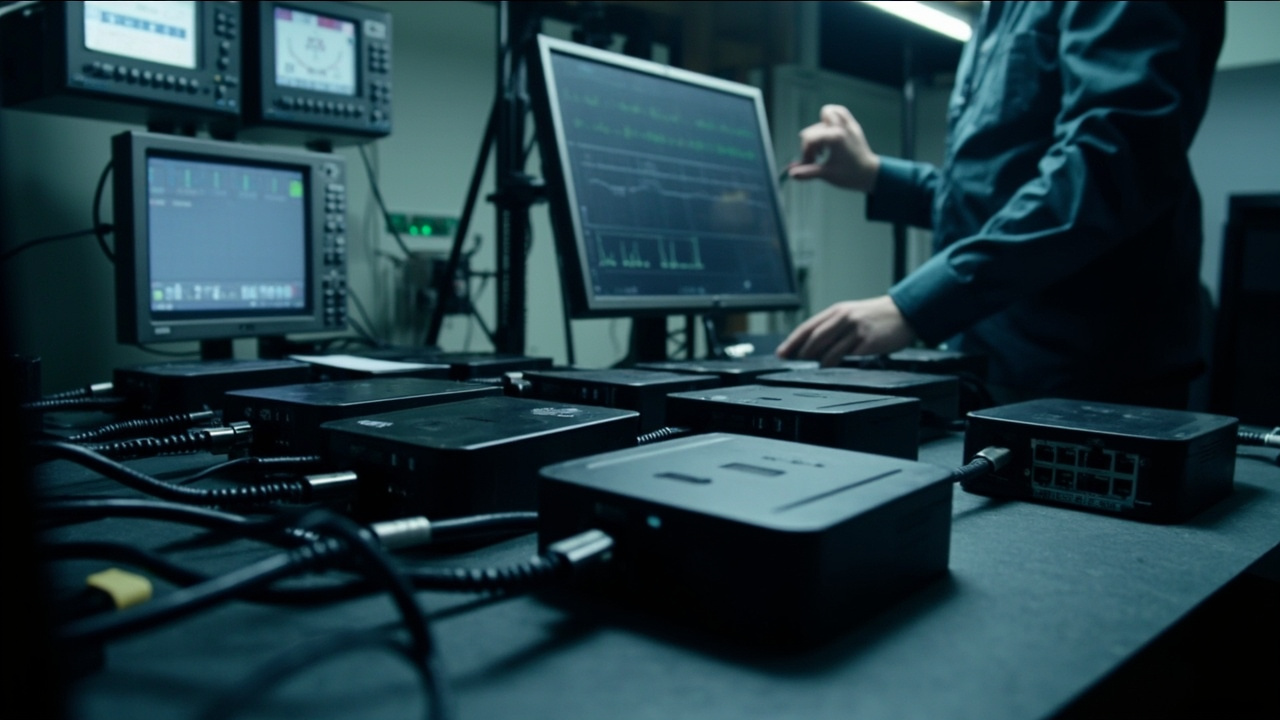
The deployment setting changes the acceptance priority. An operator may place the greatest weight on entitlement renewal, device identity and reboot recovery. An integrator may place it on HDMI interoperability, audio routing and peripheral startup. A venue may require a reset image, audit records and a replacement unit that restores service without manual intervention. These priorities should become separate test cases rather than a single generic “function check.”
Responsibility boundaries need corresponding evidence. If the operator provisions devices, the RFQ should identify the provisioning protocol, identity source and behaviour when a certificate expires. If an integrator owns the image, the agreed handover must identify the image version and checksum. If a venue operates a private app catalogue, the update policy and rollback mechanism should be documented before deployment.
A decision path for the RFQ
A useful RFQ follows the dependency chain: workload, software, media path, network, peripherals, governance and evidence. It prevents a bidder from optimizing headline specifications while omitting the operator’s real operating constraints.
- Name the workload Write “IPTV,” “OTT,” “GMS-certified AOSP,” “white-label,” “premium UHD” or “cloud-gaming” as the deployment target, and identify the service owner.
- Freeze the software baseline Specify the exact OS designation, build approval process, middleware version, signing method, provisioning flow and update responsibility.
- Define the content matrix List each codec, profile, level, resolution, frame rate and output path that must pass, including DRM and HDCP where applicable.
- Define connectivity and peripherals State Ethernet speed, Wi-Fi deployment expectations, Bluetooth use, USB count and type, audio output and display interfaces.
- Select the production configuration Lock the exact model, storage option and optional interfaces into the quotation instead of referring only to a product family.
- Attach acceptance evidence Require sample-level functional results, configuration audit records, inspection records and a defined pilot approval gate.
- Define change control State how SoC, OS, PCB, firmware, packaging or supplier changes enter review before shipment.
The RFQ can use concise specification lines such as:
“Device model: exact DataMax SKU; storage configuration: exact GB allocation; OS and middleware build identifiers: required in quotation. Ethernet: RJ45 100M or documented optional 1G; Wi-Fi and Bluetooth configuration: stated explicitly. Video acceptance: named codec/profile/level/resolution/frame-rate matrix with test streams and pass criteria. DRM: named implementation and evidence required. Factory records: configuration audit, inspection results and traceability evidence tied to shipment lot.”
“Quotation deviations must be listed as exceptions. Optional means unconfirmed until the supplier identifies the exact SKU suffix, included hardware, firmware behavior and evidence package.”
This approach also gives a reseller or integrator a defensible comparison basis. Model name, exact configuration and evidence requirements travel together. Without that linkage, quotations may appear equivalent even when their network interfaces, certification status or production traceability differ.
Add a deviation schedule to the RFQ. It should have columns for the requested item, offered item, commercial effect, technical effect, evidence required and buyer approval. For example, an offered RJ45 100M interface where the pilot assumed optional 1G is a deviation, not a neutral substitution. Likewise, an optional DRM implementation must be identified by its orderable configuration and evidence.
The RFQ should also define sample governance. Name the sample quantity and purpose, state whether the sample is production-intent, require its configuration record, and connect its serial reference to inspection results. The pilot gate should define permitted deviations and identify who can approve them. That governance clause prevents a successful laboratory sample from becoming an undocumented production reference.
A final RFQ line should govern the android tv box lifecycle: firmware update responsibility, security-patch cadence, image rollback, spare-unit replacement, first-line diagnostics and escalation evidence. The exact cadence and service scope remain buyer decisions, but the responsibility cannot be left implicit in the phrase “operator support.”
The traps in this category
The first trap is treating “operator” as a specification. It describes a relationship to service deployment, but not the features required for that service. A buyer that asks only for an operator-grade android tv box may receive a capable media device with the wrong Ethernet option, incomplete DRM evidence or unsupported middleware integration. The commercial cost is a pilot that stalls while the service owner rediscovers requirements that were never written.
Field trap
Do not compare “4K,” “AV1” or “GMS” as standalone claims. Pair each with profile, level, output mode, OS build and certification scope. A quotation that omits those qualifiers can satisfy the headline while failing the actual stream or approval process.
The second trap is copying the wrong platform data between models. DM21RTD’s supplied facts identify Realtek RTD1325, GMS-certified AOSP and AV1 capability, but do not provide its RAM/ROM, port set or complete DRM configuration. Inheriting those values from DM21P, DM21S or DM21T creates a technical fiction in the tender file.
Field trap
Do not infer “8K” output from broad market wording for DM21T. Its stated output and decode ceiling is 4K, including specific 4K@120 formats. Any display-mode requirement above that limit must be confirmed against the production datasheet before commercial commitment.
Other divergences accumulate around optional interfaces. RJ45 100M is standard on the listed models, while 1G is optional on DM21S and DM21T. Widevine L1 and PlayReady are optional on several configurations, and HDCP 2.2 is optional on DM21P. “Optional” must be converted into an orderable, testable configuration line.
Thermal and codec claims also need test duration. A short demonstration does not establish sustained decode behavior, heat rise, reboots or recovery after a network interruption. Specify the stream, display mode, duration, ambient condition and recovery expectation. Supplier evidence must reveal whether the result came from a production-intent unit or a specially configured laboratory sample.
A related quotation trap is the certification bundle. “GMS-certified AOSP” identifies a route, while the buyer still needs the exact certification scope, software-build relationship, device identifier and evidence validity for the target market. Where facts are absent, as with DM21RTD memory and ports, the procurement team must request the production datasheet instead of allowing the word “certified” to fill the specification gap.
Network claims create another divergence. Ethernet speed, Wi-Fi generation, antenna configuration and Bluetooth version describe different radio and service expectations. A quotation that merely says “Wi-Fi6” leaves the operator’s coverage testing, interference plan and peripheral requirements incomplete. For each android tv box, the RFQ should specify wired or wireless deployment assumptions and identify which interfaces the acceptance test must exercise.
Finally, branding can obscure hardware variance. An OEM may offer several appearances that share a platform while changing enclosure, logo, remote, packaging or regional power supply. The factory record must still identify the functional configuration. A buyer should not infer that two privately labelled units have equivalent RF behaviour, port population or storage merely because their exterior branding matches.
How the factory controls the variable
Factory control begins by converting commercial ambiguity into a frozen build record. DataMax can use that record to connect the ordered configuration, board revision, software image and inspection results. The exact evidence package and responsibility split must be agreed during RFQ; “factory quality” is not a substitute for acceptance criteria.
- Configuration baseline Map the buyer’s SKU, memory, interfaces, OS, middleware and branding requirements to an approved production specification.
- Incoming control Inspect materials and verify critical parts against the approved sourcing list, with lot or batch records retained for the defined traceability scope.
- SMT and AOI Apply surface-mount assembly and automated optical inspection under controlled process parameters, with defects dispositioned through written criteria.
- Functional assembly Check boot, storage, network, HDMI, audio, USB, wireless functions and the customer-approved indicator sequence.
- Dark-room and display test Validate screen output, audio outputs and applicable interfaces under controlled conditions, using defined image and signal checks.
- Aging and stress Exercise thermal, reboot, network, decode and peripheral sequences for the agreed test window, recording exceptions by serial or lot reference.
- Audit trail Archive the approved configuration, inspection results, deviations, firmware identifier and release decision under the agreed retention rule.
SMT/AOI can identify assembly defects, but it cannot prove firmware compatibility. Dark-room checks can verify an image path, but they do not establish secure playback. Aging can reveal instability, but only if the load represents the intended workload. The operator should therefore define a test matrix that combines manufacturing inspection with service-level scenarios.
Request evidence tied to the exact production configuration: approved BOM, hardware revision, firmware checksum, AOI or inspection disposition, aging result, display/audio/network test record, and deviation log. The buyer should receive a sample of the evidence format before the pilot, not after the first shipment.
A factory audit can verify process capability more effectively than a presentation slide. Operators can request a video factory audit through DataMax’s factory quality process and ask for SMT/AOI, dark-room and aging evidence specific to the selected model. The manufacturer profile provides the appropriate starting point for a production discussion, while certification and compliance pages should be used to scope the evidence required from the operator.
The evidence chain should be designed as a retrieval exercise. During preparation, the buyer should be able to connect a sample serial number to its board revision, approved configuration, software identifier, inspection disposition and aging result. For shipment release, the factory should identify exceptions by lot and serial reference. After an escalation, the operator can submit those references without reconstructing the build from memory.
Sampling rules require agreement. If the operator accepts a sample-level display test, production release still needs a documented sample size, selection method and rejection rule. If the factory proposes destructive testing on a small number of units, the buyer should identify whether equivalent evidence comes from non-destructive checks. Neither “100% tested” language nor a generic test report is sufficient without the criteria behind it.
Change control closes the loop. A supplier notification should identify what changed, why it changed, whether the affected android tv box configuration remains orderable and which evidence must be repeated. For OS changes, the approval should cover middleware and DRM behavior. For component substitutions, it should cover electrical, thermal, radio and media-path impact as applicable.
Two routes, one bill of differences
The simplest procurement split is between a sourcing-led route and a factory-type manufacturing route. The former minimizes the factory’s direct responsibility but leaves more interfaces between buyer, supplier and integrator. The latter adds engineering, process control and evidence work but reduces ambiguity about where a failure originates. The editorial chart score quantifies traceability potential, not measured defect performance.
| Dimension | Entry route: sourcing agent or distributor | Commitment route: factory-type OEM/ODM |
|---|---|---|
| Configuration ownership | Buyer often specifies parts and coordinates suppliers | Factory translates the approved specification into a controlled build |
| Software integration | More vendor boundaries between middleware, firmware and hardware | Clearer opportunity to integrate and validate one build |
| Inspection evidence | Availability and consistency vary by supplier | Evidence can be defined against inspection and audit procedures |
| Change control | Multiple parties may change components or firmware | Approved revision and deviation process can be specified |
| Best fit | Small or evaluation-led programs with an internal integration team | Operator deployments needing repeatable production evidence |
Within DataMax’s five models, the hardware selection is a second decision. DM21P fits operator middleware; DM21RTD fits a GMS-certified AOSP requirement; DM21S fits 4K IPTV/OTT white-label deployments; and DM21T fits premium UHD/cloud-gaming requirements. A factory-type program does not remove the need to select one of them against workload, software and interface requirements.
The buyer should compare total program responsibility, not only the unit-level hardware bill. Add certification review, middleware qualification, sample cycles, factory evidence, failure analysis and change-management work to the commercial model. A lower component cost can be offset by integration delays, while a factory-managed program can be less risky once its acceptance criteria are precise.
The entry route fits buyers willing to coordinate the build themselves, maintain configuration records and absorb supplier interfaces. The commitment route fits operator programs that need one factory to connect the ordered configuration, manufacturing records and release decision. Neither route makes an under-specified workload acceptable. A sourcing-led pilot still needs a frozen image and test matrix; a factory-managed program still needs a clear approved specification.
DataMax supports both routes through the supplied product family and manufacturing evidence. The choice should follow the deployment’s control model rather than a generic label. For an operator-managed IPTV deployment, the evidence burden, middleware ownership and fleet recovery requirements usually justify closer factory engagement. For an integrator-led white-label project, DataMax can still provide a controlled platform while allowing the integrator to retain application integration.
To move from comparison to a controlled proposal, email [email protected] with the SKU shortlist, target-market certification requirement, middleware and DRM checklist, required port and storage configuration, and requested inspection and aging evidence. DataMax can then map the RFQ to the appropriate product documents, samples and factory evidence.
Further reading
- Guide android tv box for isps
- DTS:X Android TV box guide
- DRM compliance solutions
- Telecom solutions
- Amlogic Android TV boxes
- DataMax DM21P specifications and fit
- DataMax DM21RTD specifications and fit
FAQ
Does operator tier mean the device includes an IPTV application?
No. Operator tier describes the intended deployment and supporting program. The application, middleware, provisioning, DRM integration and update responsibilities must each be specified. The hardware can support the workload without owning the complete IPTV service architecture.
Which model is appropriate for a GMS-certified AOSP project?
DM21RTD is the stated fit for operators or retailers requiring a Google-certified non-Google-TV configuration. Its SoC is Realtek RTD1325, with GMS-certified AOSP and AV1 capability. Memory, ports and complete DRM details must be confirmed against the production datasheet.
Is 4K support sufficient for acceptance testing?
No. Acceptance should identify codec, profile, level, resolution, frame rate, display mode and duration. The selected stream must be delivered through the required network and output path. A short codec demonstration does not establish sustained stability or recovery behavior.
Should an operator select optional 1G Ethernet?
Specify the requirement first. DM21S and DM21T list RJ45 100M with 1G optional. The RFQ should require 1G as an identified orderable configuration if the access network or service profile depends on it, rather than treating “optional” as included.
What factory evidence should accompany an operator program?
Request the approved configuration, inspection and testing results, firmware identifier, aging evidence, defect dispositions and change-control process tied to the production build. Evidence format and retention rules should be agreed before the pilot so that shipment inspection, laboratory qualification and production verification use the same baseline.
Can one model cover middleware, white-label and cloud-gaming needs?
A platform may be evaluated for several workloads, but the production configuration and acceptance criteria differ. DM21P targets operator middleware, DM21S targets 4K IPTV/OTT white-label, and DM21T targets premium UHD/cloud-gaming requirements. The RFQ should select the required fit instead of combining all workloads into one unqualified device request.


