
Executive Summary for Edge-Computing Procurement
Industrial edge-computing procurement should be treated as a workload, thermal, software-support and lifecycle allocation exercise rather than a processor ranking exercise. A 4-channel 1080p AV-over-IP endpoint, an 8K30 encoder and a 6 TOPS machine-learning accelerator impose different constraints on memory bandwidth, media engines, network design and enclosure dissipation. DataMax provides two directly relevant production products for this evaluation: the RK3568 Edge Computing Box for Video Conferencing (Android/Linux) and the DM16N RK3588 Edge-Computing AV-over-IP Ecosystem Hardware Engine for Enterprise Meeting Solution. Detailed RK3568 specifications, Ethernet count, ports, memory options and environmental limits are not present in the supplied product record and must be confirmed against the production datasheet.
- Select by measured workload: document concurrent streams, codec, resolution, frame rate, GPU utilization, NPU model size and required headroom before choosing a platform.
- Use the DM16N where the specified media engine matters: the RK3588 platform specifies a 6 TOPS NPU, 8K media decode/encode capabilities, one HDMI input, one HDMI output and Gigabit Ethernet with PoE support.
- Keep operating-system selection explicit: DM16N production data lists AOSP Android 14 and Debian 10.6; the RK3568 product title identifies Android/Linux, but the exact Linux distribution and release require confirmation.
- Separate published capability from qualified performance: codec maxima are component-level claims, not guaranteed simultaneous-channel or thermal results.
- Design the network, power and recovery model with the device: VLAN separation, QoS, watchdog behavior, brownout handling, image rollback and field replacement determine operational reliability.
- Demand project evidence before volume commitment: require certification reports, PCB/BSP revision control, AQL results, PCN process, patch delivery and lifecycle commitments as contract deliverables.
Edge-Computing Use Cases and Acceptance Boundaries
The term “edge” covers several materially different processing chains. Procurement must specify whether the device terminates one media stream, aggregates multiple feeds, executes control logic, or runs neural inference. Each role carries a different failure impact and therefore a different acceptance test.
| Use case | Edge processing function | Primary sizing inputs | Principal deployment risk |
|---|---|---|---|
| AV-over-IP or SDVoE-class media processing | Encode, decode, multicast, transform or route audiovisual streams | Input/output stream count, codec, resolution, frame rate, pixel format, synchronized latency | Headroom claims may not survive full thermal load or simultaneous encoding and decoding |
| Video-conferencing room endpoint | Camera ingest, echo processing, participant UI, meeting-room media bridging | Participants, camera count, display resolution, audio channels, privacy requirements | Microphone/camera integration and long-duration thermal stability |
| Industrial automation gateway | Protocol conversion, telemetry collection, local buffering, deterministic control | Sensor rate, protocol mix, polling interval, retention, control-loop latency | Non-real-time OS scheduling and network jitter |
| AI inference gateway | Video or sensor preprocessing and local classification | Model architecture, precision, objects per second, batch size, preprocessing cost | NPU operator compatibility and CPU-to-NPU data-transfer overhead |
| Digital-signage player | Playback, web rendering, device control and telemetry | Number of displays, looped media, content type, OTA bandwidth | Flash endurance, app compatibility and unattended recovery |
For AV-over-IP, specify whether the unit is a media endpoint, a gateway or an orchestration node. For industrial control, distinguish advisory edge analytics from a safety-certified control path; ordinary commercial edge hardware should not be placed inside a safety-rated loop unless the applicable functional-safety evidence is supplied. For AI, TOPS is only a capacity indicator: throughput depends on model architecture, supported operators, quantization, preprocessing, memory bandwidth and device utilization.

RK3568 Versus RK3588-Class Platform Architecture
The comparison below is limited to verified DataMax product data. A platform-to-platform comparison must not imply identical port maps, thermal ratings or validated performance for products whose supplied records are incomplete.
| Parameter | RK3568 Edge Computing Box for Video Conferencing | DataMax DM16N RK3588 AV-over-IP Engine | Procurement interpretation |
|---|---|---|---|
| Product record | Product #263 | Product #266 | Both are directly relevant edge platforms, but only DM16N has a detailed supplied specification |
| SoC / platform | RK3568; CPU, GPU and NPU details not supplied | RK3588; quad-core ARM Cortex-A76 plus quad-core ARM Cortex-A55 | Do not attach RK3568 TOPS or media claims without the production datasheet |
| NPU | Not supplied | 6 TOPS AI accelerator | Qualify supported SDKs, operators, precision and model throughput |
| GPU | Not supplied | ARM Mali-G610 MP4; OpenGL ES 3.2, OpenCL 2.2 and Vulkan 1.2 stated | Graphics API availability does not by itself establish application performance |
| Memory | Not supplied | LPDDR4X 8GB; 2GB, 3GB and 4GB options stated | Memory configuration must match the ordered SKU |
| Storage | Not supplied | eMMC 64GB; 8GB, 16GB, 32GB and 64GB stated | Confirm endurance, partition layout and recovery requirements |
| OS | Android/Linux identified by product title | AOSP Android 14 / Debian 10.6 | Exact RK3568 Linux release and BSP baseline are not supplied |
| HDMI | Not supplied | 1 input, 1 output | HDMI capture and display paths should be tested separately |
| Ethernet | Not supplied | 1 × RJ45, 1000M LAN, PoE supported | PoE standard, power budget and negotiation are not stated |
| USB / Type-C | Not supplied | 2 × USB 2.0 host; 1 × Type-C with DP 1.4 | USB power delivery and device modes are not specified |
| Wireless | Not supplied | AP6275PR3 dual-band 2.4GHz/5GHz Wi-Fi 6 and Bluetooth 5.0 | Industrial deployments should normally use wired networking |
| Dimensions | Not supplied | 135 × 135 × 32 mm | Confirm mounting and airflow clearance against mechanical drawing |

Media-engine envelope and simultaneous work
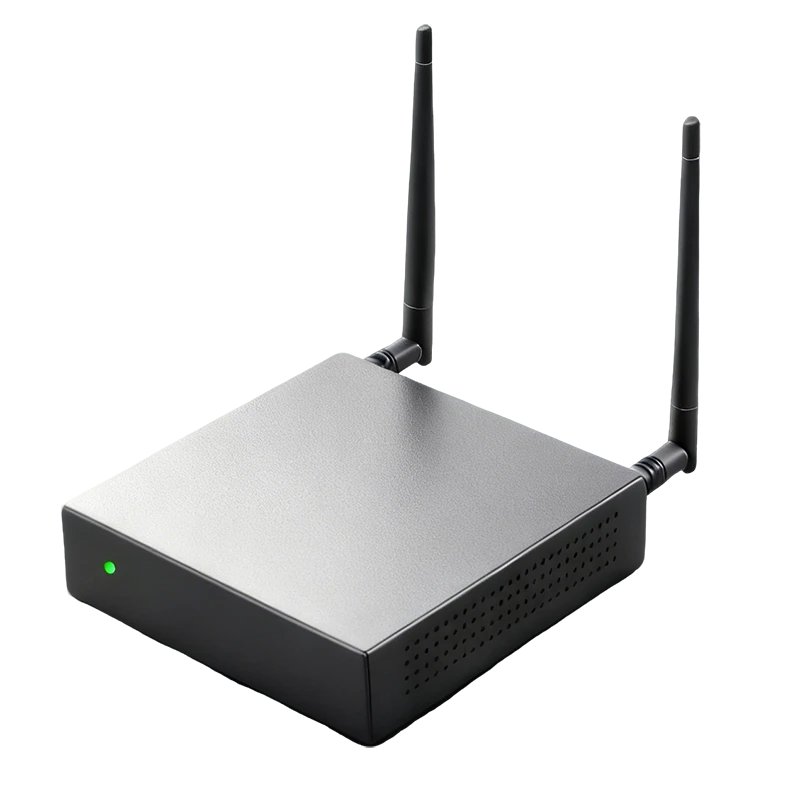
The DM16N specification states H.265/VP9 decoding to 8K60, H.264 decoding to 8K30 and AV1 decoding to 4K60. Encoding is specified as real-time H.265/H.264 to 8K30, with lower-resolution multi-channel parallel encoding. These values must not be interpreted as simultaneous 8K streams or as guaranteed application throughput. Qualification should establish decode-plus-encode combinations, pixel rates, GPU/NPU contention, frame duplication behavior, encoder latency and stability over the target duty cycle.

Hardware Selection Method and Worked Sizing Example
Start with a workload envelope, not an SoC name. For media, calculate aggregate pixels per second using pixels/second = streams × width × height × frames per second × 1.10 overhead factor. The 10% factor is an illustrative sizing allowance for overlays, duplicated frames and non-media work; validate it against the application. For inference, record model size, input dimensions, batch size, precision and target latency because two models with the same theoretical TOPS requirement can deliver substantially different results.
A worked example for a meeting-room AV engine specifies 4 concurrent 1080p60 H.265 inputs, 2 independent 1080p60 H.264 outputs and one local AI classification path. The media input requirement is 4 × 1920 × 1080 × 60 × 1.10 = approximately 547 million pixels/s; the output requirement is approximately 273 million pixels/s. Combined media activity is approximately 820 million pixels/s before compositor, UI, camera and inference overhead. On the verified DM16N, the 6 TOPS NPU, 8GB LPDDR4X and stated media engines make this a candidate, but neither the SoC marketing limits nor the 6 TOPS figure establish completed-stream capacity.
- Capture the workload: record 4 × 1080p60 H.265 inputs, 2 × 1080p60 H.264 outputs, 1 AI path, 24-hour operation and a maximum 250 ms glass-to-glass latency target.
- Apply sustained-load tests: decode all 4 inputs while encoding 2 outputs and running the selected model continuously for 72 hours.
- Add recovery tests: remove and restore Ethernet, cycle input sources, restart the application and simulate power loss during an OTA.
- Set acceptance limits: zero lost output frames, no unplanned restarts, latency within the agreed 250 ms envelope and CPU/GPU/NPU memory headroom above 20%.
- Reserve expansion: retain at least 20% CPU, memory and storage headroom for security updates and model changes; treat this as an illustrative planning reserve.
| Sizing dimension | Worked example | Qualification method | Decision threshold |
|---|---|---|---|
| Concurrent media | 4 inputs and 2 outputs at 1080p60 | End-to-end stream generator and analyzer | No frame loss during 72-hour test |
| AI | 1 classification model | Model-specific latency and objects/s benchmark | Target latency met at 70% device load |
| Memory | DM16N 8GB configuration | Peak RSS, DMA buffers and compositor memory | At least 20% headroom after 72 hours |
| Storage | DM16N eMMC 64GB configuration | Log, cache and OTA-cycle endurance review | Three OTA cycles complete with rollback |
| Thermal | Closed enclosure, 24/7 duty cycle | Thermal chamber at maximum qualified ambient | No throttling-triggered stream loss |
Memory, Storage, Thermal Envelope and Duty Cycle
Memory sizing must include the OS, compositor, codec frames, model weights, DMA buffers, logging and update staging. A 6 TOPS NPU does not remove the need for RAM: unquantized weights, image batches and preprocessing buffers can dominate memory consumption. For the DM16N, 2GB, 3GB, 4GB and 8GB LPDDR4X options are listed, while eMMC capacities of 8GB, 16GB, 32GB and 64GB are stated. These are configuration choices, not proof that every combination supports the 4-input/2-output workload.
- RAM rule: peak allocation must remain below 80% of installed memory during the qualified workload; this is an illustrative engineering limit requiring project approval.
- Storage rule: reserve at least twice the active OS image plus update payload and recovery partition; confirm exact partition sizes in the BSP release notes.
- eMMC rule: request endurance data in write cycles or terabytes written, including the qualification methodology and test conditions.
- Thermal rule: obtain minimum/maximum operating temperature, storage temperature and relative-humidity limits from the production datasheet; neither DM16N nor RK3568 records supplied here contain them.
- Duty-cycle rule: distinguish 24/7 powered operation from 24/7 continuous compute. Run the media and AI load for at least 72 hours and then 500 hours for the extended qualification phase.
- Enclosure rule: validate airflow at the installed orientation, with the final filter, bracket, cable bundle and ambient temperature; free-air benchmarks do not represent enclosure performance.
Power quality can cause more field failures than processor saturation. The DM16N is specified for 12V/2A, which indicates a 24 W nominal input rating, although actual consumption and peak adapter margin are not supplied. The acceptance procedure should use a programmable source to record minimum, typical and maximum current, verify the adapter’s voltage regulation and verify behavior during input interruption. Brownout behavior, restart policy, capacitor hold-up and safe output state must be specified for the connected equipment.
Interfaces, Mechanical Integration and Expansion
Interface sufficiency depends on cable routing and serviceability, not connector count. The DM16N provides one RJ45 Gigabit LAN port with PoE support, one HDMI input, one HDMI output, two USB 2.0 host ports and one Type-C port with DisplayPort 1.4. No serial, GPIO, OPS slot, storage expansion, second Ethernet or DIN/VESA mounting detail is present in the supplied record. These omissions require confirmation against the production datasheet and mechanical drawing rather than inference from the RK3588 platform.
| Integration layer | Verified DM16N fact | Project qualification | Change-control requirement |
|---|---|---|---|
| Network | 1 × RJ45, 1000M, PoE supported | Link negotiation, LLDP, packet loss, VLAN tagging and PoE restart behavior | NIC driver and bootloader revision |
| Display | HDMI input ×1 and output ×1 | EDID handling, hot-plug, scaling, HDR/HDCP and audio extraction | Firmware and media configuration |
| USB | 2 × USB 2.0 host | Camera, UVC, storage and sustained current test | USB power-current policy |
| Type-C | 1 × Type-C with DP1.4 | Display Alt Mode, peripheral mode and cable compatibility | Type-C PHY and BSP version |
| Wireless | Wi-Fi 6 dual-band and Bluetooth 5.0 | Regulatory use, antenna path and coexistence | Module and antenna configuration |
| Mechanical | 135 × 135 × 32 mm | Mounting pattern, clearance and cable bend radius | Drawing revision and tooling |
For control applications, a USB-to-serial adapter is not an equivalent to a native UART. Native serial requirements should include logic levels, RX/TX direction, RS-232/RS-485 transceiver, isolation, ESD rating, connector pinout and boot console access. Likewise, GPIO timing must be validated against the BSP rather than assumed from the SoC.
BSP, Operating Systems, OTA and Codec Licensing
The DM16N’s listed software platforms are AOSP Android 14 and Debian 10.6. AOSP Android provides an Android application framework and device ecosystem, while Debian 10.6 is a Linux distribution requiring a separately qualified BSP, kernel and hardware-enablement package. The RK3568 product title identifies Android/Linux, but the supplied data does not state versions; confirm against the production datasheet. The RK3399 development board is a separate product and must not be represented as an edge-box alternative.
- BSP baseline: request the exact kernel, bootloader, device-tree, U-Boot, Android security patch level and Debian package revision for each shipped unit.
- Driver completeness: test Ethernet, Wi-Fi, Bluetooth, HDMI input/output, Type-C DP, USB, audio, watchdog, GPIO, serial and any expansion interface used by the project.
- OTA architecture: define package signing, transport, staging, atomic application, rollback trigger and power-loss recovery before deployment.
- SDK access: obtain SDK, API documentation, toolchain, license model, sample code and binary compatibility commitments; source availability does not by itself guarantee long-term support.
- Codec licensing: identify the royalty exposure for H.264, H.265, AV1, VP9 and MPEG-2 and confirm whether the supplied decoder/encoder is hardware-only or includes a production license.
- Remote management: require inventory, health telemetry, log collection, configuration change control, certificate rotation, role-based access and health-event notification.
- Security hardening: disable unused services, rotate default credentials, enforce signed boot or verified boot where available, isolate tenants and maintain an SBOM.
Android 14 compliance must not be inferred merely from its use. A production Android device may be subject to Google Mobile Services, Android Enterprise, Widevine and content-owner requirements. If the product is a development board rather than a certified TV or mobile device, Google EDLA claims must be verified against the exact model and certification record. Debian 10.6 is an identified distribution baseline; its security-maintenance status and vendor patch responsibility require review at quotation and production-release gates.
Reliability, 24/7 Operation, Spares and Observability
Reliability evidence should connect component stress to deployed failure mechanisms. Request MTBF calculation method, mission profile, confidence level and whether the result is predicted, simulation-derived or field-derived. For industrial use, also request burn-in, temperature cycling, vibration, shock, humidity and long-duration media tests. None of those quantitative values are present in the supplied product records.
| Reliability control | Acceptance evidence | Operational metric | Escalation threshold |
|---|---|---|---|
| Watchdog | Forced process and kernel-hang recovery on the production BSP | Recovery time and restart count | Any repeated restart |
| Power protection | Input interruption at minimum, nominal and maximum load | Unexpected reboot and output-state behavior | Corrupt state or unsafe output |
| Thermal stability | 72-hour chamber run followed by 500-hour extended run | Frame loss, throttling and temperature | Any stream interruption |
| Storage endurance | Write amplification and lifecycle test for the exact eMMC SKU | Free space and write-rate trend | Projected threshold reached |
| Field recovery | Golden image, configuration restore and rollback procedure | Mean time to repair | Repair exceeds agreed SLA |
A spares strategy should use the exact production configuration, not a generic sample. Quantities can be derived from installed-base failure history once it exists; before that, reserve validated units for the headend, integration lab and priority sites. Record serial number, PCB revision, bootloader, BSP, image hash and accessory set so a replacement restores service without an uncontrolled software drift.
- Stage: deploy one golden image to all spares and verify the hardware/BSP combination.
- Recover: replace the failed unit, apply the approved image and restore only validated configuration.
- Validate: test media paths, I/O, network, application, certificate and thermal alarm state.
- Return: quarantine the failed unit with logs and preserve evidence for root-cause analysis.
- Update: revise the spare pool and deployment records after each firmware or hardware change.
Certification, Compliance and OEM Customization Evidence
Certification applies to the final electrical, mechanical and software configuration, including the enclosure, power supply, antenna, OS image and enabled radio functions. A chip-level certificate does not certify the finished product. DataMax’s supplied data identifies the RK3399 product as a development board with Google EDLA wording, but it does not provide supporting report identifiers for the RK3568, DM16N or RK3399. Obtain documentary evidence rather than relying on a product-page claim.
- Product safety: request applicable CB or regional reports, test-lab identity, report number, model coverage and validity dates.
- EMC: request emissions and immunity reports covering the target market, port configuration and representative cable set.
- Radio: request FCC/IC/EU radio reports and approvals where Wi-Fi 6 or Bluetooth 5.0 is enabled in the shipped configuration.
- Android: request GMS or non-GMS status, Android Enterprise, EDLA or other device-program documentation as applicable; do not infer it from AOSP Android 14.
- DRM: request Widevine security-level documentation, key-delivery setup and content-owner approvals where protected playback is required; L1 and L3 are distinct deployment conditions and cannot be inferred from codec support.
- Display content: request HDCP 2.2/2.3 compliance evidence and cable/adapter restrictions for protected commercial video paths.
- Environmental: request operating-temperature, humidity, shock, vibration and EMC test reports rather than inferring “industrial” from a catalog description.
OEM/ODM customization should be governed by a controlled baseline that includes schematic and PCB revision, mechanical drawing, BOM alternates, Android/Debian image hash, drivers, certificates, serial-number rules, packaging, test fixtures and approved accessories. Material or layout changes require engineering review and must enter the PCN process with advance notice, affected serial/lot range, risk assessment, validation evidence and field-upgrade instructions.
AQL, PCN, Lifecycle and Supply-Chain Controls
Quality planning should connect supplier inspection with actual field failure modes. Electrical functional tests alone will not detect connector insertion weakness, antenna-cable variation, thermal instability or storage wear. The inspection plan should include appearance, dimensions, connector insertion, port function, display, network, audio, storage, thermal sampling, firmware identity and packaging.
| Stage | Controlled artifact | Evidence | Release gate |
|---|---|---|---|
| EVT | Schematic, PCB, BOM and BSP | Design review, signal integrity, thermal estimate | Prototype function and risk closure |
| DVT | Production-intent hardware and software | 72-hour load, environmental, EMC pre-scan, OTA recovery | Validation report accepted |
| PVT | Production tools and line process | Work instructions, golden units, fixture MSA, process capability | Operator qualification complete |
| Mass production | Locked BOM, image and test limits | AQL record, serial traceability and audit trail | Lot release and exception review |
| Field support | Spare pool, RMA evidence and PCN database | Failure Pareto, MTTR and patch status | Corrective-action review |
The AQL plan should define defect classes, sample plan, lot size, reinspection rules and disposition authority for critical, major and minor defects. AQL is not a substitute for 100% testing of safety- or functional-critical items; determine those critical checks against the control plan. Confirm proposed AQL levels in the quality agreement rather than treating an industry default as a contractual requirement.
Lifecycle commitments should state the intended support period, end-of-life notice interval, last-time-buy policy, firmware security-patch period, BSP source release and long-term storage availability. These are contract terms rather than product claims. The operating-cost model should include unit acquisition, installation, switch ports, PoE or AC infrastructure, enclosures, licenses, monitoring, spare units, field labor, RMA logistics, energy and eventual replacement; no currency figures are required because quotation depends on configuration and volume.
Deployment Architecture, QoS and VLAN Segmentation
A typical headend/network/edge/display architecture separates five planes: management, media, device control, telemetry and application data. Management traffic carries firmware, logs and configuration; media traffic carries encoded video and audio; control traffic carries commands and acknowledgements; telemetry carries health data; application traffic carries conferencing or AI-specific content. Combining these planes on one VLAN increases failure impact and complicates QoS policy.

| Plane | Example endpoint | VLAN / ACL intent | QoS treatment |
|---|---|---|---|
| Media | Headend to DM16N to display | Dedicated VLAN; permit only media addresses and required control ports | Priority class with policed bandwidth and frame-loss alarm |
| Management | Controller, edge device, monitoring server | Management VLAN; ACL from authorized jump hosts | Best effort with protected control reserve |
| Device control | Conferencing control service | Separate application VLAN or VRF where supported | Strict priority only after media rules are validated |
| AI data | Camera or sensor to inference gateway | Segmented sensor/data VLAN; restrict east-west traffic | Rate-limit noncritical uploads; preserve inference path |
| Telemetry | Agent to observability platform | Telemetry VLAN; outbound-only agent path | Low-rate shaping with local buffering |
For switched AV transport, use IGMP snooping and a multicast querier where required by the selected protocol; document whether the DM16N application uses multicast, unicast or discovery-assisted transport. Avoid blanket “priority” marking. A practical policy assigns an explicit DSCP or 802.1p class, defines an access-policy target, bandwidth ceiling and observation threshold, then confirms behavior on the actual switch. If the site uses SDVoE-class infrastructure, verify bridge, multicast, redundancy and controller compatibility through the protocol vendor’s approved test matrix.
For the worked 4-input/2-output example, determine measured input bitrate from encoded streams, not raw pixels. The design should reserve media bandwidth at peak aggregate bitrate, allow signaling overhead, and separate it from a 1 Gbit/s Ethernet capacity calculation. Because DM16N has one Gigabit Ethernet port in the supplied data, traffic sharing, multicast behavior and any Type-C or USB network path require measured testing. A second NIC cannot be assumed.
Deployment Profiles by Use Case
AV-over-IP media edge
Conditions: 4 × 1080p60 H.265 inputs, 2 × 1080p60 H.264 outputs, synchronized playback and a 250 ms maximum glass-to-glass target. Architecture: one DM16N per room or wall, Ethernet media VLAN, separate management VLAN, multicast or unicast transport selected by the control platform, and central orchestration with local fallback. Risks: one-NIC saturation, switch IGMP configuration errors, undocumented licensing exposure, simultaneous codec peaks and HDMI EDID incompatibility.
Video-conferencing room
Conditions: 1 HDMI input, 1 HDMI output, camera through USB, 1080p60 meeting media and privacy-controlled local processing. Architecture: DM16N beside the display, isolated conferencing VLAN, wired network, separate management path and a room controller with explicit state recovery. Risks: camera UVC compatibility, acoustic echo from fan or chassis noise, Android application compatibility and privacy data exposure.
Industrial automation gateway
Conditions: serial or Ethernet sensors, 100 ms polling class, local buffering during WAN loss and deterministic local decisions. Architecture: Linux-class edge unit with protocol-specific I/O, isolated OT network, local historian or broker, signed configuration and a separate safety controller for safety functions. Risks: general-purpose OS jitter, brownout corruption, undocumented GPIO behavior and network storms.
AI inference gateway
Conditions: one or more cameras, fixed model, target latency, no upstream dependency and 24/7 operation. Architecture: DM16N NPU path where the model is compiler-supported, local preprocessing, model signature verification, result buffering and telemetry counters. Risks: unsupported operators, FP16/INT8 conversion error, CPU preprocessing bottleneck, thermal throttling and model drift.
Digital-signage player
Conditions: 24/7 playback, local cached content, remote fleet management and controlled update windows. Architecture: Android or Linux player with watchdog, signed application packages, A/B-style rollback where supported and telemetry for screen and storage health. Risks: flash endurance, DRM entitlement failure, unintended auto-update, certificate expiry and kiosk-mode bypass.
Weighted RFP Scoring and Ordered Selection Process
The RFP should require evidence rather than comparative adjectives. Weightings are an illustrative starting structure; the buyer should adjust them to the deployment risk. A score of 1 means unsupported or failed, 3 means qualified with limited evidence, and 5 means production-qualified and contractually controlled.
| Criterion | Weight | Evidence requested | Scoring rule |
|---|---|---|---|
| Workload fit | 20% | Sustained benchmark on the target stream and model mix | 5 only if the qualified workload passes with stated headroom |
| Thermal and reliability | 15% | Environmental reports, 72-hour test and MTBF method | Deduct for missing environmental limits |
| Software and BSP | 15% | Versioned BSP, SDK, patch and rollback evidence | Deduct for source-only delivery without binaries |
| I/O and mechanical fit | 10% | Port map, drawing, cable and mounting qualification | Fail for missing required native interfaces |
| Network and media | 10% | QoS, multicast, EDID and sustained stream results | Deduct for untested simultaneous paths |
| Security | 10% | SBOM, signing, secure-boot evidence and access control | Fail for unmanaged default credentials |
| Certification | 5% | Final-configuration reports with valid model coverage | No credit for generic SoC certificates |
| Lifecycle and supply | 10% | PCN, EOL, patch, BOM continuity and spare policy | Deduct for uncommitted notice periods |
| Commercial compliance | 5% | Costed BOM, tooling, warranty and delivery controls | Score complete and auditable responses |
- Reject mandatory gaps: eliminate any bid lacking the required ports, OS baseline, safety evidence or production-test method.
- Test the target workload: score sustained media, AI and I/O results rather than advertised maximums.
- Score lifecycle controls: include BSP, patch, PCN, EOL, spares and traceability.
- Normalize the evidence: compare bids against the same workload, accessories, firmware baseline and test duration.
- Select conditionally: name any open validation item, owner and deadline in the award record.
Laboratory Acceptance and Production QC
Acceptance should use production-intent hardware, the nominated BOM, approved power adapter and the exact release image. Each result must record serial number, PCB revision, BSP hash, accessory and test duration. A pass at room temperature does not qualify the deployed temperature range.
| Test | Procedure | Pass criterion | Evidence |
|---|---|---|---|
| Boot and identity | Cold boot 20 times; verify model, serial, revision and image signature | 20/20 boots; identity matches approved configuration | Console and serial log |
| Media endurance | Run the agreed stream matrix for 72 hours with encoded output capture | No unplanned restart or decoder error; latency within limit | Media analyzer and device telemetry |
| AI performance | Run production model at target input rate for 8 hours | Latency and throughput meet the signed specification | Inference benchmark and thermal log |
| Thermal | Run at maximum qualified ambient and worst-case orientation | No throttling-caused loss or shutdown | Continuous temperature and utilization logs |
| Ethernet | Test link rates, VLAN tags, multicast, packet loss and 24-hour utilization | No unexpected link reset; QoS behavior matches policy | Switch and packet-capture logs |
| HDMI | Cycle hot-plug, EDID, protected and unprotected content | Stable output and defined unsupported-format behavior | Capture images and error log |
| USB / Type-C | Connect each approved peripheral; repeat 100 insertions | All functions remain operational | Functional report |
| Power loss | Interrupt input during streaming and OTA at varied phases | No corruption; safe restart and defined output state | Power and application logs |
| OTA rollback | Perform 3 update cycles, including forced failure | Automatic recovery to approved image | Version and recovery logs |
| Security | Verify default credentials, ports, certificates and privileged access | No default credential; only approved services exposed | Security scan and configuration export |
- 100% checks: serial identity, display output, network link, approved image and packaging are candidates after a control-plan review.
- Sampling: use a documented AQL plan for noncritical appearance and dimensional checks with defined rejection and reinspection rules.
- Burn-in: retain serial-level results from the first production lots until field data supports a change.
- Golden unit: protect one fully qualified configuration and record every change to its BOM, image or test fixture.
Field Troubleshooting and Escalation
Troubleshooting should preserve evidence before changing configuration. Capture the device timestamp, logs, network counters, thermal data, image hash and recent configuration change. Replace one variable at a time and retain the failed unit when it may reveal a hardware defect.
| Symptom | First checks | Likely isolation | Escalate when |
|---|---|---|---|
| Intermittent video loss | Link counters, IGMP state, decoder errors, temperature and PSU current | Switch multicast path, media process, thermal throttling or power | Loss repeats at controlled load |
| No network link | NIC LED, negotiated rate, cable, VLAN and PoE negotiation | Physical layer, switch port, PoE or NIC driver | Link fails across known-good cabling |
| AI model stalls | Operator compatibility, memory, temperature, CPU preprocessing and NPU utilization | Model conversion, runtime, memory or thermal limit | Logs show device fault rather than input mismatch |
| No HDMI output | Input signal, EDID, cable, display power and app route | Source, handshake, display or media configuration | Signal works on the golden unit |
| Device reboots | Reset cause, watchdog event, power interruption and storage errors | Brownout, kernel fault, watchdog or storage | Reboot repeats without power disturbance |
| OTA fails | Free space, signature, network path, battery/UPS state and rollback partition | Package, transport, storage or recovery partition | Golden unit cannot reproduce recovery |
| High temperature | Ambient, fan status, filter, orientation and CPU/GPU/NPU load | Airflow, enclosure, fan or sustained compute | Temperature exceeds the qualified limit |
| Management loss | VLAN, ACL, certificate, agent status and management-plane congestion | Network policy, agent, certificate or platform fault | Management traffic exceeds planned load |
- Capture: save logs, counters, screenshots and the current configuration.
- Compare: test the same media, power and network path on a qualified golden unit.
- Isolate: replace only the cable, network path, storage or image one variable at a time.
- Escalate: submit a reproducible bundle containing fault time, serial, revisions, logs, topology and thermal data.
Expert FAQ
Is RK3568 sufficient for industrial AV-over-IP?
It may be sufficient for a defined low-channel workload, but the supplied RK3568 record does not include stream limits, TOPS, Ethernet count, HDMI configuration or thermal data. Require a sustained test using the actual codec, resolution and channel count before deciding against RK3588.
Does a 6 TOPS NPU guarantee six TOPS of application performance?
No. The DM16N specification lists a 6 TOPS accelerator, but application throughput depends on precision, supported operators, batching, preprocessing, memory transfers and concurrent media work. Benchmark the production model on the production image.
When should AOSP Android 14 be selected instead of Debian 10.6?
Select AOSP Android 14 when the application depends on Android framework behavior, camera/display APIs or Android-specific management. Select Debian 10.6 when the application is a Linux service or industrial middleware stack. Both choices require a qualified BSP, security process and recovery design.
Is the DM16N suitable for PoE deployment?
The supplied data states Gigabit LAN with PoE support, but does not identify the PoE standard, power budget, input-voltage tolerance or adapter behavior. Obtain the production electrical specification and test startup, reboot and maximum-load power delivery before deployment.
Can either product be described as industrial-temperature-rated?
Not from the supplied records. Operating-temperature and environmental-test values are missing, so “industrial” should not be used as a substitute for a rated range. Require the production datasheet and environmental report for the exact SKU.
What evidence supports 24/7 operation?
Request a 72-hour minimum sustained workload test, a longer extended-life run, watchdog and power-loss results, eMMC endurance data and field-failure statistics. The media or NPU maximum specification alone is not evidence of continuous operation.
What should an OEM customization package contain?
It should contain the controlled schematic and PCB revisions, approved BOM and alternatives, mechanical drawings, BSP and image hashes, driver list, certifications, packaging, test fixtures, golden units, serial rules, PCN contacts and warranty/RMA procedures.
Should AV media and management use one VLAN?
No. Separate media, management, control, telemetry and AI-data planes, then permit only required flows with ACLs. Assign QoS based on measured bitrate and latency rather than marking all real-time traffic as highest priority.
Engineering Consultation and RFQ
For an edge-box RFQ, provide the target workload, stream and model details, interface list, OS preference, environmental limits, networking topology, required certifications, lifecycle period and proposed deployment volume. DataMax engineering can then map those constraints to a controlled hardware and BSP configuration, identify validation gaps and define a production acceptance plan. Request an engineering consultation and scoped RFQ without assuming that unverified specifications or generic platform claims meet the project requirements.