Why installed UST selection differs from home-projector buying
Installed ultra short throw, or UST, selection is a room-performance and lifecycle exercise rather than a resolution-led consumer comparison. A nominal “short distance” does not establish UST capability: the supplied DataMax models specify projection ratios of 1.2:1 or 1.35:1 and minimum distances of 1.15 m, 1.2 m or 1.26 m. These figures are not consistent with the few-inch placement often associated with UST advertising. Procurement must therefore treat each published projection ratio, distance and image-size range as the controlling geometry until a current optical drawing is supplied.
An installed project adds 4 variables absent from most home buying guides: maintained ambient light, viewing-angle uniformity, screen gain and reflectance, duty cycle, and service access. A 1,000 ANSI-lumen unit produces approximately one third of the light of a 3,000-ANSI-lumen unit, but its adequacy depends on surface area, room illuminance, screen gain and required contrast. Commercial buyers should also reserve ceiling and furniture clearance, cable routes, ventilation, wall loading, acoustics, PMS control, network security and replacement strategy.
- Geometry first: calculate throw distance, screen diagonal, cabinet footprint and installation tolerance before comparing brightness.
- Photometry second: use ANSI lumens, screen gain, measured room illuminance and application-specific contrast targets.
- Platform third: map Google TV certification, Android version, DRM, content launch, OTA and MDM to the service model.
- Lifecycle fourth: model light-source depreciation, operating hours, consumables, service travel and spare-unit stock.
- Evidence fifth: require production datasheets, test reports, firmware baselines and acceptance records rather than marketing labels.
| Consumer-guide criterion | Installed-project replacement criterion | Procurement evidence |
|---|---|---|
| Maximum resolution | Native panel resolution plus input scaling, geometry and pixel acceptance | Test pattern at intended screen size |
| Peak brightness claim | ANSI-lumen output, uniformity and maintained output | Calibrated photometer and test report |
| Short throw | Throw ratio, lens offset, focus range and installation tolerances | Optical drawing and site survey |
| Smart-TV features | Managed boot, signed firmware, OTA rollback and identity | Firmware security and update procedure |
| Zero-shadow claim | Obstruction map, presenter position and sightline acceptance | Installed demonstration using project content |
Optical and measurement fundamentals for projector procurement
ANSI lumens measure light output using an approved test procedure; they are not the same as a manufacturer’s LED-lumen or “source lumens” figure. The DataMax records sometimes state both ANSI output and an LED source range of 10,000–10,500 lumens. Those are different quantities. Procurement should use the ANSI figure for comparison and reject source-lumen values as substitutes for projected output.
Screen geometry can be estimated with the projection ratio:
Throw distance ÷ projection ratio = image width
Diagonal size follows:
Image width = diagonal × 0.8716 for 16:9, and image width = diagonal × 0.8 for 4:3.
Screen area is not itself the correct brightness metric because surface brightness falls with image area. A simple maintained-lux approximation is:
Average screen luminance = ANSI lumens × screen gain × maintenance factor ÷ screen area in square metres.
This is an illustrative first-stage method, not a substitute for photometric simulation. Values for maintenance factor, gain, ambient contribution and uniformity must be validated with the actual screen and operating profile.
| Metric | Procurement interpretation | Required method or caution |
|---|---|---|
| ANSI lumens | Standardized light-output class for useful cross-product comparison | Request the actual test report and test configuration |
| Native resolution | Physical addressable signal baseline | Distinguish native output from 4K input decoding |
| Contrast ratio | Peak black-to-white optical performance under specified conditions | ANSI-style room contrast is more decision-useful than an isolated ratio |
| Throw ratio | Distance from lens reference point to image width | Confirm the reference point and tolerance against a mechanical drawing |
| Keystone correction | Digital geometry compensation | Evaluate effective resolution, edge sharpness and latency |
| Auto focus/alignment | Setup automation, not a substitute for calibration | Verify repeatability after thermal settling and movement |
| LED source life | Manufacturer-declared source-life condition | Require lumen-maintenance curve rather than hours alone |
“Shadow-free” is a geometry outcome, not a universal projector feature. A presenter may still interrupt light or cast a body shadow unless the optical path, projection surface and people paths are coordinated. Conversely, the supplied products list automatic obstacle avoidance, but this feature must be tested because it can trigger avoidable image changes, mute audio or alter geometry in an occupied room.
- Measure the nominal lens-to-screen reference distance rather than cabinet-front distance.
- Calculate image width at the declared ratio and verify the chosen diagonal against the published range.
- Measure room illuminance at screen height during operating hours.
- Apply the screen manufacturer’s gain, viewing-angle and ambient-rejection data.
- Validate brightness, uniformity, focus, geometry and presenter obstruction on site.
DataMax model comparison from supplied production data
The comparison below contains only supplied DataMax facts. Conflicting title-level and row-level values are preserved or flagged rather than reconciled. In particular, GP96-GTV is titled “1000 ANSI” and has a row stating 1,000 ANSI lumens, while GP95-GTV is titled “350 ANSI” but its parameter row states 400 ANSI lumens. GP94C is titled “550 ANSI” but its detailed row states 500 ANSI lumens.
| Model | Optical and image | Platform and memory | Power, audio and noise | Mechanical and interfaces | Procurement flag |
|---|---|---|---|---|---|
| GP96-GTV | 1,000 ANSI; 1920×1080; 1600:1; 1.2:1; 80–120 in; 1.26–3.5 m | Allwinner H137; XuanTie C906; Google TV 11 or 14 dongle specification; 1GB DDR4; 8GB eMMC | 130 W; 32 dB; 2×5 W; AC110–240 V | 256×203×140 mm; 2.95 kg; HDMI; USB; mini-jack audio; IR | Confirm whether Google TV is integrated or implemented through the listed dongle architecture |
| GP98-PRO | 800±20 ANSI; 1920×1080; 1500:1; 1.35:1; 29–150 in; 1.15–5 m | Linux projector system; Allwinner H137; XuanTie C906; Google TV 11 or 14 listed; 1GB class and storage details are contradictory | 86 W; 32 dB; 2×5 W | 263×263×305 mm; 2.42 kg; HDMI; USB; 3.5 mm; S/PDIF; optional Wi-Fi 6/Bluetooth 5.4 | Confirm OS variant, memory/storage, network fit and optical classification |
| GP94C | 500 ANSI row value; 1920×1080; 1500:1; 1.35:1; 29–150 in; 1.15–6 m | MTK9269; Android 9; 1GB RAM; 32GB ROM | 86 W; 32 dB; 2×5 W | 315×305×155 mm; 2.42 kg; HDMI; USB; mini-jack; 3.5 mm; 100M LAN; Wi-Fi 6; Bluetooth 5.1 | Title says 550 ANSI; confirm output, Android security support and hospitality APIs |
| GP93B | 240 ANSI; 1920×1080P with 4K decoding; 1200:1; 1.2:1; 32–120 in; 1.2–3.5 m | Allwinner H723 quad-core ARM Cortex-A53; Android 14; 2GB RAM; 8GB ROM | 49 W; 28 dB; 1×3 W | 194×194×66 mm; 1.04 kg; HDMI; USB; 3.5 mm; Wi-Fi 6; Bluetooth 5.4 | Confirm certification status, DRM, managed-device capability and production availability |
| GP95-GTV | 400 ANSI row value; 1920×1080; 1600:1; 1.2:1; 80–120 in; 1.26–3.5 m; full-sealed optical engine | Allwinner H137; XuanTie C906; Google TV 11 or 14 dongle specification; 1GB DDR4; 8GB eMMC | 130 W; <32 dB; 2×5 W | 184×150×125 mm; 1.9 kg; HDMI; USB; mini-jack audio; IR | Title says 350 ANSI; confirm brightness, Google TV implementation and carton data |
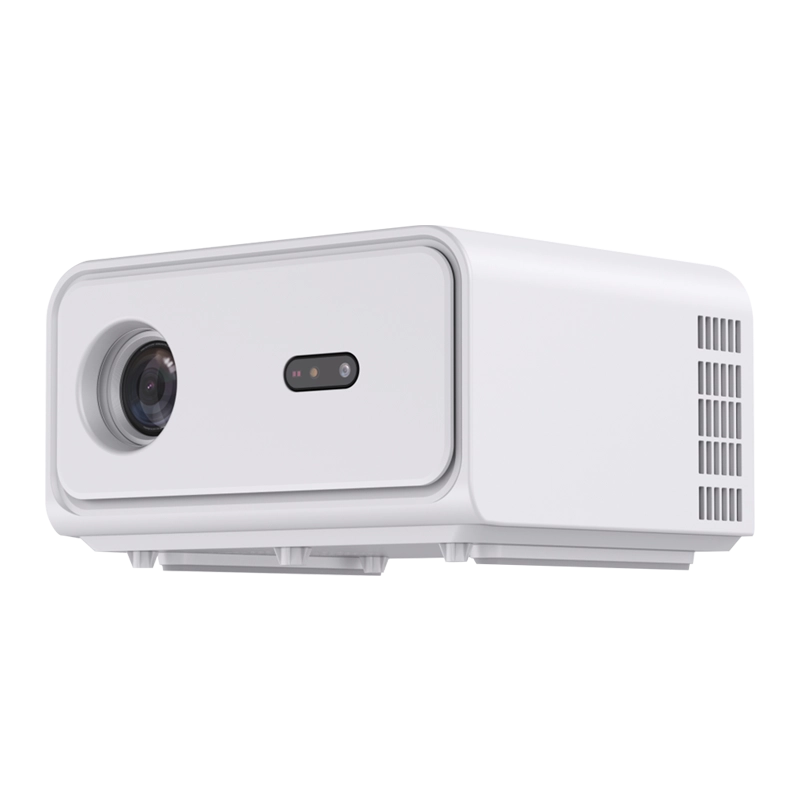
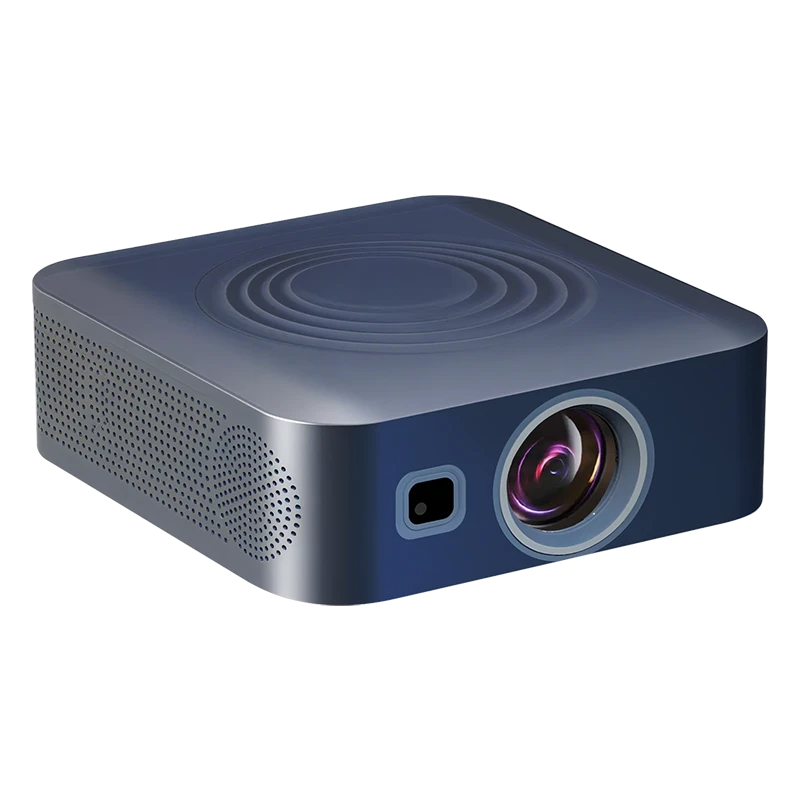
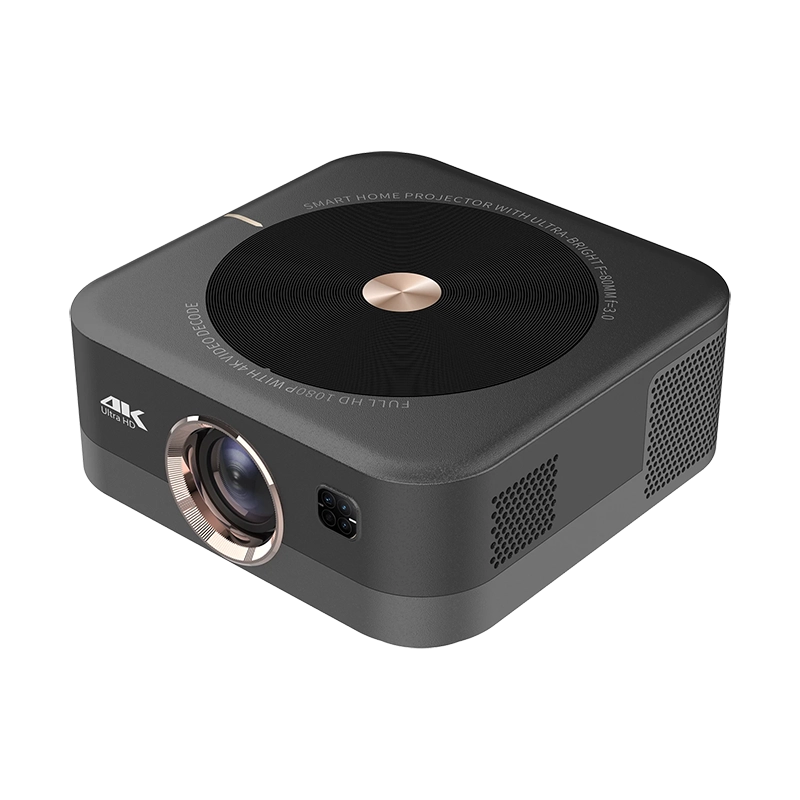

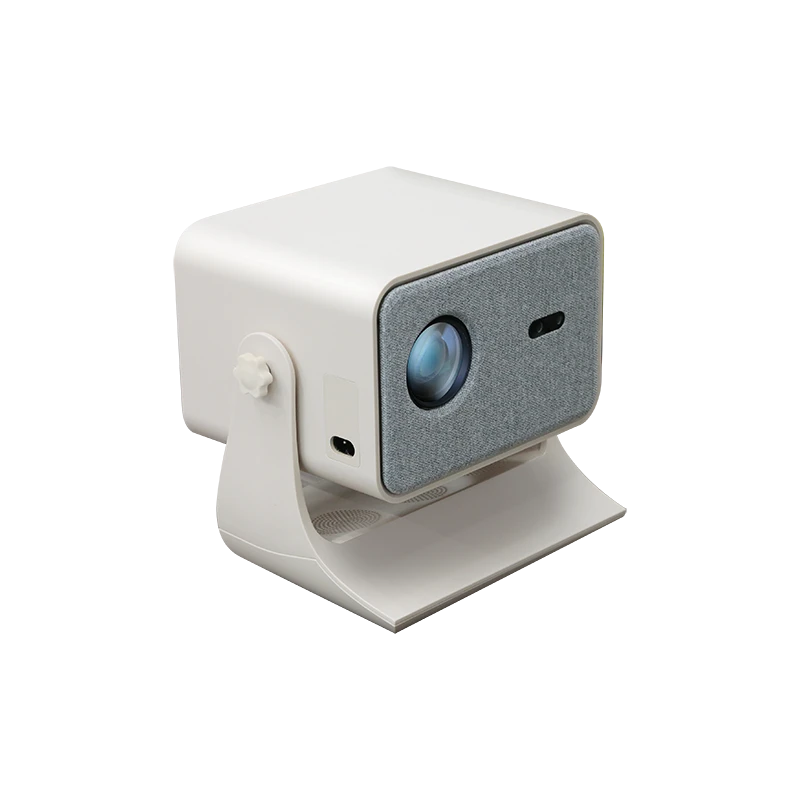
None of the supplied DataMax records establishes a conventional sub-0.4:1 UST ratio or placement within 150–380 mm. Commercial marketing, model names or dust-free descriptions must not be used to infer UST classification. Request an optical diagram showing lens position, throw ratio, image offset and working range for each production configuration.
Quantitative selection method and worked example
The worked example targets a 100-inch, 16:9 hospitality display. Image width is 100 × 0.8716 = 87.16 in, or approximately 2,214 mm. Screen area is approximately 4.34 m². With a nominal 1.2:1 ratio, the calculated lens-to-image-width distance is 2.66 m, which conflicts with an 80–120 inch range stated over 1.26–3.5 m only if the ratio reference and distance endpoint differ. The physical drawing must resolve that conflict before installation.
Assume measured screen-plane ambient light requires an illustrative 150 cd/m² for acceptable presentation content. For a screen gain of 0.8, required projector output at zero depreciation would be:
150 cd/m² × 4.34 m² ÷ 0.8 = 814 lm.
Applying an illustrative 0.80 maintenance factor at replacement raises initial output to 1,018 lm. This calculation indicates why the GP96-GTV’s stated 1,000 ANSI lumens is the closest supplied class, but it does not establish contrast, uniformity, Google TV certification or usability. If a 1.35:1 optical model is required, the calculated distance becomes 2.95 m and the enclosure, screen and furniture layout must be redrawn.
| Worked parameter | Value | Basis | Validation action |
|---|---|---|---|
| Target image | 100 in, 16:9 | Hospitality application requirement | Confirm viewing distance and usable wall zone |
| Image area | 4.34 m² | Calculated | Use actual screen dimensions |
| Screen gain | 0.8 | Illustrative assumption | Obtain screen datasheet |
| Target luminance | 150 cd/m² | Illustrative presentation assumption | Photometric simulation and site sample |
| Maintenance factor | 0.80 | Illustrative planning factor | Replace with supplier lumen-maintenance curve |
| Calculated initial output | Approximately 1,018 lm | 150 × 4.34 ÷ 0.8 ÷ 0.80 | Compare with measured ANSI output |
| Application condition | Screen size | Minimum design actions | Likely supplied-class fit | Principal risk |
|---|---|---|---|---|
| Controlled meeting room, dark enablement | 80–100 in | Use 1,000 ANSI where geometry fits; disable unnecessary ambient light | GP96-GTV or optical variant | Do not confuse decoding with native 4K |
| Hotel room with moderate ambient light | 80–120 in | Require controlled blackout, measured 240–500 lux test and PMS integration | GP94C, GP96-GTV or GP95-GTV pending site test | Brightness conflicts and unsupported APIs |
| Classroom with presenter movement | 100–120 in | Set obstacle zones, board wash, geometry and audio priorities | Geometry-dependent GP96/GP95 class | Obstacle avoidance disruption |
| Retail with scheduled operating hours | 100–120 in | Define 4–10 hour illustrative duty profile and maintenance cadence | Highest stated ANSI output preferred | Ambient light and maintenance labor |
| High-ambient lobby | 120 in or larger | Commission photometric simulation; reject selection from ANSI lumens alone | No confirmed fit from supplied models | Undersized image luminance |
Deployment profiles by site condition
Hotel and hospitality
Hotel rooms favor controlled-light surfaces, external audio, remote recovery and PMS-triggered identity rather than consumer sign-in. GP94C supplies 100M LAN, Android 9, IR remote, mini-jack and 3.5 mm audio, while GP96-GTV and GP95-GTV list mini-jack audio and Bluetooth. These interfaces do not prove CEC, PMS API, IP control or captive-portal compatibility; confirm against the production datasheet and SDK.
| Profile | Conditions and mounting | Connectivity and management | Key risks |
|---|---|---|---|
| Hotel room | 80–120 in target; wall or furniture-top installation only after clearance review | PMS guest-room event, wired LAN preferred, IR capture, remote diagnostics | API mismatch; ambient light; sound bleed; theft |
| Corporate boardroom | 100 in illustrative; align to table and camera sightlines | HDMI source, network, room-control trigger, centrally stored presets | Keystone reduces sharpness; conferencing privacy |
| Education | 100–120 in illustrative; board and presenter zones reserved | Central content management, wired network, USB service access | Vandalism; obstacle triggers; uneven board illumination |
| Retail | 120 in illustrative; concealed mount with front air path | Scheduled playback, MDM or signage controller, telemetry | Long duty cycle; inaccessible dust path |
| High ambient | 120 in or larger; blackout or high-gain ALR surface | External media player may separate content and display functions | Contrast loss; screen hotspots; unverified product class |
Corporate, education and retail operating controls
Boardrooms require deterministic source selection and recovery rather than unrestricted Android access. Education deployments need anti-tamper mounting, replaceable cables and classroom input isolation. Retail deployments operate for long blocks, making thermal cycling, scheduled reboot policy, content monitoring and spare coverage more important than peak resolution.
- Corporate: lock input paths, define HDMI-CEC behavior, provide a documented manual-over automatic control mode, and test conferencing-camera exposure.
- Education: reserve a 1 m presenter zone, validate obstacle detection in that zone, and provide staff-only service navigation.
- Retail: define a minimum 4-hour playback block for illustrative planning, validate thermal stability, and prohibit uncontrolled rear access.
- Hospitality: bind power-on, volume limit and input state to room occupancy only after PMS event definitions are approved.
- High ambient: require measured illuminance, screen gain and contrast evidence; none of the supplied records alone establishes suitability.
Platform, connectivity and control architecture
Google TV and AOSP are not interchangeable procurement labels. Google TV 11 or 14 can provide an operator-facing smart-TV experience, but the exact Google certification status, Widevine security level, EDLA requirements, Netflix deployment status and service-level agreement must be evidenced. An AOSP build can support enterprise applications, kiosk mode or headless playback, but application signing, device-owner provisioning, update control and compatibility become OEM responsibilities.
| Layer | Technical decision | Evidence required | DataMax-specific status |
|---|---|---|---|
| Application platform | Consumer Google TV, managed AOSP or source-only display | Firmware BOM, license record and application test list | GP96/GP95 list Google TV 11 or 14; GP94C lists Android 9; GP93B lists Android 14; GP98 has contradictory platform data |
| DRM | Protected streaming, apps or local playback | Widevine L1/L3 evidence, codec license path and HDCP topology where applicable | No Widevine level or HDCP version is supplied; confirm against production datasheet |
| Network | Wired management preferred for commercial fleets | Port speed, VLAN support, captive portal, proxy and multicast tests | GP94C supplies 100M LAN; other network support varies by row |
| Update | Signed OTA with staging, rollback and outage recovery | Update package, release notes, server dependencies and RTO | No OTA mechanism is supplied; confirm |
| Room control | PMS/AV trigger, RS-232, IR, network API or CEC | Protocol document, command set and integration test | IR receiver/control is listed on several models; no protocol is supplied |
| Audio | Internal speaker, analog, optical or networked audio | Routing, latency, volume limit and lip-sync test | Mini-jack, 3.5 mm, S/PDIF and 5 W×2 or 3 W×1 arrangements are model-specific |
Mechanical integration requires more than cabinet dimensions. Check wall-contact points, load capacity, anti-theft retention, cable bend radius, IR window visibility, intake/exhaust clearance, rear service space and whether furniture blocks convection. Thermal acceptance should run for at least the contracted playback block after a 30-minute stabilized period; a longer continuous block is preferable for retail use. Record surface temperature, shutdown events, image stability and noise at the seated operator position.
The 28–32 dB supplied noise figures are not distance-weighted or room-weighted. Require measurement distance, weighting and operating mode. Likewise, 86 W and 130 W working-consumption values need measurement conditions before energy modeling.
Sealed optical engines, dust control and lifecycle economics
Only GP95-GTV is explicitly identified as having a “full-sealed optical engine.” GP96-GTV, GP98 and GP93B carry dust-free or dust-free-related product descriptions, but supplied rows do not define sealing construction, filter status or ingress testing. Confirm against the production datasheet; do not convert a marketing description into an IP-rating claim.
LED source life is stated as 10,000–10,500 lumens for GP96-GTV, GP98, GP94C and GP95-GTV, while GP93B lists LED without hours. “Lumens” in that phrase appears to describe source characteristics rather than a life duration; hours and lumen-maintenance percentages require written clarification. Procurement should request a curve at 20%, 50% and 80% of stated life under defined ambient temperature and duty cycle.
| Lifecycle stage | Cost or evidence variable | Method | Failure-control action |
|---|---|---|---|
| Design | Screen, enclosure, controls, network and service access | Total 5- to 10-year cash-flow model | Separate mandatory scope from optional scope |
| Deployment | Staging, freight, mounting, cabling and commissioning | Per-site labor and travel log | Standard work instruction and serialized asset register |
| Operation | Electricity, licenses, network and remote monitoring | Measured watts × operating hours × tariff | Do not use nameplate consumption as metered consumption |
| Maintenance | Cleaning, inspection, firmware and replacement labor | Preventive maintenance schedule by environment | Escalate optical cleaning or recurring faults |
| Failure | Swap logistics, spare stock and on-site time | Failure rate and mean time to restore | Hold site-specific critical spares |
| End of life | Data erasure, disposal and recovery | Asset disposition and secure-wipe record | Confirm regulatory and customer obligations |
A total-cost model should separate CAPEX and OPEX without inserting unquoted DataMax prices. One illustrative energy equation is annual kWh = measured average watts ÷ 1,000 × annual operating hours. At 130 W and 4,000 hours, that equals 520 kWh; at 49 W and 4,000 hours, it equals 196 kWh. These are engineering illustrations, not operating guarantees. Add maintenance visits, spares, logistics, management software and content integration as separate line items.
Compliance, certification and optical-engine evidence
Compliance scope depends on destination market, sale channel and product configuration. The buyer should identify the legal importer or responsible economic operator, applicable radio and EMC rules, electrical requirements, energy rules, packaging and battery obligations. No DataMax market-specific certificate numbers were supplied, so this article cannot claim certification.
- Request an unaltered bill of materials showing LCD, SoC, wireless module, power supply, optics, light source, cables and packaging.
- Match test-report model numbers, photographs, ratings and dates to the exact production SKU and power supply.
- For smart-TV programs, request current Google/EDLA documentation, Widevine security level, HDCP component map and authorized app deployment evidence.
- For managed deployments, request Android CDD/CTS applicability, device-owner behavior, key provisioning, patch responsibility and rollback procedure.
- For optical claims, request sealed-engine construction drawings, dust-ingress test method, replacement limits and maintenance instructions.
- For radio-enabled products, request band, antenna, modular approval and regional use records for Wi-Fi and Bluetooth.
| Evidence package | Minimum content | Acceptance rule | Escalation on mismatch |
|---|---|---|---|
| Product identity | SKU, SoC, LCD, Android/Google TV, firmware and hardware revision | Exact match to sample and delivery unit | Stop award or quarantine inventory |
| Electrical safety and EMC | Applicable report, certificate, standards list and authorized applicant | Valid for production configuration and destination | Reject nontransferable report |
| Wireless | Module, antenna, band, regulatory approval and label artwork | Configuration matches production hardware | Hold shipments |
| DRM/copyright | Widevine level, HDCP version and license-flow diagram | Meets each application’s requirement | Qualify alternate source or platform |
| Optical and environmental | ANSI test, thermal report, noise method, sealed-engine evidence | Traceable to production unit | Requalify sample and production lot |
OEM/ODM process, customization and supply controls
A commercial projector program should be governed as a hardware, software, optics and service deliverable. Branding, packaging, logo placement, boot animation and splash screens are visible customizations, but platform signing, Google certification, wireless approvals, optical alignment and safety validation can alter the certification boundary. Define every customization by bill-of-material effect and approval owner before the design freeze.
- Issue a technical specification with optical drawing, interface schedule, firmware baseline, environmental conditions and acceptance thresholds.
- Appoint samples from the intended production revision, not hand-modified engineering units.
- Run design verification across electrical safety, EMC, wireless, thermal, network, codec, DRM and mechanical endurance tests.
- Approve golden samples covering color, finish, port labels, accessories, carton markings and user documentation.
- Pilot one controlled production lot with serialized traceability and third-party or customer-witnessed inspection.
- Release mass production only after configuration management, firmware hash, certificate mapping and inspection criteria are signed.
| Commercial control | Defined requirement | Audit evidence | Procurement consequence |
|---|---|---|---|
| Customization matrix | Logo, UI, package, cable, manual, mount and platform features | Revision-controlled samples and BOM | Unapproved feature removes qualification |
| AQL | Agree defect classes, sampling standard, lot size and inspection level | Inspection report and lot disposition | No silent acceptance level change |
| PCN control | Advance notice, change reason, impact analysis and approval right | Signed PCN and affected serial range | Buyer may pause or requalify |
| Spares | Remote, power cord, board, mount and device-level stock policy | Consumption and RMA trend | Adjust safety stock after field data |
| Warranty | Term, RMA authorization, turnaround, freight and advance replacement | Service-level simulation | Exclude unsupported labor assumptions |
| Traceability | Serial, hardware revision, firmware, date code and shipment | Database extract tied to cartons | Quarantine untraceable lots |
A practical pilot should use a statistically representative lot rather than 1 or 2 showroom units. AQL is a sampling system, not a guarantee that every unit is defect-free; critical safety, optical and security defects should be handled as zero-acceptance categories. Before volume release, run destructive and non-destructive tests capable of detecting the failure modes relevant to that product class.
For hotel programs, spare policy must include remotes, power cords, mounts, installation templates and a defined replacement rate for complete units. For corporate or retail fleets, retain at least one golden image plus serialized hardware and firmware records, because field diagnosis depends on reproducing the exact configuration.
Review the broader projector OEM/ODM process before freezing a custom program.Weighted RFP scoring and ordered selection decision tree
| RFP criterion | Weight | Evidence and scoring rule | Automatic condition |
|---|---|---|---|
| Optical and photometric performance | 25% | Geometry, ANSI output, uniformity, contrast and screen fit; 0–5 scale | No optical drawing or unresolved geometry conflict |
| Reliability and thermal design | 15% | Thermal test, sealed evidence, noise method and source curve | No restarts during acceptance block |
| Platform and DRM | 15% | Android/Google TV baseline, Widevine, HDCP and app compatibility | Must meet application security level |
| Integration and controls | 12% | API, PMS, CEC, IR, network, audio and update interfaces | Required control path demonstrated |
| Manufacturing quality | 10% | AQL, traceability, PCN, pilot yield and change control | Acceptable pilot record |
| Serviceability and spares | 10% | Service access, documentation, parts, RMA and warranty workflow | Documented escalation path |
| Commercial responsiveness | 8% | Requirement ownership, change process, evidence turnaround and transparency | No unsupported compliance claim |
| TCO framework | 5% | Measured energy, service, spare and failure assumptions | All calculations use stated assumptions |
Award only after technical compliance. Weighted scoring is unsuitable for concealing a missing mandatory capability, such as a required Widevine level, unresolved input voltage, invalid destination-market certificate or inability to reproduce the supplied software platform.
- Is the exact required image size physically inside the published image range and calculated distance?
- Does the model meet the required throw geometry without relying on unresolved contradiction?
- Does an ANSI test and site simulation support the maintained luminance target?
- Does the platform meet DRM, content-launch, network and management requirements?
- Are destination-market compliance documents tied to the production configuration?
- Does a pilot pass optical, thermal, noise, interface, security and endurance tests?
- Can service, spares, PCN and firmware rollback controls meet the deployment SLA?
- Select the highest weighted score only among technically compliant models.

Site acceptance and commissioning tests
Acceptance should use the intended wall or screen, room light condition, source, network, audio route and installed orientation. A laboratory demonstration does not replace the site test. Record serial number, hardware revision, firmware hash, ambient illuminance, screen dimensions, measured luminance samples and installer identity.
| Test | Procedure | Acceptance criterion | Failure action |
|---|---|---|---|
| Asset identity | Photograph labels and export system identity | Exact SKU and serial match approved BOM | Quarantine and replace |
| Geometry | Measure lens reference distance and image corners | Inside approved drawing and alignment tolerance | Redraw mount or reject optical unit |
| ANSI/site brightness | Measure 5 or more points under contracted lighting | Meets photometric specification and uniformity target | Correct surface, geometry or model class |
| Focus and resolution | Use fine-detail grid at final size and after 30 minutes | No unacceptable softening or drift | Recalibrate; investigate heat focus |
| Color and contrast | Display reference material at intended mode | Within signed color and contrast specification | Lock mode or replace unit |
| Obstacle behavior | Enter the approved presenter zone | No unsafe, disruptive or unwanted shutdown | Disable or retune feature |
| Power and thermal | Operate through agreed 4-hour minimum block | No shutdown, overheating fault or unstable color | Log thermal data and reject |
| Audio and control | Exercise input, volume, mute, IR and room-control events | Correct route and repeatable command response | Correct integration configuration |
| Network and OTA | Test connection, captive policy, update and rollback | No unplanned exposure or update failure | Hold production release |
- Capture screen-plane illuminance before and after the project image, with room controls in the approved state.
- Record five-point brightness and calculate minimum-to-average and maximum-to-average uniformity.
- Display the actual LMS, video-call and signage content used in service, not only a static test pattern.
- Save calibration presets by serial number and protect service navigation from ordinary guest access.
- Run the stability block without vents obstructed and with the intended wall or furniture configuration.
Field troubleshooting sequence and escalation
| Symptom | First 3 checks | Diagnostic action | Escalate when |
|---|---|---|---|
| Low or uneven brightness | Input mode, ambient light, air inlet, source setting | Measure five-point luminance and inspect temperature | Below signed output or repeated thermal shutdown |
| Soft image | Focus, screen surface, overscan, HDMI source resolution | Display fine grid at operating temperature | Focus cannot be retained after stabilization |
| Trapezoid or alignment drift | Lens reference distance, cabinet movement, keystone value | Compare corners with approved geometry report | Correction changes effective sharpness beyond tolerance |
| Image changes when presenter approaches | Obstacle avoidance state, zone and sensitivity | Log trigger events and compare with content requirements | Feature cannot be safely disabled or tuned |
| No network or no app launch | Physical link, DHCP or captive state, clock, account policy | Collect device and network logs | Credential, certificate or DRM failure recurs |
| Remote-control conflict | IR device address, line of sight and competing RF keyboard | Test command-by-command from seated position | Guest commands affect restricted functions |
| Fan or noise complaint | Vent clearance, fan mode, room placement | Measure at operator distance and operating mode | Noise exceeds site limit or acoustic pattern is abnormal |
| Intermittent restart | Power history, temperature, OTA state and crash logs | Reproduce during stability block | Any unexplained safety or stability fault |
- Capture asset identity, firmware, input, ambient condition and time of failure before changing settings.
- Reproduce with the production source and wired network path; remove variable one at a time.
- Check physical installation and thermal state before treating the fault as firmware.
- Collect logs and measurements, then compare them with the approved acceptance baseline.
- Roll back only through a controlled update process with the prior known-good image available.
- Escalate serial, lot and photo evidence when safety, optical, platform or thermal thresholds are exceeded.
DRM decisions for commercial streaming and education fleets
Widevine L1 versus L3 affects where protected video is decrypted and rendered. L1 commonly permits hardware-backed secure processing and protected output paths; L3 generally relies more heavily on software protection and is not interchangeable with L1 for every service. A projector listing “Dolby support” or “4K decoding” does not establish Widevine L1, HDCP 2.2 or 2.3, Netflix approval or an application’s device eligibility.
| DRM question | Required evidence | Procurement consequence | Current DataMax evidence |
|---|---|---|---|
| What Widevine level is implemented? | Device Security Level report tied to serial and firmware | Defines eligible applications and content paths | Not supplied; confirm against production datasheet |
| Which HDCP version protects output? | HDCP component and version map for projector, dongle, scaler and display | Determines protected 4K source compatibility | Not supplied; confirm |
| Are commercial apps certified? | Partner deployment letter and test account | Prevents storefront or hardware regression | Not supplied |
| Can keys rotate and recover? | Provisioning and revocation procedure | Limits fleet outage duration | Not supplied |
Preserving measurement integrity through deployment
A fleet acceptance process can fail even when the panel resolution is correct. Digital keystone creates interpolation across the image, while edge correction can amplify softness at the sides. Auto focus may repeat accurately on an undisturbed bench but drift after thermal stabilization or cabinet movement. Auto obstacle avoidance may add a safety response that an integrator interprets as an image fault.
The installed contract should therefore define the approved operating mode, preserve a locked calibration profile, and state which automatic features remain enabled. For permanently installed systems, service access should reach connectors and optical inspection points without dismantling the screen or disturbing alignment. For managed Android devices, separate user mode from technician mode and document re-enrollment after repair.

| Control | Commissioning value | Failure consequence | Required record |
|---|---|---|---|
| Fixed operating mode | Prevents users from changing brightness, color or geometry | Nonuniform fleet output | Approved mode and image preset |
| Lens geometry lock | Reduces accidental trapezoid and resolution loss | Soft edges and presenter obstruction | Lens position and alignment report |
| Obstacle-zone policy | Balances presenter movement against interruption | Blank image or unsafe distraction | Zone map and trigger test |
| Thermal stabilization | Validates focus and color under real duty | Failure after hours of operation | Temperature and stability log |
| Service identity | Links repair to the correct firmware and calibration | Repeat faults and inconsistent image | Serial, hardware and firmware record |
Expert FAQ
Are the supplied DataMax projectors confirmed ultra short throw models?
No. Their supplied ratios are 1.2:1 or 1.35:1 and minimum distances are approximately 1.15–1.26 m. A production optical drawing is required before classifying any as a conventional sub-0.4:1 UST projector.
Does 4K decoding mean native 4K output?
No. GP93B explicitly lists native 1920×1080P with 4K decoding. Decode capability describes input processing; native resolution describes the physical output grid.
Which brightness value applies to GP94C, GP95-GTV and GP96-GTV?
GP96-GTV is stated as 1,000 ANSI lumens. GP94C has a 500-ANSI row despite a 550-ANSI title. GP95-GTV has a 400-ANSI row despite a 350-ANSI title. Confirm each against the production datasheet and test report.
Why is a 1500:1 or 1600:1 contrast figure insufficient?
An unspecified contrast ratio may be measured under conditions unlike the installation. Require ANSI-style room contrast, operating mode, screen gain and ambient-light procedure, then validate the installed result.
Does a Google TV label prove Widevine L1 and commercial streaming approval?
No. The records list Google TV 11 or 14 and decode formats, but not Widevine level, HDCP version, EDLA status or app-partner authorization. Request evidence for the exact firmware and hardware revision.
Which models have a sealed optical engine?
Only GP95-GTV is explicitly specified as having a full-sealed optical engine. Other dust-free descriptions do not establish sealed construction or an ingress rating; confirm against the production datasheet.
Can these projectors be remotely managed today?
The supplied data confirms network hardware on several models but provides no MDM, TR-069, Android Management API, OTA or device-owner specification. Confirm the production software and SDK before assigning remote-management capability.
What should a multi-site spare plan cover?
Track failures by serial and symptom across at least the pilot and initial deployment phases. Maintain site-relevant stock of remotes, power cords, mounts and complete units; set final levels from measured failure rates and restore-time targets rather than an arbitrary percentage.
For an installed-project review, provide DataMax the screen dimensions, room illuminance, operating hours, source interfaces, DRM applications, network architecture, control protocol and acceptance environment. An engineering consultation can convert those inputs into a controlled RFQ, optical calculation, pilot test plan and evidence matrix without requiring a commercial price.