
The term that determines what you are buying
“OEM” often appears in an android tv box manufacturer quotation as if it identifies a fixed manufacturing model. It does not. OEM can mean a badge change, a restricted Android build, a modified launcher, a firmware branch, or a jointly developed board and software stack. The commercial meaning must be written into the RFQ.
Disassemble “Android TV box” first. It can describe an AOSP device with a third-party launcher, a Google-certified Android TV product, or an operator middleware appliance whose visible interface hides the underlying Android platform. The label alone establishes neither feature parity, update control, nor licensing status.
For a decision-grade answer, treat the request as a specification-and-control exercise:
- Name the operating-system baseline and distribution precisely.
- List the silicon, memory, ports, video modes, wireless options, and protected-content functions by field.
- State which logos, launcher elements, applications, middleware, and remote-control behaviours the manufacturer may change.
- Attach the production evidence required for each release.
- Define ownership of source files, signing keys, device identity, certificates, and update services.
- Identify the exact production configuration, rather than relying on a platform family name.
DataMax is positioned as a Chinese OEM/ODM manufacturer for Android TV/OTT set-top boxes, TV dongles, commercial projectors, digital-signage players, and edge-compute devices. For the broad selection method, see Android TV box manufacturer guide; this page instead resolves terminology and preserves quotation boundaries.
A buyer should also distinguish the device from the programme around it. The same board can appear in a catalogue offer, a private-label launch, an operator middleware programme, or a bespoke ODM engagement with different acceptance gates. The model number identifies a starting platform; it does not define which branding, software, regulatory, provisioning, and update obligations transfer to the buyer.
Turning the question into a specification line
A useful android tv box manufacturer selection sequence converts ambiguous labels into lines that engineering, procurement, and compliance can independently verify.
- Name the deployment class Record whether the unit is an operator set-top box, an IPTV/OTT white-label product, a cloud-gaming platform, or a general retail Android TV box.
- Lock the platform baseline Write “AOSP Android 11” or “AOSP Android 14,” then identify the launcher, Google services, middleware, and application distribution separately.
- Freeze the silicon and memory State the SoC verbatim, CPU configuration, RAM, and production ROM option. Treat family options as options, not delivered configurations.
- Define the media contract Record codec support, maximum resolution, frame rate, chroma profile, output standard, and any inline processing feature.
- Separate content protection Mark Widevine, PlayReady, and HDCP by capability and optionality. Require the deployment licence level in the quotation.
- Map every physical interface Specify HDMI output count, USB generation and count, Ethernet speed, Wi-Fi configuration, Bluetooth version, analog AV, optical audio, card slot, and power input.
- Assign customization ownership State what may change in hardware, boot logo, launcher, firmware, middleware, packaging, and regulatory marking.
- Attach the acceptance evidence Require sample identification, firmware build records, test evidence, compliance documents, and a golden-sample reference before production release.
A pasteable RFQ line looks like this: “Provide one production BOM configuration based on AOSP Android 14, Amlogic S905X5, 4GB RAM and 64GB ROM, H.266/VVC [email protected] 4K@120, AV1/VP9/H.265 4K@120, AVS3 4K@120, H.264 4K@60, inline AI-SR, HDMI 2.0b output with no HDMI input, 1×USB 2.0, 1×USB 3.0, TF, S/PDIF, AV, 100M RJ45, Wi-Fi6 and Bluetooth 5.4. State all options and the exact shipped configuration.”
The first message sent through the inquiry form should contain the deployment class, target platform, production quantity, required RAM/ROM, interfaces, codec ceiling, DRM requirements, customization boundary, destination markets, and requested evidence. This prevents a catalogue platform from being quoted as if it were the final operator appliance.
Turn every option into a question with a recorded answer. If Ethernet is listed as “1G optional,” ask whether the production board, cable requirement, operating-system image, and test fixture all change. If HDMI is specified as 2.0b, ask which protected-content path is enabled, whether the display mode is validated at the stated frame rate, and whether audio is passed through HDMI or S/PDIF. If the device has a family of RAM/ROM options, require one line such as “2GB/16GB as ordered,” not “memory configurable.” This converts a catalogue description into a controlled order line.
The sequence also protects against a common false comparison: comparing headline features across products with different delivery obligations. A unit with a newer AOSP baseline but no stated operator middleware may be less suitable than an Android 11 platform whose middleware, provisioning, and update ownership are defined. Conversely, a high-frame-rate decode list does not establish a useful gaming platform unless the output mode, thermal behaviour, interface bandwidth, and application path are tested together.
A procurement example should capture the product’s operating role. For an operator fleet, include conditional-access integration, device identity, entitlement, channel data, provisioning, rollback, and fleet reporting in the specification. For an OTT product, include the application catalogue, remote-control map, launcher ownership, account flow, privacy requirements, and store or side-loading method. For a gaming box, include the video mode matrix, controller connectivity, network target, persistence behavior, and thermal soak test. The same hardware BOM can require materially different acceptance evidence in each case.
Where quotations quietly diverge
Two quotations can name the same platform and still describe different products. Divergence appears where adjectives replace measurable commitments.
| Ambiguous term | What it may conceal | RFQ control |
|---|---|---|
| “Android TV” | AOSP firmware, third-party launcher, or separately certified distribution | State OS baseline, launcher, Google services and certification scope separately |
| “4K” | Resolution without codec, chroma, frame-rate and output constraints | List codec/profile, maximum frame rate and HDMI output mode |
| “8K” marketing label | A product name that may exceed the documented output ceiling | Accept only the datasheet’s stated maximum output and decode modes |
| “DRM ready” | A chipset capability rather than a provisioned device level | Specify Widevine or PlayReady level, device provisioning and test evidence |
| “Custom logo” | Print, boot animation, launcher branding or a deeper firmware change | Enumerate the permitted branding surfaces and asset ownership |
| “Optional Ethernet” | 100M and 1G variants with different board or BOM implications | State the speed and quantity for the production sample |
Field trap
A phrase such as “4K playback” can conceal an output limitation. The acceptance line must state the codec, profile, chroma format, frame rate and physical output. For the premium UHD platform discussed later, the production limit must not be rewritten from “4K@120” into 8K output.
Field trap
An “HDCP optional” line creates a different deployment outcome from a shipped HDCP-enabled unit. Secure-content operators need the fitted implementation and verification method, not the option name. Confirm each DRM field against the production datasheet and the golden sample.
Other divergence points sit outside the visible specification. Two suppliers may use the same board revision while applying different Android images, bootloaders, launcher packages, remote-control tables, update clients, certificates, or regional regulatory markings. Ask whether the quotation covers a reference design or a production image, and whether engineering changes are recorded as an engineering change notice. A model number in a PDF is not a configuration-controlled release.
Connectivity language creates comparable risk. “Wi-Fi6” does not specify band, antenna configuration, regulatory domain, coexistence behaviour, or throughput target. “BT5.4” does not establish the required codec, profile, pairing workflow, or controller range. “RJ45 100M” describes the nominal interface, not whether the software path is tuned for it. Require the fitted hardware and a test method relevant to the deployment, particularly where the box competes with Bluetooth controllers over the same radio environment.
Storage is another frequent source of drift. A quoted 16GB or 64GB may refer to total flash, usable storage, or a configurable family option. Require the exact fitted RAM and ROM in the order, state whether application data is included, and freeze the partition layout if the operator provisions local content. The same distinction matters for external storage through TF or USB: interface presence does not guarantee that all formats, mounting rules, or application paths are validated.
The commercial divergence can be as consequential as the technical one. A logo-only engagement may leave a buyer responsible for application integration, while a joint hardware/software ODM engagement may allocate board changes, firmware maintenance and defect ownership differently. Put milestone acceptance, modification ownership, update responsibilities, and the consequence of a failed lot in the agreement rather than in a meeting note.
A second layer of divergence is the remedy. Define whether a failed sample triggers correction, replacement, or a programme-level change request; how long a defect remains attributable to the accepted golden sample; and whether a firmware update can close a hardware-related fault. Also define who owns the cost of a second sample when the first sample does not represent the stated baseline. These clauses prevent a nominal “customization” statement from becoming an unlimited integration burden.
Questions to put in the supplier review
Review the process that turns a quotation into a repeatable production unit. Ask for evidence from each control point rather than a generic quality-policy PDF.
- Incoming-material control Identify component traceability, approved-vendor lists, storage controls, substitutions and the process for engineering change notices.
- SMT and inspection Request a record connecting the production lot to stencils, placement data, inspection criteria and repair decisions.
- AOI and functional test Define which populated boards undergo automated optical inspection, how exceptions are triaged, and what fixture records prove port-level testing.
- Firmware build control Ask how source revision, image version, signing material, launcher build and configuration are tied to a production identifier.
- Aging and burn-in Establish the agreed stress duration, environmental conditions, failure criteria and disposition of units that do not pass.
- Dark-room or display validation Require video-output, synchronization, interface and relevant decode checks, including the final display mode.
- Audit and release Confirm the final packing list, sample identity, firmware hash or version, certificate scope and approved golden sample.
For a controlled review, ask for one evidence packet covering a single production lot: board identity, BOM revision, firmware revision, test results, corrective-action records, packing list and serial-number range. A certificate or inspection report disconnected from the delivered lot is context, not release evidence.
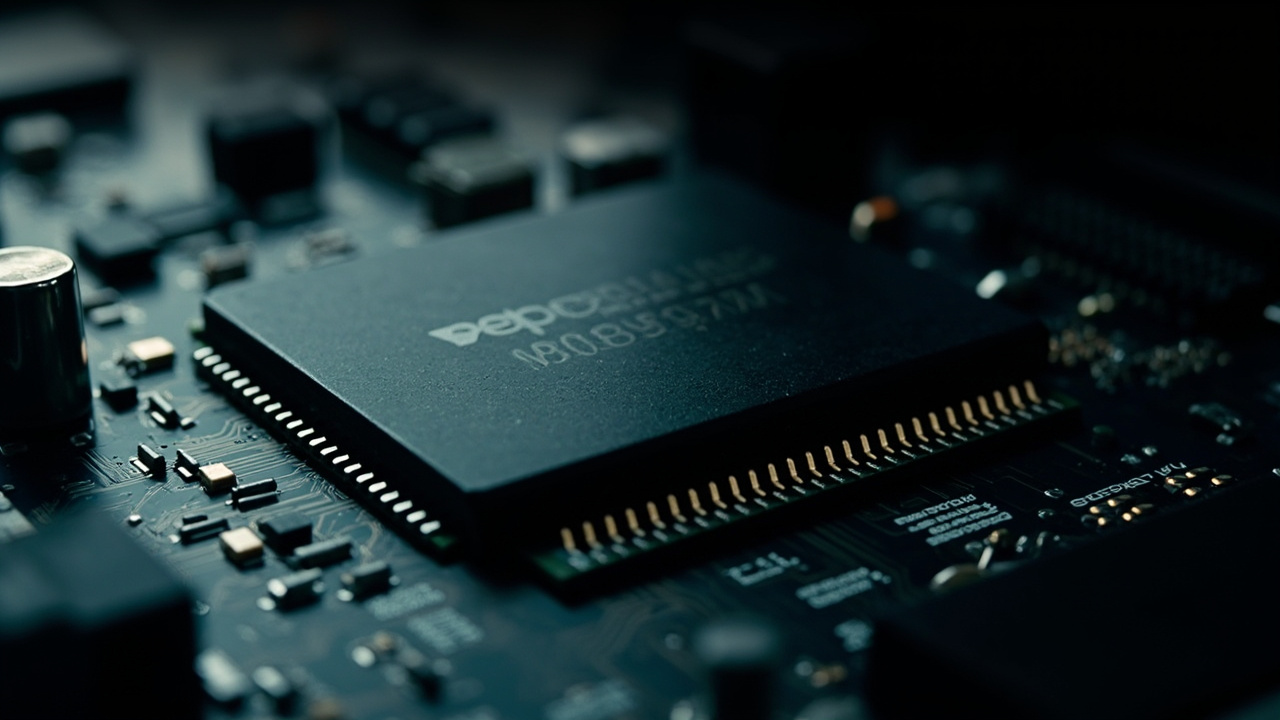
The photograph should show the physical evidence behind these records: the silicon and memory placement that inspection, firmware and functional testing ultimately protect.
Questions should expose unverified assumptions. “Does it support AV1?” needs a mode list. “Is it Google certified?” needs a certification scope and model identification. “Can you change the launcher?” needs an architecture boundary and asset list. “How is the update controlled?” needs a signed image, version history, staging procedure and rollback owner.
For a manufacturing review, trace one serial number in both directions. From the packing list to the board, confirm the BOM revision, SoC marking, memory population, Ethernet variant, and any populated option that differs from the base model. From the board to the release record, confirm the flash image, boot version, signing identity, test result, and disposition. If either path stops at a family-level label, the evidence is not sufficiently specific for volume acceptance.
SMT inspection and AOI answer different questions. AOI can detect component-placement and soldering anomalies visible to the inspection method; functional test confirms behavior through interfaces and peripherals. Dark-room or display validation adds visual and signal-path evidence that neither document review nor board inspection can replace. Ask which tests are mandatory, which are sampled, and what happens when a board is reworked. A reworked board should have a traceable repair and retest result.
Aging and burn-in need acceptance thresholds rather than a generic label. Specify the duration, load pattern, operating mode, ambient range, network conditions, video playback, and the failure count that triggers hold or investigation. For an operator platform, include repeated network registration and update behaviour where these are critical. For a display product, include the exact output mode and display combination. The objective is to identify an early failure before the unit enters a fleet or venue.
For a development-oriented programme, use the custom development route. A white-label programme should identify who owns the Android image, launcher source, middleware integration, remote-control mapping, OTA infrastructure and production provisioning. The factory quality overview can provide the appropriate evidence request for production assurance.
Options placed side by side
Customization depth should be treated as a work breakdown, not a marketing ladder. A logo change leaves most engineering interfaces untouched. A joint hardware/software ODM changes the board, BSP, firmware, applications and acceptance process.

The same figures, in searchable form:
| Engagement option | Editorial score |
|---|---|
| Logo print only | 30 |
| Boot logo plus launcher | 55 |
| Firmware feature branch | 78 |
| Joint hardware/software ODM | 93 |
Source: DataMax editorial team, qualitative planning scale (0-100), not audited or measured data.
| Option | Typical boundary | Buyer owns | Best fit |
|---|---|---|---|
| Logo print only | • Packaging or enclosure mark • Standard firmware | • Brand assets • Channel execution | • Existing hardware platform • Minimal differentiation |
| Boot logo plus launcher | • Startup identity • Launcher presentation | • Launcher specification • Application integration | • White-label retail launch • Operator UI adaptation |
| Firmware feature branch | • Device configuration • Middleware and update features | • Requirements • Regression acceptance | • Operator middleware • Repeated fleet deployment |
| Joint hardware/software ODM | • Board and BSP • Firmware and application stack | • Acceptance criteria • Program governance | • New product platform • Complex operator or vertical needs |
The key trade-off is control versus organizational load. Deeper customization can reduce later integration friction, but it also raises verification burden, change-control cost and dependency on the manufacturer’s engineering responsiveness. A procurement request through sample ordering should ask for a written engagement boundary before any sample is described as representative.
Compare the four options against the same four questions. First, what changes in the bill of materials? Second, what source or configuration assets must the buyer receive? Third, who performs regression testing after a change? Fourth, who owns field updates and defect triage? A logo-print engagement may answer all four with “not applicable.” A firmware branch introduces image ownership and regression duty. A joint ODM adds board, BSP, mechanical, certification, and application interfaces.
The scoring graphic is editorial and directional. A score of 78 for a firmware feature branch does not mean that 78% of the device is customized, nor does the score of 93 for joint ODM quantify cost, lead time, or defect probability. It ranks the breadth of engineering interfaces that may be affected. Procurement should use the matrix to define scope, then use the RFQ and acceptance plan to establish commercial and technical commitments.
A staged programme can sit between these extremes. A buyer may first accept a branded reference configuration, then order a firmware feature branch after the launcher and middleware have been validated, and finally initiate a hardware revision if a physical-interface limitation is proven. Each stage should have a named baseline, a configuration-controlled sample, an evidence packet, and a decision gate. This reduces the risk of purchasing a deep ODM engagement before application, video, thermal, and interface assumptions are stable.
Definitions a buyer cannot outsource
The requirement language must survive translation between commercial, product and engineering teams.
- Identifies the Android baseline; it does not by itself establish Google TV certification, launcher ownership or middleware identity.
- Identifies the newer Android baseline; applications, device provisioning, updater and signing remain separate engineering decisions.
- Name protected-content mechanisms. The deployed security level, service provisioning and application compatibility must be stated separately.
- Defines the physical output interface; it does not itself guarantee every advertised codec mode at every resolution and frame rate.
- Names the wireless generation; band, antenna configuration, regulatory domain and performance target require separate agreement.
- Identifies an inline processing feature in the platform description; the supported source/output combinations must be validated on the production build.
For an IPTV or OTT appliance, distinguish operating system, operator middleware, conditional-access or DRM integration, and application layer. AOSP is the base platform; middleware implements operator functions such as provisioning, channel data, entitlement and user experience. Neither term tells the buyer whether the application is integrated or merely installable.
For codec review, distinguish decode from display output. AV1 [email protected], VP9 and H.265 at 4K@60 describe decode obligations in the DM21P specification, while its HDMI 2.0b output must be accepted under the actual mode matrix. The same discipline applies to SDR, HDR and protected-content paths. Consult the AV1 deployment guide before locking an AV1 acceptance matrix, and use the H.265 guide for HEVC-specific requirements.
OTA, MDM and Android Management are not interchangeable. A consumer-style updater distributes images; Android Management APIs manage policy and device state; an operator OTA platform may add firmware staging, rollout control, reporting and recovery. Define which mechanism owns each device and which updates are mandatory.
A launch sequence needs its own definition. “Boot logo” is an asset displayed during startup. “Launcher branding” covers the visible home experience, navigation, and application presentation. “Firmware feature branch” identifies a maintained software configuration beyond those visible assets. “Middleware integration” connects the device to operator services, entitlements, provisioning, and channel data. “Joint hardware/software ODM” means the buyer and manufacturer share responsibility for at least the board, BSP, and application-stack interfaces. These terms define boundaries, not quality levels.
DRM terminology needs equal precision. Widevine L1 identifies a specific protected-content security level, but it does not replace operator provisioning, account association, service-level agreements, or application certification. PlayReady identifies a separate mechanism. HDCP 2.2 is a physical-display content-protection version and must not be treated as interchangeable with a software DRM. A complete protected-content acceptance line names the mechanism, version or level, fitted status, display path, and test content.
The android tv box manufacturer should state which data path is protected, which component performs provisioning, and where diagnostic access stops. In an operator deployment, a factory that provisions devices may need a controlled process for device identity, activation, revocation, and recovery. If the buyer provisions devices, the manufacturer must deliver the required hooks and procedures. This allocation is more important than a generic “DRM supported” statement because it determines who can authorize, diagnose, and recover a live unit.
Real DataMax platforms, field by field
The model index below uses only the supplied production facts. Optional entries remain marked optional; they are not promised in the base configuration.
| Model and fit | SoC and OS | RAM / ROM | Decode and DRM | Ports and connectivity |
|---|---|---|---|---|
| DM21P 4K IPTV / operator middleware set-top box | Amlogic S905Y4, quad Cortex-A35 AOSP Android 11 | 2GB / 8GB 4GB; 16/32/64GB optional | AV1 [email protected]; VP9/H.265 4K@60; H.264 4K@30 Widevine L1 / PlayReady / HDCP 2.2 optional | HDMI 2.0b out ×1; USB2.0 ×2; TF; S/PDIF; 3.5mm AV; RJ45 100M; Wi-Fi6 2x2 + BT5.4; DC 5V/2A |
| DM21S 4K Android TV box for IPTV/OTT white-label | Amlogic S905Y5, quad Cortex-A55 AOSP Android 14 | 2GB / 16GB 2/4/8GB; 16/32/64GB optional | AV1 / H.265 [email protected] 4K@60 Widevine L1 / PlayReady optional; Dolby Vision/DTS | HDMI 2.0b out; S/PDIF; AV; USB2.0 ×2; TF; RJ45 100M (1G optional); Wi-Fi6 2x2 + BT5.4 |
| DM21T Premium UHD / cloud-gaming box | Amlogic S905X5, quad Cortex-A510 (ARMv9) AOSP Android 14 | 4GB / 64GB family options | H.266/VVC [email protected] 4K@120; AV1/VP9/H.265 4K@120; AVS3 4K@120; H.264 4K@60; inline AI-SR Widevine L1 / PlayReady optional | HDMI 2.0b out, no HDMI in; USB2.0 ×1 + USB3.0 ×1; TF; S/PDIF; AV; RJ45 100M (1G opt); Wi-Fi6 + BT5.4 |
| DM22Q Gaming-oriented Android TV box | Amlogic S905X5M, quad Cortex-A55 up to 2.5GHz AOSP Android 14 | 4GB / 64GB 2/4/8GB; 16/32/64GB optional | AV1/H.265 L5.1 4K@60; inline AI-SR, no NPU TOPS stated Widevine L1 / PlayReady optional; Dolby Vision/DTS | HDMI 2.0b out; USB2.0 ×2; TF; S/PDIF; AV; RJ45 100M (1G opt); Wi-Fi6 2x2 + BT5.4 |
The DM21P is the lower-memory Android 11 route for operator middleware, while the DM21S moves to Android 14 and provides a 1G Ethernet option. The DM21T and DM22Q both carry 4GB/64GB base memory but differ in stated silicon and media ceiling: DM21T lists 4K@120 decode modes and a USB 3.0 port; DM22Q lists 4K@60 and two USB 2.0 ports. Do not convert either platform’s marketing name into an unsupported 8K output claim. Confirm the final configuration against the production datasheet.
Model selection should start with the field that constrains the programme. For middleware integration, the DM21P is expressly positioned as an operator set-top box and includes a 3.5mm AV connection plus DC 5V/2A in its stated port list. For an IPTV/OTT white-label product, the DM21S has an AOSP Android 14 baseline and 1G Ethernet listed as optional, making the exact network variant an order decision. For high-frame-rate media, DM21T provides the widest stated decode list in the group and a USB 3.0 interface, while the absence of HDMI input must remain explicit.
For a gaming-oriented retail proposition, the DM22Q combines 4GB/64GB with an AOSP Android 14 baseline and a stated 4K@60 AV1/H.265 ceiling. Dolby Vision and DTS are listed for the platform, but the buyer should ask whether they are fitted in the quoted production configuration and how they interact with the display, application, and content path. “No NPU TOPS stated” is not a performance claim in either direction; it is a boundary against adding an unsupported accelerator metric.
The android tv box manufacturer comparison should not reward a higher number where the deployment needs less. A 4GB/64GB device may be unnecessary for a fixed-function operator terminal, while a product without the stated USB 3.0 interface may be unsuitable for a bandwidth-sensitive gaming accessory. The decisive document is the exact sample configuration: model, SoC, OS, memory, optional fittings, codec modes, DRM status, ports, and firmware revision.
Buyer situations, ranked by what they punish
Different deployments fail differently. An operator fleet is punished by control-plane fragmentation; a retail launch by branding and content ambiguity; a gaming programme by latency or media-mode errors; an integrator by interface and mechanical mismatches.
| Situation | Primary requirement | What it punishes | Model direction |
|---|---|---|---|
| Pay-TV or IPTV operator | Middleware integration, device control, protected content and fleet update discipline | Undifferentiated launcher scope and uncontrolled image changes | Start with DM21P for its stated operator-middleware fit or DM21S for the Android 14 white-label route |
| OTT or streaming brand | Launcher identity, 4K AV1/H.265 path, application delivery and branding ownership | Loose “Android TV” claims and ambiguous DRM levels | Evaluate DM21S for its stated IPTV/OTT white-label fit |
| Cloud-gaming programme | High-frame-rate decode modes, interface bandwidth and validated output configuration | Maximum-frame-rate claims without a matching mode matrix | Evaluate DM21T for its stated premium UHD / cloud-gaming fit |
| Gaming-oriented retail box | 4K@60 AV1/H.265 path, 4GB/64GB memory and branded software presentation | Confusing 8K wording with the documented 4K ceiling | Evaluate DM22Q for its stated gaming-oriented fit |
| AV or digital-signage integrator | Stable HDMI, USB, Ethernet, audio and control integration | Port-count assumptions and optional-speed ambiguity | Choose by measured installation I/O; confirm the exact platform against the production datasheet |
The ranking principle is penalty avoidance. A fleet programme should prioritize update control and middleware boundaries; a branded OTT product should prioritize launcher and content-path acceptance; a gaming programme should prioritize mode validation over headline resolution. Integrators should prototype against the actual sample because the DataMax model table does not replace mechanical, thermal, RF or site-specific testing.
For an operator-focused programme, the operator-tier Android TV box solution provides a relevant next comparison. To separate AOSP from Google Android TV, consult the AOSP versus Google Android TV guide. When requesting a proposal from DataMax, include the selected model, production configuration, destination market, customization boundary and required evidence package in the first message.
Rank a venue vertical by its largest failure mode. A hotel room prioritizes account isolation, remote-control behavior, account recovery, and simple network recovery. A retail signage deployment prioritizes continuous playback, scheduled updates, storage, and recovery after power loss. A sports or hospitality display prioritizes sustained video mode, audio routing, and installation stability. A gaming lounge prioritizes the display mode, controller latency behavior, network target, and thermal performance under repeated load. These requirements may point to the same model family but require different acceptance tests.
The android tv box manufacturer should therefore receive a deployment matrix rather than a single requested feature list. For each model under consideration, identify the installation display, source and output mode, network design, content-protection requirement, operator interface, update policy, physical constraints, and field-service process. The selected DataMax platform can then be sampled against the matrix, with every optional field resolved in the production datasheet.
A practical final step is to freeze the golden sample before commercial release. Record its model, SoC, OS, RAM/ROM, ports, DRM fittings, codec ceiling, firmware version, remote-control mapping, and approved appearance. Require every production lot to be compared with that reference. For the next step, use the 4K 60fps Android TV box guide to sharpen a frame-rate acceptance requirement, and use the inquiry form with a first message containing the selected model, exact configuration, destination market, customization boundary, quantity band, and required lot-level evidence.
Further reading
- Guide android tv box manufacturer
- DRM compliance solutions
- Telecom solutions
- Amlogic Android TV boxes
- Google TV devices
- DataMax DM21P specifications and fit
- DataMax DM21S specifications and fit
FAQ
What does an Android TV box manufacturer actually supply?
It may supply a catalogue hardware platform, a customized enclosure, a branded launcher, a firmware branch, middleware integration, or a joint hardware/software ODM programme. The quotation must identify the exact boundary. Ask which assets, source files, update mechanisms and production tests are included.
Does AOSP Android 14 mean the product is Google certified?
No. AOSP identifies the base operating-system version; it does not establish Google services, Google TV certification, launcher status or operator middleware. Require model-specific certification records and a clear statement of the software distribution.
Which DRM fields belong in an RFQ?
Specify Widevine L1 or PlayReady where required, and state the intended deployment security level and device-provisioning process. HDCP should be listed separately by version and whether it is fitted or optional. A chipset capability is not evidence of a provisioned production device.
Can a factory change the launcher and boot branding?
That depends on the agreed engagement. Some programmes permit boot and launcher customization; others require a maintained firmware feature branch or joint ODM development. Define the permitted surfaces, source ownership, update responsibility and regression criteria before sample approval.
What should a buyer verify before accepting a production sample?
Check the model, SoC, RAM/ROM, ports, decode modes, DRM configuration, operating-system baseline, firmware revision and physical appearance against the agreed specification. Also verify certifications for the destination market and connect the sample to the factory’s lot-level quality records.
How do I request a quotation from DataMax?
Use the DataMax contact route and include the deployment class, target model or SoC, exact RAM/ROM, required ports, codec ceiling, DRM needs, destinations, customization boundary and evidence requirements in the first message. This gives engineering and procurement a common baseline for comparison.


