

Commercial decision context
WiFi projector buying guides commonly rank convenience features such as automatic focus, wireless mirroring and built-in speakers. Those criteria are insufficient for an installed commercial deployment. A buyer must instead qualify the optical output, screen geometry, acoustic environment, software platform, network design, service access, content protection and mounting constraints. The procurement unit is normally the projector plus its screen, controller, speakers, network, control system, cables, labour and maintenance access, rather than a standalone consumer appliance.
Installed projects introduce constraints absent from home evaluation. A boardroom may require scheduled startup, corporate casting and video-conference interoperability. A classroom may require asset control, content filtering and rapid replacement. A hotel room may need PMS discovery, IR or serial control, automatic input restoration and concealed cable routing. Retail and hospitality deployments may expose the projector to dust, alcohol cleaning, temperature cycling or accidental impact. Procurement should therefore separate image performance from serviceability and platform qualification.
- Require the production datasheet, test report and firmware baseline for every proposed SKU; a listing title is not an engineering specification.
- Use ANSI lumens, native pixel specification, measured throw geometry and operating noise as separate acceptance dimensions.
- Qualify Google TV or AOSP licensing, Widevine security level, HDCP path and update mechanism before approving streaming use.
- Model Wi-Fi as an engineered RF subsystem covering bands, channel width, roaming, interference, captive portals and wired fallback.
- Define mount, screen, electrical, thermal and acoustic interfaces before sample approval because mechanical changes can invalidate optical alignment.
| Consumer-guide criterion | Installed-project qualification | Evidence required |
|---|---|---|
| “Bright” or “HD” label | ANSI output, native addressable pixels and input compatibility are measured separately | ANSI test record, pixel specification and signal test matrix |
| Wireless convenience | Wireless use must coexist with captive portal, MDM, DRM, multicast, VLAN and recovery requirements | Network diagram, platform build and recovery procedure |
| Auto keystone | Geometry correction must not reduce usable resolution, violate throw-distance limits or violate mounting alignment | Measured image dimensions and final as-installed commissioning sheet |
| Built-in speakers | Room acoustics, speech intelligibility, latency and audio routing determine whether speakers are acceptable | Audio system design and playback test |
| Long LED life | Useful life is tied to lumen depreciation, colour shift, maintenance access and operating profile | Optical lifetime curve and defined replacement threshold |
Optical and measurement fundamentals
ANSI lumens measure luminous output under a defined projector test procedure rather than an arbitrary lamp-rating convention. Procurement should require the manufacturer’s ANSI test report or a witnessed third-party measurement. A production claim of “lumens” without a test basis is not equivalent to ANSI lumens. Ambient light is not part of the ANSI lumens unit, but it strongly affects the luminance required at the screen.
For a rectangular screen, the image area is:
A = W × H, where W and H are the actual image width and height. For a 16:9 image of width W, height is 0.5625W. Screen area and image area are distinct from the physical screen or wall area; borders, masking and mounting tolerances must be included separately.
A practical installed-luminance estimate is:
Lscreen ≈ LumensANSI × η / A, where Lscreen is cd/m², A is m² and η captures projection losses, screen gain, alignment and maintenance margin. A wall’s effective gain and directional characteristics must be measured or obtained from the screen manufacturer. The formula is an engineering estimate, not a substitute for site commissioning.
| Measurement | Meaning | Procurement pitfall | Required qualification |
|---|---|---|---|
| ANSI lumens | Standardised luminous output test value | LED lumens, lamp lumens, “brightness” and ANSI lumens may be mixed without explanation | Request test basis, measurement date and production-line tolerance |
| Native resolution | Physical addressable image format of the display engine | “Supports 4K” may describe input decoding, not 4K native imaging | State native pixels separately from maximum input resolution and frame rate |
| Contrast ratio | Ratio between specified bright and dark levels | Manufacturer conditions, operating mode and measurement standard may differ | Request test conditions and compare like-for-like conditions |
| Throw ratio | Projection distance divided by image width under the stated convention | UST, front and rear ratios are not interchangeable | Confirm lens geometry and whether the ratio uses image width or diagonal |
| Noise | Acoustic sound-pressure level, usually in dB at a stated distance | No distance, mode or weighting makes dB values non-comparable | Request dB(A), measurement distance, operating mode and fan profile |
For a stated throw-ratio convention using image width D, approximate distance is D = W × R. For the GP8, a 0.24:1 ratio produces a 100-inch 16:9 image with width 2.214 m and an approximate projection distance of 0.531 m, subject to focus limits and the manufacturer’s geometry convention. For a 1.2:1 ratio, a 100-inch 16:9 image requires approximately 2.657 m. The actual cabinet, lens offset and screen plane can alter usable installation distance.
Keystone correction digitally transforms the image. The correction required increases with off-axis placement, lens displacement and screen misalignment. Downscaling reduces displayed resolution. Auto focus and auto screen alignment shorten commissioning, but they do not eliminate the need to verify pixel alignment, obstruction clearance, screen fit, shadowing and content legibility. Dust-free optical architecture should be assessed separately from the housing label: ingress protection, filter service, optical-window cleaning and replacement policy matter more than the phrase alone.
- Specify native resolution, maximum HDMI input resolution, supported frame rates and EDID behaviour as separate fields.
- Specify ANSI lumens with test method, not a marketing brightness string.
- Record projection ratio, image-size range, focus range and mounting positions from the production datasheet.
- Validate contrast and colour only under the application’s controlled ambient-light conditions.
- Model light-source life against operating hours, brightness reduction and colour stability, not years alone.
DataMax model comparison from supplied data
The following table uses only the supplied DataMax product data. Where a field is absent, it is not inferred. Product #287 and Product #282 have names but no complete engineering records in the supplied set; their specifications must be confirmed against the production datasheet. Product #289 also contains a title-level “400 ANSI” statement while the detailed brightness field states 450 ANSI lumens. This contradiction is explicitly unresolved.
| Model / record | Optical data | Platform and connectivity | Mechanical, power and integration | Procurement flag |
|---|---|---|---|---|
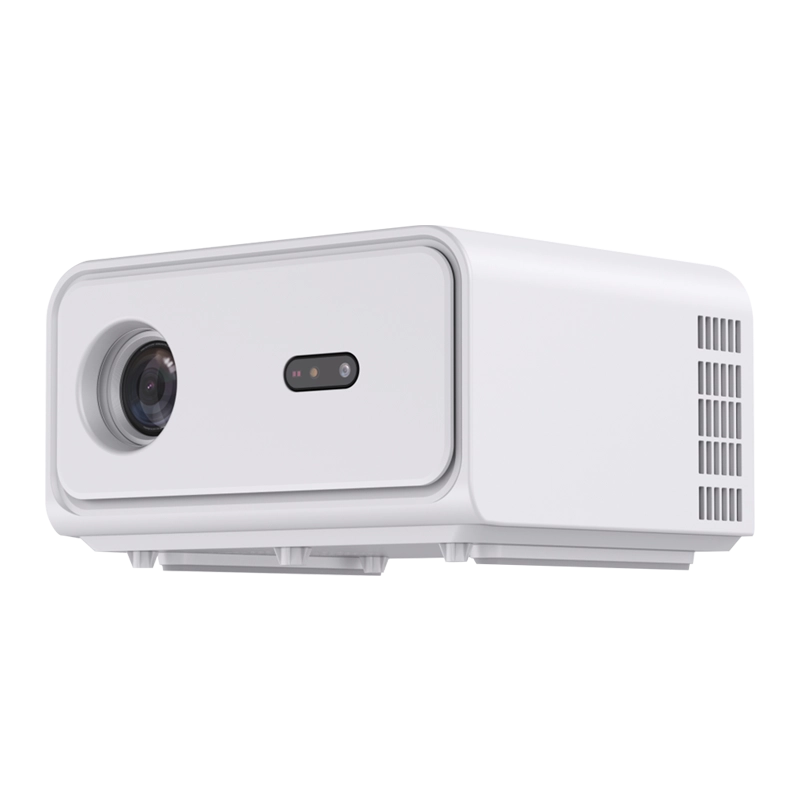
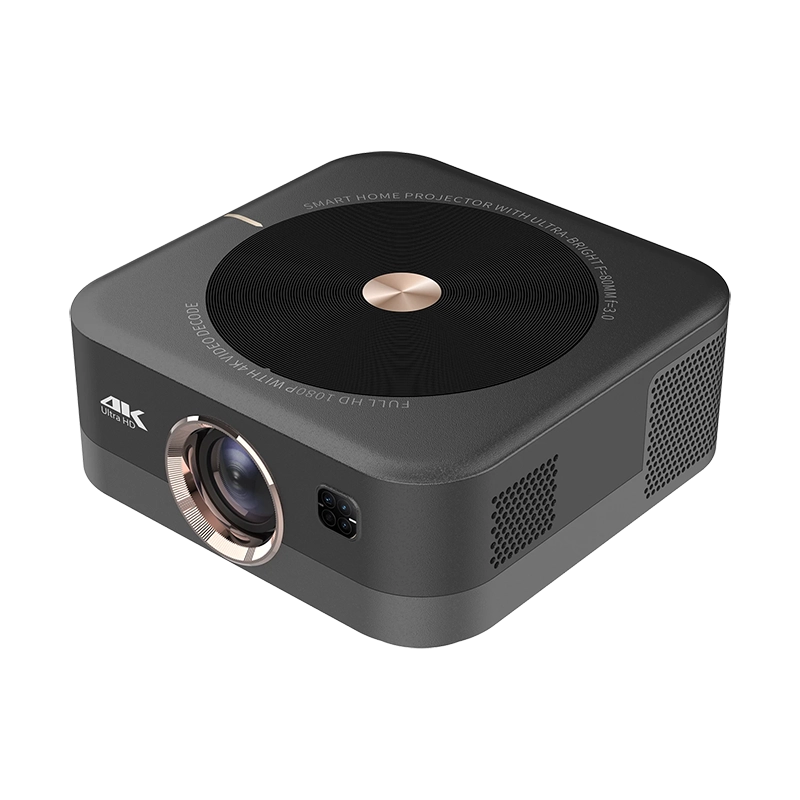
| GP8 / #289 | 1920×1080 native; 400 ANSI in title and 450 ANSI in detailed field; 1200:1 contrast; LED; 0.24:1; 30–200 in; 15–116 cm | Android 9; Amlogic T972; 2 GB RAM; 32 GB ROM; dual-band Wi-Fi 6; Bluetooth 5.0; AirPlay, MirCast, EShare | 89 W; 30 dB; 94×71×190 mm; 0.88 kg; front projection; 1×HDMI; 2×USB 2.0; 3.5 mm audio | Brightness conflict: confirm against production datasheet |
| GP96-GTV / #304 | 1920×1080 native; 1000 ANSI; 1600:1 contrast; 1.2:1; 80–120 in; 1.26–3.5 m; LED stated as 10,000–10,500 lumens | Google TV 11 or 14; S805X2 or RTD1332 dongle CPU; 2.4/5 GHz Wi-Fi; Bluetooth 5.0; HDR10, HDR10+, HLG; AV1, H.265, VP9 and H.264 decode | 130 W; 32 dB; 256×203×140 mm; 2.95 kg; 1×HDMI; 1×USB; mini-jack; front, rear or hang | Google TV version, SoC, 2KP60 meaning and LED lumen wording require datasheet confirmation |
| GP94C / #299 | 1920×1080 native; 550 in title and 500 ANSI in detailed field; 1500:1 contrast; 1.35:1; 29–150 in; 1.15–6 m; LED stated as 10,000–10,500 lumens | Android 9; MTK9269; 1 GB RAM; 32 GB ROM; dual-band Wi-Fi 6; Bluetooth 5.1; mirroring supported; 100M Ethernet | 86 W; 32 dB; 315×305×155 mm; 2.42 kg; 1×HDMI; 1×USB; 3.5 mm earphone; front, rear or hang | Brightness conflict and 3D/other unsupported fields: confirm against production datasheet |
| #287 | Title states portable 1080P and 230 ANSI; detailed optical fields are not supplied | Title states Wi-Fi, Bluetooth 5.2 and Android 13; detailed fields are not supplied | Not supplied | Do not use for engineering approval without production datasheet |
| #282 | Title states 1080P, Wi-Fi, auto-focus and keystone; detailed optical fields are not supplied | Title states Android 13; detailed fields are not supplied | Not supplied | Do not use for engineering approval without production datasheet |


Quantitative selection method and worked example
Begin with a site lighting and content survey. Measure illuminance at the screen during operating hours, identify window reflections, record screen gain and establish the acceptable viewing zone. Then calculate the required image area, select the mechanical position from the throw ratio, and apply a measured or justified optical utilisation factor η. Add an explicit maintenance and installation margin rather than relying on the maximum lumen claim.
Worked example: a 100-inch 16:9 screen has width 2.214 m and height 1.245 m, producing an image area of approximately 2.76 m². If the selected model provides 1000 ANSI lumens, an assumed η of 0.75 is used for geometry, screen and maintenance losses, and the target screen luminance is 150 cd/m². Required lumens are:
Lrequired = 150 × 2.76 ÷ 0.75 = 552 ANSI lumens.
Under those assumptions, GP96-GTV is the closest supplied model by measured brightness. GP94C’s detailed 500-ANSI figure would not meet the 552-ANSI requirement without additional margin or measured validation, and its title-level 550-ANSI figure remains contradictory. GP8’s detailed 450-ANSI figure is also below the calculation. This is a selection example, not a product guarantee; validate η, screen gain, ambient light and measurement tolerances on site.
| Selection input | Worked value | Engineering consequence |
|---|---|---|
| Image size and aspect ratio | 100 in, 16:9 | W = 2.214 m; H = 1.245 m; A ≈ 2.76 m² |
| Target screen luminance | 150 cd/m² | Not valid for every room or content type; establish from viewing requirements |
| Utilisation factor η | 0.75 illustrative | Validate with screen gain, alignment and maintenance conditions |
| Required optical output | 552 ANSI lumens | Add production tolerance and commissioning reserve |
| GP96-GTV geometry | 1.2:1, 1.26–3.5 m stated range | 100-inch width implies approximately 2.657 m before geometry adjustments |
| GP8 geometry | 0.24:1, 15–116 cm stated range | Approximately 0.531 m for 100-inch width; verify UST installation conditions |
| Site condition | Minimum selection action | Preferred evidence | Reject if |
|---|---|---|---|
| Controlled dark room | Calculate from measured screen area and content luminance target | Photometer or calibrated image measurement | Only a marketing lumen number is available |
| Office with reflections | Measure ambient illuminance and control window reflections | Lighting survey and viewing-angle report | Screen is placed directly across uncontrolled glazing |
| Classroom | Prioritise legibility, alignment, locking and service access | Teacher-zone and student-zone images | Auto correction produces insufficient native detail |
| Retail or signage | Define operating hours, cleaning exposure and replacement SLA | Thermal, dust and endurance plan | No serviceable or replaceable optical path is documented |
Deployment profiles by environment
| Profile | Conditions | Mounting and connectivity | Management | Primary risk |
|---|---|---|---|---|
| Hotel / hospitality | Guest-room or suite display; controlled ambient light; recurring content changes; concealed installation desired | Ceiling, wall or rear mount subject to throw geometry; wired network preferred; IR, serial or network control only if confirmed | Startup, input restoration, channel or PMS integration, remote diagnostics | Guest network, PMS protocol, sound policy and cabinet ventilation may be incompatible |
| Corporate | Boardroom, training room or town hall; daylight control and video conferencing | Rigid ceiling mount; HDMI or display connection; dedicated VLAN; reserve control and microphone paths | Configuration control, scheduled startup, device identity, patching records | Auto keystone reduces fine detail; conferencing latency or EDID conflicts |
| Education | Classroom display with teacher mobility; 8–12 hour school-day use; frequent content switching | Wall or ceiling mount; cable locks; wired fallback; LAN where available | Application allow-listing, student casting policy, image-lock configuration, rapid replacement | Unauthorized casting, firmware drift, cabinet dust and unauthorised settings |
| Retail | Long operating day, repeated playback and visible image surface; public access | Fixed mount, protected cabling, ventilated service path; network isolation for signage playback | Scheduled reboot or playback control, monitoring, content-signage workflow | Ambient light, cleaning chemicals, accidental input changes and heat accumulation |
| High-ambient | Daylight, reception area or bright commercial environment; no controlled dark room | High-output model, screen designed for gain and viewing angle, window-control measures, fixed geometry | Brightness verification after daylight peak and maintenance cleaning | Contrast loss, reflections and excessive heat or acoustic disturbance |
- Hotel: specify wake-on-LAN, input auto-restore, channel changes, PMS API or serial/IP protocol, IR code set and guest-network onboarding before approval.
- Corporate: specify duplicate-display or presentation modes, source locking, cable tamper control, EDID handling and shutdown schedule.
- Education: specify Android user restrictions, app management, classroom casting policy, recovery image and replacement stock.
- Retail: specify playback endurance, automatic restart behaviour, storage endurance and remote monitoring alarms.
- High-ambient: measure at the darkest and brightest operating states; a nominal ANSI value alone cannot establish legibility.
Platform, network and system integration
Google TV and AOSP are different procurement classes. Google TV is a licensed commercial platform with an application distribution, certification and update framework; AOSP is an Android source-based platform whose product behaviour depends on the vendor build, firmware, drivers and licensing. A Google TV badge, Android version or streaming application on a box does not by itself prove managed commercial operation. Confirm the exact production image, regional certification, signed firmware update process, Widevine level, HDCP path, application IDs and recovery method.
| Integration layer | Required design decision | Verification method | Failure mode |
|---|---|---|---|
| Display engine | Native pixels, HDMI input, frame rate, EDID, HDR and audio return | Signal generator across supported resolutions and refresh rates | “4K” input accepted but native image remains 1080p |
| Platform | Google TV versus AOSP build; app distribution; signed update policy | Build inspection, app launch and rollback test | Unapproved firmware or inaccessible service application |
| DRM and content | Widevine L1/L3, HDCP 1.4/2.2/2.3 as applicable, output restrictions | Protected playback on the exact output path | Black screen, downscaled resolution or failed licence |
| Network | Wi-Fi bands, DHCP/DNS, VLAN, firewall, wired Ethernet, captive portal | Throughput, latency, DHCP, roaming, loss and recovery test | Intermittent streaming or inability to join enterprise network |
| Control | PMS, CEC, IR, serial, API, volume mute, input restore | Command/response matrix across power states | Room automation cannot restore the intended state |
| Mechanical | Mount pattern, lens offset, ventilation, cable bend radius, service clearance | CAD review, thermal test and as-installed inspection | Focus drift, blocked airflow or inaccessible ports |
For network design, specify minimum RSSI and noise margin rather than relying on “Wi-Fi 6” or “dual-band”. Validate channel width, interference from neighbouring access points, authentication method, lease time, NTP, proxy or captive-portal behaviour, multicast requirements and whether the application expects a wired fallback. For IPTV or OTT deployments, use the Widevine L1 versus L3 reference and verify licence flow on the intended display output, not only on a handheld device.
Mechanical and thermal integration require a service envelope rather than a catalogue dimension. Confirm the production datasheet for mounting hole pattern, centre of gravity, vents, lens clearance, minimum operating temperature and acoustic weighting. Record fan or thermal-pan behaviour at steady state; a 30 dB or 32 dB label is not comparable unless the measurement distance and mode are known.
Compliance evidence, optical maintenance and lifecycle TCO
Compliance evidence should be tied to the exact model, production factory, firmware, power supply and destination market. Depending on geography and function, the evidence set may include electrical safety certification, EMC emissions and immunity, RoHS, REACH and WEEE where applicable, radio-equipment approvals for Wi-Fi and Bluetooth, cybersecurity or privacy documentation, Google TV licensing or EDLA certification where claimed, and site-specific structural, accessibility or broadcast requirements. Do not infer approval from a component certificate or a test performed on a different housing.
- Request certificate number, applicant, model coverage, laboratory accreditation where required, issue date, expiry date and factory/scope statement.
- Require safety and EMC reports to cover the production power supply, external cables, antennas and final enclosure, not only a development board.
- Require FCC or equivalent radio evidence for the final Wi-Fi and Bluetooth configuration, including band, antenna and regulatory domain.
- Require Google certification evidence if Google TV is sold or positioned as a certified platform; confirm the exact model and regional build.
- Require a software bill of materials, update policy, vulnerability-response route and end-of-support statement for an Android connected product.
Optical life should be treated as a maintained-output problem. If an LED source is rated for 10,000 hours, that figure alone does not specify the luminance retained at 10,000 hours, colour shift or suitability for a presentation use case. Procurement should request a lumen-depreciation curve, minimum acceptable luminance, colour maintenance criteria and replacement procedure. The supplied GP96-GTV and GP94C records state LED light source figures of 10,000–10,500 lumens; these appear to be source output wording and are not interchangeable with ANSI projector lumens. Confirm against the production datasheet.
| TCO component | Engineering calculation | Data required | Control action |
|---|---|---|---|
| Energy | Average watts × operating hours per day × 365 days | Measured active and standby power, tariff schedule | Schedule display off and isolate unused playback hardware |
| Maintenance | Lamps or LED modules, filters, cleaning labour, service visits per year | Replacement interval, local labour rate, access policy | Use a documented preventive-maintenance plan |
| Downtime | Units unavailable × hourly service impact | Spares stock, response time, substitute workflow | Hold model-matched critical spares where justified |
| Networking and control | Switch ports, cabling, licences, monitoring and integration labour | Port count, VLAN design, control protocol | Separate one-time CAPEX from recurring OPEX |
| Content and security | Licensing, app maintenance, firmware, vulnerability and compliance effort | DRM terms, update commitment, operator workflow | Assign ownership and review dates |
For example, a 130 W projector operating 10 hours per day consumes 1,300 Wh/day, or 474.5 kWh per 365-day year before standby losses. That calculation is arithmetic, not a DataMax energy claim. The GP8’s 89 W operating consumption over the same schedule is approximately 324.9 kWh per year; GP94C’s 86 W figure is approximately 313.9 kWh per year. Confirm actual power mode, measurement conditions and regional input before budgeting.
OEM/ODM process, customisation and supply control
A commercial projector programme should move from requirement baseline to engineering sample, pilot build and production acceptance. DataMax model facts remain model-specific; custom Android images, logos, UI overlays, regional Wi-Fi configurations, packaging and accessory bundles require written approval. A supplier should identify every change from the production reference design, including SoC, memory, optics, power supply, firmware, antennas, remote control, speakers, certificates and carton contents.
- Issue a requirement specification covering optical output, geometry, platform, interfaces, network, regulatory evidence, service access and acceptance tolerances.
- Request golden samples, firmware identifiers, test reports, bill of materials, production-line calibration records and approved supplier list.
- Define the sample approval as locked to model, hardware revision, firmware revision, factory and certificate scope.
- Run a pilot lot with documented assembly, optical, functional, RF, packaging and burn-in checks.
- Approve the AQL sampling plan, defect classes, inspection level, lot traceability and corrective-action workflow before mass production.
- Require PCN or ECN control for optics, light source, mainboard, power supply, Wi-Fi module, enclosure, firmware and packaging.
| Commercial control | Minimum deliverable | Acceptance question |
|---|---|---|
| Customisation | Change matrix, revision number and approval owner | Does the change alter optics, RF, EMC, thermal, DRM or mechanical fit? |
| AQL | Written plan by defect class, inspection method and sampling basis | Who releases a lot and what evidence accompanies shipment? |
| PCN / ECN | Advance notice, reason, impact assessment and requalification scope | Can a component revision invalidate a certificate or calibration? |
| Spares | Part number, quantity, shelf life, firmware compatibility and storage method | Will a spare reproduce the approved image, network and control behaviour? |
| Warranty | Term, exclusions, RMA process, turnaround target and advance replacement criteria | How are serial number, firmware and fault logs linked to the RMA? |
| Traceability | Lot, serial, date code, factory and inspection record | Can a failing field population be isolated quickly? |

Weighted RFP scoring and ordered decision tree
Use a 100-point RFP scored by a cross-functional panel. A single estimator should not decide a high-volume programme. Suggested weights are optical and usable image 25, platform and security 20, installation and acoustics 15, serviceability 15, compliance evidence 10, supply and warranty 10, and commercial responsiveness 5. Scores should be evidence-based, with “unconfirmed” capped until documentation is supplied.
| RFP criterion | Weight | 5-point evidence condition | Common failure |
|---|---|---|---|
| Optical performance and geometry | 25 | ANSI report, native resolution, throw range and repeatable installation | Input 4K presented as native 4K |
| Platform, DRM and security | 20 | Production image, Widevine level, update and recovery evidence | Platform name without exact build |
| Mechanical and acoustic fit | 15 | CAD, thermal envelope, noise condition and mount detail | Dimensions quoted without service clearance |
| Service and lifecycle | 15 | Depreciation, cleaning, spare parts, warranty and RMA procedure | LED life quoted without maintained output |
| Compliance | 10 | Valid model-specific certificates and RF evidence | Generic supplier certificate |
| Supply and warranty | 10 | PCN, AQL, traceability, spare and warranty controls | No change-control commitment |
| Responsiveness | 5 | Documented engineering response and corrective-action process | Marketing response substituted for evidence |
Decision tree:
- Does the project require protected streaming on a fixed commercial display? If yes, obtain exact platform, Widevine and HDCP evidence; if no, document why local or uncontrolled content is acceptable.
- Does the screen exceed the model’s stated image-size or distance range? If yes, reject the model or re-engineer the mount.
- Does measured room luminance exceed the modelled output after the stated target and margin? If yes, increase optical output, change screen geometry or reject the location.
- Is Wi-Fi the only network path? If yes, require RF survey, authentication, fallback and recovery testing; otherwise prefer wired Ethernet where available.
- Is the installation exposed to dust, cleaning chemicals or maintenance delay? If yes, require optical ingress evidence, service access and a spare plan.
- Are production documents incomplete or contradictory? If yes, hold the SKU at sample or pilot status and require written datasheet confirmation.

Acceptance, testing and troubleshooting
Acceptance should be performed on the final production hardware, final firmware, intended screen, intended mount and intended network. Record serial number, hardware revision, firmware build, ambient illuminance, image dimensions, projection distance, power mode, source path, audio path and test date. A sample acceptance does not replace a lot-level AQL inspection.
| Acceptance test | Method | Pass condition | Record |
|---|---|---|---|
| Optical output | Measure using calibrated instrument under defined mode | Within approved datasheet and site target with agreed margin | Instrument, distance, mode, lux and cd/m² or ANSI test reference |
| Native image | Display 1:1 pixel grid and resolution test at native mode | No unintended scaling, cropping or geometry defect | Input mode, output pixels and screenshots |
| Geometry and focus | Measure image width, height and corner focus | Within site drawing and focus tolerance | Distance, dimensions and correction state |
| Signal | Cycle supported HDMI, control and audio paths | Stable output, correct EDID, no unexpected reboot | Source, resolution, frame rate and duration |
| Network | Join target network, stream protected content, power-cycle | Successful authentication, playback and recovery | SSID/VLAN, RSSI, latency and failure log |
| Thermal and acoustic | Run at intended duty cycle and measure steady state | No thermal shutdown; noise within room criterion | Temperature, runtime and dB conditions |
| Serviceability | Remove and replace approved module or access panel | No damage; controls, ports and image remain accessible | Time, tools and replacement part number |
| Symptom | Likely checks | Procedure | Escalate when |
|---|---|---|---|
| No image | Power, source, HDMI, lens, input state | Confirm power LED and selected input; substitute known-good cable/source; review signal log | No stable output across approved sources |
| Low brightness | Ambient light, screen gain, picture mode, source | Measure illuminance and image luminance; compare with commissioning baseline; clean permitted optical surfaces | Measured output falls below approved tolerance |
| Blurred image | Native resolution, focus, keystone, screen alignment | Select native input; disable unnecessary correction; verify mount and focus pattern | Focus or geometry cannot be held at operating temperature |
| Streaming failure | Wi-Fi authentication, Widevine, HDCP, app version, NTP | Test wired path if available; inspect protected playback logs; confirm account and certificate state | Licence or output restriction is unresolved |
| Intermittent Wi-Fi | RSSI, interference, DHCP, VLAN, AP roaming | Run site RF survey; change channel or access point only under network-owner approval | Packet loss persists under approved RF design |
| Overheating | Vents, room temperature, duty cycle, filters | Remove obstructions; verify clearance; log internal or external temperature where available | Thermal shutdown or enclosure deformation occurs |
| Remote-control failure | IR/Bluetooth pairing, obstruction, battery, control profile | Pair again; test line of sight; confirm command matrix and room-control mapping | Factory IR or serial operation is undocumented |
| Input not restored | HDMI-CEC, EDID, automation state, autoscan | Disable/enable CEC test; reproduce power-cycle; record PMS or control command sequence | Room automation cannot be made deterministic |
Expert FAQ
Is 3000 ANSI lumens always suitable for a commercial room?
No. Required output depends on image area, screen gain, ambient illuminance, contrast target and viewing distance. Calculate from the site survey and add validated margin; a larger image or brighter room can require more output than a dark living room.
Does 4K decoding mean the projector is natively 4K?
No. A product can accept or decode a 4K signal while its native display engine is 1920×1080. Require native pixels separately from maximum HDMI input resolution and frame rate. The supplied GP96-GTV and GP94C records state 1920×1080 native resolution.
Is dual-band Wi-Fi sufficient for hotel or enterprise deployment?
No. Dual-band or Wi-Fi 6 identifies radio capability, not network quality. Qualify authentication, VLAN, DHCP, DNS, NTP, multicast, captive portal, interference, roaming, latency and wired fallback on the actual site network.
When should a buyer choose Google TV instead of AOSP?
Choose Google TV when the commercial application requires its certified application ecosystem, device form factor and update framework. Choose AOSP only when the firmware, application distribution, security, update, regional compliance and service-control requirements are documented for the exact vendor build.
What does Widevine L1 mean for an installed projector?
It describes a DRM security level for protected software-path playback, subject to the exact device, platform and output architecture. A buyer should verify licence acquisition, HDCP output, protected playback and failure behaviour on the final projector rather than infer security from a chipset or platform name.
Can automatic keystone replace projector alignment?
No. Automatic correction can reduce installation effort, but it digitally transforms the image and may lower effective resolution. Corporate and education projects still require a fixed mount, measured geometry, focus verification and alignment to the screen.
How should LED life be used in TCO?
Do not budget only from the stated hour rating. Request lumen depreciation, colour stability, cleaning requirements, replacement parts, labour and spare-stock assumptions, then define an output threshold that triggers maintenance.
How should contradictory DataMax specifications be handled?
Mark the model as requiring written confirmation against the production datasheet and test report. The GP8 title and detailed brightness differ, and GP94C title and detailed brightness differ. Do not resolve either conflict by inference or average.
Engineering consultation and RFQ
For an engineering consultation or RFQ, provide the screen dimensions, room illuminance, projection distance, mounting constraints, source formats, network design, content-protection requirement, operating hours, target lifecycle and acceptance tolerances. DataMax can then map those requirements to a documented model, production specification and validation plan without treating unsupported product claims as engineering facts. For optical design and maintenance decisions, see the ANSI projector brightness guide and projector OEM/ODM process reference.


