Executive summary
Ultra short throw, or UST, projection reduces installation depth but transfers risk to optical alignment, wall or screen flatness, ambient-light control, thermal management and software support. A B2B selection must therefore combine photometric sizing, measured installation tolerances, network architecture, maintenance access and acceptance testing rather than treating “4K,” “short throw” or consumer Android support as sufficient procurement criteria.
The supplied DataMax range contains 1 genuine UST model, 3 conventional-throw models and 1 Google TV model explicitly described as fully sealed. Their listed brightness spans 240–1,000 ANSI lumens, native optical resolution is 1,920 × 1,080 throughout the range, and listed power is 49–130 W. Those values support preliminary allocation by room type, but several supplied specifications conflict and must be confirmed against the production datasheet before bid comparison.
- Use the ANSI lumens method and measured room illuminance to size output; do not use an unspecified LED-lumen figure for procurement.
- Select a native 1920 × 1080 optical panel for text and standard 16:9 content; treat “4K” only as input or decoding capability unless the datasheet explicitly specifies 3,840 × 2,160 native pixels.
- Reserve true UST geometry for installations where the lens-to-screen distance is constrained; conventional models require materially more depth.
- Specify Google TV or AOSP functionality, HDCP, Widevine level, OTA signing, MDM enrollment and network provisioning as testable software requirements.
- Require optical-engine ingress evidence, lamp or LED lifetime definitions, spare strategy, PCN control and warranty workflow before fleet approval.
- Complete site acceptance with photometer readings, focus, geometry, 24-hour thermal cycling, network tests and documented failure-recovery procedures.
Commercial decision context
A home buying guide optimizes purchase price, decoration, immediate convenience and subjective image impression. An installed office, classroom, hotel or retail system instead carries 4 independent obligations: repeatable image performance, safe mechanical integration, controlled content access and maintainable fleet operations. One GP8 installation near a wall is not representative of a 200-room hotel deployment where remote recovery, spare-unit strategy, room-controller interoperability and firmware consistency become material.
| Decision domain | Home-projector assumption | Commercial-project requirement | Evidence required |
|---|---|---|---|
| Image size | Nominal “large” screen | Diagonal, viewing distance, seat coverage and ADA/accessible sightlines | Dimensioned room drawing and sightline survey |
| Brightness | Vendor headline lumens | ANSI lumens, test mode, screen gain and maintained output | Photometer report and sample display |
| Software | App installation and casting | Google certification or defined AOSP build, signed OTA, MDM and DRM | Build manifest, licenses, update policy and login test |
| Service | Local repair after fault | Fleet diagnostics, PCN, spares and agreed replacement workflow | Fleet SLA, RMA procedure and version-control clause |
| Installation | Temporary tabletop placement | Fixed alignment, cable path, cooling, wall load and tamper control | Approved shop drawing and commissioning record |
- Define the use case, operating hours, ambient illumination and content mix.
- Measure the room, projection surface and available mounting envelope.
- Calculate required maintained luminance with a stated screen-gain assumption.
- Shortlist by optical type, throw geometry and verified interfaces.
- Validate software, compliance, support and lifecycle documentation.
- Run a pilot unit through the acceptance test before fleet release.
The principal commercial risk is a technically compliant sample that cannot be reproduced across sites. Drawings, firmware identifiers, mounting accessories, surface materials and calibration settings must be version-controlled as one deployment package.
Optical and measurement fundamentals
ANSI lumens normalize projector output using a standardized method; they are not equivalent to arbitrary LED lumens, color-compensated lumens or illuminance at one point on the screen. Procurement should request the test standard, color mode, lamp or light-source mode and measurement uncertainty. Lux on a screen is not lumens: it measures incident illuminance and must be converted using screen reflectance and the target picture level.
| Quantity | Formula or test method | Engineering use | Procurement caution |
|---|---|---|---|
| Image diagonal | D = √(W² + H²), with W = D × 16/17.61 and H = D × 9/17.61 for 16:9 | Confirms physical screen area and mounting geometry | Do not size from marketing shorthand such as “100-inch classroom display” |
| Throw ratio | TR = lens-to-screen distance ÷ image width | Checks wall depth, cabinet clearance and required offset | Measure from the specified lens reference point, not chassis front |
| Projection distance | L = TR × W | Checks the model’s specified throw range | Automatic keystone does not change native aspect ratio without image loss |
| Average picture illuminance | E = η × A / S; for initial estimation, compare η against 10–20 lux for controlled viewing, then validate by measurement | Supports content-dependent output allocation | 10–20 lux is an illustrative planning band, not a universal standard |
| Native pixels | Horizontal × vertical active pixels | Determines panel detail and input scalability | 4K decoding is not native 4K imaging |
| Contrast | Typically full-on/full-off under a stated ambient condition | Influences black level and text legibility | Require the measurement setup; 1200:1 is not interchangeable across models |
For UST geometry, focus and keystoning interact with wall flatness. A surface deviation of several millimetres can be magnified across a 100–200-inch image. Automatic focus and auto keystone improve setup speed, but they do not correct uneven wall geometry, cabinet vibration or unstable projector alignment. Production acceptance should use a straight reference plane and record both corrected and residual geometry error.
LED light-source life is commonly specified in hours, but procurement needs the end-of-life criterion. Request lumen maintenance at 20,000 or 50,000 hours, color shift, contrast at age, operating-mode dependency and treatment of dust ingress. Do not infer useful classroom life from the supplied “10,000–10,500 lumens” LED values for GP94C, GP95-GTV and GP96-GTV; those figures conflict with the separate 500, 400 and 1,000 ANSI-lumen ratings and appear to use a different metric.
DataMax model comparison
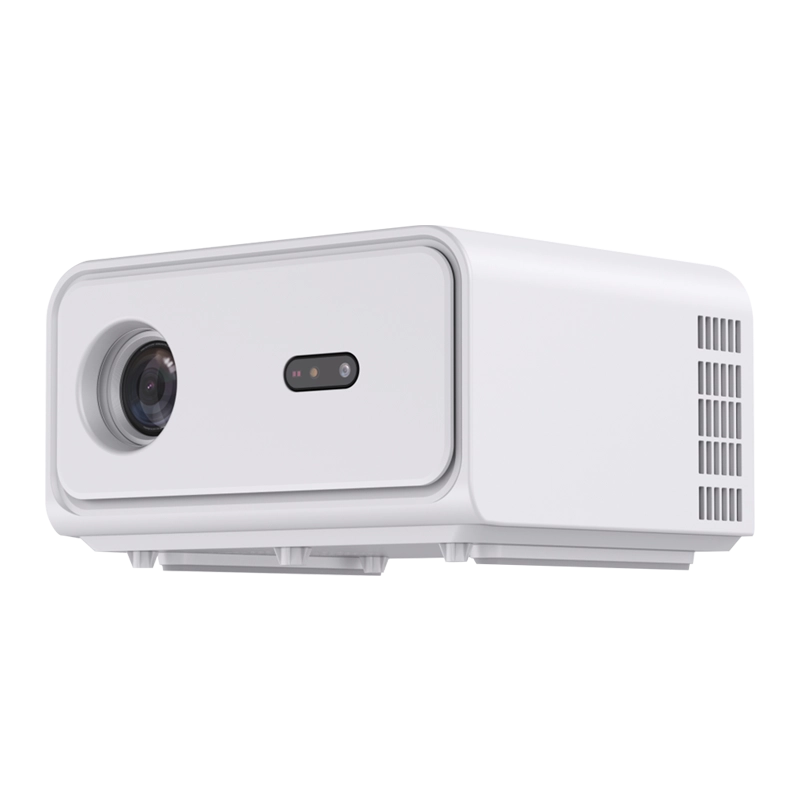
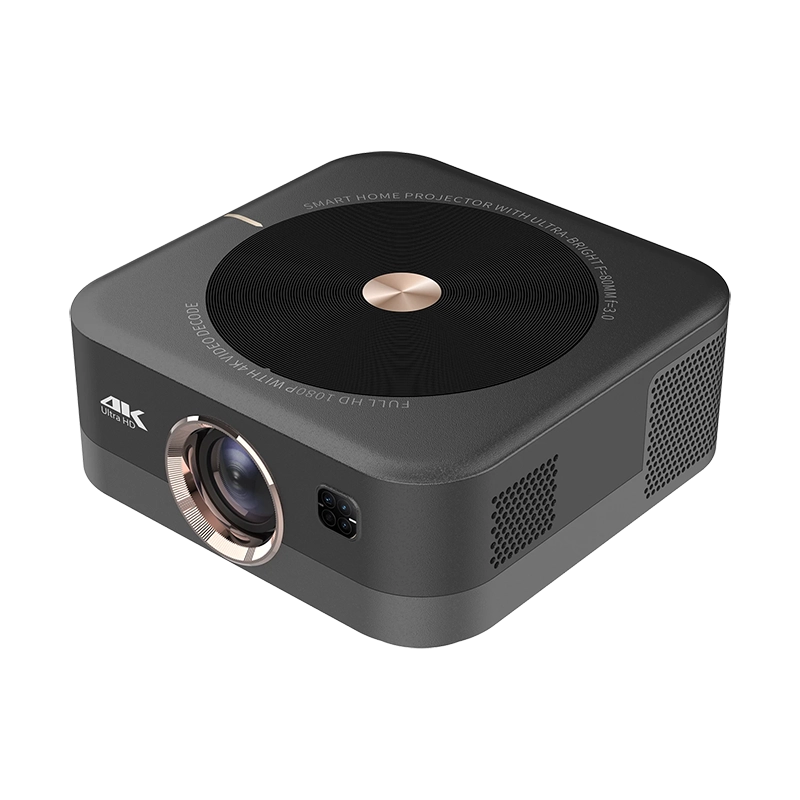
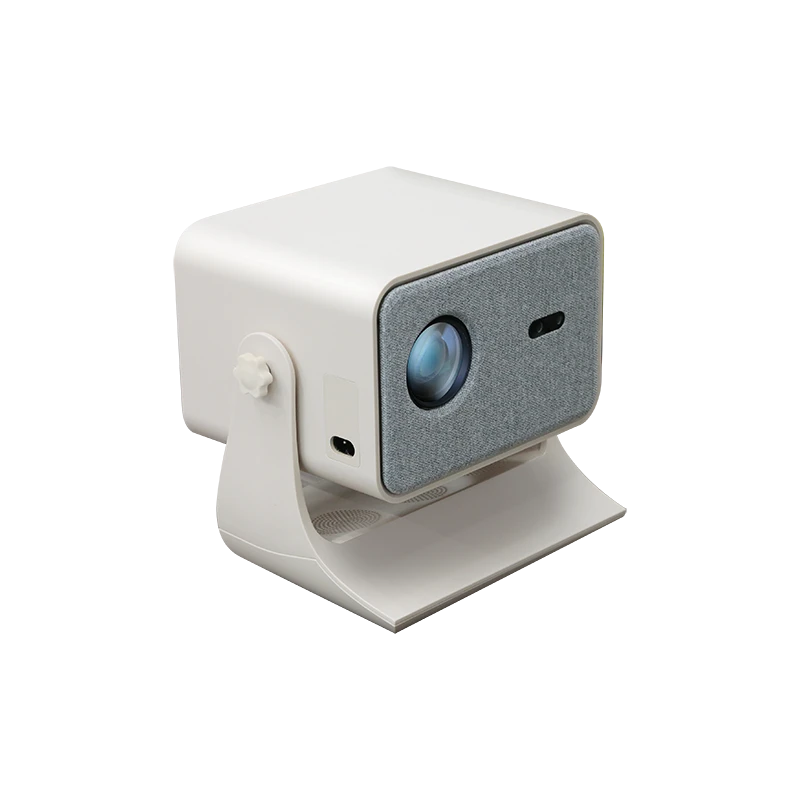
The following table uses only supplied product data. GP8 is the only listed model with a UST ratio of 0.24:1. GP93B, GP94C, GP95-GTV and GP96-GTV use 1.2:1 or 1.35:1 ratios and should be treated as conventional-throw products, regardless of physical enclosure size.
| Model | Optical and light | Platform | Interfaces | Mechanical, power and service | Data conflicts to resolve |
|---|---|---|---|---|---|
| GP8 UST | 450 ANSI lm; 1920 × 1080 native WVGA DMD 0.23-inch; 0.24:1; 15–116 cm; 30–200 inches; 1200:1; LED; 3D; auto focus/keystone | Amlogic T972; Android 9; 2 GB RAM; 32 GB ROM; Wi-Fi 6; Bluetooth 5.0; AirPlay, Miracast, EShare | 1 × HDMI input; 2 × USB 2.0; 3.5 mm audio; AC 100–240 V, 50/60 Hz; DC 19 V 4.7 A | 94 × 71 × 190 mm; 0.88 kg; 89 W; 30 dB; one dual-driver speaker rated 5 W; BT remote | Title says 400 and 400 ANSI lumens, while supplied parameter says 450; title says 4K, while native is 1920 × 1080. Confirm against production datasheet |
| GP96-GTV | 1,000 ANSI lm; 1920 × 1080 native; 1.2:1; 1.26–3.5 m; 80–120 inches; 1600:1; 4.45-inch LCD; auto screen alignment and obstacle avoidance | Main platform lists Allwinner H137/XuanTie C906 plus Google TV dongle S805X2 or RTD1332; Google TV 11 or 14; 1 GB DDR4; 8 GB eMMC; dual-band Wi-Fi; Bluetooth 5.0 | 1 × HDMI; 1 × USB; mini-jack audio; AC 110–240 V, 50/60 Hz; IR receiver | 256 × 203 × 140 mm; 2.95 kg; 130 W; 32 dB; 2 × 5 W speakers; front, rear or hang projection | Google TV 11 or 14 and S805X2 or RTD1332 are unresolved build alternatives; 10,000–10,500 “lumens” conflicts with 1,000 ANSI lm. Confirm against production datasheet |
| GP94C | Supplied heading says 550 ANSI and parameter says 500 ANSI; 1920 × 1080; 1.35:1; 1.15–6 m; 29–150 inches; 1500:1; 4.0-inch LCD; auto focus, keystone, alignment and obstacle avoidance | MTK9269; Android 9; 1 GB RAM; 32 GB ROM; Wi-Fi 6; Bluetooth 5.1; mirroring supported | 1 × HDMI; 1 × USB; 3.5 mm earphone; 1 × 100M Ethernet; AC 110–240 V, 50/60 Hz | 315 × 305 × 155 mm; 2.42 kg; 86 W; 32 dB; 2 × 5 W speakers; front, rear or hang projection | 550 versus 500 ANSI lm is contradictory. The “Hotel TV Projector” description does not establish PMS/CEC/DRM integration. Confirm against production datasheet |
| GP93B | 240 ANSI lm; 1920 × 1080 native with 4K decoding; 1.2:1; 1.2–3.5 m; 32–120 inches; 1200:1; 3.5-inch LCD; auto focus, keystone, alignment and obstacle avoidance | Allwinner H723 quad-core Cortex-A53; Android 14; 2 GB RAM; 8 GB ROM; Wi-Fi 6; Bluetooth 5.4; mirroring supported | 1 × HDMI; 1 × USB; 3.5 mm earphone; AC 110–240 V, 50/60 Hz | 194 × 194 × 66 mm; 1.04 kg; 49 W; 28 dB; one 3 W speaker; front, rear or hang projection | Product title says dust-free but no sealed-engine claim is supplied. A dry- or dust-free certification is not inferable. Confirm against production datasheet |
| GP95-GTV | Supplied heading says 350 ANSI and parameter says 400 ANSI; 1920 × 1080; 1.2:1; 1.26–3.5 m; 80–120 inches; 1600:1; 3.5-inch LCD; fully sealed optical engine | Allwinner H137/XuanTie C906 plus Google TV dongle S805X2 or RTD1332; Google TV 11 or 14; 1 GB DDR4; 8 GB eMMC; dual-band Wi-Fi; Bluetooth 5.0 | 1 × HDMI; 1 × USB; mini-jack audio; AC 110–240 V, 50/60 Hz; IR receiver | 184 × 150 × 125 mm; 1.9 kg; 130 W; less than 32 dB; 2 × 5 W speakers; front, rear or hang projection | 350 versus 400 ANSI lm; Google TV 11 or 14 and two dongle CPUs remain unresolved. Carton weight and dimensions are TBD. Confirm against production datasheet |


Quantitative selection method and worked example
Start with the target screen and room. Assume a 16:9 display of 100 inches diagonal, giving W = 87.1 inches and H = 49.0 inches. A GP8 at a 0.24:1 ratio implies a nominal lens-to-screen distance of 20.9 inches, or 531 mm. This is geometrically consistent with the stated 15–116 cm overall range, but the optical reference point and wall offset must be measured on the production unit.
For a controlled corporate room, assume a 100-inch 16:9 screen with an illustrative target average picture illuminance of 15 lux and 1.05 gain. A 1.1 m² screen has approximately 73 lumens of reflected luminous flux under a simplified Lambertian relation. Dividing by the 1.05 gain gives an illustrative initial target of approximately 77 lumens; this calculation does not replace standardized ANSI-lumen testing or room measurement because real screens, walls, color modes and beam uniformity alter the result. Validate the result by measuring 3 × 3 grid points during content playback.
| Input | Worked value | Reason for use | Validation |
|---|---|---|---|
| Diagonal | 100 in | Defines target viewing surface | Measure final screen or wall area |
| Aspect ratio | 16:9 | Defines 87.1 × 49.0 in image | Match source aspect and pixel geometry |
| Throw ratio | 0.24:1 | Selects GP8 as UST candidate | Verify with lens datum and physical sample |
| Nominal lens distance | 531 mm | Checks cabinet and service clearance | Measure wall offset, ventilation and mounting tolerance |
| Target picture illuminance | 15 lux, illustrative | Supports a 77-lumen initial output estimate at assumed gain | Measure under final lighting and content conditions |
| Ambient condition | Controlled room | GP8’s 450 ANSI lm may support initial review | Do not approve for high ambient without pilot test |
A classroom with 200–300 lux at the display is a materially different design problem. Increasing output may reduce washed-out black level and improve text contrast, but it also raises thermal load and operating cost. In that case, GP93B at 240 ANSI lumens should be treated as low-risk only if lighting control, screen gain and content requirements are verified. GP96-GTV at 1,000 ANSI lumens is the strongest supplied brightness candidate for a larger or brighter conventional-throw installation, but its 130 W consumption and 3.5 m maximum listed distance must be accepted.
| Selection condition | Primary metric | Provisional DataMax candidate | Decision gate |
|---|---|---|---|
| Wall depth below 600 mm, 80–120 inches | UST geometry | GP8 | Lens datum, image offset, ventilation and wall flatness |
| Controlled meeting room below 100 lux | 1080p, 400–450 ANSI lm, compactness | GP8 | Measured contrast and screen gain |
| High-ambient conventional room | 1,000 ANSI lm | GP96-GTV | Thermal load, network architecture and Google TV build |
| Android 14 pilot with 49 W consumption | Power and platform generation | GP93B | Ambient-light feasibility and ingress evidence |
| Hotel room requiring wired control | Ethernet plus control protocol | GP94C candidate | PMS/CEC commands, IR/USB control and Android 9 security |
| Bedroom or residential hospitality pilot | Sealed engine and Google TV | GP95-GTV | Resolve brightness, OS and packaging variants |
The final sizing record should state screen diagonal, width, height, target lux, ambient lux, screen gain, model, ANSI rating, throw ratio, lens distance, mounting offset, power, noise and responsible approver. Any change to screen gain or room lighting invalidates the photometric allocation.
Deployment profiles by application
Hotel and hospitality
Conditions include guest rooms, lobby suites or serviced apartments with controlled lighting, overnight power management and staff-operated recovery. The architectural priority is concealment around furniture, stable alignment and remote control. GP94C’s 100M Ethernet and compact projector platform merit review, while GP95-GTV can be considered only for residential-style deployments requiring its stated sealed engine.
| Layer | Hospitality architecture | Main risks |
|---|---|---|
| Content | PMS launch, captive portal or managed Android build; DRM where licensed content is used | Unapproved Google Play status, credential leakage and inconsistent app versions |
| Control | PMS or BMS over tested serial/TCP/IR/USB/CEC pathway | Commands are not in supplied specifications; discoverability or wake-up reliability is unknown |
| Audio | External distributed speakers through analog or documented digital route | Mini-jack and internal speakers are insufficient evidence for room audio routing |
| Mounting | Fixed shelf, cabinet or bracket with rear clearance | Front/rear/hang claims do not establish each model’s exact offsets |
| Operations | Remote inventory, signed OTA, golden-image room configuration | Guest resets, update failures and inaccessible service ports |
Corporate meeting and executive space
Conditions include 4–12 person rooms, Windows or macBY video conferencing, frequent 8–10 hour occupancy and demand for rapid wake-up. GP8 is the compact UST candidate where wall depth is restricted; GP96-GTV offers higher listed brightness for rooms with controlled-to-moderate ambient light. UST wall or ALR screen placement must preserve sightlines and avoid ceiling-light reflections.
- Fix camera framing, codec, microphone and screen-share source before projector calibration.
- Route HDMI through an approved switcher or room PC; the listed single HDMI input has no documented loop-through.
- Use a managed network for cast, service and OTA while keeping conferencing traffic on the defined VLAN.
- Disable consumer casting features where unauthorized presentation sources create a security risk.
- Store calibration offsets and source labels in the room-controller database rather than changing them room by room.
Primary risks are waking after standby, HDMI handshake failures, camera overload, inconsistent room UI and exposure of management credentials.
Education
Conditions include 25–40 students, 6–8 teaching hours, touch or active learning, Windows PCs and content from LMS or USB. Native 1920 × 1080 supports conventional classroom documents, but touch modules, latency, USB HID, pen tracking and interlock safety are not established by the supplied projector data. Brightness and ambient control must be evaluated with actual worksheets rather than film content.
- Use a matte screen or controlled wall finish to limit hotspot and reflection under classroom luminaires.
- Verify 16:9 and 4:3 behavior from the same HDMI source, because models use different aspect-ratio support.
- Test USB touch and camera functions against the exact host-computer driver matrix.
- Lock power management to prevent sleep during lesson transitions.
- Keep wall controls and touch cables inaccessible to students while retaining service access.
Risk priorities are text legibility, touch-driver lifecycle, cable vandalism, thermal noise and unauthorized app or storage access.
Retail and signage
Conditions include 8–14 hour daily operation, repeated video loops, high ambient exposure at certain hours and centrally managed content. GP96-GTV’s listed 1,000 ANSI lumens and 130 W demand a pilot under actual store illumination. A conventional-throw installation is more practical than GP8 where 3–4 m of projection depth is available.
Architecture should separate signage playback from guest casting, use NTP or an approved time source, monitor network reachability and retain a USB-recovery path. Risks include unattended playback failure, heat in enclosed cabinets, accidental reboot, logo/content mismatch and network isolation blocking multicast or captive-portal delivery. For IPTV workflows, multicast, IGMP behavior and protected license acquisition must be tested on the final network rather than inferred from Android support.
High-ambient rooms
Conditions above approximately 300 lux at the display require a measured photometric trial. Select the highest suitable listed ANSI rating only after accounting for screen gain, image size and acceptable operating power. Among supplied models, GP96-GTV is the 1,000-ANSI-lumen candidate, while GP94C, GP8 and GP93B require stronger lighting control or closer review.
| Control | High-ambient action | Engineering trade-off |
|---|---|---|
| Room lighting | Separate ambient circuit; avoid direct light on image | Lower ambient improves contrast without increasing heat |
| Screen | Use measured gain and viewing-angle data | Higher gain narrows viewing flexibility |
| Optical output | Use GP96-GTV pilot where 3.5 m depth permits | 130 W raises thermal and energy requirements |
| Content | Favor high-contrast graphics over dark cinema grading | Creative assets must be re-graded for installed conditions |
| Acceptance | Measure 3 × 3 lux grid with lights on and off | Pass thresholds must be project-specific |
Platform and system integration
Google TV and AOSP are different deployment baselines. Google TV provides a certified commercial interface when the exact build, certification and licensing status are documented. AOSP offers greater control for enterprise devices but does not automatically provide Google Play, Widevine provisioning, Google Mobile Services or a signed production update channel. The supplied GP95-GTV and GP96-GTV data lists Google TV 11 or 14 with two possible dongle CPUs; neither the final combination nor production certification should be assumed.
| Layer | Google TV path | AOSP path | Required evidence |
|---|---|---|---|
| Distribution | Approved device and app ecosystem, subject to final model licensing | OEM-managed APK, web or kiosk application | Exact build number, package identity and deployment rights |
| Authentication | Managed or guest Google account policy | Local identity, token store or enterprise enrollment | Credential handling and recovery test |
| OTA | Manufacturer-managed signed updates or approved update mechanism | OEM OTA server with partition and rollback protection | A/B update behavior, signing policy and failure recovery |
| MDM | Android Management API where supported and licensed | OEM API, DPC or device-owner enrollment | Enrollment, policy enforcement, app allow-list and remote wipe |
| DRM | Widevine level determined by licensing and hardware path | OEM must provide the required L1/L3 implementation and key service | License-flow test and security-level report; do not infer from codec support |
| Peripherals | Casting, CEC or vendor APIs must be enabled on the exact build | Custom HAL or application integration may be required | Interface control document and command-response matrix |
For paid streaming, HDCP protects content paths while Widevine protects software license delivery. The distinction matters because a device may decode HDR10, H.265 or AV1 yet lack the required Widevine security level or HDCP path. Procurement should request Widevine L1/L3 evidence, HDCP version and content-playback traces. See Widevine L1 versus L3 for the security and operational distinction.
| Subsystem | Minimum design check | Failure mode | Commissioning action |
|---|---|---|---|
| Network | VLAN, DHCP, DNS, NTP, 802.1X, proxy and multicast plan | No license, delayed recovery or captive-portal isolation | Test each access path and failure state |
| OTA/MDM | Signed package, staging cohort, rollback and inventory mapping | Brick risk or version drift across rooms | Upgrade 5% pilot before fleet deployment |
| Room control | PMS/CEC/API command matrix for power, input and volume | Guest cannot wake or recover the display | Run 100 command cycles across 3 devices |
| Audio | Analog or digital route, latency and automatic muting | Video lip-sync or room mute failure | Measure offset and verify mute recovery |
| Mechanical | Weight, bracket, wall flatness, cable strain and service gap | Image drift, overheating or unsafe mounting | Record torque, offsets and thermal clearance |
| Thermal | Inlet and outlet temperature under sustained load | Throttling, shutdown or shortened component life | Run 8-hour test with cabinet doors installed |
| Acoustics | 32 dB is not sufficient alone; verify at occupied-room distance | Speech interference in classroom | Measure at listener positions under full load |
Sealed optics, compliance evidence and lifecycle
“Sealed,” “dust-free” and “dust-resistant” describe different claims. GP95-GTV has an explicit full-sealed optical-engine statement; GP93B’s title says dust-free without a supplied ingress rating. No IP rating should be inferred. For all models, request optical-engine construction drawings, particulate ingress test method, service-seal procedure and evidence that opening the engine triggers a defined service state.
- Electrical safety evidence should match the destination market and exact AC configuration, such as applicable IEC 62368-1 evidence.
- EMC evidence should cover the final chassis, power supply, cables and intended configuration; a module-only report is not enough.
- Radio approval should cover Wi-Fi 6 or dual-band Wi-Fi, Bluetooth and the final antenna arrangement.
- For Google TV distribution, request the exact device approval and licensing status rather than relying on “Google TV built-in.”
- For North America, evaluate applicable FCC and ISED requirements; for Europe, CE/RED requirements; for other markets, confirm local requirements with the responsible compliance team.
- For optical safety and laser classification, request the exact light-source hazard assessment; do not transfer one model’s classification to another.
Lifecycle planning should use maintained luminance, color retention and failure rate. If a model is rated at 1,000 ANSI lumens initially, a project should not assume 1,000 lumens at end of life. Procurement can define illustrative depreciation bands, such as 80% at 20,000 hours and 70% at 50,000 hours, only after the manufacturer validates them. The GP94C and GP95-GTV data lists “10,000–10,500 lumens” for LED, which is not a stated lifetime and should be clarified.
| TCO component | Calculation method | Controlling variable | Evidence |
|---|---|---|---|
| Energy | Annual kWh = average W ÷ 1,000 × operating hours | GP93B listed 49 W to GP96-GTV listed 130 W | Metered pilot with screen, audio and peripherals |
| Maintenance | Annual visits + replacement parts + labor | Failure distribution and service access | RMA history and MTBF/MTBF-claim basis |
| Content operations | Estate hours per device ÷ productive hours per hour | MDM, OTA and remote diagnostics | Administration log for 90 days |
| Spares | Installed base × spare ratio + swap logistics | Criticality and room downtime tolerance | Approved spare list and stock rotation policy |
| Refurbishment | Devices recovered × residual value minus testing and logistics | Firmware support and optical condition | Disposition and data-wipe procedure |
| Risk reserve | Quantity × probability × downtime impact | Single-source firmware or power supply | Failure-mode analysis and PCN records |
For a worked energy comparison, a 2,000-hour year at 49 W consumes 98 kWh per GP93B; at 130 W, GP96-GTV consumes 260 kWh. This is an illustrative arithmetic comparison, not a claim about tariff, standby behavior or total system consumption. The difference becomes 3,240 kWh over 10,000 operating hours before screen, audio, network and standby loads are added.
OEM/ODM commercial process and customization
A fleet OEM/ODM program begins with a frozen product definition, not a retailer catalog request. Mechanical revisions, Android builds, optics, power supplies, packaging and approved components must be traceable by hardware revision and firmware version. For projector programs, optical calibration is especially sensitive to panel, light-source and mounting variation; a last-time-buy component can alter brightness, color, geometry or service method.
- Issue a requirements matrix covering optical output, native resolution, throw range, screen offsets, noise, power, interfaces, platform, OS, certifications and environmental limits.
- Run a design-for-manufacturing review for enclosure ventilation, service access, bracket interfaces, connector orientation and cable retention.
- Approve AVOD software architecture, signing keys, account model, OTA domain, telemetry and privacy boundaries.
- Execute golden-sample and first-article validation using production-intent units, cables, screen and room conditions.
- Release a pilot tranche through site acceptance before authorizing fleet quantities.
- Activate PCN, warranty, RMA, spare and end-of-life controls at the same time as mass production.
| Customization area | Typical scope | Change-control requirement | Acceptance evidence |
|---|---|---|---|
| Mechanical | Bracket, color, logo, port layout, ventilation | Drawing revision and tooling impact | Fit, temperature and vibration sample |
| Optics | Image size, offset, lens, screen suitability | Never bypass optical validation | Photometric and geometric report |
| Software | Boot logo, launcher, preinstalled apps, network portal | Signed build and package manifest | Upgrade, rollback and recovery test |
| Room control | PMS, CEC, IR, serial, API or relay control | Frozen command-response specification | 100-cycle control test |
| Packaging | Carton, labels, accessories and region plug | Revision under PCN | Packaging audit and drop test |
| Branding | Asset labels, serial scheme and packaging | Approval of master artwork | Production preflight report |
AQL sampling plan should be agreed before the first purchase order. ISO 2859-1 or ISO 2859-2 can support a sampling framework, while the critical defect classes, lot definition, sample size and acceptance number must be project-specific. Optical brightness, safety, missing accessories, display defects, power and firmware identity should be treated as critical characteristics. The supplier’s final AQL report does not replace pre-shipment or installation acceptance.
PCN control should require advance notice for optical, light-source, panel, power, radio, memory, Android build, Google licensing, connector and enclosure changes. Each notice should identify affected serials, change reason, qualification evidence, firmware migration path and field-return plan. Spares must match the active revision; otherwise a 5% spare ratio can create false coverage.
Warranty planning should define RMA authorization, advance replacement, return freight, customs responsibility, data handling, turnaround target and defective-unit disposition. For managed Android devices, remote extraction must respect customer privacy policy and include a documented factory-reset or storage-sanitization process. See projector OEM/ODM process for broader manufacturing governance.
Weighted RFP scoring and ordered decision tree
| RFP criterion | Weight | Full-score evidence | Partial-score treatment |
|---|---|---|---|
| Optical and application fit | 20% | ANSI report, native pixels, throw model, contrast setup and pilot grid | Conflicting specifications receive no technical credit |
| Reliability and thermal design | 15% | 8-hour thermal test, noise measurement, component traceability | Unsupported life claims score zero |
| Software and security | 15% | Signed OTA, rollback, MDM, app policy and update evidence | Consumer casting without controls scores limited credit |
| Integration interfaces | 12% | HDMI handshake, control matrix, Ethernet, audio and API tests | Port presence without command evidence earns limited credit |
| Compliance and optical safety | 10% | Final-configuration reports for destination markets | Module-only or generic certificates receive no credit |
| Service and lifecycle | 12% | Warranty workflow, spares, PCN, EOL and repair turnaround | Verbal commitments without contract language score zero |
| Manufacturing quality | 8% | AQL plan, traceability, golden sample and audit results | Generic ISO certificate alone receives limited credit |
| Commercial responsiveness | 8% | Named engineering contacts, change process and escalation path | Unclear ownership loses delivery-control credit |
- If lens-to-screen depth is below 600 mm, require a genuine UST optical path; GP8 is the only supplied ratio-qualified candidate.
- If depth allows at least 3.5 m and high ambient dominates, evaluate GP96-GTV while accepting its listed 130 W power.
- If controlled-room brightness and 49 W operating power dominate, evaluate GP93B but verify ingress evidence.
- If hospitality requires Ethernet, evaluate GP94C and demand PMS/CEC/API proof before approval.
- If Google TV and a stated full-sealed engine are mandatory, evaluate GP95-GTV after resolving OS, CPU and brightness variants.
- Reject any bidder whose native-resolution or brightness claim remains internally contradictory at award.
Award should be based on weighted technical score plus contractual compliance, not on the highest weighted score alone. Corrective actions and missing evidence must be closed before production release.
Site acceptance and troubleshooting
| Test | Procedure | Suggested acceptance | Record |
|---|---|---|---|
| Identity | Verify model, serial, hardware revision, Android/build and accessories | 100% match to approved BOM | Photograph labels and export build information |
| Focus and geometry | Display crosshatch, edge test and text pattern at operating temperature | Sharp at center and edges; no unacceptable keystone or bow | Capture screen and recorded correction values |
| Photometry | Measure 3 × 3 grid points under final lighting with fixed color mode | Meets project-specific target and uniformity band | Lux readings, ambient lux and instrument serial |
| Color and text | Display grayscale and school or corporate text assets | No clipping, focus haze or unacceptable tint | Signed visual checklist |
| Source compatibility | Connect every supported resolution, refresh rate, EDID and HDCP source | Stable image, audio and handshake | Source matrix and failed-mode notes |
| Room control | Run power, input, volume, mute and recovery commands for 100 cycles | 100% expected responses or approved exception list | Command-response log |
| Thermal stability | Operate 8 hours with final cabinet and ventilation | No shutdown, throttling alarm or unsafe surface temperature | Hourly voltage, temperature and event log |
| Network and security | Verify Wi-Fi, Ethernet where supplied, casting policy, OTA and MDM | Authorized services operate; prohibited apps and ports are blocked | VLAN, certificate and enrollment records |
| Recovery | Remove network, interrupt power and simulate failed update | Documented recovery to known-good state | Timing and operator steps |
| Final alignment | Apply tamper-resistant labels and lock menu and update policy | Unit remains calibrated after restart | Signed as-built sheet |
| Symptom | Likely checks | Isolation procedure | Corrective action |
|---|---|---|---|
| No image after power-on | AC, HDMI handshake, input selection, update state | Test known-good source and recovery mode | Replace cable, restore image or initiate RMA |
| Image blurred at edge | Wall plane, focus, thermal stabilization, screen material | Compare grid on flat reference plane and wall | Correct wall, adjust focus and recalibrate |
| Washed-out image | Ambient light, screen gain, color mode and brightness | Measure 3 × 3 grid with lights on and off | Change lighting circuit or select suitable hardware |
| Black border or resized source | Aspect-ratio setting, source resolution and keystone | Send 16:9 and 4:3 test patterns | Reset correction and select native aspect |
| Room controller cannot wake unit | CEC/API version, IR state, network and input state | Run manual wake, then command matrix | Update controller profile or correct interface driver |
| Streaming license fails | Widevine level, time, network path and HDCP route | Capture device identity and license request logs | Repair provisioning or revise DRM path |
| Device shuts down after 1–2 hours | Cabinet temperature, inlet blockage and power stability | Reproduce with doors installed and log temperatures | Correct airflow or lower operating load |
| OTA fails across a cohort | Version, certificate, storage and staging policy | Compare successful and failed device logs | Suspend rollout, correct package and resume pilot |
Expert FAQ
Does 4K decoding make a 1920 × 1080 projector a 4K projector?
No. Native resolution is the panel or imaging-array resolution; decoding only describes whether the platform can accept and decode a 4K signal. The supplied DataMax models list 1920 × 1080 native resolution, so procurement should request pixel-shift or native 3,840 × 2,160 evidence before describing them as 4K imaging systems.
Is a 0.24:1 throw ratio enough to classify GP8 as UST?
Yes, GP8 is the only supplied DataMax model explicitly listing a 0.24:1 projection ratio. The production installation must still use the manufacturer’s lens datum, image-offset table and cabinet-clearance requirements rather than measuring from the enclosure edge.
Which supplied model has the highest stated brightness?
GP96-GTV is listed at 1,000 ANSI lumens. GP8’s title and parameter conflict at 400 versus 450 ANSI lumens; GP94C conflicts at 550 versus 500 ANSI lumens; GP95-GTV conflicts at 350 versus 400 ANSI lumens. Those conflicts require confirmation against the production datasheet.
Does Google TV guarantee Widevine L1 and HDCP 2.3?
No. Google TV, codec support and HDR support do not establish a Widevine security level or complete HDCP path. Request a device-level Widevine L1/L3 report, HDCP implementation evidence and successful protected-content playback using the required license service.
Can GP94C integrate with a hotel PMS as supplied?
Ethernet presence does not prove PMS integration. The project must define the transport—CEC, API, serial, IR, USB or network protocol—plus power, input, volume, mute and recovery commands. Select GP94C only after a physical unit passes the agreed command-response matrix.
Does “dust-free” mean the optical engine is sealed?
No. GP93B is described as dust-free, but no sealed-engine statement or ingress rating is supplied. GP95-GTV explicitly states a full-sealed optical engine. For either commercial deployment, request test conditions, service procedures and the warranty treatment of ingress damage.
How much operating reserve should be required?
Specify reserve from measured ambient light, screen gain, content type and maintenance policy rather than applying a universal percentage. A pilot can establish the initial maintained-output threshold; procurement should then require manufacturer evidence for lumen depreciation, color retention and replacement criteria over the intended service period.
What should be frozen before fleet award?
Freeze the model, hardware revision, panel and light-source specifications, native resolution, ANSI measurement conditions, throw and offset data, power supply, interfaces, Google TV or AOSP build, OTA signing, certifications, accessories, bracket and packaging. Any change should enter the PCN process before shipment.


Engineering consultation
For a multi-room office, classroom, hotel or retail program, provide the room dimensions, screen material, ambient-light readings, source resolutions, operating hours, control protocol, regulatory destination and required fleet size to receive an engineering review and RFQ clarification against the final DataMax production datasheet and sample hardware.