The short answer first
A vertical l display should be bought as a fixed mechanical, electrical, and software configuration, not as a portrait screen fitted with a generic Android box. The decisive procurement question is whether the complete L-shaped assembly can preserve its intended orientation, cable path, thermal margin, recovery path, and content workflow after installation. A capable processor or Android release alone does not answer those questions.
This angle is narrower than the broader enterprise identity discussion for the vertical l display player for enterprise deployments. Here, the focus is what changes when a buyer, integrator, or OEM program specifies an L-shaped desktop or wall-mounted unit and manages it as production hardware.
Four decisions should be locked before a purchase order:
- Mechanical fit: confirm assembled dimensions, panel orientation, stand geometry, and installation envelope against the site drawing.
- Electrical and network fit: confirm power input, cable exits, network interface, and mounting environment against the approved configuration.
- Content fit: define native resolution, orientation, codec profile, DRM requirement, update method, and device-management owner.
- Evidence fit: tie the exact SKU to a production datasheet, test evidence, applicable certification records, and an agreed change-control process.
A quotation that merely says “portrait Android display” leaves the buyer exposed to substitutions in SoC, RAM/ROM, Android version, panel orientation, power option, or wireless revision. Those fields affect compatibility, certification, serviceability, and installed behavior.
DataMax has relevant platforms for retail, hospitality, banking, government, hotel, and patient-facing uses, but they are not interchangeable substitutes. A model whose stated installation fit matches the use case is the starting point. The production SKU and its evidence are the contract boundary.
Procurement teams should treat the first RFQ response as a configuration proposal, not an order acknowledgement. Every unresolved field should be recorded with an owner and approval date. That prevents a commercial promise from becoming the accidental product specification.
The rule is straightforward: document the installed unit, production identity, accepted content path, and evidence chain as one system. If one record is missing, the purchase order remains exposed to a site-level interpretation of what “portrait player” means.
Definitions a buyer cannot outsource
“Vertical l display” describes an installation geometry, not a complete technical category. The “L” may be formed by a portrait display and a base, a display joined to another panel section, or an L-shaped enclosure. Without a dimensioned drawing, procurement language cannot establish whether two units occupy the same footprint, maintain the same viewing angle, or preserve service clearance.
The first requirement is an as-installed envelope. It should include overall width, height, depth, base projection, centre height, bezel, rear protrusion, cable bend radius, and wall or desk clearance. A portrait panel’s pixel array and the enclosure’s mechanical orientation are separate specifications. If the drawing shows landscape pixels inside a portrait enclosure, the content pipeline must rotate at capture, playback, or application level, with the selected layer explicitly identified.
The second requirement is the display electrical interface. HDMI input and HDMI output have different roles. HDMI input can accept a separate media source; HDMI output on an Android player normally carries the player’s rendered image to a panel. Those functions are not interchangeable in an RFQ. DS43H has HDMI in and LVDS in, while DP810U and DP104R list HDMI out. The chosen architecture must state where decoding occurs and how the final panel is driven.
The third layer is the Android media profile. Resolution, aspect ratio, and decode capability must be recorded together. A player may decode 4K while its installed panel renders at a lower native resolution, or decode 1080P content scaled onto a portrait 9:16 canvas. Neither result is automatically defective, but both require an agreed visual target and test source.
The fourth layer is the device identity and management model. An AOSP Android build is not, by itself, an enterprise device-management solution. The buyer must define whether deployment uses an operator application, MDM, device APIs, a captive portal, a signed APK, a network-controlled content agent, or local installation. Provisioning, rollback, recovery, and update ownership need named counterparts.
Finally, “certified” is not a portable adjective. The requirement should identify the applicable standard, assessed product or component, issuing body, certificate identifier, and production configuration. An OS badge without a traceable certificate record is not procurement evidence.
A complete technical definition should also separate display timing from media timing. State whether the application targets 60Hz output, whether playback must synchronize across multiple screens, and whether the sign runs unattended. These requirements affect firmware, test content, network design, and acceptance.
Operationally, separate panel acceptance from player acceptance. Panel acceptance covers native resolution, touch response, viewing behavior, brightness, and physical defects. Player acceptance covers boot, application launch, content rotation, decoding, network reconnection, update recovery, and output stability. A single “display works” sign-off cannot reconcile both scopes.
For a managed fleet, add the identity tuple: serial number, production SKU, panel revision, firmware build, Android image, power configuration, network mode, and site asset tag. This tuple lets support distinguish an application defect from an Android-build, panel, power, or cabling defect. Without it, the same help-desk incident can be investigated differently at two sites.
Real DataMax platforms, field by field
The table separates published platform facts from decisions that must be tied to a production SKU. Conflicting catalogue, hero-image, or badge claims are excluded unless the production datasheet and purchase order resolve them.
| Model and fit | Compute, OS and memory | Media and interfaces | Panel | Procurement boundary |
|---|---|---|---|---|
| DS43H Hospitality/hospital/restaurant wall signage | Hisilicon Hi3751 quad 32-bit A53; Mali-450 AOSP Android 9 1GB / 8GB | 1080P@60 + VP9 10-bit; no 4K/AV1 HDMI in, LVDS in, USB2.0 x4, RJ45 100M, 1G opt, DC12V/2A 989x578.5x60.3mm | 43" TFT LED 1920x1080; 300 cd/sqm; 1500:1; 6ms; 89deg; backlight 50,000h; 0-50C | Confirm against the production datasheet. The power option and catalogue conflicts must be fixed per SKU PO. |
| DP810U Bank/government/hotel desktop self-service kiosk | Rockchip RK3562 quad A53 up to 1.2GHz; Mali-G52 1-Core-1EE AOSP Android 11 2GB / 16GB; 4GB optional | H.265 4K@60; H.264/VP9 1080P@60 HDMI out, USB2.0 x2, TF x2 up to 128GB, 3.5mm, RJ45 100M, DC12V/2A, Wi-Fi + BT5.0 | 8"/10.1" capacitive touch 1280x800 | 1920x1200; 1x3W | Confirm against the production datasheet. Android, Bluetooth, and TF-card claims must follow the datasheet. |
| DP104R Retail/hospitality portrait L-shape desk sign | Rockchip RK3566 quad A55; Mali-G52 1-Core-2EE AOSP Android 11 or above 2GB / 16GB; 4GB optional | H.265/H.264/VP9 4K@60 decode; 1080P encode; 8M ISP HDMI out, USB2.0 x2, TF x2, 3.5mm, RJ45 100M, DC12V/2A, Wi-Fi + BT5.0 | 10.1" IPS capacitive touch; portrait 800x1280 | 1200x1920 (9:16); 5MP cam optional | Confirm against the production datasheet. Portrait resolution and Bluetooth 5.0 must remain controlled fields. |
| DP02L Hospital bedside infotainment/care terminal | Rockchip RK3399 dual A72 + quad A53; Mali-T860 MP4 AOSP Android 11 4GB / 32GB; 8GB/64GB optional | H.265 10-bit 4K@60; H.264 4K@30; Widevine L1/HDCP2.2 optional USB2.0 x1 + USB3.0 x2; RJ45 1000M, PoE optional; Wi-Fi + BT5.0; DC12V/2A | 21.5" capacitive touch 1920x1080; 16:9 or 16:10; 16h/7d; 8MP camera; 2x3W + mic; 2x headset | Confirm against the production datasheet. Do not infer an EDLA badge, hospital software, or a different SoC. |
The closest fit to the named form factor is DP104R, because its supplied panel description explicitly states portrait 800x1280 or 1200x1920 at 9:16 and its intended use is a retail/hospitality portrait L-shape desk sign. It should not be called “the vertical l display” in an RFQ as a generic model name; use “DP104R” and identify the production datasheet revision.
The other platforms demonstrate why fit, not resemblance, governs selection. DS43H is a 43-inch wall-signage platform with input-oriented interfaces. DP810U is a compact kiosk platform with several size and resolution variants. DP02L is a care-terminal platform with optional Widevine L1 and HDCP2.2, but its panel and clinical-use requirements differ from a desk sign.
For an initial RFQ, send the mechanical drawing, panel-resolution requirement, power constraints, content workflow, and target quantity to the DataMax inquiry team. The first message should state the exact application, required L geometry and site dimensions, native panel orientation and resolution, source/codec needs, DRM requirement, Android-management approach, power/network interfaces, and approval deadline. If a sample is needed, the sample request should identify the same fields and request the proposed SKU revision in writing.
Operational model-audit exposure
How much of the failure each model can trace is an editorial comparison of sourcing responsibility, not a measured factory statistic. The score describes how much of a programme failure can potentially be traced through the selected relationship; it is not evidence about an individual shipment.

The same figures, in searchable form:
| Sourcing model | Editorial score |
|---|---|
| Sourcing agent | 22/100 |
| Component distributor | 35/100 |
| Factory-type OEM | 78/100 |
| Factory-type ODM | 90/100 |
The 90/100 score does not mean that a factory-type ODM route is free of defects or automatically appropriate for every programme. It reflects greater traceability potential when component selection, firmware, manufacturing records, and customer approval remain inside one controlled engineering relationship. A buyer still has to define acceptance criteria and inspect the shipped configuration.
The 22/100 and 35/100 entries are planning signals rather than quality verdicts. They indicate that an agent or component distributor may provide a commercial route while leaving more of the production identity, component provenance, firmware, and evidence chain outside direct control. The 78/100 and 90/100 entries indicate greater potential control in factory-type OEM and ODM relationships, subject to defined responsibilities.
A vertical l display program with a managed fleet should judge the sourcing route by document ownership. Can the supplier identify which factory built the unit, which panel revision was fitted, which Android image was flashed, and which change notices apply? If those answers remain outside the contract boundary, the route offers less value regardless of its commercial label.
Buyer situations, ranked by what they punish
A matrix makes the selection consequence visible. “Punishment” means the failure that most damages deployment, service cost, or acceptance—not a universal product ranking.
| Buyer situation | Primary requirement | Model direction | What must be verified |
|---|---|---|---|
| Retail or hospitality desk sign | Portrait 9:16 presentation and L-shaped footprint | DP104R | 800x1280 or 1200x1920, enclosure drawing, media path |
| Bank, government, or hotel self-service | Compact touch kiosk with controlled touch application | DP810U | 8" or 10.1" variant, 1280x800 or 1920x1200, Android 11 |
| Hospitality, hospital, or restaurant wall signage | 43-inch wall-mounted information display | DS43H | HDMI/LVDS source architecture, power option, operating environment |
| Bedside infotainment or care terminal | 16h/7d operation, audio/camera/accessory integration, protected content | DP02L | Optional Widevine L1/HDCP2.2, PoE option, exact panel ratio |
| Integrator supplying multiple branded programs | Stable SKU, traceable evidence, controlled revisions | Factory-type ODM direction, with a model selected from fit | Exact model BOM, change notice, test record, certification scope |
For a retail operator, the punishing failure is often a sign that is technically capable but physically ill-fitted: the portrait screen obscures merchandise, the base occupies queue space, or cables cannot follow the planned route. The RFQ must include a scale drawing and a photograph of the intended furniture position. Software resolution should not be discussed until the mechanical envelope is accepted.
For an AV integrator, the punishing failure is the handover gap. A panel may pass a visual demo but lack a defined source, mounting, network, or update procedure. The integrator needs a wiring diagram, supported input/output map, recovery process, and a named party responsible for each layer.
For a venue operator, the punishing failure is fleet inconsistency. If installations contain different Android revisions, memory configurations, panels, or accessory sets, support scripts become unreliable. A fleet asset register should use the production SKU and datasheet revision, not a marketing name.
For a pay-TV or OTT operator, the punishing failure is an unresolved rights chain. A display panel is not evidence of DRM support. If protected video is required, specify the protected-content pipeline, device-management responsibility, licence delivery, recovery behavior, and applicable certificate. DP02L lists Widevine L1/HDCP2.2 as optional; optional means the exact order must confirm inclusion and evidence.
A real deployment scene should show more than a polished display. At an electronics factory shipping dock, operators inspect neutral cartons on pallets before loading them into a container truck. That physical checkpoint is where a mislabeled panel, omitted power option, or unreconciled SKU can still be stopped before reaching the installation site.

For a digital-signage software owner, the punishing failure is a content path designed around a sample APK but never described as a supported platform. The RFQ should identify the APK, required permissions, boot behavior, screen orientation, media formats, storage policy, update mechanism, and device identifiers. If the player serves menus, wayfinding, advertising, and emergency notices, each workflow needs its own acceptance sequence.
For a brand owner managing multiple sites, the punishing failure is visual inconsistency caused by mixed panel sizes or firmware images. A central asset template can still produce inconsistent typography, safe areas, and playback behavior if native resolution differs. The master specification should identify approved panel variants, content templates, firmware baselines, and the process for adding a site-specific variant.
For a procurement office, the punishing failure is an ambiguous approval chain. The agent may believe the integrator froze the configuration, while the integrator believes the operator approved the drawing. Name a technical approver, compliance approver, commercial approver, and document revision each accepted.
A vertical l display intended for one shop should not inherit the full fleet-control burden, but it still needs an approved golden sample and installation drawing. A multi-site rollout should add production-intent sampling, serial-to-SKU traceability, firmware capture, and a change-notice workflow. Control should follow the number of sites, managed content count, and consequence of recovery failure.
How to choose, step by step
A controlled selection process prevents a visually persuasive sample from becoming an unrepeatable production order.
- Freeze the physical requirement Mark the L geometry, portrait orientation, dimensions, viewing direction, cable route, mounting method, and service-clearance zone on a drawing.
- Freeze the display requirement State native resolution, aspect ratio, touch or non-touch operation, brightness or luminance requirement, viewing-angle requirement, and operating environment.
- Freeze the compute requirement Name the Android release, required RAM/ROM, processor requirement, codec profile, output resolution, DRM requirement, and peripheral interfaces.
- Select by fit, not similarity Compare controlled fields to the DataMax model and stated deployment fit; document unresolved fields as “confirm against the production datasheet.”
- Freeze the production identity Assign the exact model, SKU, datasheet revision, firmware image, panel revision, power option, and accessory list.
- Attach evidence and change control Link test records and certification evidence to that production identity, with advance notice for component or configuration changes.
- Approve the deployment package Release wiring, installation, content, recovery, update, and acceptance instructions together.
The RFQ should prevent silent substitution. Pasteable specification lines include:
- “Device model: DP104R, or the DataMax production alternative approved in writing.”
- “Installed orientation: portrait; native panel resolution: 800x1280 or 1200x1920, with the selected value fixed on the PO.”
- “OS: AOSP Android 11 or above, as stated on the controlled production datasheet.”
- “Memory: 2GB / 16GB; 4GB optional only where expressly selected.”
- “Media: H.265/H.264/VP9 4K@60 decode, 1080P encode, and 8M ISP, subject to the accepted SKU specification.”
- “Interfaces: HDMI out, USB2.0 x2, TF x2, 3.5mm, RJ45 100M, DC12V/2A, Wi-Fi + BT5.0.”
- “Panel: 10.1-inch IPS capacitive touch, portrait 9:16; optional 5MP camera only if ordered.”
- “Production identity: model, SKU, datasheet revision, firmware version, panel revision, and power configuration must be stated on the PO and packing list.”
A shorter qualification route is appropriate for exploration, but it must not be confused with acceptance. Send the inquiry team the application, drawing, resolution, power, network, content, and DRM fields. Ask for the proposed configuration in writing, then convert the selected response into the controlled specification.
Add an installation-acceptance line for every site class. For a desk sign, record the measured base footprint and visible cable route. For a wall installation, record bracket clearance and service route behind the enclosure. For a managed fleet, record the asset identifier, firmware build, and content-agent address before the unit leaves staging.
The final step should be a signed configuration matrix rather than a catalogue PDF. Each row should contain one field, required value, source document, approver, and status. A field marked “optional” should identify who selects it; a field marked “confirm” should not remain open at shipment.
For a vertical l display, approval should also include an application owner. That person confirms boot behavior, orientation handling, safe areas, touch response, network reconnection, and production content format. Hardware approval without application approval can produce a unit that powers on but cannot operate the intended service.
What goes wrong after the PO
The most expensive failure is not necessarily a defective unit. It is accepting a unit that works but does not represent the promised configuration. For a vertical l display program, several divergences can survive a showroom demonstration and surface during rollout.
Field trap
Marketing imagery is not a controlled mechanical specification. A portrait enclosure shown with a landscape resolution array can create an application, scaling, and acceptance dispute. Put the native portrait resolution, orientation, and mechanical drawing in the PO; confirm against the production datasheet.
Field trap
A model family name is not a shippable identity. Android version, Bluetooth revision, TF-card count, RAM option, power input, panel luminance, and chipset can differ across catalogue, hero image, and datasheet. Require a production configuration sheet that resolves every conflict before PO release.
Additional post-PO failures cluster around four layers:
| Failure layer | Typical divergence | Operational consequence | Contract control |
|---|---|---|---|
| Mechanical | Portrait UI imposed on a landscape panel, or altered base depth | Content cropping, unstable mounting, rework at site | Dimensioned drawing and portrait-resolution line |
| Electrical | DC power assumption replaced by an AC configuration, or incomplete PoE option | Non-connection, adaptor changes, service delay | Exact power input and accessories on PO |
| Platform | SoC, Android release, memory, or wireless revision changed | App compatibility, management policy, update failure | SKU/BOM/firmware identity and change notice |
| Compliance | Badge or certificate not matched to shipped configuration | Rejection during compliance review | Certificate identifier and production scope |
| Media | Codec or DRM assumed but not ordered | Black frames, failed licences, unsupported content | Accepted media matrix and DRM evidence |
| Fleet | One programme spans mixed revisions | Inconsistent recovery and support workflows | Asset register keyed to production revision |
The cost is typically programme delay rather than one failed device. A retail rollout may stop when several units fail the portrait-resolution check. A hospital programme may be unable to accept the application because optional DRM or PoE was treated as standard. An integrator may discover late that the panel is driven externally rather than by an internal Android output.
A vertical l display can also fail because the enclosure changes after artwork approval. A revised base, rear cover, bracket, or cable gland may alter centre of gravity, viewing angle, ventilation, or service access. Require a no-change rule for mechanical parts after golden-sample approval, or apply the same engineering-approval process used for electronic substitutions.
Application changes create another divergence. If the buyer replaces a portrait menu layout with a browser page, the layout may use a desktop aspect ratio, hardware-acceleration assumptions, or input methods not exercised on the sample. Media acceptance should use the production application, not a generic video loop. Include the longest menu names, emergency notices, network interruption, reboot behavior, and approved content formats.
Thermal and power assumptions require separate acceptance evidence. A unit that passes a short demonstration may behave differently under continuous operation, especially when mounted against a wall. Ask the supplier to define the tested operating condition, duration, load, and ambient environment. Where the supplied facts state 0-50C for DS43H, that value should not be silently broadened or narrowed without controlled specification change.
Make acceptance conditional on evidence, not merely shipment. Sample production-intent units, verify labels against the PO, run agreed content and network tests, and retain traceability from assembly record to finished unit. Any change in panel, SoC, RAM/ROM, Android image, wireless module, power configuration, or accessory set should trigger written review.
Another failure is the mismatch between the quoted sample and production-intent unit. A sample may be assembled by a specialist team with a controlled image and specialized accessories, while the production batch uses a different line, operator sequence, or packaging procedure. State whether the approved golden sample, production-intent sample, or both represent the shipment.
A vertical l display can fail at handover because the installation drawing names the wrong owner for a cable or network termination. Define whether the supplier, integrator, network operator, or venue team supplies the adaptor, switch, cable, mount, and power outlet. Undefined accessories may be treated as standard in one quotation and excluded from another, creating delay even when the terminal is correct.
Verification you can ask for on paper
Factory verification must produce records that reconcile with received hardware. The useful question is not “Does the factory have SMT and AOI?” but “Can the factory connect this evidence to this SKU and this shipment?”
SMT evidence should identify the board or model family, assembly date or controlled lot, placement parameters, and inspection result. AOI coverage and disposition should identify which populated or assembled areas were inspected and how exceptions were resolved. “AOI was used” provides little acceptance value because it does not establish coverage, defect criteria, or disposition.
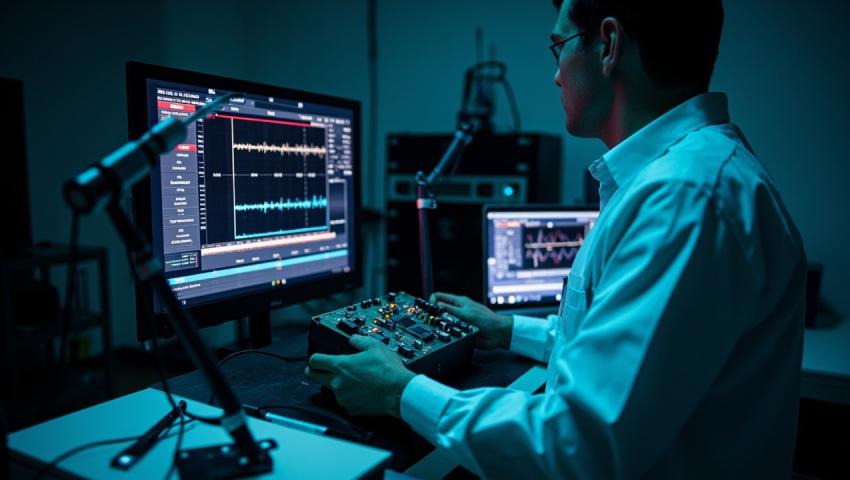
Aging evidence is especially relevant to a continuously powered display. The record should connect serial or lot identifier to stress condition, duration, temperature or load condition, intermediate observation, and final release decision. The procurement document must define what the supplier’s aging regime means rather than accepting an undefined label.
For visible defects, dark-room or display inspection can document panel condition, uniformity, dead pixels, touch response, and image stability against the acceptance standard. The buyer should supply its own sample policy or reference procedure because a generic “pass” does not define the defect threshold.
Minimum evidence index: approved configuration sheet; model/SKU/BOM revision; firmware and panel revisions; SMT record; AOI record; aging record; display and touch inspection; packaging and serial traceability; applicable certificate records; approved change-control notice.
Follow documentary review with physical sampling. Use an agreed sample from the production lot, not a showroom unit with different provenance. Check label, ports, panel orientation, native output, touch behavior, storage capacity, operating-system identity, network interface, power input, and included accessories against the PO.
For multi-site programs, sampling should be risk-based. Increase attention where the line changed, a new subassembly was introduced, or a previous shipment had field failures. Record label and packaging images without exposing confidential network information. Capture the exact firmware build identifier and attach the test log to the serial record.
The vertical l display acceptance file should reconcile component approval, unit production, and programme deployment. If a component changed after the golden sample but before assembly, the acceptance record must identify which configuration was tested. If firmware was updated after manufacture, the update record should identify the affected serial range and application version used during testing.
Certification evidence requires the same discipline. Check a certificate for product name, model, relevant standard, issuing body, status, and production relationship. If it covers a component rather than the complete terminal, say so rather than presenting it as complete-system approval. A badge visible in an image cannot replace that record.
Define the audit sampling boundary. “Show us the factory” is less useful than “show us the line, inspection station, aging area, configuration-control station, and shipment-release process for this exact model.” Map each required document to the physical point where it should originate.
A vertical l display review should retain a document index with revision dates. A certificate record, datasheet, firmware release, and inspection plan can change independently. Show which revision was valid during production and which during acceptance, preventing later documents from being applied retrospectively without basis.
DataMax can support procurement through a factory-quality review or a manufacturing discussion. Request a video factory audit, a walkthrough of SMT/AOI/aging evidence, and an explanation of how changes in SoC, Android build, panel, wireless module, or power configuration trigger customer notice. Reference the exact model and site configuration so the evidence is relevant rather than generic.
Entry tier versus commitment tier
The practical difference between entry and commitment sourcing is traceability. Both may use a suitable platform, but only the commitment route should lock production identity, evidence package, and engineering response path.
| Control item | Entry sourcing route | Commitment route | Buyer decision |
|---|---|---|---|
| Configuration control | Commercial model label or broadly specified configuration | Model, SKU, BOM, datasheet, panel and firmware revisions | Which fields are contractually fixed? |
| Evidence | General quality statement or sample inspection | Lot-linked SMT, AOI, aging, display and traceability records | Can evidence reconcile with the shipment? |
| Compliance | Badge or general reference | Certificate identifier, scope, production configuration and expiry handling | Which exact product is covered? |
| Change management | Informal notice after a substitution | Advance approval for controlled changes and disposition rules | Who can approve a change? |
| Engineering support | Retailer or distributor coordination | Factory engineering escalation tied to the program | Who resolves media, mechanical, or system faults? |
| Scale path | Good for one-off or low-complexity needs | Structured path to fleet rollout and revision control | Does the route match the program lifecycle? |
| Sample governance | One demonstration unit | Approved golden sample and production-intent sampling plan | Which unit represents the shipment? |
| Recovery ownership | Local or distributor-led troubleshooting | Factory, integrator and operator escalation matrix | Who owns each failure layer? |
| Programme documentation | Model catalogue and basic wiring information | Configuration matrix, acceptance method, change notices and traceability index | Can another team deploy the same unit? |
An entry route can be appropriate for a single demonstration unit, small pilot, or noncritical internal display. Its lower control depth is acceptable only when the buyer explicitly accepts that risk and the hardware has no hard managed-deployment requirement.
For a fleet program, the commitment route should include an approved golden sample, controlled specification sheet, acceptance tests, serial traceability, factory-audit access, and change-control procedure. The commercial scope should define what happens when the factory proposes a different SoC, panel, memory configuration, Android build, power option, or wireless revision.
Model selection remains separate from sourcing depth. DP104R can fit a retail/hospitality portrait L-shaped desk sign, while DS43H can fit a 43-inch wall-signage application; neither becomes a better platform merely because it was sourced through a stronger route. The stronger route improves control over what is delivered. The application still determines the correct platform.
Record the decision as a control-depth review rather than a price-led tier choice. For a one-site pilot, list missing evidence and assign a risk owner. For a multi-site rollout, identify which missing controls would prevent replacement of an entire batch. That converts the entry-versus-commitment decision into engineering and operations requirements.
A vertical l display pilot can use the entry route if its purpose is to validate content, mounting, and network behavior before fleet commitment. The pilot report should record what remains unverified, especially panel revision, production identity, aging evidence, and change control. Those unresolved items become entry conditions for the next production phase.
For the closing RFQ step, send the DataMax inquiry team one consolidated package: site drawing, exact display requirement, proposed model, controlled configuration fields, sample needs, certification evidence request, target deployment stage, and required delivery date. That package gives engineering and procurement teams a common basis for comparison.
Further reading
- Vertical L Display Player for Enterprise: Identity
- Compliance support by market
- About DataMax
- RFQ checklist for device procurement
- Procurement glossary
- 43-inch hospital digital signage
- Compact kiosk display
FAQ
Is a portrait Android display automatically a vertical L display?
No. Portrait orientation describes screen content or pixel orientation. An L-shaped product also requires a defined mechanical assembly, base or adjoining section, dimensions, and installation envelope. Request the production drawing and native resolution, then confirm both against the selected SKU. The drawing, panel specification, and acceptance test must describe the same physical configuration.
Which DataMax model directly states a portrait L-shape desk-sign fit?
DP104R states a retail/hospitality portrait L-shape desk-sign fit. Its supplied panel facts include 10.1-inch IPS capacitive touch, portrait 800x1280 or 1200x1920 at 9:16, and an optional 5MP camera. Other specifications and configuration control remain subject to the production datasheet and PO.
Can the DP104R be treated as a 4K-output device from its decode specification?
No. The supplied facts state H.265, H.264, and VP9 4K@60 decode, 1080P encode, and an 8M ISP. Decode capability does not establish a 4K native panel or 4K output path. The RFQ should separately specify panel resolution, playback resolution, scaling method, and HDMI output behavior.
What evidence should be requested before shipment approval?
Request the approved configuration sheet, exact SKU and datasheet revision, panel and firmware identity, SMT and AOI records, aging results, display and touch inspection, packaging and serial traceability, applicable certification records, and change-control procedure. Evidence should link to the production lot rather than describe generic factory capability.
Does “Android 11 or above” resolve platform risk?
No. “Or above” can conceal a different Android build across deliveries. Require the exact OS version, firmware image identifier, security-update policy, provisioning method, and production configuration. Apply the same change-control process used for SoC, panel, memory, wireless, and power changes.
How should a buyer handle an optional DRM feature?
Write the optional feature as a conditional RFQ and PO line, then require confirmation that it is present in the shipped SKU. For DP02L, the supplied facts list Widevine L1/HDCP2.2 as optional; do not infer inclusion, licence provisioning, or certificate coverage. Confirm against the production datasheet and obtain applicable production evidence.