Before the terminology: the decision
For android tv box wholesale sign-off, confirm 6 controlled fields: operating-system baseline, SoC, RAM/ROM pair, media and rights behavior, physical connectivity, and destination-market evidence. Verify the first 5 against the frozen production datasheet and model BOM; verify the sixth against shipment-specific compliance records. A quotation that says only “Android 4K box” does not define a deployable product.
Start with the canonical wholesale Android TV box guidance for the broader buying process, then use this page for the specification fields that commonly vary. The key distinction is between a catalog platform and a committed SKU. A family may list several RAM and storage tiers, while the purchase order must identify one tested configuration.
For each proposed model, require 5 evidence lines:
- Exact model and SoC.
- Exact AOSP Android version.
- RAM and ROM as one immutable pair.
- Codec, DRM, HDCP, and output limits.
- Port list plus target-market certification scope.
The commercial question is not “which box is best?” It is “which production configuration satisfies the operator middleware, content rights, display environment, network design, and regulatory target without creating an unsupported hardware commitment?” DataMax can provide 4 quoted platform directions for that comparison, while every selected option remains subject to the production datasheet and order-specific confirmation.
A practical sign-off record should identify the buyer, application owner, engineering approver, and document revision. An operator buying 4K IPTV equipment may specify DM21P only after confirming the middleware image, network requirement, protected-content path, and destination market. A distributor serving white-label OTT projects may instead select DM21S, but the launcher, preinstallation, remote-management, and update arrangement still belongs in the commercial schedule.
The fastest way to expose ambiguity is to convert every catalog sentence into a testable row. “Wi-Fi6” becomes a radio configuration and approval attachment; “4K” becomes codec, profile, output resolution, and frame rate; “Android TV box” becomes an AOSP baseline plus the intended application and update path. This prevents a familiar category label from hiding an unresolved production choice.
For android tv box wholesale negotiations, place the frozen SKU at the top of the quotation, not in a footnote. Include the exact model, SoC, OS, RAM/ROM, output path, media scope, rights configuration, ports, target market, and evidence schedule. Any exception must identify whether it is unresolved, optional, excluded, or subject to confirmation against the production datasheet.
The comparison buyers actually make
Buyers usually move from an entry platform to a higher-capability platform, but “higher” applies to specific engineering fields rather than every requirement. RAM headroom, storage, codec generation, interface mix, and certification burden determine whether a higher platform reduces deployment work.
| Decision field | Entry commitment | Higher-capability commitment | RFQ evidence required |
|---|---|---|---|
| Primary driver | Cost-controlled IPTV or OTT deployment | UHD, gaming, or richer operator experience | Monthly active concurrency, playback profile, operator middleware |
| Software baseline | AOSP Android 11 or Android 14 | AOSP Android 14 | Frozen build number and upgrade policy |
| Memory posture | 2GB base configurations | 4GB base configurations | RAM/ROM pair in the purchase order |
| Media scope | 4K30 to 4K60 depending on model | Up to 4K120 decode on one quoted platform | Codec profile, output resolution, and refresh-rate test |
| Interface posture | 2 USB 2.0 ports on quoted models | USB 3.0 plus USB 2.0 on DM21T | Mechanical drawing and accessory list |
| Rights control | Widevine L1 / PlayReady options; HDCP where specified | Widevine L1 / PlayReady options | License-service account, device provisioning, and HDCP route |
| Storage posture | Base storage differs across models | 64GB base is stated for two quoted platforms | ROM line, application budget, and update mechanism |
| Ethernet posture | RJ45 100M is stated across the quoted set | 1G is an option on selected platforms | NIC configuration, switch capability, and throughput test |
| Wi-Fi and Bluetooth | Wi-Fi6 and BT5.4 combinations vary | Selected interface mix differs by platform | Module configuration, antenna evidence, and radio approval |
| Refresh-rate scope | 4K30 or 4K60 decode entries | 4K120 decode entries on DM21T | Source profile, output mode, display, and sustained test |
| USB workload | USB2.0 host accessories and service tasks | USB3.0 available on DM21T | Device list, transfer expectation, and power requirement |
| Software lifecycle | Android 11 or Android 14 baseline | Android 14 baseline with application-specific middleware | Image owner, patch cadence, and rollback method |
The DM21P starts from a 2GB base and an operator-oriented fit. The DM21S addresses IPTV/OTT white-label requirements with a 2GB base. The DM21T and DM22Q each carry a 4GB base, but their interfaces and media positions differ. A buyer selecting on RAM alone risks paying for capability that does not solve the deployment constraint.
For android tv box wholesale comparisons, separate platform selection from option selection. Put every deviation from the base configuration into a line-level BOM, then test the complete BOM against the operator’s device profile. That discipline prevents a nominal specification sheet from becoming an ambiguous shipment.
Consider an integrator specifying service for 200 hotel rooms. A 4K@60 decode claim may satisfy the display use case, while 100M Ethernet may be adequate for the operator traffic pattern; neither decision authorizes USB3.0, 1G Ethernet, or optional rights features. A cloud-gaming buyer, by contrast, may need sustained decode behavior, a high-speed USB accessory path, and a specific client profile. The bill of differences is operational: each added field must remove a named deployment risk.
For distributor-led programs, standardize the comparison sheet across suppliers. Give every quotation the same rows: model, SoC, OS, RAM/ROM, video decode, output, DRM, HDCP, audio, interfaces, network, target-market evidence, and sample acceptance criteria. A supplier that cannot populate a row should mark it unresolved rather than substitute a marketing label. This creates a direct comparison between commercial offers and exposes where one supplier has a confirmed commitment while another has only a family statement.
Where the terminology comes from
“Android TV box” describes a product category, not a complete technical specification. The procurement requirement should separate 5 layers.
Hardware platform. The SoC defines the processor, media engine, display interfaces, memory controller, and supported peripherals. It is not interchangeable with the operating-system label. A quad Cortex-A35 platform running AOSP Android 11 and a quad Cortex-A510 ARMv9 platform running AOSP Android 14 occupy different engineering positions.
Operating-system baseline. “AOSP Android 11” or “AOSP Android 14” identifies the base software. For operator deployments, the RFQ must additionally identify the middleware image, launcher, device-management model, provisioning method, security patches, update channel, and preinstallation policy. None of those integration elements may be inferred from the AOSP version alone.
Media and rights chain. Codec support covers decoding, while HDMI output, display mode, refresh rate, and HDCP form the content-protection path. Widevine L1 and PlayReady describe DRM-module options; they do not prove that a service account, license policy, hardware secure path, or particular operator agreement is ready.
Connectivity. HDMI 2.0b output, USB, RJ45, Wi-Fi, Bluetooth, AV, S/PDIF, and TF slots define physical integration options. A 100M RJ45 can be technically present while still creating a network bottleneck for large application or game payloads. Conversely, 1G Ethernet may be an option rather than the standard configuration and must be fixed in the order.
Regulatory and market compliance. Android compatibility, radio rules, electrical safety, EMC, and market-specific requirements are separate approval domains. A production model name does not automatically transfer every certification to every destination.
| Term or claim | What it establishes | What still requires evidence |
|---|---|---|
| 4K | A stated resolution class | Frame rate, codec profile, output configuration |
| Widevine L1 | A requested DRM capability level | License-service provisioning and playback test |
| AOSP Android 14 | The base OS generation | Frozen image, middleware, updates, and provisioning |
| Optional 1G Ethernet | A configurable network path | The exact SKU and firmware configuration |
| HDCP 2.2 optional | A possible protected-output configuration | Exact model configuration and downstream display support |
| 4K@120 | A stated decode entry | Source profile, display mode, and sustained behavior |
| AI-SR | A stated processing feature | Implementation, operating mode, and validation method |
| Wi-Fi6 | A stated radio-generation class | Module, antenna path, regional configuration, and approval |
| Dolby Vision/DTS | A stated optional feature area | Ordered status, licenses, firmware, and playback validation |
| Operator set-top box | A stated application fit | Middleware, provisioning, DRM, and device-management scope |
This vocabulary matters in android tv box wholesale because generic trade terms often collapse several layers into one line. Require the response to identify which layer a claim changes, then record the corresponding test or document.
The architecture also determines who owns each acceptance result. The hardware supplier can verify the assembled platform, firmware function, and physical interfaces. The application owner verifies the operator middleware, launcher, entitlement workflow, and service experience. The compliance owner confirms that the destination-market evidence applies to the selected radio and hardware configuration. Keeping those roles separate avoids a supplier claim being treated as an operator certification.
Use precise nouns in the RFQ. Ask for “AOSP Android 14 with the agreed operator middleware image,” not “latest Android.” Ask for “AV1/H.265 L5.1 4K@60 decode with the selected HDMI output mode,” not “supports all 4K.” Ask for “Widevine L1 option with the named provisioning procedure,” not “DRM ready.” Each phrase maps to evidence that can be sampled, inspected, and retained.
Five production SKUs compared
The stated platform set contains 4 quoted DataMax models. Their fixed production facts are compared below without inferring unlisted performance, dimensions, wireless bands, or certification coverage.

The same figures, in searchable form:
| Platform | Base RAM |
|---|---|
| DM21P | 2 GB |
| DM21S | 2 GB |
| DM21T | 4 GB |
| DM22Q | 4 GB |
Source: DataMax production datasheets, base SKU; higher RAM is a configured option on most platforms. Base configuration only; optional RAM tiers exist and must be fixed line-by-line in the PO.
| Field | DM21P | DM21S | DM21T | DM22Q |
|---|---|---|---|---|
| Product fit | 4K IPTV / operator middleware set-top box | 4K Android TV box for IPTV/OTT white-label | Premium UHD / cloud-gaming box | Gaming-oriented Android TV box |
| SoC | Amlogic S905Y4, quad Cortex-A35 | Amlogic S905Y5, quad Cortex-A55 | Amlogic S905X5, quad Cortex-A510 (ARMv9) | Amlogic S905X5M, quad Cortex-A55 up to 2.5GHz |
| OS | AOSP Android 11 | AOSP Android 14 | AOSP Android 14 | AOSP Android 14 |
| RAM / ROM | 2GB / 8GB (4GB; 16/32/64GB optional) | 2GB / 16GB (2/4/8GB; 16/32/64GB optional) | 4GB / 64GB (family options) | 4GB / 64GB (2/4/8GB; 16/32/64GB optional) |
| Decode | AV1 [email protected], VP9/H.265 4K@60, H.264 4K@30 | AV1 / H.265 [email protected] 4K@60 | H.266/VVC [email protected] 4K@120, AV1/VP9/H.265 4K@120, AVS3 4K@120, H.264 4K@60; inline AI-SR | AV1/H.265 L5.1 4K@60; inline AI-SR (no NPU TOPS stated) |
| DRM | Widevine L1 / PlayReady / HDCP 2.2 optional | Widevine L1 / PlayReady optional; Dolby Vision/DTS | Widevine L1 / PlayReady optional | Widevine L1 / PlayReady optional; Dolby Vision/DTS |
| Ports | HDMI 2.0b out x1, USB2.0 x2, TF, S/PDIF, 3.5mm AV, RJ45 100M, Wi-Fi6 2x2 + BT5.4, DC 5V/2A | HDMI 2.0b out, S/PDIF, AV, USB2.0 x2, TF, RJ45 100M (1G optional), Wi-Fi6 2x2 + BT5.4 | HDMI 2.0b out (no HDMI in), USB2.0 x1 + USB3.0 x1, TF, S/PDIF, AV, RJ45 100M (1G opt), Wi-Fi6 + BT5.4 | HDMI 2.0b out, USB2.0 x2, TF, S/PDIF, AV, RJ45 100M (1G opt), Wi-Fi6 2x2 + BT5.4 |
The DM21P’s unique stated option is HDCP 2.2. The DM21S and DM22Q both list Dolby Vision/DTS, but that does not make their media profiles interchangeable. The DM21T is the only quoted model with USB3.0 and 4K@120 decode entries. Its output remains 4K because the production datasheet does not establish an 8K output path. Confirm any selected option against the production datasheet.
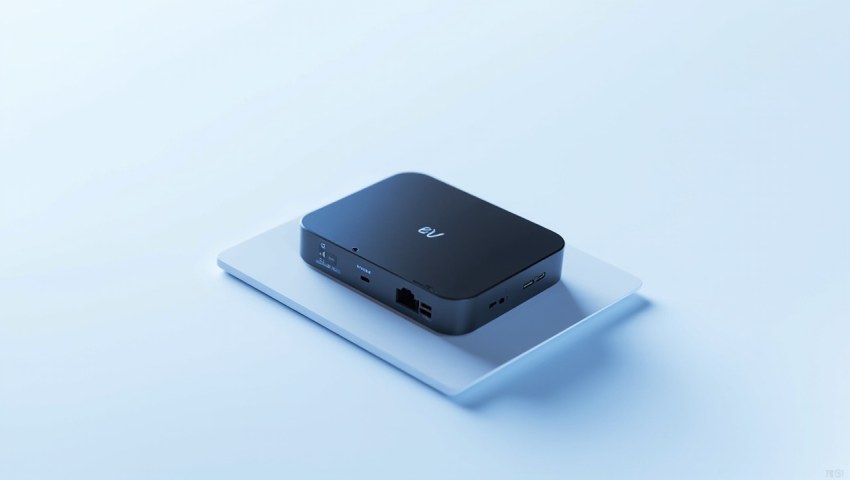
The platform matrix supports a structured choice. DM21P is the stated direction for a 4K IPTV or operator-middleware set-top box, and its port list includes DC 5V/2A, 3.5mm AV, and two USB2.0 ports. DM21S is the stated direction for an IPTV/OTT white-label product on AOSP Android 14. DM21T combines a quad Cortex-A510 ARMv9 configuration with the broadest stated decode scope in this group. DM22Q uses a quad Cortex-A55 up to 2.5GHz and states AV1/H.265 L5.1 4K@60 with inline AI-SR.
Do not infer dimensions, display specifications, remote-control variants, regional bands, or certification coverage from these fields. Those details are not supplied in the quoted production facts and must be confirmed against the production datasheet. The same restriction applies to output: a decode entry at 4K@120 does not authorize an 8K claim or guarantee every display mode without validation.
RAM comparison is useful for capacity planning but not for product ranking. DM21P and DM21S use 2GB bases, while DM21T and DM22Q use 4GB bases. Storage differs independently: DM21P lists an 8GB base, DM21S lists a 16GB base, and DM21T and DM22Q list 64GB bases. The purchase order must freeze both values and any optional tier.
The interfaces determine integration effort. DM21T offers one USB2.0 and one USB3.0 port and explicitly has no HDMI input. DM21P, DM21S, and DM22Q list two USB2.0 ports. A capture-card, game-console, or accessory plan requiring HDMI input cannot be treated as interchangeable with the stated DM21T configuration. For android tv box wholesale ordering, the physical accessory schedule should reference the selected model and its exact port list rather than a generic accessory kit.
Buyer situations, ranked by what they punish
A hotel room, telecom subscriber home, retail digital-signage venue, and cloud-gaming service punish different specification errors. Rank the situation by the failure that causes the largest operational interruption: loss of service, unusable content, compliance exposure, or weak experience.
| Situation | What the deployment punishes | Controlling requirement | Model direction |
|---|---|---|---|
| Operator IPTV | Middleware, provisioning, or interface mismatch | Operator image, device management, 100M Ethernet, HDCP route | DM21P for the stated operator fit |
| IPTV/OTT white-label | Launcher and branding instability | AOSP Android 14, controlled preinstallation, DRM option | DM21S for the stated white-label fit |
| Premium UHD | Resolution, codec, or refresh-rate mismatch | 4K@120 decode entries, 4GB base, high-speed USB | DM21T for the stated UHD fit |
| Cloud gaming | Latency, thermal behavior, and input ecosystem | Compute platform, network path, controller and accessory plan | DM21T for the stated cloud-gaming fit |
| Gaming-oriented retail | Display timing and sustained experience | 4K@60 media scope, 4GB base, selected connectivity | DM22Q for the stated gaming fit |
| Hospitality | Guest-visible failure and remote recovery cost | Stable image, concealed installation, remote operations | Compare operator and white-label platforms against the property workflow |
| Telecom subscriber home | Activation, entitlement, or in-home return rate | Provisioning, stable Ethernet, operator middleware, protected playback | Use the operator-fit direction and freeze the complete image |
| Digital signage | Unattended reboot or scheduled playback failure | Storage, sustained operation, remote recovery, scheduled content plan | Compare the 64GB-base platforms when the application budget requires it |
| Sports or UHD demo zone | Visible frame-rate or codec incompatibility | Source profile, 4K60 or 4K120 decode entry, display mode | DM22Q for stated 4K@60 scope; DM21T for 4K@120 decode entries |
| Corporate distribution | SKU proliferation and unsupported variants | Frozen BOM, common accessories, consistent packaging | Choose one committed configuration per market line |

In a modern hotel room, the compact box may be hidden behind the television while the guest sees only the display and remote-control workflow. The engineering decision is not merely visual: power, heat dissipation, IR or network control, and remote recovery determine whether a hidden installation becomes an invisible support asset.
For android tv box wholesale programs, build the deployment matrix from actual sites. For an operator, profile continuity and provisioning dominate. For a distributor serving small integrators, an installable consistent SKU may matter more than maximum codec scope. For cloud gaming, validate the complete client path rather than inferring performance from codec support. Each situation should produce a short list of mandatory fields, a test method, and a named acceptance owner.
The hospitality example adds constraints that a bench comparison can miss. A hidden installation still needs cable routing, service access, power, network reach, and a recovery process. The buyer should test remote application recovery with the intended network, confirm the selected output path against the room display, and define what happens when the box cannot boot after an image update. The stated product facts do not include dimensions or thermal figures, so the mechanical and thermal design must be confirmed against the production datasheet and the installed environment.
Operators should distinguish a subscriber device from a generic OTT appliance. The acceptance matrix may require boot into the operator image, service discovery, entitlement handling, network association, stable playback, reset or recovery behavior, and an auditable software version. White-label integrators need controlled preinstallation and branding, while gaming programs need input accessories, sustained client operation, and a display-specific test. Each application changes which specification differences matter.
Distributors can reduce field variation by limiting the initial range. Instead of carrying every family option, approve one configuration for each defined deployment and attach its exact evidence package. If a second market requires a different Ethernet, rights, storage, or radio configuration, create a separate SKU line rather than describing it as a routine upgrade. This creates traceability from the end customer back to the factory test record.
A decision path for the RFQ
Turn the inquiry into a configuration-controlled request. The sequence prevents visual features from outranking operational requirements.
- Define the service Record IPTV, OTT, gaming, signage, or white-label use; operating system image; middleware; DRM service; display modes; network; peripherals; and destination market.
- Select the platform Compare the 4 quoted DataMax directions against mandatory fields, then reject any model whose unstated details cannot be confirmed against the production datasheet.
- Freeze the memory pair Specify RAM and ROM exactly. Treat optional tiers as line items rather than implied upgrades.
- Freeze media and rights State codec profile, resolution, frame rate, output path, Widevine/PlayReady requirement, HDCP requirement, and Dolby Vision/DTS requirement where relevant.
- Freeze interfaces List HDMI, USB generation and count, Ethernet speed, Wi-Fi, Bluetooth, AV, S/PDIF, TF, power, and any HDMI input limitation.
- Attach compliance scope Identify destination, operator, and content requirements; request the applicable evidence rather than assuming the catalog model carries every approval.
- Define acceptance Specify sample sequence, playback matrix, boot test, interface test, burn-in duration, packaging inspection, and document handoff.
A pasteable RFQ line for android tv box wholesale should read like this: “Selected model: [exact model]; SoC: [verbatim]; OS: [verbatim]; RAM/ROM: [one pair]; output/decode: [profile and frame rate]; DRM/HDCP: [selected status]; ports: [fixed list]; firmware source: [AOSP or customer middleware]; target market: [country/region]; certification evidence: [named attachments].”
Ask the supplier to respond in the same line-item order. A response that changes RAM, Ethernet speed, DRM, or firmware without identifying the affected line number is not configuration control. That discipline is especially important when the same platform supports several market-facing configurations.
Expand the pasteable RFQ with acceptance ownership. For example: “The buyer will supply the operator image and protected-content test account; DataMax will verify boot, display output, USB enumeration, Ethernet association, audio output, and agreed media playback; the distributor will approve the packaged sample; unresolved optional fields remain excluded until confirmed in writing.” This assigns an action and an evidence result to every requirement.
Use a deviation schedule after platform selection. A line such as “1G optional” should move into the selected configuration only after approval. A line such as “HDCP 2.2 optional” must specify whether it is ordered. For interfaces, enumerate ports rather than saying “standard I/O.” For the AOSP baseline, add the middleware and update responsibility. For the market, attach the actual evidence requested.
Before releasing the PO, conduct a configuration review involving engineering and procurement. Engineering checks technical sufficiency; procurement checks that the quotation, PO, sample, and proposed production records use the same identifiers. Any difference becomes a numbered deviation with an owner and disposition. This process is more reliable than asking for a final datasheet after the sample has already shaped the project.
For repeat android tv box wholesale orders, preserve the frozen SKU, approved golden sample, test matrix, and document revision. A new quotation should state whether it is identical to the prior release or identify every changed line. Reopening a previously approved configuration without evidence can shift the risk from engineering back to field deployment.
The traps in this category
Most commercial discrepancies come from omitted qualifiers rather than incorrect headline specifications. 10 traps deserve a written rule.
- Catalog SKU versus ordered SKU. A family option does not prove the sample matches the PO.
- Decode versus output. Decode support does not establish the maximum output mode.
- DRM module versus license readiness. A named DRM level does not prove service provisioning.
- Ethernet speed ambiguity. A 100M base and optional 1G path must not be treated as equivalent.
- Optional versus standard. HDCP, Dolby Vision, DTS, and other rights features need explicit selection.
- USB generation ambiguity. USB2.0 and USB3.0 have different host, transfer, and accessory implications.
- Platform versus certification transfer. Destination-market evidence must match the exact product and radio configuration.
- Firmware ambiguity. AOSP version does not specify middleware, launcher, provisioning, or update responsibility.
- Storage-option ambiguity. A family’s RAM or ROM options do not establish the storage selected for the shipment.
- Accessory-interface mismatch. HDMI input, port count, USB generation, or audio connection can invalidate an otherwise suitable media platform.
Field trap
A quotation that describes DM21T or DM22Q through an “8K” label can conflict with the stated 4K production limits. The purchase specification must use the verified decode and output entries from the production datasheet: 4K@120 decode for DM21T and 4K@60 for DM22Q, without claiming 8K output.
Field trap
RAM alone does not define a platform commitment. For example, a 2GB base with higher RAM available may serve 2 different products, while a 4GB base does not establish that the complete firmware, operator middleware, and storage option has been validated. Freeze RAM/ROM together and test the exact image.
Field trap
An optional 1G Ethernet path is not the same commitment as the stated RJ45 100M base. If the sample uses 1G but the PO omits the option, the field installer may receive a different network configuration. Put the selected Ethernet speed on the model line, test it with the intended switch and traffic profile, and require the factory record to identify the fitted configuration.
The cost of these ambiguities appears late: an installer discovers the wrong Ethernet option, a retailer cannot obtain protected playback, an operator image fails certification, or a distributor receives samples that do not match the PO. For android tv box wholesale negotiations, make discrepancies a revision-control event rather than a shipment-quality dispute.
A second family of traps comes from feature adjacency. Dolby Vision/DTS appearing on both DM21S and DM22Q does not make their codec, USB, and SoC positions identical. The inline AI-SR entry on DM21T and DM22Q does not provide a stated NPU TOPS figure for comparison. Wi-Fi6 appearing across the quoted set does not remove the need to verify antenna, radio, and target-market configuration. Use the exact stated field and request evidence instead of constructing an implied hierarchy.
The remedy is contractual precision. Attach the selected specification matrix to the PO, identify optional fields as selected, excluded, or unresolved, and require written approval for any substitution. Require the sample, first production run, and shipment documentation to reference the same revision. If a field cannot be verified, mark it “confirm against the production datasheet” rather than allowing an adjective to become an unchallengeable deliverable.
How the factory controls the variable
Factory control is an evidence chain from component issuance to the packed unit. DataMax should expose the controls appropriate to the selected configuration rather than merely state that the units were tested.
- Incoming identity and traceability Match SoC, memory, storage, wireless module, and other approved components to the frozen BOM and lot record.
- SMT inspection Apply solder-paste, placement, and reflow controls appropriate to the board, with AOI detecting assembly defects that can create intermittent boot, USB, Ethernet, or media-path failures.
- Assembly verification Check fitted part identifiers against the configuration record before firmware application, preventing an approved 100M board from being mixed with an ordered 1G variant.
- Firmware and functional test Verify boot, storage, interfaces, network association, output mode, audio path, and the agreed playback matrix on the customer or operator image.
- Aging and dark-room verification Exercise assembled units under sustained operation, then inspect displays and relevant interfaces in a controlled dark-room procedure for visible or intermittent defects.
- Audit trail and release Retain serial, hardware revision, firmware version, test result, operator, date, and packaging disposition; release only the exact approved configuration.
Factory evidence to request for **android tv box wholesale** approval: the frozen model/BOM revision, SoC and RAM/ROM line items, SMT and AOI inspection records, firmware and playback test results, aging report, dark-room inspection record, serial traceability sample, packaging checklist, and target-market certification file. The factory can provide a video factory audit or evidence package scoped to the selected model.
The acceptance chain must connect the sample, production unit, carton, and shipment document. If the approval sample uses one Ethernet or DRM configuration and production uses another, the chain has failed even when both units boot. For a distributor program, audit the first approved production run, retain the change-control process, and define when any component substitution triggers renewed sample testing.
Define the evidence hierarchy. The frozen BOM states what should be fitted. Incoming and assembly records show what was fitted. Functional tests show how the completed unit behaved. Aging and dark-room records address sustained and visible failure risks. Serial traceability reconnects those results to the carton and shipment. Target-market certification documents confirm only the market and configuration to which they apply.
For a configuration change, the factory should identify the affected process controls. A memory substitution changes the BOM and possibly the application-capacity test. An Ethernet-option change alters the assembly check and network functional test. A rights-option change requires the correct firmware and playback acceptance. A wireless-module change may affect radio evidence and antenna validation. The exact consequence should be documented rather than assumed.
Before final release, request the factory process through DataMax factory quality controls or the manufacturer capability review, and ask for SMT/AOI/aging evidence specific to the chosen platform. To close the RFQ, email [email protected] with the SKU list, frozen RAM/ROM options, target-market certificate requirements, middleware/DRM checklist, and acceptance-test matrix.
Further reading
- Guide wholesale android tv box
- Dolby Atmos Android TV box guide
- TV box vendor selection checklist
- AOSP vs GMS solution notes
- Telecom and pay-TV operator solutions
- DataMax DM21P specifications and fit
- DataMax DM21S specifications and fit
FAQ
Which RAM configuration should an Android TV box distributor quote?
Quote the RAM and ROM as one pair selected from the production datasheet. DM21P and DM21S have 2GB base configurations, while DM21T and DM22Q have 4GB base configurations. Optional tiers must be listed line-by-line. Avoid promising a higher-memory configuration until the exact SKU, firmware, and production allocation are confirmed.
Is 4K decoding enough for operator deployment?
No. The RFQ should also fix codec profile, frame rate, HDMI output mode, refresh-rate policy, HDCP requirement, and DRM provisioning. Decode capability does not by itself establish the display path, protected-content readiness, or operator middleware compatibility. Request sample playback evidence using the agreed content and display configuration.
Does Widevine L1 mean protected playback is ready?
No. Widevine L1 identifies the requested DRM capability level. Deployment still requires the correct license-service account, provisioning process, device policy, and compatible content. PlayReady, HDCP, Dolby Vision, and DTS should be stated separately where required, with the exact ordered configuration confirmed against the production datasheet.
Can one model serve several distributor markets?
It can serve several markets only when the selected hardware, firmware, rights, radio configuration, and destination-market approvals all align. A base model name alone does not transfer certification scope. For android tv box wholesale programs, keep market-specific BOM lines and compliance attachments separate even when the industrial design is shared.
Which platform fits a premium UHD or cloud-gaming program?
The quoted fit for premium UHD and cloud gaming is DM21T, with a 4GB base, 4K@120 decode entries, USB3.0 plus USB2.0, and a quad Cortex-A510 ARMv9 configuration. Validate sustained performance, display behavior, network path, peripherals, and the actual operator or gaming client before production release.
What evidence should accompany a wholesale quotation?
Request the frozen SKU and BOM revision, exact RAM/ROM pair, target-market certificate requirements, middleware/DRM checklist, interface and playback test matrix, and factory evidence such as SMT/AOI, aging, dark-room, and serial-traceability records. The quotation should identify which documents apply to the proposed shipment rather than relying on a general factory capability statement.
When should an optional feature become part of the purchase order?
Only after the buyer approves the configuration and the supplier identifies its effect on the BOM, firmware, test matrix, and applicable evidence. Options such as 1G Ethernet, higher memory or storage, HDCP 2.2, Dolby Vision, or DTS must appear as selected, excluded, or unresolved lines. An approved sample should then establish the physical and functional baseline for that exact configuration.
How should a buyer verify that production matches the sample?
Compare the model, SoC, RAM/ROM, output, rights configuration, and interface list against the frozen specification. Then review serial-linked factory records covering assembly, firmware functional testing, aging, dark-room inspection, and packaging disposition. Any change to a fitted component or firmware image should trigger a documented deviation and an agreed retest before production release.