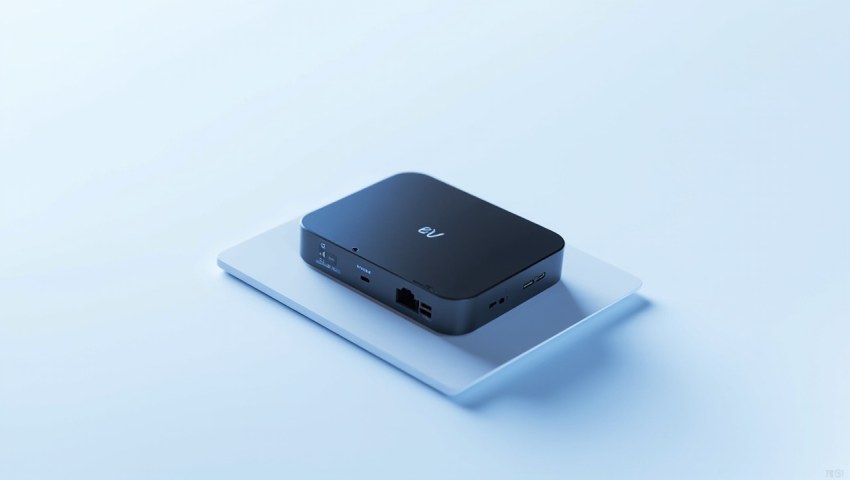
The short answer first
An RFQ reaches engineering with three headline claims: “AV1 decode,” “4K,” and “Widevine L1.” Those labels are not interchangeable. For an android tv box, the procurement question is whether the fixed-function decoder, operating-system media stack, output path, DRM module, memory configuration, and thermal design can sustain the intended service—not merely whether AV1 appears in a feature list.
The short answer is to select the platform against a locked service profile: container, codec profile and level, resolution, frame rate, DRM, network behavior, and interface requirements. Decode support is necessary but insufficient. A hardware decoder can be present while a chosen profile, level, Android build, middleware path, or display mode remains outside the validated configuration. The resulting failure appears in the field as boot loops, dropped frames, DRM errors, unstable HDMI negotiation, or thermal throttling.
For DataMax, the quoted range spans operator middleware, IPTV/OTT white-label, premium UHD, and gaming-oriented configurations. The DM21P and DM21S use different Android generations and storage baselines; the DM21T adds higher stated 4K decoding capability and inline AI-SR; the DM22Q prioritizes gaming-oriented use with a different SoC. AV1 capability appears across the quoted platforms, but no quotation should substitute an unqualified “AV1 ready” statement for the complete playback matrix.
A procurement specification should also separate decode from output. A decoder can accept a frame size that the output path cannot transmit at the intended refresh rate, color format, or protected-content setting. The same device can pass a short AV1 clip yet fail during a live IPTV session because the service injects overlays, DRM licensing, audio synchronization, network jitter, and repeated channel changes. Acceptance therefore needs a repeatable media matrix rather than a catalog feature.
Treat the comparison below as an engineering narrowing tool. The general buying framework for an Android TV box for ISPs remains separate; this article concentrates on proving the decode path and locking it into procurement language.
Buyer situations, ranked by what they punish
The first RFQ decision is not whether AV1 matters; it is which failure the deployment punishes most. Operator IPTV usually punishes fleet stability, middleware compatibility, remote-management behavior, and supportability. Integrators punish mismatched display, USB, audio, or networking requirements. Gaming-oriented offers punish sustained frame delivery, thermals, and input responsiveness. Venue digital-signage projects may punish unattended recovery and power/network resilience more than peak decode throughput.
• Controlled OTA path
• Exact output and DRM profileStart with DM21P; validate against the required operator stack IPTV/OTT white label• Android 14 deployment
• Consumer UI flexibility
• App and codec compatibilityStart with DM21S Premium UHD or cloud gaming• 4K@120 decode profile
• Sustained performance
• USB and display validationEvaluate DM21T Gaming-oriented service• 4K@60 AV1/H.265 profile
• Memory and thermal margin
• Responsive application layerEvaluate DM22Q AV integrators• HDMI 2.0b output
• S/PDIF and analog AV
• USB, TF, and Ethernet fitMap connectors first; then use the matrix to choose a platform
The ranking should be explicit in the RFQ because a single “operator-grade AV1 box” line collapses commercial, technical, and operational requirements into one unverifiable adjective. An operator may accept 4K@60 and prioritize remote diagnostics; a cloud-gaming service may demand 4K@120 and sustained frame pacing; an integrator may need analog AV even if applications use only HDMI.
A concrete operator example is a live-channel gateway that must recover from network loss, maintain sync, and survive repeated power cycles. Its acceptance test should include 24 hours of channel changes, licensed playback, the agreed AV1 operating point, and the operator middleware’s diagnostic events. A retail AV1 android tv box may instead pass after a shorter visual and functional check because the deployment has a different recovery model. The test plan should follow the operational consequence rather than the codec name.
A venue project has another ranking. A digital-signage player may cycle content continuously and prioritize Ethernet recovery over peak frame rate. An integrator supplying conference-room displays may prioritize HDMI output, audio extraction, remote control, and mounting rather than IPTV middleware. For each use case, identify whether decode load is continuous, bursty, or scheduled, then select the interface and evidence burden accordingly.
A photograph of the actual board class helps focus this stage. It must show package placement, memory topology, power-delivery regions, and the thermal path rather than a decorative chipset close-up.

After board inspection, reject any shortlist that cannot distinguish the decoder from the rest of the path. A system-on-chip package proves physical presence only. Evidence must connect the SoC to an AV1-capable Android build, validated profile and level, display mode, content path, and service-level playback objective. The quoted models also need interface-level review because a platform may decode the intended media yet lack the required Ethernet variant, USB arrangement, audio output, or connector.
A decision path for the RFQ
Convert the service requirement into testable rows before asking for a model proposal. The sequence below prevents a chipset-led quotation from obscuring application, DRM, interface, or thermal constraints.
- Define the content matrix Record container, AV1 profile, level, resolution, frame rate, bitrate, HDR treatment, audio format, and whether playback is live, file-based, or cloud-rendered.
- Define the output matrix Specify the HDMI standard, output resolution, frame rate, HDR mode, color format, and HDCP requirement. Avoid converting a decoder statement into an assumed output capability.
- Define the software boundary Name the Android generation, AOSP or Google Android TV image, operator middleware, DRM, launcher, app delivery method, and OTA architecture.
- Define the interface boundary List required HDMI, USB, Ethernet, audio, wireless, storage, and control interfaces. Treat optional variants as configuration line items.
- Define the production boundary Specify memory and storage, firmware provenance, production-test coverage, aging evidence, thermal criteria, pilot quantity, change notification, and acceptance procedure.
The RFQ can then use these lines:
AV1 playback must be validated in the quoted OS image at the agreed resolution, frame rate, profile, level, container, and display mode. Quote the decoder path, application path, and DRM path separately. State all storage and RAM options in the bill of materials; do not approve an unqualified “AV1 hardware” line. Identify Wi-Fi, Ethernet, HDMI, audio, and USB variants as separate orderable configurations. Provide the validation report, sample results, production-test method, aging procedure, and firmware/SoC change-control commitment for the exact SKU.
Do not let “Android” stand alone as a compatibility claim. Android 11 and Android 14 provide different framework baselines, while AOSP describes the source baseline rather than a complete retail distribution agreement. A buyer needing Google Play, Google services, certification, or a specific operator application should name those requirements separately. The same distinction applies to Widevine: “Widevine L1” is meaningful only when tied to the exact firmware, hardware security configuration, playback implementation, and content service.
A useful method is to create one row per operating point. For example: “[email protected], 3840×2160, 60 Hz, 10-bit, HDR10, Widevine L1, HDMI 2.0b.” Another row can carry 4K@120 only when the service, application, display, and output configuration require it. If the operator delivers 1080p channels but uses AV1, do not inflate the requirement with a higher frame rate that adds thermal load without business value. If the target television cannot accept the intended mode, the bottleneck moves outside the box and belongs in the integration schedule.
The final approval should occur on a golden sample, not on a distributor specification sheet. Compare sample behavior, identifiers, interfaces, firmware, and accessory requirements against the proposed production order. Record the display model, firmware checksum, installed applications, network configuration, and cable topology used during acceptance so that an installation failure can be distinguished from a platform failure.
The traps in this category
The largest quotation divergence is between capability language and a validated operating point. “AV1” can omit profile, level, pixel format, frame rate, bit depth, container, and output mode. “4K” can mean decode, render, output, or the maximum size accepted by an application. A quotation that uses one word for all four cannot be tested.
Field trap
The terminal is marketed as an 8K model, but the datasheet caps output and decode at 4K. Acceptance must use the documented resolution and frame-rate ceiling, not the product label. Accepting the marketing term creates an immediate mismatch between customer expectation, application output, HDMI negotiation, and test evidence.
A second trap is assuming that hardware decode closes the performance question. Resolution and frame rate affect decoder load; HDR and color conversion affect graphics and memory paths; application decoding, protected content, overlays, and audio synchronization affect end-to-end throughput. Sustained behavior can differ from a short laboratory clip. Require a defined duration, thermal condition, content mix, and frame-loss criterion.
Field trap
Widely spaced “8K-ready” claims can survive a catalog review and fail during RCA. The purchasing correction is to freeze a 4K ceiling in the specification, require a sample display at that ceiling, and route any future change through written approval rather than accepting roadmap language as a present capability.
Other failure modes cluster around configuration ambiguity. A quoted 2GB/8GB device may not match a quoted 4GB/16GB device after storage and memory options are selected. Ethernet at 100M and an optional 1G variant affect IPTV architecture. Dolby Vision, DTS, PlayReady, and Widevine may be optional rather than standard. Ask for a signed configuration sheet that states exactly what the shipment contains.
The fourth trap is treating a short aging run as proof of fleet stability. A valid production argument links the failure mechanism to a control: thermal instability maps to temperature and soak tests; solder defects map to inspection and rework records; boot instability maps to repeated power-cycle testing; memory pressure maps to application and endurance testing. Generic “100% tested” wording supplies no such traceability.
A fifth failure mode is assuming the Android application exercises the hardware decoder. The application may invoke software decoding, fail to negotiate the requested codec, or use an incompatible container and profile combination. A sixth is ignoring the service path: a DRM license-server rejection, entitlement failure, or middleware update can look like a decode fault. The incident log should therefore record application state, codec negotiation, DRM status, display mode, and network conditions together.
Verification you can ask for on paper
Factory verification should be requested as an evidence chain, not a quality slogan. The chain starts at incoming material inspection, continues through board assembly and automated optical inspection, moves to firmware flashing and functional test, and ends with environmental stress, aging, packing, and traceability. The request should name the exact platform and firmware because evidence from another model does not establish conformity.
- Incoming control Request the approved supplier list, incoming inspection criteria, lot traceability, and handling records for memory, storage, and other critical components.
- SMT and AOI control Request the stencil, placement program, AOI program, defect limit, escalation rule, and records showing how detected defects are isolated and reworked.
- Program and flash control Request the firmware identity, flashing tool, version checksum, MAC or device-identity procedure, and evidence that the shipped image matches the approved build.
- Functional test Require the test recipe to cover HDMI output, AV1 and other required codecs, Wi-Fi, Ethernet, USB, audio, storage, remote control, reset, and power recovery as applicable.
- Soak and dark-room evidence Request the test duration, chamber conditions, repeated restart or power-cycle method, sample selection, acceptance criteria, and disposition of failed units.
- Shipment traceability Link the carton label, serial identifier, hardware revision, SoC, RAM/ROM configuration, and firmware version through final inspection and shipment records.
Evidence request: a single indexed pack should connect the RFQ configuration to incoming lots, SMT/AOI results, flash records, functional tests, aging logs, final inspection, and the packing list. Redact unrelated commercial data, but preserve configuration and revision identifiers. For a video factory audit, request access to the stations that produced the quoted SKU rather than a generic production line.
Decoder proof should sit alongside manufacturing proof. Ask for the exact AV1 profile and level used in the test, the resolution and frame rate, the output mode, the application or media framework, the number of streams, the test duration, and the measured result. A screenshot labeled “AV1” is weaker evidence than a reproducible test record tied to the production image.
The acceptance report can use a compact sequence: sample identity, firmware checksum, hardware revision, storage and RAM configuration, display mode, AV1 media parameters, DRM path, network condition, duration, thermal state, result, and exception log. This structure reveals whether a pass came from the intended production configuration rather than a development fixture.
For an operator program, include the middleware build identifier and remote-management identifiers in that sequence. For a branded android tv box program, include the launcher, account model, app-signing identity, and recovery procedure. For an integrator, include the cable, display model, and supported mode because a source-device failure caused by HDMI negotiation should not trigger an unnecessary return of a correctly decoding unit.
The paper request should also identify sampling rules and escalation ownership. If AOI detects a defect, the buyer needs to know whether the affected board is quarantined, reworked, retested, or scrapped. If a unit fails aging, the report should link the failure to the serial number and final disposition. These controls turn “factory tested” into an auditable sequence.
Entry tier versus commitment tier
“Entry” and “commitment” are procurement positions, not quality grades. An entry-position quote optimizes baseline cost and standard use; a commitment-position quote adds a larger or more capable platform, broader interfaces, higher stated decode ceilings, or a more tightly controlled configuration. Both require the same evidence chain.
| Decision field | DM21P operator direction | DM21S white-label direction | DM21T premium direction | DM22Q gaming direction |
|---|---|---|---|---|
| SoC | Amlogic S905Y4 | Amlogic S905Y5 | Amlogic S905X5 | Amlogic S905X5M |
| CPU | quad Cortex-A35 | quad Cortex-A55 | quad Cortex-A510 (ARMv9) | quad Cortex-A55 up to 2.5GHz |
| OS | AOSP Android 11 | AOSP Android 14 | AOSP Android 14 | AOSP Android 14 |
| Base RAM/ROM | 2GB / 8GB | 2GB / 16GB | 4GB / 64GB | 4GB / 64GB |
| Stated decode ceiling | AV1 [email protected]; VP9/H.265 4K@60 | AV1 / H.265 [email protected] 4K@60 | H.266/VVC [email protected] 4K@120; AV1/VP9/H.265 4K@120; AVS3 4K@120; H.264 4K@60 | AV1/H.265 L5.1 4K@60 |
| DRM | Widevine L1 / PlayReady / HDCP 2.2 optional | Widevine L1 / PlayReady optional; Dolby Vision/DTS | Widevine L1 / PlayReady optional | Widevine L1 / PlayReady optional; Dolby Vision/DTS |
| Ethernet | RJ45 100M | RJ45 100M; 1G optional | RJ45 100M; 1G opt | RJ45 100M; 1G opt |
The table shows why a generic “entry AV1 model” is inadequate. DM21P is the operator-middleware direction with AOSP Android 11; DM21S moves to AOSP Android 14 and a different SoC; DM21T raises the stated 4K decoding ceiling to 120 Hz for several codecs; DM22Q retains 4K@60 for AV1 and H.265 while targeting gaming-oriented use.
The operational difference is configuration control. DM21P has 2GB/8GB base, with 4GB and 16/32/64GB storage options. DM21S has 2GB/16GB base, with 2/4/8GB RAM and 16/32/64GB storage options. DM21T is quoted at 4GB/64GB with family options. DM22Q has 4GB/64GB base and listed RAM/storage options. Each option must appear line-by-line in the purchase order because a platform family is not an orderable configuration.
The procurement distinction is not “less testing” versus “more testing.” A 4GB/8GB operator unit still needs image, interface, thermal, and aging evidence matched to its configuration. Conversely, a 4GB/16GB retail unit does not gain fleet reliability merely because its application layer feels responsive. The stronger commitment comes from fixed Bill of Materials lines, traceable firmware, controlled change notification, and evidence tied to the production route.
A sensible escalation rule supports this comparison. Keep the lower-commitment candidate when it meets the agreed AV1 operating point, output mode, DRM path, interface set, and endurance requirement. Escalate to a different platform when the evidence shows a structural limit, such as a stated frame-rate ceiling below service demand or insufficient interface options. Do not escalate solely because a more capable decode ceiling is available if the commercial case does not require it.
The mechanism behind the spec
AV1 is the open, royalty-free codec specification developed by AOMedia. Its technical reference is the AV1 Bitstream & Decoding Process Specification. The specification defines the bitstream and decoding process; it does not, by itself, guarantee that a particular Android product, display, DRM service, or application will present a stable AV1 experience.
Source: Alliance for Open Media, AV1 Bitstream & Decoding Process Specification
The mechanism contains four distinct layers. First, the encoder creates a bitstream that conforms to a selected profile and level. Second, the SoC decodes that bitstream, potentially through a hardware decoder block. Third, Android exposes the decoded frames through a media and graphics path. Fourth, the application, DRM service, HDMI output, display, and audio renderer complete the chain.
Profile and level matter because they bound syntax and operating conditions. A statement such as [email protected] identifies more than a codec acronym: the profile, Main 10 capability, and level form a constrained operating point. The buyer must still connect that point to the actual content, pixel format, frame rate, output mode, and decoder implementation.
The Android layer requires equal precision. AOSP Android 11 or AOSP Android 14 identifies the platform baseline, while device-specific media codecs, firmware drivers, security configuration, and application integration determine production behavior. A hardware decoder can be present in the SoC but not exposed correctly through the OS media framework, or exposed in a build without the required security integration. An application can also choose a software path that changes load and behavior.
DRM introduces another gate. Widevine L1 and PlayReady are licensing and security classifications, not AV1 certifications. The service provider, device provisioning, application, firmware, and content policy must operate together. A decode demonstration using clear content does not prove protected-content playback. HDCP 2.2 is likewise an output-protection requirement rather than a video-codec capability.
HDMI closes the user-visible path. HDMI 2.0b output is present across the quoted DataMax platforms, but the supported display mode still needs an agreed resolution, refresh rate, color mode, and HDCP configuration. “Decodes 4K” and “outputs 4K at the intended rate” are separate acceptance statements.
Thermal behavior sits across all layers. Codec activity, graphics composition, memory movement, networking, and ambient conditions combine into sustained platform load. A laboratory decode result under ideal conditions therefore does not establish fleet behavior. Specify test duration, ambient temperature, operating mode, and pass criteria.
For an operator, the architecture can be expressed as a complete service chain:
- Service origin Multicast, unicast, file, or cloud-rendered source
- Decode component AV1 bitstream, profile, level, pixel format, and hardware decoder path
- Protection component Widevine or PlayReady licensing and HDCP output requirement
- Presentation component Android media framework, graphics pipeline, HDMI 2.0b mode, display, and audio
Each arrow can introduce a failure that is invisible in a chipset specification. Source packet loss can starve the decoder; a missing media-codec declaration can force software decoding; a license failure can stop playback after negotiation; an unsupported display mode can produce scaling, negotiation failure, or black output. Engineering acceptance should preserve the chain rather than isolating the codec.
Which DataMax models actually sit here
The four quoted DataMax platforms occupy distinct engineering positions. Every field below comes from the supplied production facts; options remain options and require confirmation against the production datasheet and purchase order.

The same figures, in searchable form:
| Platform | Base RAM |
|---|---|
| DM21P | 2 GB |
| DM21S | 2 GB |
| DM21T | 4 GB |
| DM22Q | 4 GB |
| Model | Engineering position | Core configuration | Decode and protection |
|---|---|---|---|
| DM21P | 4K IPTV / operator middleware set-top box | Amlogic S905Y4; quad Cortex-A35; AOSP Android 11; 2GB / 8GB; 4GB and 16/32/64GB storage options | AV1 [email protected]; VP9/H.265 4K@60; H.264 4K@30; Widevine L1 / PlayReady / HDCP 2.2 optional |
| DM21S | 4K Android TV box for IPTV/OTT white-label | Amlogic S905Y5; quad Cortex-A55; AOSP Android 14; 2GB / 16GB; RAM and storage options listed | AV1 / H.265 [email protected] 4K@60; Widevine L1 / PlayReady optional; Dolby Vision/DTS |
| DM21T | Premium UHD / cloud-gaming box | Amlogic S905X5; quad Cortex-A510 (ARMv9); AOSP Android 14; 4GB / 64GB; family options | H.266/VVC [email protected] 4K@120; AV1/VP9/H.265 4K@120; AVS3 4K@120; H.264 4K@60; inline AI-SR; Widevine L1 / PlayReady optional |
| DM22Q | Gaming-oriented Android TV box | Amlogic S905X5M; quad Cortex-A55 up to 2.5GHz; AOSP Android 14; 4GB / 64GB; RAM and storage options listed | AV1/H.265 L5.1 4K@60; inline AI-SR with no NPU TOPS stated; Widevine L1 / PlayReady optional; Dolby Vision/DTS |
Interface fit remains a separate gate. DM21P includes HDMI 2.0b output, two USB2.0 ports, TF, S/PDIF, 3.5mm AV, RJ45 100M, Wi-Fi6 2x2, and Bluetooth 5.4. DM21S and DM22Q each list HDMI 2.0b, S/PDIF, AV, two USB2.0 ports, TF, RJ45 100M, Wi-Fi6 2x2, and Bluetooth 5.4, with 1G Ethernet optional. DM21T lists HDMI 2.0b output without HDMI input, one USB2.0 and one USB3.0 port, TF, S/PDIF, AV, RJ45 100M with 1G optional, Wi-Fi6, and Bluetooth 5.4. Confirm every connector against the production datasheet.
The model choice can be narrowed without turning the table into a ranking. DM21P fits an operator middleware brief that accepts its AOSP Android 11 baseline and specified interfaces. DM21S fits a white-label brief requiring AOSP Android 14 and the listed IPTV/OTT capability. DM21T fits a premium or cloud-gaming brief that needs the stated 4K@120 decode coverage. DM22Q fits a gaming-oriented brief whose service requirement is AV1/H.265 4K@60. Any requirement outside those stated fields belongs in a new RFQ line, not an assumed capability.
This separation matters because the term android tv box can conceal different procurement objects. One buyer may be ordering a managed operator appliance with middleware and recovery requirements; another may be sourcing a branded retail device with application, launcher, and merchandising requirements. The same decode statement serves both only after the image, DRM, output, update, and service responsibilities are identified.
For procurement closure, send DataMax an RFQ; the first message should contain the target AV1 profile and level, resolution, frame rate, output mode, DRM requirement, OS baseline, required interfaces, RAM/ROM configuration, and evidence package. For factory assurance, request the factory-quality evidence or a DataMax video factory audit focused on SMT, AOI, aging, dark-room testing, and firmware traceability for the selected platform. An alternative sample step is to order samples with the same configuration lines and acceptance matrix proposed for production.
Further reading
- Guide android tv box for isps
- RFQ checklist for device procurement
- Android TV boxes
- Rockchip Android TV boxes
- Edge computing boxes
- DataMax DM21P specifications and fit
- DataMax DM21S specifications and fit
FAQ
Does hardware AV1 decode guarantee 4K playback?
No. Hardware decode capability must match the content profile, level, resolution, frame rate, pixel format, OS media stack, DRM path, and output mode. A short AV1 demonstration does not prove sustained playback, protected-content operation, or a stable HDMI output mode. Specify those conditions and require repeatable evidence against the production firmware.
Is Widevine L1 proof that a device supports AV1?
No. Widevine L1 describes the device’s DRM security level, while AV1 describes a codec operating point. Content must also pass through a compatible Android media path, application, DRM implementation, and display output. Test licensed content with the exact firmware and service configuration; clear-content decoding does not establish the protected-content path.
Which quoted DataMax platform supports 4K@120 AV1?
The DM21T production facts list AV1/VP9/H.265 at 4K@120 alongside H.266/VVC [email protected] at 4K@120, AVS3 at 4K@120, and H.264 at 4K@60. Confirm the complete output, application, thermal, and test conditions against the production datasheet before accepting the deployment profile.
Should the purchase order list only the base RAM and storage?
No. Base configurations are starting points, and several models have additional RAM or storage options. Each processor, operating-system image, memory tier, storage tier, DRM option, Ethernet option, accessory, and regional configuration must be fixed line-by-line. The golden sample and production shipment should be traceable to those same identifiers.
What factory evidence is useful for an AV1 set-top-box program?
Request the evidence chain for the quoted SKU: incoming critical-component control, SMT and AOI records, firmware flashing and checksum records, functional codec/interface tests, aging or soak results, dark-room procedures, final inspection, and carton-to-device traceability. A video factory audit should cover the same stations and confirm that the production image matches the approved golden sample.
Can a DataMax quotation promise future AV1 firmware improvements?
The quotation should separate present capability from roadmap items. Present capability requires a production-datasheet statement and reproducible sample evidence for the agreed media matrix. Any planned codec profile, Android generation, output mode, DRM configuration, or SoC change needs written approval and a controlled requalification plan before it becomes an acceptance assumption.
How should an integrator test an android tv box before deployment?
Test the exact production image with the target display, cable, audio path, network, application, and display mode. Include AV1 at the agreed profile and level, DRM playback, channel or app restart, Ethernet recovery, USB peripherals, and repeated power cycles. Record frame errors, HDMI negotiation, audio sync, thermal state, and application logs so installation problems can be separated from platform faults.
What distinguishes the quoted DataMax RAM configurations?
DM21P and DM21S have 2GB base RAM, while DM21T and DM22Q have 4GB base RAM. Storage baselines differ: DM21P has 8GB, DM21S has 16GB, and DM21T and DM22Q have 64GB. Additional RAM and storage tiers exist on several platforms, so confirm the exact configuration against the production datasheet and fix it in the purchase order.