
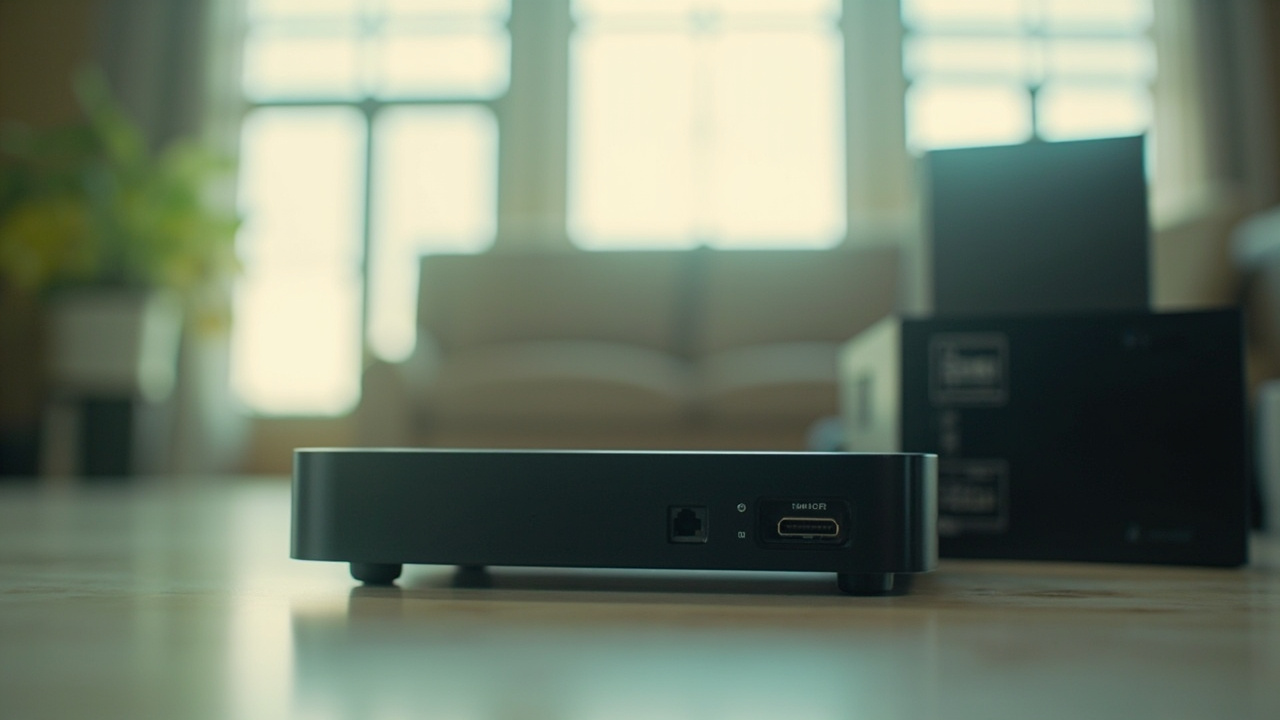
What the answer hinges on
| Decision axis | Evidence required | Why it changes the quotation |
|---|---|---|
| Platform | AOSP Android version, middleware ABI, target operator OS or RDK release | Drives BSP, application, certification, and integration work |
| Connectivity | RJ45 rate, Wi-Fi mode, operator access policy | Determines managed-network suitability and test scope |
| Content protection | Mandatory DRM, HDCP obligations, licence path | Changes board, key provisioning, and commercial setup |
| Lifecycle | Firmware branch, update ownership, end-of-life notice and spares plan | Separates a one-off device sale from fleet management |
| Production assurance | SMT/AOI, aging, dark-room, audit records | Turns performance claims into inspectable shipment evidence |
For Nigeria, the decisive requirement is not whether a box is described as Linux, RDK, or android tv box; it is whether the operating system, middleware ABI, content security, networking, and update evidence match the operator’s actual commercial deployment. An android tv box can use AOSP Android 11 or Android 14, but an Android build is not an RDK device. RDK-based deployments require a compatible RDK stack, middleware interfaces, certification path, and operator-controlled integration. The DataMax models listed below are Android platforms, so their suitability for a Linux/RDK programme depends on the operator’s application architecture rather than a change of label.
The short answer for an RFQ is to separate three questions: “Can it run the target middleware?”, “Can it receive and authenticate protected services?”, and “Can the supplier evidence production quality and lifecycle control?” A specification that answers only “Android 14, Wi-Fi 6, 4K” leaves all 3 unresolved. The RFQ should identify the OS branch, target middleware version, memory configuration, Ethernet speed, DRM obligations, HDMI path, security requirements, update mechanism, test evidence, and production configuration to be quoted. This article focuses on that entry angle; the broader guide to Android TV boxes for ISPs covers the wider operator selection.
Procurement should therefore treat “Linux/RDK” as an architecture requirement, not a product label. Ask whether the supplier can deliver a named production image, document the middleware interface, identify the update owner, and tie every test result to the ordered hardware revision. A nominal chipset or operating-system version is insufficient evidence for a managed fleet.
Which DataMax models actually sit here
The available DataMax family gives buyers a portfolio from an operator-oriented 4K IPTV set-top box to higher-capacity UHD and gaming-oriented configurations. None should be described as an RDK model because the supplied facts identify AOSP Android operating systems. The fit labels describe their intended roles, not a completed operator middleware or RDK certification.
| Model and stated fit | SoC and operating system | Memory | Decode and content protection | Connectivity and interfaces |
|---|---|---|---|---|
| DM21P 4K IPTV / operator middleware set-top box | Amlogic S905Y4, quad Cortex-A35; AOSP Android 11 | 2GB / 8GB; 4GB; 16/32/64GB optional | AV1 [email protected]; VP9/H.265 4K@60; H.264 4K@30; Widevine L1 / PlayReady / HDCP 2.2 optional | HDMI 2.0b out x1; USB2.0 x2; TF; S/PDIF; 3.5mm AV; RJ45 100M; Wi-Fi6 2x2 + BT5.4; DC 5V/2A |
| DM21S 4K Android TV box for IPTV/OTT white-label | Amlogic S905Y5, quad Cortex-A55; AOSP Android 14 | 2GB / 16GB; 2/4/8GB; 16/32/64GB optional | AV1 / H.265 [email protected] 4K@60; Widevine L1 / PlayReady optional; Dolby Vision/DTS | HDMI 2.0b out; S/PDIF; AV; USB2.0 x2; TF; RJ45 100M (1G optional); Wi-Fi6 2x2 + BT5.4 |
| DM21T Premium UHD / cloud-gaming box | Amlogic S905X5, quad Cortex-A510 (ARMv9); AOSP Android 14 | 4GB / 64GB; family options | H.266/VVC [email protected] 4K@120; AV1/VP9/H.265 4K@120; AVS3 4K@120; H.264 4K@60; inline AI-SR; Widevine L1 / PlayReady optional | HDMI 2.0b out (no HDMI in); USB2.0 x1 + USB3.0 x1; TF; S/PDIF; AV; RJ45 100M (1G opt); Wi-Fi6 + BT5.4 |
| DM22Q Gaming-oriented Android TV box | Amlogic S905X5M, quad Cortex-A55 up to 2.5GHz; AOSP Android 14 | 4GB / 64GB; 2/4/8GB; 16/32/64GB optional | AV1/H.265 L5.1 4K@60; inline AI-SR (no NPU TOPS stated); Widevine L1 / PlayReady optional; Dolby Vision/DTS | HDMI 2.0b out; USB2.0 x2; TF; S/PDIF; AV; RJ45 100M (1G opt); Wi-Fi6 2x2 + BT5.4 |
Specification boundary
DM21T and DM22Q must be quoted at their stated 4K capabilities. Do not repeat an 8K output or decode claim. For RDK or operator middleware, request the exact port, BSP, and certification configuration against the production datasheet.
The model comparison reveals 4 different procurement starting points. DM21P is the most direct operator-IPTV candidate in the supplied family because its stated fit explicitly mentions operator middleware, although its AOSP Android 11 baseline must be checked against the target stack. DM21S offers a newer AOSP Android 14 baseline and a stated IPTV/OTT white-label orientation, making it a logical starting point for a branded service. DM21T shifts the requirement toward premium UHD and cloud-gaming decode modes, including 4K@120, while retaining the AOSP Android 14 platform. DM22Q addresses a gaming-oriented requirement with a stated 4K@60 ceiling, 4GB / 64GB base memory, and inline AI-SR.
The table does not turn platform fit into certification. A middleware supplier may require a particular BSP revision, abstraction layer, provisioning interface, or update daemon that is not visible in a catalogue entry. For each candidate, request the production image identifier, integration list, operator test procedure, and configuration lock. Confirm whether “optional” refers to a board population choice, a firmware entitlement, a service agreement, or a feature that must be enabled by DataMax engineering.
Memory, storage, Ethernet, and protected-content options also need explicit shipment status. DM21P’s 2GB / 8GB base differs from DM21S’s 2GB / 16GB base, while DM21T and DM22Q start from 4GB / 64GB in the supplied facts. RJ45 100M is listed across the family, with 1G optional on DM21S, DM21T, and DM22Q. Widevine L1 and PlayReady are also qualified as optional in several rows, so a quote that says “DRM” does not establish the actual licence path.
For procurement, the strongest practical conclusion is not that one model is universally correct. It is that each model creates a different integration envelope. The RFQ must compare models against a fixed service matrix—middleware version, video profile, network rate, account model, update method, and evidence package—rather than allowing each supplier to define a different meaning of readiness.
The mechanism behind the spec
An android tv box is a hardware category with an Android-derived software stack, an application execution model, and television-facing interfaces. AOSP Android 14 on DM21S, DM21T, and DM22Q supplies an application platform; it does not, by itself, establish RDK conformance, operator middleware compatibility, or Google Android TV certification. For an RDK programme, the buyer must identify the target RDK release and the middleware implementation required by the operator. The application, media pipeline, device abstraction, DRM integration, provisioning, remote management, and update path must all be matched to that target.
The physical specification still matters. HDMI 2.0b provides a defined output path, but supported resolution and refresh rate depend on the complete decode chain and display configuration. A codec capability such as AV1 [email protected] is not the same as a commercial 4K service profile: the service bitrate, frame rate, HDR metadata, audio format, and output mode must all be validated. DM21T’s stated 4K@120 decode modes position it for high-frame-rate use, but its facts also specify no HDMI input. A buyer requiring game capture or loop-through must treat that as a disqualifying interface gap unless an alternative is separately engineered.
DRM creates another layer. Widevine L1 and PlayReady are stated as available on the family, with some options marked optional. A protected IPTV service also depends on device provisioning, account identity, licence acquisition, concurrent stream policy, and the operator’s preferred key and account system. The procurement team should state whether the licence path is a product option, a certified platform dependency, or a separately integrated service. “DRM optional” is not equivalent to “DRM ready for the operator’s service.”
RDK and Android platforms also have different update mechanisms. A managed operator fleet normally needs controlled image versions, staged rollout, failure recovery, device identity, and a traceable configuration. A conventional Android update flow is not automatically an operator update flow. The RFQ should require the update transport, package format, rollback procedure, release ownership, and audit evidence. Firmware branches, device logs, and recovery procedures need to be treated as deliverables, not as undocumented supplier assumptions.
Network architecture must match the service. All 4 models list RJ45 100M, with 1G options stated for DM21S, DM21T, and DM22Q. For a managed IPTV network, this distinction affects the production configuration and should be quoted explicitly. Wi-Fi6 2x2 + BT5.4 can assist installation, but a wired path may be operationally preferable for predictable access and reduced setup variation.
- Target RDK release or operator Android middleware branch
- Protected-service licence and account model
- Video, audio, HDR, and refresh-rate profile
- BSP, kernel, drivers, middleware ABI, device provisioning
- Operator application integration
- Update transport, monitoring, rollback
- Configuration lock and golden sample
- SMT/AOI, aging, dark-room, audit evidence
- Shipment traceability
The architecture should be evaluated as 3 linked contracts. First, the service contract identifies the content, protection, identity, and network behaviour the operator must deliver. Second, the platform contract maps that service to BSP, drivers, middleware, applications, and update mechanisms. Third, the manufacturing contract proves that the quoted device was built and tested in the specified configuration. A failure in any layer can block deployment even when the other 2 appear adequate.
For an android tv box used in Nigeria, this model also prevents a common category error: Linux is a kernel and software foundation, not a sufficient operating-system specification. A buyer may need an Android application framework for a branded OTT application, an RDK middleware stack for a broadcast-oriented operator service, or a separately engineered Linux product. The platform decision must therefore name the OS branch, API level, application framework, and middleware interface rather than relying on the Linux/RDK label.
Entry tier versus commitment tier
“Entry tier” and “commitment tier” describe procurement depth, not two quoted DataMax prices. The entry position optimizes for a defined service, controlled configuration, and minimum integration surface. The commitment position adds longer lifecycle planning, deeper telemetry, more custom engineering, and more formal production evidence. A model selection alone does not create that commitment.
| Criterion | Entry tier | Commitment tier |
|---|---|---|
| Software baseline | • One fixed AOSP or operator-certified branch | • Versioned branches with documented update ownership |
| Configuration | • One golden configuration | • Controlled hardware and software configuration variants |
| Middleware | • Defined integration list | • Middleware lifecycle, regression, and migration plan |
| Lifecycle | • Basic spare planning | • EOL notice plus spares window |
| Evidence | • Production and burn-in records | • Audit access, traceability, and change history |
| Deployment | • Single operator or venue batch | • Multi-site or staged rollout |
The chart below ranks lifecycle-control positions on an editorial planning scale. It is not audited or measured data and should not be treated as a contractual service level.

The same figures, in searchable form:
| Contract position | Editorial score |
|---|---|
| Undocumented | 20/100 |
| Warranty period only | 45/100 |
| Named firmware branch | 70/100 |
| EOL notice plus spares window | 92/100 |
A concrete example: a single-site operator can quote a fixed model, OS, memory, Ethernet, and DRM configuration, then require a golden sample plus line-test records. A multi-site programme should add a named firmware branch, controlled update process, hardware revision control, and an EOL communication commitment. The difference is the amount of evidence and planning—not a generic “premium” label.
The entry tier should nevertheless include a configuration lock. “Android 14 box” is not a purchasable configuration, whereas “DM21S, AOSP Android 14, 2GB / 16GB, RJ45 100M, HDMI 2.0b output, Widevine L1 and PlayReady status defined, operator image identifier defined” can be inspected and compared. The entry tier ends where the number of hardware variants, middleware versions, or deployment sites begins to exceed what one golden sample and one audit trail can represent.
The commitment tier adds 4 operational mechanisms: controlled configuration variants, versioned software branches, middleware migration rules, and formal end-of-life communication linked to a spares window. It also needs change control so that a RAM supplier change, driver revision, or Android image update does not silently alter an accepted unit. These mechanisms affect engineering effort and documentation scope even when the visible hardware remains unchanged.
The editorial values should be used as a question generator, not a scorecard. “Undocumented” means the buyer cannot establish who owns updates, rollback, or end-of-life communication. “Named firmware branch” means the software baseline can be identified and tested, but it does not automatically prove a migration path. “EOL notice plus spares window” provides a planning structure, although the exact notice period and spare duration must be agreed rather than inferred from the chart.
Where this matters in a deployment
A Nigeria-facing deployment may be an ISP-operated IPTV service, a branded OTT service, a hospitality venue, a digital-signage installation, or a cloud-gaming pilot. The environment changes which interface and lifecycle decision dominates. An operator emphasizes middleware compatibility, device identity, updates, and controlled issuance. A hospitality integrator may prioritize HDMI, AV output, remote control, and simple recovery. A gaming-oriented pilot needs sustained decode performance and a high frame-rate display path, not merely a processor description.
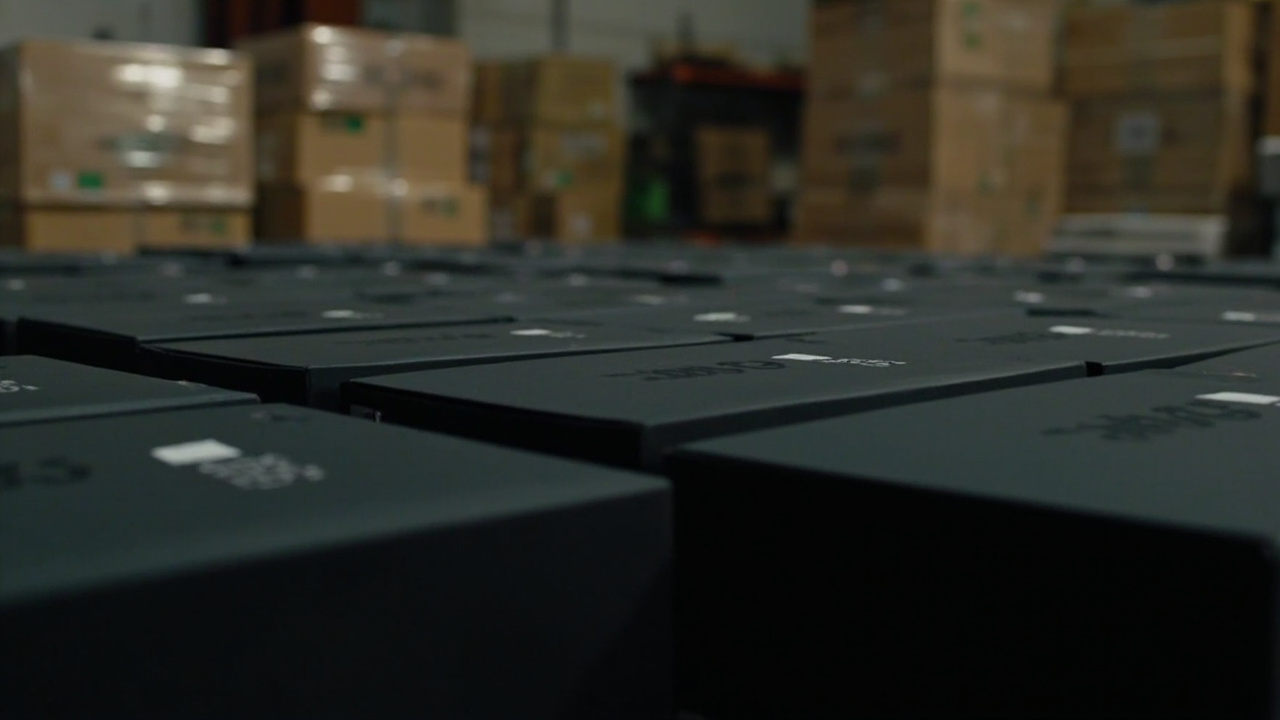
Here is the real-world scene: rows of identical compact black Android TV boxes on warehouse shelving with neutral packaging, pallets and a packing station in the background, under soft industrial light. The photograph shows the operational end of a programme: each unit must be traceable to its configuration and inspection record.
| Situation | Primary requirement | Model direction | Evidence to request |
|---|---|---|---|
| Operator IPTV fleet | Middleware, provisioning, updates, managed Ethernet | DM21P or DM21S; validate the target stack | Golden sample, integration test, firmware branch, provisioning procedure |
| White-label OTT service | Brand control, protected content, Android application environment | DM21S | DRM configuration, service profile, update ownership |
| Premium UHD or cloud gaming | 4K@120 paths, throughput, storage, USB | DM21T | Mode-by-mode playback matrix, thermal results, no-HDMI-in boundary |
| Gaming-oriented pilot | 4K@60 decode, inline AI-SR, memory | DM22Q | Target-game profile, input-accessory requirements, sustained-run report |
| Hospitality or signage | HDMI, AV, recovery, compact enclosure | Select from the family by interface and storage | Installation sample, burn-in, remote-control and recovery test |
The operator IPTV case has a different failure boundary from a venue installation. In an operator fleet, a configuration error can affect provisioning, entitlement, updates, and monitoring across many units. At a hospitality venue, the priority may instead be a stable HDMI output, accessible AV connection, remote-control response, and recovery after a power interruption. One evaluation matrix cannot represent both environments; the acceptance test must mirror the actual operating use.
Network design also determines the model direction. The family lists RJ45 100M, with 1G options on DM21S, DM21T, and DM22Q. A managed IPTV operator should test its real access path, provisioning traffic, media session, and update traffic instead of inferring capacity from the RJ45 label. A hotel or signage buyer may operate over Wi-Fi6, making radio coverage, interference, and installation procedures more significant than Ethernet throughput.
For a premium UHD or gaming pilot, validate each stated mode on the target display and service. DM21T’s 4K@120 decode claims do not remove the need to establish the service bitrate, colour pipeline, output mode, and sustained thermal behaviour. DM22Q’s 4K@60 profile and inline AI-SR likewise require a target-game and target-display test. Remote-control, gamepad, capture, or loop-through requirements are not established by the supplied facts and must be confirmed against the production datasheet.
The environmental risk also changes. Confirm the operating environment, installation method, and intended duty cycle against the production datasheet; no ingress rating is available in the supplied facts. For deployments outside controlled interiors, power, heat, surge, and connectivity resilience need explicit validation. The 4K 60 fps Android TV box guide helps define a playback target when frame rate is the principal service requirement.
The traps in this category
The first trap is treating AOSP Android as equivalent to Google Android TV or RDK. These are distinct platform and certification claims. An AOSP build may support the right decoder and connectivity while lacking the exact operator middleware, Google services, certification, or device-management behaviour required. A quotation that says only “Android 14” is not a portable acceptance criterion.
The second trap is allowing a headline resolution to replace a full video profile. For an android tv box programme, specify the codec, profile or level, resolution, frame rate, bitrate, HDR behaviour, audio path, and output mode. DM21T’s stated H.266/VVC [email protected] 4K@120, AV1/VP9/H.265 4K@120, AVS3 4K@120, and H.264 4K@60 are specific claims, but they are not a blanket promise that every 4K service profile will pass end to end.
Field trap 1: platform relabelling
Accepting “RDK-ready” without the target RDK release, middleware version, certification evidence, and update process can create an integration programme before a valid device baseline exists. Require the operator stack and production image in the acceptance matrix.
Field trap 2: interface ambiguity
“HDMI enabled” can conceal output-only operation, and “optional 1G” can conceal a shipped 100M configuration. The wrong assumptions cause middleware timing failures, operational workarounds, and replacement demand. Put port direction, speed, memory, and DRM status on the quotation line.
Commercial divergence often comes from omitted configuration qualifiers. Two quotations for the same model may differ in RAM/ROM, Ethernet rate, Widevine or PlayReady status, HDMI wording, operating-system branch, or bundled accessories. Ask for a bill of materials and a configuration lock rather than accepting a model name as the complete specification. Warranty language alone does not answer firmware ownership, rollback, security patching, or spares planning.
| Ambiguous statement | Risk | Corrective RFQ language |
|---|---|---|
| “Android TV box, 4K” | No codec, frame-rate, or service-profile definition | State the accepted video-profile matrix and display test modes |
| “RDK version supported” | Generic version rather than a certified build | Name the release, middleware, image, and operator test suite |
| “DRM supported” | Licence or provisioning path remains undefined | Identify the required DRM, optional status, and device account process |
| “Dual-band Wi-Fi” | Radio variant and regulatory evidence remain unclear | State the exact radio configuration and Nigeria compliance documents |
| “100M/1G Ethernet” | Shipped configuration can be misread | State the production BOM Ethernet rate separately from available options |
The quotation table exposes 4 recurring ambiguities. “Android TV box, 4K” can merge codec support, output capability, and service certification into one unsupported phrase. “RDK version supported” can omit the middleware and image that make the claim testable. “DRM supported” can leave the licence server, account model, and device provisioning outside the contract. “100M/1G Ethernet” can describe a choice rather than the actual production population.
A second risk is accepting a sample with a generic launcher or an unmodified retail image. The sample then proves general boot, decoding, and connectivity but not the operator’s application, entitlement flow, middleware, update path, or provisioning. A valid sample should carry the intended production image, use the proposed network configuration, and pass the same acceptance sequence planned for shipment.
A third risk is confusing a successful engineering sample with a controlled production unit. The sample may be assembled by hand, receive a different memory population, or run a newer image than the volume build. The purchase specification should identify the exact model, memory, storage, Ethernet rate, DRM configuration, OS branch, image identifier, ports, and firmware revision. A configuration-controlled golden sample is more useful than an undated display unit because it creates a repeatable comparison point.
A decision path for the RFQ
Start from the service contract rather than a model catalogue. The operator or venue owner should define the protected-service path, middleware target, video profile, network design, provisioning system, update owner, and deployment scale. A technical buyer then maps those requirements to the DataMax model family. Only after that mapping should the RFQ request a production sample, a compliance pack, and lifecycle evidence.
Pasteable RFQ lines should read like these:
“Software: AOSP Android [11/14], production image supplied with operator middleware [name/version], approved update transport and rollback procedure.”
“Hardware: [DM21P/DM21S/DM21T/DM22Q], RAM/ROM [configuration], RJ45 [100M/1G optional and shipped status], HDMI 2.0b output, USB [count], TF, S/PDIF, AV, Wi-Fi6 [specified configuration] + BT5.4.”
“Media: accepted profiles include [exact codec/profile/level/resolution/frame-rate matrix]; TV and headless display test required.”
“Content protection: Widevine L1 [required/optional], PlayReady [required/optional], HDCP 2.2 [required/not required], with operator licence-account provisioning procedure.”
“Quality: SMT and AOI records, aging report, dark-room record, final configuration report, approved golden sample, and serial traceability to shipment.”
The RFQ should also separate qualification from volume acceptance. Qualification asks whether the target image, service profile, network, DRM, and update mechanism work. Volume acceptance asks whether each production unit matches the locked configuration and passes the agreed test sequence. Keeping those stages distinct prevents a promising demonstration from bypassing production controls.
For an operator, the decision sequence should include middleware ABI review, device provisioning, entitlement integration, and fleet update responsibility. For a venue, it should include display compatibility, control accessories, wired or wireless access, installation recovery, and local content playback. The result may select different members of the same model family, but it should never use an operator checklist and a venue checklist interchangeably.
Use the sample-order route to move from a matrix to physical evaluation, and the inquiry channel when the target middleware or production configuration needs clarification. Do not let a sample be evaluated on a generic launcher alone; it should carry the intended image and service path. The AV1 Android TV box guide can help narrow codec acceptance tests, while the H.265/HEVC guide helps define the corresponding service-profile questions.
The evidence trail from SMT to shipment
Factory assurance should be traceable rather than reduced to a pass/fail statement. SMT records establish the intended assembly; AOI records add board-level inspection evidence; aging exposes thermal, power, and stability issues under load; dark-room checks provide visual output evidence. Each stage must be associated with the correct hardware revision and final software configuration. A report from a different model or image does not validate the ordered device.
- Pre-production control Freeze the bill of materials, SoC population, RAM/ROM, Ethernet rate, DRM configuration, ports, Android branch, firmware image, packaging, and serial-label format against the production datasheet.
- SMT and board inspection Record line, date, production lot, board identifier, stencil or placement information, and AOI results for the inspected assembly.
- Software flashing and configuration verification Flash the approved image, verify model identity, memory, network interfaces, output path, DRM status, update component, and operator provisioning state.
- Burn-in and dark-room validation Run the approved display, network, media, power, and workload sequence; document the device identifier, result, exceptions, and disposition.
- Final audit and packaging Compare a sample against the locked configuration, inspect accessories and packaging, scan serial identity, and reconcile quantities across the shipment record.
- Shipment evidence pack Deliver the reports, approved golden-sample record, configuration list, exception log, and serial-to-lot mapping with the shipment documentation.
Evidence rule: Every report should carry the model, hardware revision, software or image identifier, test date, lot or serial range, procedure reference, result, and authorized disposition. A supplier should be able to trace one shipped unit to its inspection and aging records without reconstructing the history manually.
The factory-side review must also cover change control. A RAM supplier change, Android branch update, driver revision, or enclosure alteration can alter thermal, RF, output, or update behaviour even when the model name remains unchanged. Require advance notice and revalidation rules for changes that affect the locked specification. Regulatory documents should be reviewed for the Nigeria route, including the exact radio, power, safety, and EMC configuration; confirm the applicable documents against the production datasheet and the compliance page.
The evidence sequence should follow the physical and logical build. SMT establishes board population; AOI inspects assembly workmanship; firmware flashing proves that the intended image loads; burn-in or aging exercises the selected configuration; and the dark-room stage checks visible output under a controlled procedure. Final audit then reconciles the packed unit against the configuration lock and the authorized packing list. A gap between any 2 stages remains a traceability gap.
For example, an android tv box quote for an operator pilot should not accept an AOI report alone as evidence of service readiness. The AOI report can show board inspection, but it cannot prove that the deployed image has the right middleware, that the Ethernet population matches the quote, or that the protected-service account can obtain a licence. The shipment pack should connect those physical findings to the final software verification and display test.
Exception handling must remain visible. A unit that fails a test should have the failure code, retest history, repair action, and final disposition linked to its serial identity. A sample-based final audit can be planned, but the RFQ should state the sampling method, inspection items, defect classification, and replacement process. That avoids the ambiguity of receiving a small selection of good units while the production lot contains unreported configuration or workmanship differences.
For due diligence, request a video factory audit through the factory-quality route, or review the broader DataMax manufacturing capability. Ask specifically for SMT/AOI/aging evidence relevant to the quoted model, configuration, and software image. The certifications page provides the appropriate starting point for document review. A signed generic quality statement is not equivalent to lot-specific evidence.
Further reading
- Guide android tv box for isps
- Telecom and pay-TV operator solutions
- Allwinner Android TV boxes
- AOSP Android TV boxes
- H.265 HEVC Android TV box guide
- DataMax DM21P specifications and fit
- DataMax DM21S specifications and fit
FAQ
Can an AOSP Android 11 or Android 14 box be treated as an RDK device?
No. AOSP Android provides the Android-derived base, while an RDK deployment requires a compatible RDK stack, middleware, integration, and certification path. DM21P, DM21S, DM21T, and DM22Q are identified as AOSP Android platforms. Confirm operator middleware and target OS requirements against the production datasheet before assigning any of them to an RDK programme.
Which model is the closest starting point for operator IPTV?
DM21P is positioned as a 4K IPTV and operator middleware set-top box, with AOSP Android 11, 2GB/8GB base memory, RJ45 100M, and HDMI 2.0b output. DM21S targets IPTV/OTT white-label use with AOSP Android 14 and a 2GB/16GB base configuration. The final choice depends on the operator middleware, update model, RAM/ROM requirement, and Ethernet configuration.
Should Nigeria procurement require 1G Ethernet by default?
The supplied models list RJ45 100M, while 1G is optional for DM21S, DM21T, and DM22Q. Request the Ethernet rate actually shipped in the production BOM rather than accepting “Ethernet” as a generic line. A managed IPTV service should also be tested against its real access network, provisioning flow, and target middleware.
What evidence should a buyer request before approving shipment?
Request a golden-sample approval, SMT and AOI records, aging results, dark-room output evidence, final configuration verification, exception logs, and serial-to-lot traceability. Each record should identify the model, hardware revision, software image, procedure, and result. Generic factory statements are weaker evidence than lot-specific records tied to the shipped configuration.
Does an 8K marketing label make DM21T or DM22Q suitable for 8K deployment?
Do not use an 8K claim in the RFQ or acceptance criteria. The supplied production facts cap the relevant output and decode capability at 4K, including 4K@120 for DM21T and 4K@60 for DM22Q. State exact codec, profile or level, resolution, and frame rate, then confirm the production datasheet for the ordered configuration.
Can Dolby Vision or DTS support be assumed across the range?
No. Dolby Vision/DTS is stated for DM21S and DM22Q, while DM21P and DM21T have different listed DRM content, including optional Widevine L1/PlayReady arrangements. Put the required feature on the RFQ line and confirm whether it is standard, optional, or separately integrated against the production datasheet.




