

The short answer first
If the product is a cellular Android TV box or digital-signage player, the android tv box checklist should start with an RK3566 production platform and a datasheet-locked configuration. If the product is an operator IPTV terminal requiring specified DRM, middleware, and protected-output behavior, compare RK3566 with an operator-oriented platform rather than treating chipset capacity as proof of deployment readiness. Most readers sit on the second side: they begin with a generic Android TV request, but protected content, application distribution, network transport, and fleet operations determine the platform.
For an RK3566 programme, verify the production configuration rather than a catalogue approximation. The DataMax DM35R 4K is specified with Rockchip RK3566, quad Cortex-A55, AOSP Android 13, and a listed 4GB / 32GB configuration. Its facts also identify H.265/H.264/VP9 4K@60 decode, 1080P@60 encode, an 8M ISP, HDMI 2.0b output, two USB2.0 ports, TF, one SIM, RJ45 100M with 1G optional, Wi-Fi6, BT5.2, and DC5V/2A. No DRM is stated, so protected-content suitability must be confirmed against the production datasheet.
This focused checklist complements the broader RK3568 Android Box Engineers Checklist; it does not compete for the generic term. For RK3566, the critical path comprises application signing, Android device certification, secure boot, update policy, thermal and RF validation, network recovery, operator middleware, and production-test evidence. Convert each requirement into a testable line before comparing platforms.
A procurement example shows why the distinction matters. A signage buyer requiring cellular playback, local video encode, and a fanless Android 13 device can frame DM35R as the starting point, subject to the production datasheet. An IPTV buyer requiring Widevine L1, operator middleware, and a protected-output path cannot treat that configuration as equivalent merely because both products decode 4K video. The first buyer should lock down network recovery, SIM behaviour, display operation, and storage endurance. The second should require DRM licence, certification, and output-policy evidence before SKU approval.
A practical RFQ separates those decisions into four lines: device role, production platform, protected-content requirement, and acceptance evidence. Without them, “RK3566 Android TV box” can describe a signage player, an operator terminal, or a development platform that has not passed the required production gate. The checklist should begin with role and end with a signed acceptance record, not with a chipset preference. In the android tv box checklist, each testable item needs one approved value, one method, one evidence owner, and one revision.
The traps in this category
The first trap is treating SoC headline specifications as a complete product definition. RK3566 and quad Cortex-A55 establish a compute baseline, not the certified Android configuration, modem selection, Wi-Fi module, memory population, boot security, or update mechanism. A buyer can specify the silicon correctly and still receive a box that fails operator middleware integration, secure provisioning, thermal limits, or broadcast-network operations.
Field trap
Do not infer DRM support from the SoC name or decoder list. For DM35R, the product facts state no DRM. If the deployment requires Widevine, PlayReady, HDCP, or another protected-content path, request the exact licence model, hardware-backed pipeline, key handling, output restrictions, and certification evidence before approving the SKU.
The second trap is treating configuration ranges as standard build states. DM35R appears with a listed 4GB / 32GB configuration, while 2/4/8GB RAM and 16/32/64GB storage options are stated as optional. DM21P has a listed 2GB / 8GB configuration with other options stated separately. The RFQ must identify the exact production BOM and golden sample against which acceptance will be judged.
A third trap is confusing playback, encode, and output capability. “4K” is not a complete media requirement. Record codec, profile, level, pixel format, colour handling, frame rate, HDR policy, and output interface separately. This prevents a decoder from being treated as proof of a compliant end-to-end pipeline. For example, a product specified for 4K@120 decode still needs its output mode, display, colour format, audio route, and sustained-load conditions defined separately.
Field trap
A wrong datasheet edit can create an invalid RFQ. For DM21T, the stated decode ceiling is 4K; do not convert legacy marketing language into an 8K output claim. Use the DM35R production facts for BT5.2 and do not copy conflicting Bluetooth or graphics wording from another page.
The fourth trap is accepting “Android TV” without separating the distribution target from the operating-system baseline. AOSP Android 11, 13, and 14 identify software baselines, but they do not establish Google certification, Google Play distribution, a certified launcher, preinstalled applications, Widevine device-level integration, or an operator entitlement. Add the target market, required services, device-administrator model, launcher behaviour, update ownership, and whether the operator controls every preinstalled package.
The fifth trap is specifying ports as counts without defining their operational purpose. Two USB2.0 ports may serve storage and a control device, or a technician tool and local encoder; those uses impose different power, driver, and endurance requirements. Likewise, RJ45 100M may be a setup path, IPTV transport path, or telemetry path. State traffic type, negotiated speed, whether it is mandatory, behaviour during link loss, and what continues operating locally.
Costly rework follows an ambiguous instruction. “Use the latest Android version” can create certification churn; “include Wi-Fi” can create coverage failure; “support 4K” can create decoder-display mismatch. Incorrect drivers, unavailable components, failed certification, nonconforming firmware, inaccessible service partitions, mismatched packaging, or field returns caused by weak wireless and recovery behaviour can all reach the buyer. Record each optional item as “open,” name its owner, and prevent pilot acceptance from silently treating it as resolved.
This is where the android tv box checklist becomes a commercial control rather than a feature review. Every unresolved field carries production risk: component substitution, extra test fixtures, delayed certification, application rework, or shipment hold. Use one approved value, one test method, and one document revision for each field. A feature list without those links cannot support volume purchasing.
How the factory controls the variable
A factory controls variability through evidence gates, not one end-of-line inspection. The purchasing sequence should bind the approved specification, production BOM, firmware build, test procedure, packaging, and shipment sample into one revision-controlled acceptance package. DataMax factory controls can be requested through the factory quality process, including evidence tied to SMT, AOI, aging, dark-room, or audit stages.
- Freeze the build Link the exact SoC, RAM/ROM, Android release, ports, wireless options, cellular options, and regional compliance scope to one BOM and firmware identifier.
- Control assembly Record SMT paste, placement, reflow, AOI, and component-replacement controls under the applicable work-instruction revision.
- Verify software Capture the build number, factory image, bootloader state, permissions, partition map, package manifests, update policy, and approved application versions.
- Run product tests Apply documented checks for power, USB, HDMI, Ethernet, Wi-Fi, SIM, storage, peripherals, display output, media playback, thermal behavior, and recovery.
- Complete environmental checks Use the agreed dark-room and aging procedures, with defined sample sizes, failure criteria, and disposition records.
- Approve a golden sample Seal the accepted unit, firmware, accessories, labels, carton, and cable set as the production reference.
Require a traceable evidence index rather than disconnected photographs: work-instruction revision, station, date range, product revision, sample identity, pass/fail rule, failure disposition, retest record, and final shipment-lot reference. The index lets an operator audit the actual production chain.
An operator-facing RK3566 box adds provisioning and middleware checks. A signage product adds boot behaviour, display duration, remote or touch input, network recovery, and application persistence. Cellular hardware adds modem registration, SIM handling, antenna selection, carrier coverage, data-session recovery, and network-availability testing. These are separate acceptance records because a passing power test does not demonstrate application persistence or a stable data session.
Request a video factory audit or evidence pack before deposit approval. Ask for station video, approved fixture details, AOI records, aging criteria, dark-room procedure, firmware traceability, and a controlled comparison between the golden sample and current production. Evidence must apply to the ordered revision, not a different model or regional build.
The evidence index should also define fixture ownership. If the buyer supplies a middleware appliance, infrared remote, SIM profile, display, or USB peripheral used during acceptance, identify it by revision. If the factory supplies the fixture, request its calibration or verification status. This closes a common gap where production passes with one test environment and fails in the operator’s environment.
For an RK3566 cellular programme, add four records: module and firmware revision, SIM and network registration test, antenna-path configuration, and WAN-loss recovery. One “network passed” entry does not establish all four. For signage, the analogous records are scheduled playback, local-content persistence, output stability during repeated information cycles, and reboot into the approved application or launcher.
Change control needs the same granularity. Require written approval before changing an SoC, memory population, wireless module, cellular module, Android release, display driver, bootloader, partition layout, packaging label, or power adapter. The approval record should identify old and new revisions, test impact, customer consent, and affected golden sample.
Every gate needs a rejection rule. If AOI detects an unresolved defect, state whether the unit is quarantined, reworked, or scrapped. If aging produces a failure, define whether the fault is analysed and the lot held. If firmware changes, identify the regression tests to repeat. A gate without disposition records activity, not control. The android tv box checklist should therefore reference the evidence index, not merely a factory capability statement.
Two routes, one bill of differences
The practical choice is between a route beginning with requirements only and a route adding controlled cost and acceptance evidence. These are procurement routes, not claims about measured product performance.
The requirements-only route suits early exploration. Its bill contains application requirements, interface counts, display assumptions, memory, connectivity, and regulatory scope. It leaves component substitutions, firmware releases, packaging, test depth, and acceptance rules open. The commitment route adds a target cost, exact BOM revision, test fixtures, approved firmware, golden sample, packaging, documentation, and pilot acceptance criteria. The additional cost buys fewer ambiguity points.
The commitment route also assigns ownership. The buyer defines operator middleware and market requirements; the manufacturer controls assembly and test evidence; the approver signs the pilot. A sample-only bridge can establish whether the intended application, display, network, remote, and middleware behave correctly before the full acceptance package is committed. However, sample approval remains a configuration decision, not production authorization.
| Line | Requirements route | Commitment route |
|---|---|---|
| Hardware definition | Functional requirements | Exact BOM and approved alternatives |
| Software definition | OS family and applications | Signed image, build ID, permissions, update policy |
| Acceptance | Desk review | Golden sample plus pilot-batch sign-off |
| Factory evidence | Capability overview | Revision-specific SMT, AOI, aging, dark-room and audit records |
| Change control | Best effort | Written approval before substitution or firmware release |
| Control point | Requirements only | Sample bridge | Commitment route |
|---|---|---|---|
| Primary output | Feasibility specification | Working reference configuration | Controlled production definition |
| Hardware | Preferred options named | One sample BOM recorded | Production BOM frozen |
| Software | Application and OS intent | Tested image identified | Approved image and update policy |
| Acceptance | Desk and feasibility review | Scenario walkthrough | Golden sample and pilot sign-off |
| Open risk | Many requirements unresolved | Production yield and longevity unproven | Residual risk handled through change control |
The cost-control mechanism differs across routes. In the requirements route, buyer engineering time goes into reconciling supplier proposals. In the commitment route, part of that time moves into fixture preparation, evidence review, pilot testing, and formal change control. The correct route depends on whether uncertainty is exploratory or the programme has committed to an application, market, display environment, and launch process.
For an RK3566 buyer, the difference is visible in the document set. The requirements route may contain a one-page feature table and chipset request. The commitment route contains the same technical intent plus a serializable configuration, firmware identifier, test protocol, golden-sample record, packaging revision, and authorized-change process.
Do not use editorial scores as supplier statistics. Their purpose is to make one procurement point explicit: advancing from a written requirement toward an approved pilot narrows opportunities for production and field behaviour to diverge from an abstract specification. In this android tv box checklist, the stage names should appear in the RFQ acceptance schedule with an owner and approval record.
Uncontrolled “equivalent” substitutions are not a valid route. An alternative Ethernet module or storage population is acceptable only if it is recorded, regression-tested, and reflected in the production datasheet. Otherwise each lot may differ from the approved sample, and the nominal configuration line no longer describes the delivered product.
The mechanism behind the spec
An Android TV box passes through distinct control layers. The application layer supplies the operator portal, playback logic, account management, parental controls, diagnostics, and middleware. The Android framework provides package installation, permissions, input handling, networking, media services, storage, and update behaviour. The BSP supplies kernel configuration, device-tree configuration, drivers, boot flow, partition layout, recovery, and peripheral integration. Hardware certification validates a defined build, not every future build.
The buyer therefore needs requirement mechanisms rather than feature labels. For secure boot, specify the chain of trust, locked bootloader state, authorized-image policy, key custody, and recovery consequences. For Android device certification, identify the exact Android release, build, firmware, application, device configuration, and test ownership required for the destination market. For DRM, specify the service, level, device-count or token model where relevant, output-policy enforcement, licence acquisition path, expiry behaviour, and evidence.
Network architecture determines the next layer. Ethernet and Wi-Fi need defined attachment, DHCP behaviour, DNS handling, captive-portal handling where relevant, multicast requirements, IPTV transport, and recovery after link loss. A cellular design must identify the modem, supported network classes, SIM interface, antenna path, operator acceptance procedure, and power behaviour. For USB, define peripheral classes, power limits, and required transfer performance. For HDMI, define output resolution, refresh rate, HDCP posture, EDID behaviour, and display compatibility rules.
Update architecture should distinguish initial provisioning, factory reset, signed over-the-air update, rollback, and staged rollout. Each path needs an owner and failure rule. An OTA process without signed artifacts, rollback protection, or staged deployment is not a complete update specification. This becomes part of the android tv box checklist because an operator’s release cycle is operational infrastructure.
Media certification extends beyond naming a codec. A playback request can involve container parsing, hardware decode, output-format negotiation, colour conversion, audio synchronization, subtitle rendering, and application-level playback behaviour. The acceptance media set should include the actual service format, not only a generic local file. For IPTV, include live, recorded, and catch-up playback where applicable. For signage, include playlist format, transition behaviour, and missing-media handling. For premium UHD, test sustained 4K@120 decode and output modes against the stated device profile.
DRM has a separate mechanism. Widevine L1 or PlayReady support is not a completed commercial service. The project needs the appropriate device-security architecture, licence-request flow, token or entitlement handling, offline behaviour where required, output restrictions, clock behaviour, and failure messaging. Optional DRM in a product description remains optional until the selected production SKU documents the required implementation and certification evidence.
Thermal behaviour follows the same mechanism. Decode complexity, wireless activity, ambient temperature, enclosure material, and power supply determine sustained performance. A short demonstration does not establish a stable operating state. The RFQ should identify the intended enclosure, display, network activity, and operating duration; the evidence record should state whether observations were made in that configuration.
Memory selection is also architectural. RAM and ROM support application loading, cache, local media, update staging, and operational logs; they do not determine application quality by themselves. For signage, define local-content retention, scheduled-playback storage needs, and service-partition access. For an operator terminal, define middleware memory behaviour, entitlement caching, and factory-reset time. The accepted memory configuration then belongs in the BOM, serial label, and acceptance record.
AOSP identifies the base software source and release baseline, but leaves distribution, applications, and certification decisions open. An RFQ saying “AOSP Android 13” should separately define the launcher, application ownership, Play policy, device-administrator or operator mode, update channel, and market-entry requirements. That separation prevents a development image from being approved as an operator-production image.
Which DataMax models actually sit here
The available DataMax platforms occupy distinct positions. Only DM35R is specified here as RK3566. The other models illustrate route alternatives for IPTV, OTT white-label, and premium UHD requirements; their inclusion does not make them RK3566 variants.
| Model | SoC and OS | Memory | Media and DRM | Connectivity and I/O |
|---|---|---|---|---|
| DM35R | Rockchip RK3566, quad Cortex-A55; AOSP Android 13 | 4GB / 32GB; 2/4/8GB RAM and 16/32/64GB storage options stated as optional | H.265/H.264/VP9 4K@60 decode; 1080P@60 encode; 8M ISP; DRM not stated | HDMI 2.0b out; USB2.0 x2; TF; SIM x1 for 5G/4G LTE; RJ45 100M with 1G optional; Wi-Fi6; BT5.2; DC5V/2A |
| DM21P | Amlogic S905Y4, quad Cortex-A35; AOSP Android 11 | 2GB / 8GB; 4GB RAM and 16/32/64GB storage options stated as optional | AV1 [email protected]; VP9/H.265 4K@60; H.264 4K@30; Widevine L1 / PlayReady / HDCP 2.2 optional | HDMI 2.0b out x1; USB2.0 x2; TF; S/PDIF; 3.5mm AV; RJ45 100M; Wi-Fi6 2x2 + BT5.4; DC 5V/2A |
| DM21S | Amlogic S905Y5, quad Cortex-A55; AOSP Android 14 | 2GB / 16GB; 2/4/8GB RAM and 16/32/64GB storage options stated as optional | AV1 / H.265 [email protected] 4K@60; Widevine L1 / PlayReady optional; Dolby Vision/DTS | HDMI 2.0b out; S/PDIF; AV; USB2.0 x2; TF; RJ45 100M with 1G optional; Wi-Fi6 2x2 + BT5.4 |
| DM21T | Amlogic S905X5, quad Cortex-A510 (ARMv9); AOSP Android 14 | 4GB / 64GB; family options stated | H.266/VVC [email protected] 4K@120; AV1/VP9/H.265 4K@120; AVS3 4K@120; H.264 4K@60; inline AI-SR; Widevine L1 / PlayReady optional | HDMI 2.0b out, no HDMI input; USB2.0 x1 + USB3.0 x1; TF; S/PDIF; AV; RJ45 100M with 1G optional; Wi-Fi6 + BT5.4 |
DM35R is the relevant platform when RK3566, cellular connectivity, signage, or the listed encode path drives the specification. DM21P aligns with 4K IPTV and operator middleware when its optional DRM configuration is accepted. DM21S targets 4K IPTV/OTT white-label work on Android 14. DM21T addresses premium UHD or cloud-gaming requirements including 4K@120 decode paths. Confirm every production detail against the production datasheet, especially optional RAM, storage, Ethernet, DRM, and regional module configurations.
The model implication is precise, but configuration control remains necessary. For DM35R, “4GB / 32GB” should be written as the requested production state, while alternative RAM and storage ranges remain explicitly optional. The SIM path and 5G/4G LTE option require a selected configuration and regional evidence rather than a generic cellular label.
For DM21P, optional Widevine L1, PlayReady, and HDCP 2.2 require an order-level decision. “DRM available” is not equivalent to “the production SKU implements the specified service.” For DM21S, the same distinction applies to Widevine L1, PlayReady, and Dolby Vision/DTS. For DM21T, Widevine L1 and PlayReady are optional, and its stated decode/output ceiling remains 4K despite conflicting legacy marketing.
A selection record should capture each model’s fit. DM21P is identified as a 4K IPTV and operator-middleware set-top box. DM21S is identified as a 4K Android TV box for IPTV/OTT white-label use. DM21T is identified as a premium UHD and cloud-gaming box. These descriptions guide the shortlist, while final approval depends on production configuration and acceptance evidence.

The same figures, in searchable form:
| Stage | Editorial score |
|---|---|
| Requirements only | 25 |
| Requirements plus target price | 46 |
| Approved golden sample | 74 |
| Pilot batch sign-off | 91 |
The chart ranks procurement-control stages, not measured product performance. A requirements sheet leaves decisions unresolved; target cost adds an economic constraint; an approved golden sample links the specification to one tested configuration; pilot sign-off adds production evidence and formal release ownership. Suitability still requires the actual use case and production datasheet.
Deployment scenarios and the spec each needs
A deployment matrix prevents a universal checklist from becoming an unfocused RFQ. Operator, integrator, and signage roles share platform fundamentals but diverge on middleware, network, recovery, and acceptance criteria.
| Scenario | Primary requirement | Model direction | Acceptance focus |
|---|---|---|---|
| Operator IPTV | • Stable middleware integration • Defined DRM and output policy • Multicast or operator-network behavior | • DM21P where its optional DRM configuration is approved • DM35R only with protected-content details confirmed | • Provisioning • License flow • IPTV transport • Recovery after network loss |
| OTT white label | • Android TV application environment • Approved launcher and store policy • 4K media requirements | • DM21S for the listed Android 14 profile • DM35R when RK3566 is the platform constraint | • Boot presentation • Account flow • OTA behavior • Display and media integration |
| Digital signage | • Timed playback • Stable persistence • Remote or touch operation • Long-duration display behavior | • DM35R for the listed encode, cellular and signage-player positioning | • Scheduled playback • Power and network recovery • Storage endurance • Thermal observations |
| AV integrator | • Defined display and HDMI behavior • EDID and control integration • Predictable peripherals | • DM21S or DM35R according to OS and connectivity needs | • Display matrix • Control-device checks • HDMI hot-plug behavior • Cable and accessory pack |
| Premium UHD or cloud gaming | • 4K@120 decode paths • AV1 and VVC support • Optional protected-content delivery | • DM21T for the stated decode profile • Do not claim 8K output | • Sustained media load • Output mode • Optional DRM configuration • Thermal behavior |
For cellular signage, the RFQ should identify SIM quantity, supported 5G/4G LTE configuration, antenna interfaces, enclosure effect, carrier-test scope, and the behaviour of reboot, network loss, and data-plan exhaustion. State whether playback continues locally during WAN loss. For operator trials, use the sample order route to establish a controlled reference unit containing the intended middleware build, target network, display, IR remote, application set, and update policy. A sample without the intended software configuration cannot serve as the golden sample.
A corporate AV integrator has a different acceptance boundary. The hardware may be installed behind a display, beside a control system, or inside furniture that changes wireless behaviour. Require HDMI hot-plug, EDID, resolution, audio, remote-control, and accessory checks using the intended display. If Ethernet is the installation, content, or management path, define that role. A factory media demonstration does not settle site-level behaviour.
For a venue vertical, add physical-operability requirements: remote-control range, touch behaviour if applicable, cable retention, port accessibility, enclosure ventilation, tamper resistance, and recovery after accidental power loss. Add the display operating mode, operating schedule, and service-access policy to the acceptance record. These requirements generate observable tests and identify the party owning each result.
For cloud gaming or premium UHD, use the stated decode profile as the starting point, then require sustained-load, output-mode, input-latency, thermal, and network-jitter measurements where those metrics affect the service. Do not convert legacy marketing language into an 8K output requirement for DM21T. If protected content is part of the commercial model, approve optional Widevine L1 or PlayReady through the DRM evidence path.
For operator IPTV, include provisioning, entitlement, live transport, programme guide, remote control, parental control, network recovery, and reboot behaviour. When multicast is used, identify IGMP behaviour and transport architecture. When unicast is used, define the delivery path and session restoration. “IPTV-ready” is not an acceptance line.
The operator and signage routes share update control but have different failure scenarios. An operator terminal may need coordinated fleet release, entitlement handling, and rapid restoration. A signage player may need unattended restart, local-playlist continuity, and remote diagnosis after WAN loss. The android tv box checklist should therefore stay role-specific within each scenario matrix.
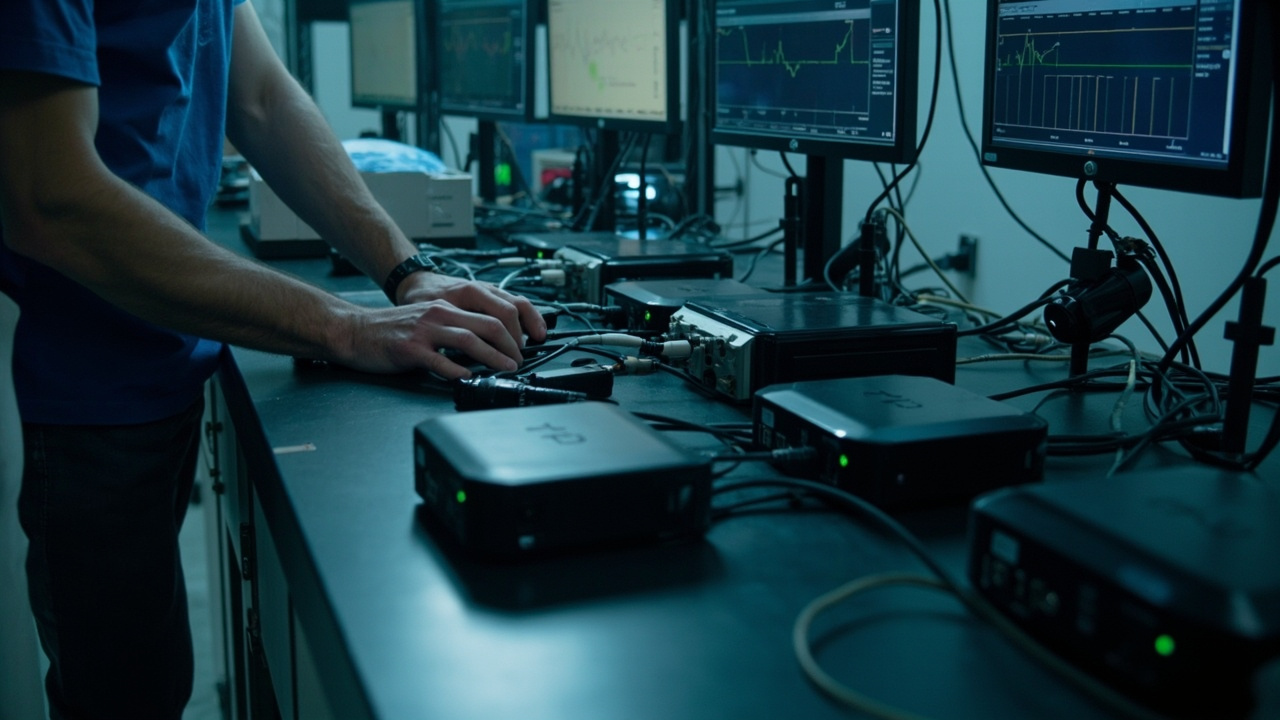
In the operator lab scene, the physical signals under test are Ethernet or WAN, HDMI output, USB peripherals, and the SIM path. A representative bench should show repeatable results rather than loose devices. The buyer may request a video factory audit through the manufacturer route, focused on SMT/AOI, aging, dark-room procedures, and revision-specific evidence.
For venue integration, the display model and enclosure belong in the test configuration. HDMI negotiation, EDID handling, remote-control behaviour, and wireless coverage can change when the unit moves from bench to installed position. Site acceptance can therefore reference factory evidence and an installer checklist without pretending that a lab result reproduces every venue condition.
Turning the question into a spec line
Turn the buying request into controlled decisions, then paste the resulting language into the RFQ. The objective is a configuration that can be assembled, tested, audited, and replaced without guessing.
- Define the role State whether the box is an operator IPTV terminal, OTT white-label product, signage player, AV-integrator appliance, or premium UHD device. Add the destination market, target quantity band, launch schedule, and software-owner list.
- Freeze the platform line If RK3566 is mandatory, identify DM35R as the product direction and confirm its exact production configuration. If not, compare the IPTV, white-label, and UHD alternatives by Android release, media path, DRM, and I/O.
- Define media and protected content List codec, profile, level, frame rate, HDR, output resolution, and DRM. Do not write 8K output for DM21T, and do not imply DRM for DM35R where none is stated.
- Define connectivity Specify Ethernet speed, Wi-Fi configuration, Bluetooth, SIM count, USB count and classes, TF, audio, HDMI, and power input. Mark optional variants explicitly.
- Define software control Name the Android release, AOSP or Google Android TV positioning, launcher, middleware, application versions, permissions, secure boot, update channels, rollback, factory reset, and telemetry policy.
- Define quality evidence Name the golden sample, test fixture, environmental scope, sample size, failure disposition, packaging revision, and pilot acceptance criteria. Tie evidence to the production BOM and firmware identifier.
A pasteable RFQ block should read:
Device role: [operator IPTV / OTT / signage / AV / premium UHD]. Target market: [market]. Processor and OS: [exact approved line]. RAM/ROM: [exact production values]. Display: [resolution, refresh, HDR]. Decode: [codec/profile/level]. DRM: [service, level, optional status]. HDMI: [count, version, input requirement]. Ethernet: [speed]. Wi-Fi/Bluetooth: [configuration]. SIM/cellular: [count and network class]. USB/TF/audio: [exact configuration]. Power: [input]. Software: [launcher, middleware, applications, permissions]. Updates: [OTA, rollback, staging]. Security: [boot, signing, key custody]. Acceptance: [golden sample, evidence index, pilot sign-off]. Any BOM, firmware, label, packaging, or accessory substitution requires written approval.
Before release, check the resulting android tv box checklist against every open field. An unresolved optional item must remain conditional until the supplier identifies the accepted configuration in writing. For deeper selection criteria, use the TV box vendor selection checklist, while keeping this page focused on RK3566 and its operational alternatives.
Convert the specification into an evidence schedule. Each RFQ field should have an acceptance method, sample set, pass criterion, evidence owner, and approval role. HDMI requires the intended display and output-mode list; Ethernet requires link establishment, sustained transfer or service behaviour, and recovery; cellular requires the agreed SIM and network profile; firmware requires build identity and rollback behaviour; packaging requires the exact carton, label, accessories, and insertion instructions.
A final review should identify contradictions across documents. SoC, Android release, RAM/ROM, DRM, Ethernet speed, and connectivity options must match across the RFQ, quotation, production datasheet, golden-sample record, carton, and test procedure. Any optional value must carry an owner and decision date. Any certification dependency must identify whether it blocks sample approval, pilot approval, or shipment release. A structured discrepancy log is more useful than a general warranty claim because it shows which document and revision created the mismatch.
Use a short approval matrix. Technical approval covers SoC, memory, media, connectivity, and firmware. Operations approval covers provisioning, recovery, packaging, and fixtures. Compliance approval covers destination-market certificates and protected-content requirements. The release owner confirms every optional line and links the approved golden sample to the production BOM. This prevents engineering approval from being mistaken for production authorization.
Email [email protected] with the proposed SKU list, exact RAM/ROM and cellular configuration, target-market certificate requirements, middleware and DRM checklist, and intended firmware or pilot evidence. That package allows DataMax engineering to review the RFQ as a controlled build. For factory validation, request an SMT/AOI and aging evidence pack or video factory audit through the factory-quality process, scoped to the exact production revision.
Further reading
- Rk3568 Android Box: Engineer's Checklist
- Google TV devices
- AV1 Android TV box guide
- AOSP vs Google TV guide
- HDR10+ Android TV box guide
- DataMax DM35R specifications and fit
- DataMax DM21P specifications and fit
FAQ
Is RK3566 sufficient for a 4K Android TV set-top box?
RK3566 can anchor a 4K product, but the chipset is only one layer. Confirm production RAM/ROM, Android build, media pipeline, display output, drivers, certification, application compatibility, thermal behaviour, and operator middleware. The DataMax DM35R lists RK3566, quad Cortex-A55, AOSP Android 13, and H.265/H.264/VP9 4K@60 decode. Confirm remaining details against its production datasheet.
Does the DM35R support DRM for commercial streaming?
The supplied DM35R facts state no DRM. Do not infer Widevine, PlayReady, HDCP, or another protected-content implementation from the SoC or decoder capabilities. For commercial streaming, request the exact DRM configuration, licence flow, key handling, output policy, and certification evidence. If protected content is mandatory, compare platforms whose production options explicitly include the required DRM.
Should an operator use wired Ethernet, Wi-Fi, or both?
Specify the production requirement rather than listing both interfaces and assuming equivalence. Define whether Ethernet is mandatory for IPTV transport, whether Wi-Fi is setup or fallback, the required Ethernet speed, Wi-Fi band and antenna arrangement, and recovery after link loss. DM35R facts list RJ45 100M with 1G optional and Wi-Fi6, so the final network configuration must be fixed in the order.
What evidence should a buyer receive before approving production?
Request a revision-specific evidence index covering SMT, AOI, aging, dark-room testing, firmware traceability, golden-sample comparison, and pilot acceptance. Include work-instruction revisions, test criteria, failure dispositions, and retest records. A general factory presentation does not prove that the evidence applies to the exact BOM, firmware, model, and market configuration being purchased.
How should an RFQ distinguish a standard model from an optional build?
Use separate lines for the standard production configuration and every option. For DM35R, the listed configuration is 4GB / 32GB, while other RAM and storage options are stated as optional. For DM21P, the listed configuration is 2GB / 8GB, with other options stated separately. Require the supplier to mark the final accepted SKU, serializable configuration, packaging revision, and component-substitution rules.
Can an Android TV box update itself safely after deployment?
Define the mechanism before deployment: signed artifacts, authorized update routes, staging, failure handling, rollback, factory reset, and fleet ownership. Test the full sequence on a golden sample, including interrupted updates and recovery after network loss. Android alone does not establish safe fleet-update behaviour, and the update design must be tied to the exact production image.


