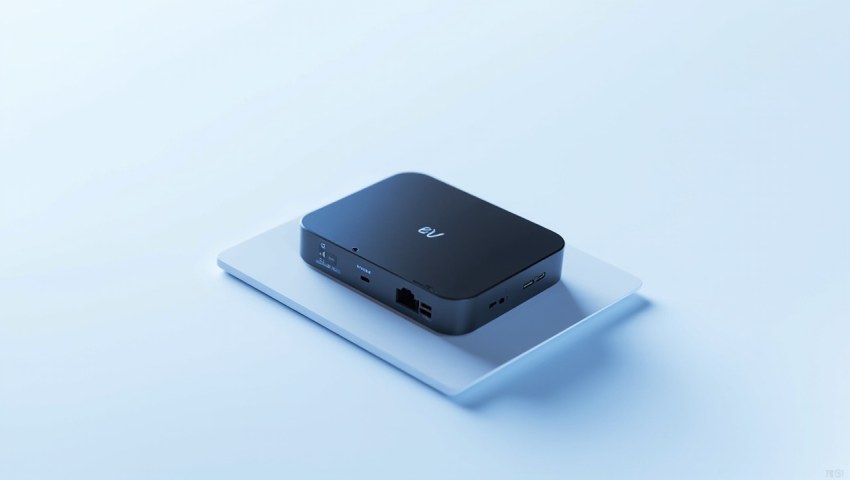
The short answer first: choose by control, not by label
If you need a branded operator product with controlled middleware, boot images, updates, and application policy, specify AOSP and put the operating-system owner in the contract. If you need a device whose primary function is Linux control, telemetry, or device management with a minimal graphical interface, specify Linux and name the kernel, BSP, root filesystem, and update mechanism. Most readers asking about an android tv box are actually deciding who controls the platform after shipment. The answer belongs to the product owner, not to the SoC vendor or the box factory alone.
The decision is especially sharp around RK3568 because the hardware platform and the product platform are different layers. RK3568 can support an Android-based image or a Linux-based image, but the available build determines the actual device behavior. The factory can assemble the board, integrate the BSP, build an image, or create a controlled productization process, yet the customer defines the release criteria and accepts the resulting product.
That means “AOSP or Linux?” is not enough to place an order. The RFQ should identify the software owner, application owner, DRM policy, update path, certification scope, and evidence package. This article focuses on that ownership decision rather than repeating the generic buying guide for Android TV boxes for ISPs.
Decision boundary: choose AOSP when Android TV behavior is part of the commercial product; choose Linux when deterministic system control is the product. Neither label transfers ownership of middleware, security updates, content protection, or end-of-life support.
The practical fork is therefore not between two operating systems in isolation. It is between two release-governance models. An operator-managed television product requires a controlled application framework, signed releases, remote enrollment, and compatibility with protected playback. A fixed-purpose appliance may require less graphical overhead, but it still needs kernel maintenance, secure boot, device identity, rollback, and an accountable support window. The SoC designation can appear on both routes without changing that ownership requirement.
The android tv box category also needs one additional distinction: “Android” in the product name does not establish Google Android TV certification, and “AOSP” does not establish a particular Widevine security level. Those are separate commercial and technical conditions. Put the operating-system route, the certification route, and the content-protection route in separate lines of the RFQ so a supplier cannot substitute one for another.
The traps in this category: where specifications diverge
The first trap is treating “RK3568” as a complete product specification. A processor designation identifies the hardware family, not the Android version, boot policy, kernel revision, board support package, tuner configuration, RAM and storage population, wireless regulatory status, or application stack. A quotation can contain the same SoC code and still describe materially different products.
A second trap is using “AOSP” as if it were an edition of Android. AOSP is the open-source platform on which Android products are built, while Google Android TV certification, Widevine security levels, PlayReady, Dolby Vision, DTS, and HDCP are separate commercial or technical conditions. A buyer can receive an AOSP image without a Google-certified build or a specified Widevine implementation.
Field trap
An RFQ saying “RK3568, 4K, Android, HDCP 2.2” can be underspecified in three independent areas: display output, protected-content path, and operator middleware. The cost of getting this wrong is not merely a missed feature; it is a rejected pilot, duplicated firmware work, or an installed base that cannot be certified as ordered.
The third trap is accepting screenshots and brochures as conformity evidence. A photograph of a boot screen does not establish the active build, bootloader state, partition layout, update mechanism, or certified version. A supplier claim also does not demonstrate that the production unit and the sampled unit use the same image. A screenshot can be captured from a golden sample while the shipment lot contains a different regional image, a different launcher build, or an earlier security patch level.
The fourth trap is leaving ownership undefined after delivery. “Factory support” may mean board repair, image compilation, source handover, crash analysis, or temporary operator access. These obligations need different response paths and acceptance criteria. An android tv box program without a named software owner often produces ambiguous escalations: the factory changes an image, the operator middleware expects another API level, and certification was performed against neither.
Finally, RK3568 leads create comparability traps. If the production model changes CPU bins, RAM suppliers, storage devices, Wi-Fi modules, tuner boards, or firmware branches, the previous test evidence may no longer represent the shipping configuration. Require a configuration-controlled bill of materials, image identifier, and change notification process.
Several other divergences deserve contractual treatment. “4K” can describe decode capability, display output capability, or the product’s actual output mode; those are not interchangeable. A Linux image with a graphical shell may still lack the application distribution, launcher, input, and media controls required for a television terminal. Conversely, an AOSP image may carry unnecessary applications and framework permissions that create security-review work for an industrial deployment.
The commercial failure usually appears late because the ambiguous terms survive quotation. A pilot may pass basic playback while failing restart recovery, entitlement handling, multicast stability, OTA rollback, or regional radio approval. Procurement should therefore reject quotations that provide only a model name, SoC, display resolution, and one operating-system adjective. Require a board revision, BOM baseline, image or BSP baseline, acceptance test, and change-control clause.
Ownership also determines the remedy. If the supplier controls the image but the customer controls the middleware, both teams must approve interface changes. If the customer controls the signing key and the supplier controls the update server, a failed rollout may leave no usable rollback path. A “factory owns the OS” statement is therefore too broad. The RFQ should assign authority over the bootloader, kernel, BSP, framework, applications, provisioning credentials, signing keys, release approval, vulnerability response, and field diagnosis.
How the factory controls the variable: evidence, not assumptions
Factory control begins with configuration control rather than a generic quality statement. Freeze the SoC, memory population, storage, network modules, tuner path, port configuration, power design, enclosure, and operating-system build into a revisioned product baseline. Each physical unit then needs a traceable route from components placed at SMT line to final test, software flashing, and shipment release.
- Define the build Record the approved RK3568 hardware revision, BOM, BSP, kernel, image, applications, DRM configuration, middleware, and update policy in one release record.
- Control board assembly Use solder paste inspection, AOI, process controls, and component traceability appropriate to the assembly route.
- Burn and configure software Load a controlled image with bootloader and filesystem settings defined by the release record; capture the image identifier and serial association.
- Run electrical and functional checks Verify interfaces, network behavior, storage, output paths, remote functions, and required application flows before enclosure or final packing, according to the approved test plan.
- Apply burn-in and dark-room evidence Exercise the unit for the agreed duration and environmental sequence, documenting failures and retest results.
- Audit the evidence chain Reconcile serial numbers, test records, software versions, certificates, and shipment release notes before accepting a batch.
The test method must match the risk. A UI boot test is not a media pipeline test. HDMI output at 4K does not establish supported colour formats or protected-content behavior. Network enumeration does not establish sustained multicast handling. For an operator project, the accepted set should include application launch, middleware attachment, DRM request and playback, tuner operation where applicable, update behavior, and recovery procedures.
Evidence package: request the production BOM, schematic or board revision list, image ID, flashing record, AOI result, functional test report, burn-in record, dark-room record, serialization record, and deviation list. DataMax can provide a video factory audit or topic-specific request for SMT, AOI, and aging evidence through its factory quality process.
This process also answers the ownership question. The factory may own assembly execution, image integration, and defect analysis under a customer-approved specification. The customer owns acceptance criteria. If source code, signing keys, update servers, or certification administration are required, assign those assets before tooling and pilot builds begin.
A practical release record should have a unique identifier that appears on the build sheet, flashing record, functional report, golden-sample record, and shipment release note. The operator can then answer three audit questions without relying on memory: which hardware was assembled, which software was installed, and which evidence demonstrates that software passed on that hardware.
Change control is equally important. Define which substitutions require written approval, such as a different RAM supplier, storage component, Wi-Fi module, tuner, regulator, or BSP branch. For each allowed change, state whether it requires regression testing, a new image, a new report, or a customer waiver. A procurement example is an LTE module substitution: electrically similar hardware can change radio approval, antenna behavior, power draw, driver behavior, and thermal performance, so it cannot be treated as a generic component substitution.
At pilot sign-off, retain the approved golden sample rather than only the test report. Record its serial number, board revision, boot configuration, image ID, provisioning state, and connected accessories. Use that physical unit as the comparison reference for pilot acceptance. For software exceptions, classify each deviation as blocking, conditional, or accepted with a corrective action. That makes a shipment decision auditable rather than dependent on a verbal assurance.
Two routes, one bill of differences: AOSP and Linux compared
The practical comparison is not “Android versus computer operating system.” It is a set of commitments across application frameworks, operator integration, update control, media workloads, security ownership, and certification work.
| Decision area | AOSP route | Linux route | Procurement consequence |
|---|---|---|---|
| Primary interface | Android application framework and TV launcher | Linux userspace with an optional graphical stack | Select from the shipped user experience, not from kernel familiarity. |
| Operator middleware | Android APK, system integration, permissions, and launcher expectations | Native or web service, Linux daemon, or container model | Define the middleware interface before freezing the image. |
| Update control | Android update mechanisms plus operator policy and signing control | OSTree, package management, container updates, or a custom mechanism | Name the updater, server, signing authority, rollback method, and ownership. |
| Media and DRM | Android media stack and platform-specific DRM integration | Vendor or software DRM integration at the Linux level | Test the exact content-security path, not only codec capability. |
| Certification | May require Google Android TV assessment plus market and radio work | May require Linux security baselines and market approvals without Android TV certification | Attach certification obligations to the chosen product route. |
| UX and memory | Higher framework overhead; application behavior depends on RAM and storage | Potentially leaner for a fixed-purpose terminal | Size from measured application and update behavior. |
| Security baseline | Android permissions, signed builds, verified boot options, and platform patching | Kernel hardening, account isolation, service hardening, and root-filesystem control | Specify the threat model and the party that closes vulnerabilities. |
| Device identity | Android device ID, provisioning enrollment, MDM or AMAPI integration | Hardware identity, daemon enrollment, certificates, and operator ACS integration | Define the identifier and credential custody before production. |
| Application distribution | APK signing, permissions, launcher placement, and managed application policy | Package repository, container registry, or application agent | Identify the signing authority and rollback behavior. |
| Field diagnostics | System logs, application diagnostics, dumpsys, and middleware logs | Journald, service logs, device agents, and remote shell workflows | Define retained data, access controls, and escalation ownership. |
The AOSP route is the stronger default for a branded android tv box aimed at IPTV, OTT, or Android TV channels because application packaging, launcher integration, input handling, and familiar ecosystem tooling align with that route. The Linux route is stronger for fixed-purpose appliances, industrial control, or equipment where the UI is secondary and deterministic service management matters more.
The ownership tier changes the commitment. An operator-managed program normally needs controlled images, middleware support, remote provisioning, field telemetry, and a clear incident boundary. A Linux appliance program may need long-term kernel maintenance, secure boot, device identity, and fleet updates, but it may not need a launcher, app store, or Android TV certification.
Neither route should be selected from a generic comparison chart alone. A factory can make a Linux image difficult to maintain through undocumented patches, just as it can make an AOSP image unstable through unsynchronized framework changes. The relevant artifact is the maintained release, its update path, and the evidence supporting both.
The bill of differences also affects quotation structure. Separate common hardware engineering from OS-specific work: BSP bring-up, framework integration, application signing, middleware packaging, certification management, image flashing, update infrastructure, security hardening, and long-term maintenance. If those items are bundled into one “software fee,” the buyer cannot compare routes or determine which cost increases when the application model changes.
The mechanism behind the specification: where control actually resides
An RK3568 device is a layered architecture: the SoC and board provide hardware, the bootloader initializes the chain, the kernel controls core resources, the BSP exposes board peripherals, the OS image supplies the user environment, and the product layer adds middleware, applications, policy, and branding.
AOSP adds an Android framework with package management, permissions, services, broadcast handling, media APIs, input methods, and UI integration. Google Android TV certification is an additional compliance process; AOSP code alone does not confer it. A buyer also needs a precise DRM statement: Widevine L1, PlayReady, HDCP, and Dolby Vision are not interchangeable labels.
Linux provides the kernel and a much wider set of user-space choices. Updates can use system packages, an application-level agent, atomic image deployment, OSTree, containers, or a vendor-specific mechanism. Secure boot, verified updates, key rotation, partition redundancy, and rollback protect the update chain. If the customer cannot identify those controls, “Linux” offers no guarantee of fleet manageability.
verified chain
hardware policy
AOSP or Linux
and applications
identity and updates
Ownership should be mapped to each layer. Specify who selects the kernel and BSP, approves the bootloader, maintains device trees, signs builds, controls provisioning credentials, releases middleware, operates the update service, investigates field faults, and authorizes security patches. The factory can execute several roles, but the contract must distinguish production execution from strategic ownership.
For managed pay-TV or IPTV deployments, the relevant mechanism may include TR-069 or operator ACS, Android Management APIs, MDM, or an operator-owned device-management service. These mechanisms differ in device enrolment, policy enforcement, application deployment, telemetry, and diagnostic access. The selected OS must support the chosen management plane without conflicting ownership of the same device.
The specification should also define reproducibility. State the image version, build date, patch baseline, device tree, bootloader version, partition layout, signing method, update server, rollback behavior, and minimum field-test suite. This turns “RK3568 Linux box” into an auditable product.
A boot-chain explanation illustrates why one supplier can claim a more secure product without changing the SoC. If the bootloader is unlocked, a verified kernel offers less protection because the next stage can be replaced. If the BSP exposes peripherals through an unreviewed device tree, the production hardware may not match the tested configuration. If the image lacks atomic deployment and rollback, an interrupted update can leave the fleet split between versions.
Content protection follows a different chain. The display controller, HDMI output path, HDCP implementation, DRM agent, application, licence server, and playback engine must work together. A codec test using unprotected content proves decode capability but not the protected-content path. Conversely, a successful Widevine playback test does not establish every supported codec, output format, or operator entitlement workflow. Each requirement needs its own acceptance case.
For fleet management, write down the control plane and data plane. The control plane provisions identity, applies policy, distributes releases, and records device state. The data plane carries applications, content, telemetry, and logs. Identify which service stores credentials, which component signs packages, which party can revoke certificates, and how support staff obtains diagnostic access. These controls determine whether an android tv box remains operable as its operator evolves the service.
Which DataMax models actually sit here: field-by-field evidence
No supplied DataMax model uses RK3568, so this angle must not be answered by relabeling an unrelated product as an RK3568 configuration. The closest product positions are an Amlogic operator set-top box and an RK3566-based cellular or signage model. Their fields below come directly from the supplied product facts.
| Model | SoC and CPU | OS | RAM / ROM | DRM position | Primary fit |
|---|---|---|---|---|---|
| DM21P | Amlogic S905Y4, quad Cortex-A35 | AOSP Android 11 | 2GB / 8GB (4GB; 16/32/64GB optional) | Widevine L1 / PlayReady / HDCP 2.2 optional | 4K IPTV / operator middleware set-top box |
| DM21S | Amlogic S905Y5, quad Cortex-A55 | AOSP Android 14 | 2GB / 16GB (2/4/8GB; 16/32/64GB optional) | Widevine L1 / PlayReady optional; Dolby Vision/DTS | 4K Android TV box for IPTV/OTT white-label |
| DM21T | Amlogic S905X5, quad Cortex-A510 (ARMv9) | AOSP Android 14 | 4GB / 64GB (family options) | Widevine L1 / PlayReady optional | Premium UHD / cloud-gaming box |
| DM35R | Rockchip RK3566, quad Cortex-A55 | AOSP Android 13 | 4GB / 32GB (2/4/8GB; 16/32/64GB optional) | none stated | Fanless cellular 4K box / signage player |
The distinction matters. DM21P is the supplied operator-middleware direction; DM21S is the supplied IPTV/OTT white-label direction; DM21T is the supplied premium UHD and cloud-gaming direction. DM35R uses Rockchip RK3566, not RK3568, and is positioned as a fanless cellular 4K box or signage player. An RK3568 request must therefore be treated as a separate product question, with any proposed DataMax configuration confirmed against the production datasheet.
The decode capability reinforces that separation without replacing it. DM21P supports AV1 [email protected], VP9/H.265 4K@60, and H.264 4K@30. DM21S supports AV1 and H.265 [email protected] at 4K@60. DM21T supports H.266/VVC main10 at L5.2 for 4K@120, AV1/VP9/H.265 for 4K@120, AVS3 for 4K@120, H.264 for 4K@60, and inline AI-SR. None of those fields changes the SoC identity, and none should be represented as an RK3568 capability.
Port configuration also affects product fit. DM21P includes HDMI 2.0b output, two USB2.0 ports, TF, S/PDIF, 3.5mm AV, RJ45 100M, Wi-Fi6 2x2, and BT5.4. DM21S adds a 1G Ethernet option. DM21T has one USB2.0 and one USB3.0 port, with RJ45 100M and a 1G option. DM35R includes SIM x1 for 5G/4G LTE, RJ45 100M with a 1G option, Wi-Fi6, and BT5.2. These distinctions should drive deployment selection rather than the “Android TV” label.
Buyer evidence should also progress beyond a supplier statement. The hierarchy below is an editorial planning score, not audited data. Its purpose is to help a procurement team request stronger proof as risk increases.

The same figures, in searchable form:
| Evidence option | Editorial score |
|---|---|
| Supplier claim | 15 |
| Generic test report | 42 |
| Standard-specific report | 70 |
| Certificate with public registry lookup | 94 |
For an operator launch, request evidence tied to the exact model, hardware revision, OS build, and standard. A generic report may show laboratory competence without proving that the shipping configuration passed the relevant test. Confirm certificate scope and registry status independently. DataMax product pages provide the primary product reference, while certification information and compliance information should be used to define the applicable evidence request.
Deployment scenarios and the specification each needs
The buyer situation determines the route and evidence burden. An IPTV operator may prioritize middleware integration, DRM, tuner behavior, remote management, and fleet updates. A signage integrator may prioritize reboot recovery, USB or network content delivery, long operating hours, and deterministic imaging. An AV integrator may prioritize HDMI behavior, EDID handling, control integration, and installation recovery. A cellular venue may prioritize modem behavior, antenna integration, network resilience, and power management.

The macro view is a reminder that the SoC package is only one component in the controlled system. Memory, PCB routing, power delivery, boot configuration, thermal design, and firmware determine whether the intended workload is stable.
| Situation | Primary requirement | Model direction | Decisive evidence |
|---|---|---|---|
| IPTV operator with controlled middleware | AOSP operator integration and specified protected-content path | DM21P direction | Exact AOSP build, middleware test, DRM configuration, RJ45 and S/PDIF function |
| IPTV or OTT white-label program | Android TV appliance with branded launcher and application control | DM21S direction | AOSP Android 14 build, launcher workflow, AV1/H.265 test, optional DRM evidence |
| Premium UHD or cloud-gaming pilot | Higher decode path and newer application platform | DM21T direction | Specified 4K formats, inline AI-SR behavior, USB and network performance |
| Cellular signage deployment | Rockchip-based fanless platform with LTE connectivity | DM35R direction | RK3566 configuration, AOSP Android 13 build, 5G/4G LTE option, burn-in record |
| Exact RK3568 Linux or AOSP program | SoC-specific BSP, image, and ownership controls | Confirm against the production datasheet | Board revision, BSP baseline, image ID, bootloader, update mechanism, test report |
| Retail display with controller integration | Stable output, application control, recovery, and physical I/O | Confirm the display interface and control protocol before model selection | EDID behavior, input workflow, reboot recovery, HDMI and USB test record |
| Cellular venue with remote monitoring | LTE option, managed image, telemetry, and restart recovery | DM35R direction when its cell and media requirements match | SIM configuration, network recovery, storage monitoring, burn-in record |
| Fixed-purpose Linux appliance | Deterministic services, secure update, and device management | Confirm a production Linux configuration | Kernel/BSP baseline, service agent, secure boot, signed update and rollback test |
For a managed operator deployment, include channel change, guide data, parental controls, entitlement handling, restart recovery, network reconnection, and update rollback in the acceptance script. For a signage deployment, define the content source, playlist format, application launch behavior, reboot target, storage monitoring, and recovery image. For an integrator, define control protocol, EDID behavior, audio route, remote-control protocol, and support escalation.
The scenario also sets the operating threshold. A fixed-purpose Linux appliance may use fewer interactive layers but still requires secure identity, remote observability, and a controlled update plane. An AOSP android tv box may need more framework and certification coordination, but it provides a familiar application model for branded television products. Neither is “finished” until its deployment workflow is specified.
An IPTV acceptance script should use the operator’s real workflow rather than a generic launcher. That includes service activation, entitlement response, channel retrieval, protected playback, audio routing, network loss and recovery, application update, device restart, and remote support diagnostics. For an OTT white-label program, include launcher branding, search behavior, user profile handling, application install permissions, and recovery to the approved home screen.
A venue deployment adds power, environment, and connectivity constraints. The RFQ should state whether content arrives by USB, TF, Ethernet, Wi-Fi, or cellular; whether a network outage must preserve playback; and whether a device must recover automatically after power restoration. A signage player can use the DM35R direction when its AOSP Android 13, Rockchip RK3566, LTE option, media decoding, and storage fit the application. A Linux route becomes relevant if the operator prefers a service appliance rather than an Android application appliance.
The strongest specification links each scenario to an owner and a measurable result. “Works after power loss” is incomplete; “restores the prior playback route and reaches content within the customer-approved recovery interval after an AC interruption” is testable. “Secure updates” is incomplete; “a signed image is installed with A/B-style or vendor-equivalent rollback and the previous release remains recoverable” is testable. The owner then supplies the evidence for that case.
Turning the question into a spec line: a controlled selection sequence
Use the procurement sequence to prevent the OS label from outrunning the acceptance criteria.
- State the product job Write one sentence defining whether the device is an operator television terminal, a managed Linux appliance, a branded Android product, or a signage player.
- Name the platform owner Identify who approves the bootloader, kernel, BSP, OS image, middleware, signing keys, update service, security response, and release acceptance.
- Freeze the hardware baseline Record the exact SoC, board revision, RAM, storage, tuner, network, wireless, display, and power configuration.
- Define the software release Specify the OS route, image identifier, boot policy, provisioning method, update mechanism, rollback, logging, and source or binary handover.
- Attach content and market requirements State the required DRM, HDCP, codec, radio, regulatory, and certification scope separately; do not infer one from another.
- Attach the evidence set Require BOM traceability, image flashing records, SMT/AOI evidence, burn-in and dark-room records, functional tests, deviation lists, and certificate verification where applicable.
- Approve a golden sample Lock the exact production configuration and use the approved unit as the physical and software reference for pilot and volume acceptance.
A pasteable RFQ line should read like this: “RK3568 [exact board revision], [RAM]/[storage], [Android AOSP version and image ID or Linux kernel/BSP baseline], bootloader ownership [party], signed update path [method], operator middleware [version], DRM [named requirement], radio [module and market], recovery and rollback [method], pilot evidence [SMT/AOI, burn-in, dark-room, functional report], and shipment acceptance against golden sample [ID].”
Avoid writing only “RK3568 Android TV box, Linux optional, 4K.” It leaves the SoC-to-BSP relationship, OS ownership, certification path, and update control unresolved. A procurement request should be short enough for a quotation line and complete enough to prevent incompatible interpretations.
For a custom RK3568 assessment, DataMax’s custom development and manufacturer capabilities are the relevant starting points, but the exact platform must be confirmed against the production datasheet. Request a factory audit and an evidence package scoped to SMT, AOI, aging, image flashing, and configuration traceability. Sample requests can be directed through sample ordering, with project-specific technical input through inquiry.
The selection sequence can be reduced to a flow from workload to control. Start with the operator workflow, select AOSP or Linux, freeze the hardware baseline, then create the release, evidence package, and golden sample. This sequence prevents a preferred operating system from being imposed before the application and management requirements are known. It also prevents a supplier from presenting a development-board image as if it were a production release.
Before placing the order, resolve six commercial questions in writing. Which party owns the application and launcher? Which party owns signing keys and the update endpoint? What image supports the required middleware and DRM path? Which components can be substituted? What evidence applies to the shipping revision? What happens when a security defect or failed rollout affects the fleet? Each answer should appear in the order, the acceptance matrix, or the quality agreement.
Email [email protected] with the SKU list, target-market certificate list, middleware and DRM checklist, approved OS image or update-policy draft, and required factory evidence package.
Further reading
- Guide android tv box for isps
- AOSP vs GMS solution notes
- Telecom and pay-TV operator solutions
- Allwinner Android TV boxes
- AOSP Android TV boxes
- DataMax DM35R specifications and fit
- DataMax DM21P specifications and fit
FAQ
Who should decide between AOSP and Linux?
The product owner should decide, with input from the operator, software integrator, factory, and compliance team. AOSP normally fits a branded television product requiring Android applications, launcher integration, and Android media workflows. Linux normally fits a fixed-purpose managed appliance where deterministic services and update control matter more than an Android application ecosystem. The deciding document should be the platform requirements, not a generic OS preference.
Does an RK3568 specification determine the operating system?
No. RK3568 identifies a hardware platform, but it does not determine the OS image, kernel version, bootloader policy, middleware, DRM implementation, or update system. Those items must be stated separately and tied to a production board revision. For any DataMax model based on RK3568, confirm against the production datasheet; the supplied RK3566-based DM35R is a distinct platform.
Does AOSP mean the box is Google Android TV certified?
No. AOSP is the open-source Android platform. Google Android TV certification is a separate compliance activity tied to the finished product and declared configuration. A buyer should request the actual certification status and scope, rather than inferring certification from the presence of an AOSP build or an Android launcher.
Which ownership documents matter most?
Start with the bootloader and signing policy, the OS image release process, update and rollback design, provisioning credentials, middleware compatibility, source or binary handover, vulnerability response, and field-support responsibility. Also require a configuration-controlled BOM and image identifier. These records reveal who can change the device, how changes are approved, and whether evidence applies to the shipping unit.
Can one factory quote cover both AOSP and Linux?
It can if the factory can maintain two controlled build streams, test plans, and evidence sets. The quotation should separate the common hardware assumptions from OS-specific engineering, certification, test, and support costs. Otherwise, comparing a ready AOSP route with a custom Linux route can hide substantial differences in tooling, validation, lifecycle work, and ownership.
What evidence should close an RK3568 pilot?
Require a configuration-controlled BOM, board revision, BSP and image identifier, flashing record, SMT/AOI evidence, functional test report, burn-in and dark-room records, deviation list, and golden-sample approval. Add certificate verification where the target market or certification route requires it. The evidence must describe the shipping configuration, not merely the engineering sample or a generic laboratory report.