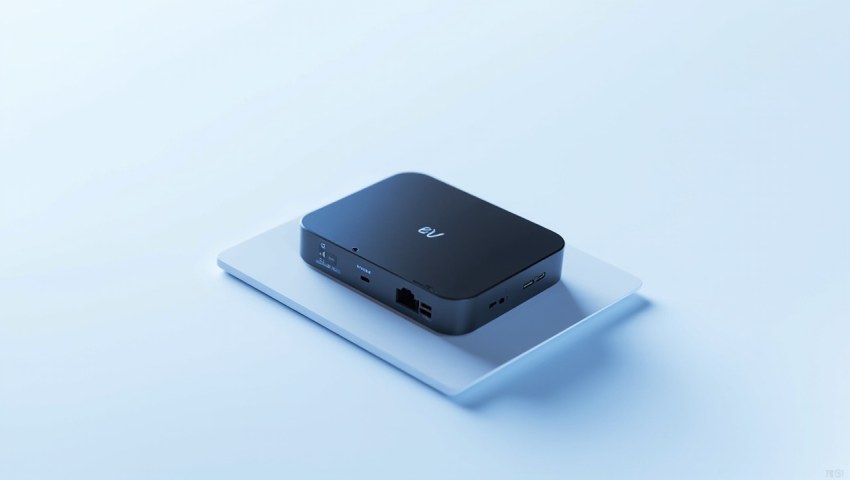
The procurement answer in one screen
For android tv box wholesale programs, the direct answer is to treat a distributor appointment as conditional, not as production acceptance. A quotation establishes commercial intent; it does not prove that the delivered model, software image, interfaces and protected-content path match the tested configuration. Before appointment, require 5 linked records: the exact DataMax model and hardware revision, the software and middleware boundary, factory verification evidence, the approved golden sample, and the pilot acceptance criteria.
The appointment file should connect those 5 records to 1 release decision. No party should substitute a component, change the RAM/ROM option, replace the network hardware, or update the image without written review. The approved sample, test records, purchase order and incoming inspection must use the same configuration identifiers. This approach separates a commercial relationship from a technical qualification and gives procurement a defensible basis for release.
Decision rule: authorize volume only after the approved golden sample, written RFQ, factory evidence and pilot results resolve to the same production configuration. An unapproved substitution invalidates the approval basis and requires revalidation.
This page addresses the evidence required before naming or authorizing a distributor. The broader Android TV box wholesale guide covers sourcing strategy; this angle concerns the appointment file, model lock and acceptance gate. DataMax platform selection remains subordinate to traceability: a stronger SoC cannot compensate for an unidentified image, an untested network option or an ambiguous production record.
A useful appointment agenda has 6 document headings: workload, model configuration, software baseline, factory evidence, golden sample and pilot release. Each heading needs an owner, a dated artifact and a defined approval status. Missing evidence is not neutral; it transfers the risk of discovering variation in the field to the buyer. For android tv box wholesale, the decisive question is not only which model is proposed, but whether that exact model can be reproduced and verified without uncontrolled changes.
Real DataMax platforms, field by field
Compare every proposed configuration against the production datasheet, not a category label or sales slide. The table records only the supplied DataMax facts; optional configurations require written confirmation against the production datasheet and purchase order. An appointment should name the model and selected options rather than referring to “the 4K model.”
| Model | Positioning | SoC and OS | RAM / ROM | Decode and DRM | Interfaces |
|---|---|---|---|---|---|
| DM21P | 4K IPTV / operator middleware set-top box | Amlogic S905Y4, quad Cortex-A35; AOSP Android 11 | 2GB / 8GB; 4GB; 16/32/64GB optional | AV1 [email protected]; VP9/H.265 4K@60; H.264 4K@30; Widevine L1 / PlayReady / HDCP 2.2 optional | HDMI 2.0b out x1; USB2.0 x2; TF; S/PDIF; 3.5mm AV; RJ45 100M; Wi-Fi6 2x2 + BT5.4; DC 5V/2A |
| DM21S | 4K Android TV box for IPTV/OTT white-label | Amlogic S905Y5, quad Cortex-A55; AOSP Android 14 | 2GB / 16GB; 2/4/8GB; 16/32/64GB optional | AV1 / H.265 [email protected] 4K@60; Widevine L1 / PlayReady optional; Dolby Vision/DTS | HDMI 2.0b out; S/PDIF; AV; USB2.0 x2; TF; RJ45 100M; 1G optional; Wi-Fi6 2x2 + BT5.4 |
| DM21T | Premium UHD / cloud-gaming box | Amlogic S905X5, quad Cortex-A510 (ARMv9); AOSP Android 14 | 4GB / 64GB; family options | H.266/VVC [email protected] 4K@120; AV1/VP9/H.265 4K@120; AVS3 4K@120; H.264 4K@60; inline AI-SR; Widevine L1 / PlayReady optional | HDMI 2.0b out, no HDMI input; USB2.0 x1; USB3.0 x1; TF; S/PDIF; AV; RJ45 100M; 1G optional; Wi-Fi6 + BT5.4 |
| DM22Q | Gaming-oriented Android TV box | Amlogic S905X5M, quad Cortex-A55 up to 2.5GHz; AOSP Android 14 | 4GB / 64GB; 2/4/8GB; 16/32/64GB optional | AV1/H.265 L5.1 4K@60; inline AI-SR, with no NPU TOPS stated; Widevine L1 / PlayReady optional; Dolby Vision/DTS | HDMI 2.0b out; USB2.0 x2; TF; S/PDIF; AV; RJ45 100M; 1G optional; Wi-Fi6 2x2 + BT5.4 |
For an operator-led deployment, DM21P follows its stated fit for operator middleware set-top boxes. For an IPTV or OTT white-label program, DM21S aligns with the supplied positioning. A premium UHD or cloud-gaming requirement points toward DM21T, while a gaming-oriented requirement points toward DM22Q. These are model directions, not automatic selections. Middleware, certification, thermal design and installation constraints can override them.
Three comparison points need explicit attention. DM21T has no HDMI input, so “premium” does not imply HDMI-capture compatibility. DM21S and DM22Q list Dolby Vision/DTS, whereas DM21P lists HDCP 2.2 as optional. All 4 models include RJ45 100M; 1G is optional on DM21S, DM21T and DM22Q. RAM/ROM is configuration-bearing, not a decorative suffix. The AV1 guide helps separate a declared codec capability from a complete service configuration.
The following table turns model selection into documentable RFQ lines. It identifies what to freeze, the operational consequence and the record that proves delivery. For android tv box wholesale, a missing option is not resolved by assuming the best-equipped variant; it is resolved through a written decision and sample inspection.
| Model | Freeze this configuration field | Why the field matters | Proof required |
|---|---|---|---|
| DM21P | RAM/ROM; optional Widevine L1, PlayReady and HDCP 2.2; network and port set | Software baseline, protected-content path and installation interfaces affect qualification | Configuration sheet plus golden-sample record |
| DM21S | RAM/ROM; optional 1G Ethernet; optional DRM and Dolby Vision/DTS | White-label and OTT workflows can be affected by storage, network and service requirements | Option line plus application and DRM test record |
| DM21T | 4GB / 64GB family baseline; optional 1G; no HDMI input | Premium decode claims do not create HDMI capture capability | Workload matrix and physical interface inspection |
| DM22Q | RAM/ROM; optional 1G; gaming-oriented decode and software path | Memory, network and sustained workload must be tested together | Approved sample, sustained-load log and update test |

The same figures, in searchable form:
| Control option | Editorial score |
|---|---|
| Verbal commitment | 18/100 |
| Contract clause | 48/100 |
| Golden sample | 72/100 |
| Golden sample plus pilot gate | 92/100 |
The chart is an editorial ranking by DataMax, not audited performance data. The procurement implication is that each control adds a distinct record: a contract defines obligations, a golden sample anchors configuration and a pilot gate tests the transition into production. The 92/100 label does not mean that 92% of failures disappear. It is a qualitative planning score for comparing evidence strength, and every score must be read against the factory-quality evidence requested for the actual order.
Buyer situations, ranked by what they punish
The fastest-failing condition differs by deployment. An operator may discover that the box passes a dealer demonstration but fails middleware integration. An integrator may find that firmware update procedures work on the sample and fail across several installed device variants. A venue operator may find that thermal behavior differs between an early unit and a production run. Rank each situation by the failure that would create the most field cost, then match evidence to that risk.
| Buyer situation | Primary requirement | Model direction | Evidence before appointment |
|---|---|---|---|
| Pay-TV or IPTV operator | Middleware integration, decoder availability, managed deployment, hardware identification | DM21P or DM21S, subject to software qualification | Exact image ID, boot trace, middleware compatibility matrix, serial-number scheme, provisioning trial |
| OTT or streaming product team | DRM service path, stable updates, white-label control, device-level recovery | DM21S, subject to service requirements | License-flow test, update and rollback demonstration, brand configuration sheet, application install record |
| Commercial AV integrator | HDMI, network, audio, remote-control and room-control compatibility | DM21P where the required port set matches | Interface drawing, control-system test log, EDID behavior, 24-hour room trial |
| Hotel or hospitality operator | Simple recovery, compact installation, network access, room-level consistency | Model selected from installed TV, network, and recovery requirements | Pilot-room log, remote-update procedure, tamper or physical reset behavior, spare-unit process |
| Gaming-focused retail or edge program | 4K decode profile, input latency, sustained performance | DM21T or DM22Q | Codec and display-mode matrix, sustained-load log, measured latency protocol |
A hotel deployment illustrates the difference between a specification and a usable installation. The scene is a modern room at dusk, with a wall-mounted television connected to a compact box hidden behind the screen and a clean bedside desk. Nothing in that scene proves fleet management, remote recovery, thermal stability or app entitlement. The photograph is illustrative of the installation context; the procurement proof must come from a room-level pilot.

For the operator scenario, the first question is: “Can the exact production image complete provisioning, receive entitlement, display protected content and recover after interruption?” For the integrator, it is: “Does the device behave predictably with the named display, control system, network and audio path?” For the hospitality operator, it is: “Can one technician recover or replace units without opening every television?” These questions prevent a distributor discussion from collapsing into unit price and exterior comparison.
Rank situations by field consequence. A middleware provisioning failure can block activation across a cohort. A remote-control mismatch can require site-visit calibration. An unresolved recovery procedure can turn 1 failed unit into a dispatch ticket, a truck roll and spare-stock movement. A gaming workload can expose a different issue: the decoder may accept a profile while frame pacing, thermal behavior or the connected display path remains unstable. The evidence package should name the failure response, not only the happy-path feature.
Use 3 operating questions per channel. For the operator, ask about entitlement, middleware and recovery. For the integrator, ask about EDID, control and audio. For hospitality, ask about remote recovery, spare substitution and network loss. The answers reveal whether the proposal is a product, a managed platform or merely a box. That distinction determines the evidence and service commitment required before volume release.
For android tv box wholesale buying, create the matrix before choosing the model. The situation determines which requirement becomes a pass/fail test; the requirement determines the evidence; the evidence identifies a defensible model direction. If a required capability falls outside the confirmed DataMax production datasheet, record it as an open engineering item rather than allowing a distributor to substitute it informally.
A decision path for the RFQ
Build the RFQ as a sequence of gates. Each gate produces an artifact that the next gate can test. The buyer should paste the resulting configuration lines into the purchase order or a referenced production specification, rather than relying on meeting notes.
- Define the workload State the operator middleware, streaming service, protected-content requirement, display modes, network topology, audio path, remote-control system and physical interfaces. Name the expected source resolution, frame rate, codec profile and output mode without using “8K” as a substitute for an evidenced output mode.
- Freeze the model line Record the DataMax model, SoC verbatim, OS, RAM/ROM option, selected DRM, network option and every required port. Add a prohibition on substitutions without written approval.
- Define the software baseline Identify the image version, application package, middleware version, boot logo, update mechanism, partition policy and build provenance. Confirm whether the device uses AOSP Android 11 or AOSP Android 14 for the selected model.
- Set measurable acceptance tests Cover power-up, network association, service launch, DRM playback, output mode, USB, audio, remote control, update, rollback, reboot recovery and sustained operation. Specify the number of units, duration, permitted failures and evidence format in the pilot order.
- Approve a golden sample Compare the sample’s hardware revision, ports, label, firmware build and measured behavior with the written specification. Photograph identifiers, retain a signed copy and define the serial-number range belonging to that approval.
- Run a pilot and gate release Review test records and physical inspection before authorizing the production release. A verbal assurance or category-level quotation does not pass this gate.
The resulting RFQ should contain lines such as these:
- “Model: exact approved DataMax model and hardware revision; substitutions require prior written approval.”
- “Software: exact OS branch, image ID, middleware version, application build and update policy.”
- “Media: named codec, resolution and frame-rate acceptance matrix, including DRM playback.”
- “Interfaces: exact port list, optional network configuration and required accessories.”
- “Quality: production records keyed to serial number or production lot, with sample retention.”
- “Pilot: agreed unit count, test duration, failure definition, corrective-action process and release authority.”
The first inquiry message should state the workload, target DataMax model, required OS and RAM/ROM configuration, deployment volume, destination, compliance needs and requested evidence package. A technical inquiry can begin with those lines; a sample request should identify the model, software baseline and test regime. Do not ask merely for “a sample”: specify what the sample must prove.
A second RFQ paragraph should define evidence ownership. Name the DataMax contact for configuration confirmation, the distributor contact for commercial coordination and the buyer authority for sample and pilot release. State who can approve a change, how much notice is required and which document supersedes meeting notes. This prevents a commercial channel from becoming the technical approval authority without a traceable record.
Preserve the right to narrow scope. If a requested feature is not supported by the confirmed production datasheet, record it as an open requirement rather than accepting marketing shorthand. If 1G Ethernet is required, include it in the model line, test it and verify the received hardware. If the application targets a specific OS generation, state that target because DM21P and the other 3 models use different stated AOSP versions. The result is an auditable RFQ, not a feature wish list.
For android tv box wholesale programs, paste this decision path into the appointment agenda. Its first line names the workload; its second identifies the model and configuration; its third freezes software; its remaining lines define evidence, pilot acceptance and change control. The agenda ends with a release decision rather than another discussion of intent. This structure also allows the buyer to ask for missing evidence without restarting model selection.
What goes wrong after the PO
The most common post-PO failure is not a dead unit. It is a documented unit that does not match the approval basis. A quotation may name a model family while omitting the RAM/ROM option, 100M versus optional 1G networking, DRM option, HDMI arrangement or OS generation. Each omission creates an assumption that becomes visible only during deployment.
Field trap 1
A distributor treats “the same model” as an equivalence key. The same product name can still carry different RAM/ROM, optional network hardware, software images, labels, middleware integrations or port arrangements. The cost is a late line stop, re-flashing, re-certification review, mismatched spares or field rework. Freeze the configuration line, hardware revision, image ID and approved sample together.
Field trap 2
A capability sheet is mistaken for deployment proof. Widevine L1, PlayReady, Dolby Vision/DTS or HDCP 2.2 identifies declared support; it does not prove that the service account, license server, display, soundbar and middleware completed a successful end-to-end playback path. Test the licensed service and physical output chain, then retain the results.
Other divergences emerge after commercial acceptance. Firmware may be updated during production, changing update behavior or middleware compatibility. The sample may have been assembled manually while the run uses production fixtures. A component substitution can preserve the model name while changing thermal behavior, radio behavior, supply timing or repair strategy. The buyer needs notice rights and a process for requalifying a change.
Documentation can fail at the boundary between supplier, distributor and operator. “FCC compliant” without a report identifier, test standard and responsible party does not establish documentary traceability. “Operator approved” without the operator, model revision and test scope is not a qualification record. These claims are not interchangeable, and a distributor appointment should not collapse regulatory, operator and factory approvals into one sentence.
Packaging and installation create another divergence. A carton may carry the right model label while the enclosed accessory set differs from the approved installation kit. A remote-control profile may work in a laboratory and require different mapping in the operator application. A firmware image may be functionally similar yet use a different update policy, creating an exception path for field recovery. Receiving inspection must compare model, hardware revision, software ID, label, accessories and quantity against the release package.
Contain commercial exposure with 8 controls:
- Require written notice before any SoC, RAM/ROM, radio, port, power, OS, middleware or packaging change.
- Define a golden-sample serial range and prohibit unmarked substitutions.
- Connect invoices, carton labels, serial records and test reports to the same lot or serial identifiers.
- State pilot failure criteria before authorization, including acceptable defect categories and corrective-action ownership.
- Separate product qualification from distributor appointment; either party may pass commercial review while failing technical acceptance.
- Preserve the approved specification and test evidence for the life of the deployed fleet.
- Add an incoming-receipt check for model, hardware revision, software image, accessories and sealed packaging.
- Define a quarantine path for nonconforming units so they cannot be mixed into an otherwise conforming lot.
The proof obligation continues after contract signature. It creates a controlled baseline against which every delivery can be checked. A practical review asks what happens when the received box fails the image-ID check, when a late firmware build is offered under the same model name, or when a distributor claims a factory change “does not affect users.” Each scenario needs a named decision path, not informal judgment.
For android tv box wholesale orders, define the deviation process before it is needed. The process should identify the trigger, required notice period, evidence to reproduce, pilot scope and release authority. If DataMax is manufacturing the product, the responsible DataMax contact should confirm any authorized change against the production record. If the distributor coordinates the order, it should not alter the technical baseline without an approved revision.
Verification you can ask for on paper
Factory verification is a chain, not a single certificate. The evidence should connect incoming components to the assembled board, the assembled board to the finished image, and the finished unit to the shipment. DataMax can document its process through the factory-quality record; a distributor should expect an auditable subset appropriate to the order.
- Incoming-material evidence Request traceable records for selected components and suppliers, including internal inspection criteria and non-conforming-material disposition. Where confidentiality limits disclosure, define an auditable summary and the responsible certification holder.
- SMT and AOI evidence Ask how solder-joint inspection is performed, which defects trigger rework, how rework is recorded and how the line ties a board to its inspection record. A declaration that AOI is used is weaker than a dated record tied to a lot.
- Assembly and firmware evidence Require the image ID, flashing record, bootloader or security settings, peripheral test results and operator identity in the unit history. Record whether unauthorized third-party applications or altered boot settings are prohibited.
- Aging and stress evidence Define burn-in conditions, duration, workload, temperature criteria and sample coverage. For a gaming-oriented model, include sustained decode or workload tests; for a set-top box, include repeated boot, network and service-session cycles.
- Dark-room and optical evidence For display-oriented products, request screen-defect, backlight and panel checks under defined conditions. The report should identify test equipment and disposition rules rather than simply state “passed.”
- Audit trail and retention Ask how inspection, test, rework and release records are connected, retained and presented to a buyer. Confirm the responsible DataMax contact and the limits of distributor access.
Useful evidence request: ask for 1 representative quality-control document set, 1 unit-history extract, 1 rework example if available, and 1 explanation of how test records are linked to serials or lots. Specify the product revision and pilot batch. A generic factory brochure cannot answer whether the ordered configuration was controlled.
For regulatory and market-access claims, use the certifications record and compliance record to identify applicable documentation, then verify that the model and revision match. For an ODM program requiring operator software, image control or customized interfaces, the custom-development capability is the relevant technical discussion point.
A credible supplier distinguishes what it tested from what it designed to test. It also identifies sampling limits. A 1% sampling rule, a 100% test point and an audit of 10 units are different forms of evidence; the RFQ must state the required coverage. Define whether a failed unit is reworked, scrapped or quarantined, and how that disposition links to the original serial or lot.
Mirror the evidence request to the product. For DM21P, include operator provisioning, network, protected-content and repeated boot/service sessions. For DM21S, include white-label application packaging, update and rollback behavior, optional 1G verification and the selected DRM path. For DM21T, include the required 4K@120 media/display matrix, sustained decode, USB and thermal observations without implying HDMI input. For DM22Q, include sustained gaming-oriented workload, decode, update and recovery behavior. These are acceptance examples, not additional DataMax claims; the production datasheet remains authoritative.
A procurement file is complete only when a reviewer can trace each important claim to a test or approved document. “AOI used” requires a board or lot record. “Image flashed” requires an image ID and unit-history link. “Pilot passed” requires the case list, unit coverage and failure definition. “Model equivalent” requires the configuration comparison.
For android tv box wholesale, the evidence request should be a numbered appendix to the RFQ, not an informal email question. Assign each requested record to the factory, distributor or buyer. A factory line can answer SMT/AOI and unit-history questions; the distributor can coordinate commercial records and shipment identifiers; the buyer must define the acceptance cases and release authority. This division prevents an unanswered request from being mistaken for a passed control.
Entry tier versus commitment tier
The entry-versus-commitment comparison is not a cheap-versus-premium slogan. It is a comparison of the minimum evidence and configuration needed to approve a deployment. An entry program may cover a standard IPTV or OTT box with limited customization and a focused pilot. A commitment program may require higher-memory configuration, premium decode, customized software, tighter traceability and broader pre-release validation.
| Decision area | Entry-tier appointment | Commitment-tier appointment |
|---|---|---|
| Model basis | One named DataMax model with fixed configuration options | Named model plus controlled hardware, software and middleware revisions |
| Configuration evidence | Production datasheet and approved sample checklist | Configuration lock, revision history, lot traceability and change-control clause |
| Software validation | Core boot, network, application and codec test | Provisioned middleware, DRM, update, rollback, recovery and endurance testing |
| Factory evidence | Sampling summary with defined coverage | Serial-linked or lot-linked records, audit trail and non-conformance process |
| Deployment gate | Small pilot against critical acceptance cases | Multi-site or larger pilot with agreed failure threshold and release authority |
| Model direction | DM21P for operator middleware or DM21S for white-label use, subject to qualification | DM21T for premium UHD/cloud gaming or DM22Q for gaming-oriented use, subject to workload validation |
The commitment tier carries more process because its failure surface is larger. A 4GB / 64GB configuration can suit a premium program, but memory alone does not prove application stability. A codec path specified at 4K@120 does not establish that the television, HDMI chain, driver and application support that mode. Likewise, Dolby Vision/DTS support does not identify every downstream licensing, service and device dependency. Confirm each claim against the production datasheet and acceptance test.
The procurement ledger should contain 4 types of commitment: model, configuration, evidence and release. A proposal fixing only the model is incomplete. A proposal fixing all 4, including a pilot gate, gives distributor and buyer a defensible appointment basis.
The bars use an editorial qualitative planning scale, not measured data. Their purpose is to show why the evidence sequence matters: a contract clause defines obligations, a golden sample anchors configuration and a pilot gate tests whether that configuration survives the intended deployment path. The scores do not predict defect rates, warranty outcomes or product quality.
An entry-tier appointment can still be rigorous. It may use DM21P or DM21S with a fixed configuration, defined critical tests and a limited pilot. A commitment-tier appointment adds controls because the operating consequence changes: more custom software, broader distribution, premium media requirements or a gaming workload. The practical difference is not a larger quotation; it is a wider traceability and validation boundary.
For android tv box wholesale negotiations, ask both parties to sign the same 4-part ledger. The model line identifies what is proposed. The configuration line identifies what must ship. The evidence line identifies how conformity is shown. The release line identifies who authorizes production. If a distributor cannot populate these 4 fields, place the gap in the appointment record rather than silently converting it into assumed approval.
The entry-tier decision is appropriate when the workload, configuration and acceptance cases are stable and the deployment has a contained failure surface. The commitment tier is appropriate when software, network options, protected content, display modes, recovery behavior or fleet scale materially increase variation. These are process tiers, not judgments about product quality. DataMax can provide the model direction, but the buyer must define which evidence burden the deployment warrants.
The mechanism behind the spec
A set-top-box specification describes several interacting layers. The hardware layer contains the SoC, memory, interfaces and wireless subsystem. The platform layer is AOSP Android 11 on DM21P or AOSP Android 14 on DM21S, DM21T and DM22Q. The media layer includes decoder support and output constraints. The service layer adds DRM licensing, middleware, provisioning and entitlement. The operations layer adds updates, recovery, testing and traceability.
Hardware decoding and display output are different claims. A decoder specification describes the stated media path. HDMI 2.0b is the stated output interface across the 4 listed models. An accepted test must therefore establish the actual source format, frame rate, color or dynamic-range path, television capability and application behavior together. Do not infer an output mode from a marketing resolution label.
DRM operates as a chain. The device supports a stated DRM path; the service issues a license; the account is entitled; the display and output path satisfy content-protection requirements; the playback session remains stable. Widevine L1, PlayReady, HDCP 2.2, Dolby Vision and DTS labels are components of that chain, not substitutes for the full test. The HDR10+ guide and Dolby Atmos guide can help define the media and output questions, while acceptance remains deployment-specific.
Network qualification determines another layer of risk. RJ45 100M is standard on the listed products; 1G is optional on DM21S, DM21T and DM22Q. Wi-Fi6 and BT5.4 are listed for the product family, but the exact antenna implementation, regulatory configuration and enclosure condition must be confirmed against the production datasheet. RF behavior inside a metal enclosure, wall, cabinet or dense hospitality environment cannot be inferred from the radio-generation label alone.
Software control closes the chain. AOSP Android 14 is not a complete middleware specification. The image build, update channel, boot policy, device provisioning, application permissions, remote-management boundary and recovery behavior define the deployed system. For an operator-grade program, test whether the middleware boots predictably, receives configuration, presents entitlement state and recovers from interrupted network or update events.
The underlying mechanism is a traceable chain from component to customer. A component inspection record supports solder-joint control through SMT and AOI. The assembly record supports firmware flashing and image identification. Final test supports interfaces, network, media and recovery. The shipment record links the unit or lot to the accepted configuration. At the customer end, provisioning and entitlement show that the accepted hardware and software operate inside the service. Each link needs an identifier and an owner; otherwise the chain breaks at a hand-off.
This mechanism explains why the meeting comes before the appointment. The meeting should assign owners and evidence, not merely review a catalog. The factory side must expose the production boundary, the distributor must clarify channel responsibilities and the buyer must define acceptance. The AOSP versus Google Android TV guide distinguishes platform and certification choices. The operator-tier Android TV box solution maps those platform questions to deployment controls.
For android tv box wholesale, every commercial promise must terminate in an observable test, and every test must attach to a controlled configuration. That is the mechanism behind distributor proof. A model, chipset, codec or DRM label is an input to the acceptance system; it is not the evidence that the ordered fleet will perform as intended.
Further reading
- Guide wholesale android tv box
- Amlogic Android TV boxes
- Google TV devices
- AV1 Android TV box guide
- AOSP vs Google TV guide
- DataMax DM21P specifications and fit
- DataMax DM21S specifications and fit
FAQ
Does a distributor appointment authorize a volume order?
No. An appointment can establish commercial intent and nominate a channel partner, but it does not replace model qualification, configuration lock, golden-sample approval or pilot acceptance. The purchase authorization should reference the approved specification and evidence set. Any later distributor commitment remains conditional on the same configuration and pilot gate.
What should be written on the first RFQ message?
State the workload, target DataMax model, SoC and OS, RAM/ROM option, DRM requirement, display modes, network topology, middleware or application, physical ports, deployment destination, compliance scope and pilot expectations. Ask for a configuration lock, sample plan, factory evidence and proposed acceptance criteria. Name the authorities for substitution approval and pilot release.
How many units should be included in the golden sample?
The RFQ must define sample quantity and test coverage rather than rely on an informal number. If several hardware or software revisions are possible, require serial-linked records for the sample and identify the approved configuration before the pilot. The sample count should reflect the variation risks of the program and must be agreed in writing.
Can a distributor provide factory test evidence directly?
The evidence chain can include the manufacturer, distributor and operator, but responsibility must be explicit. DataMax can document factory controls, while the distributor may hold commercial records and shipment documentation. Contracts should define who supplies each report, who retains it, how it maps to serials or lots, and who authorizes release.
What makes an Android TV box configuration production-equivalent?
It is production-equivalent only when the model, hardware revision, optional components, software image, middleware version, label, accessories and acceptance results match the approved baseline. A matching product name is insufficient, and substitutions require written review before shipment. Production equivalence must remain valid through delivery and receiving inspection.
When should the buyer choose DM21T or DM22Q?
Choose them when the verified workload supports their positioning, such as premium UHD, cloud gaming or gaming-oriented deployment. Validate the required decode modes, display path, sustained workload, connectivity and software service path. The broader DataMax manufacturing profile supports supplier qualification, but selection begins with the workload and production datasheet.