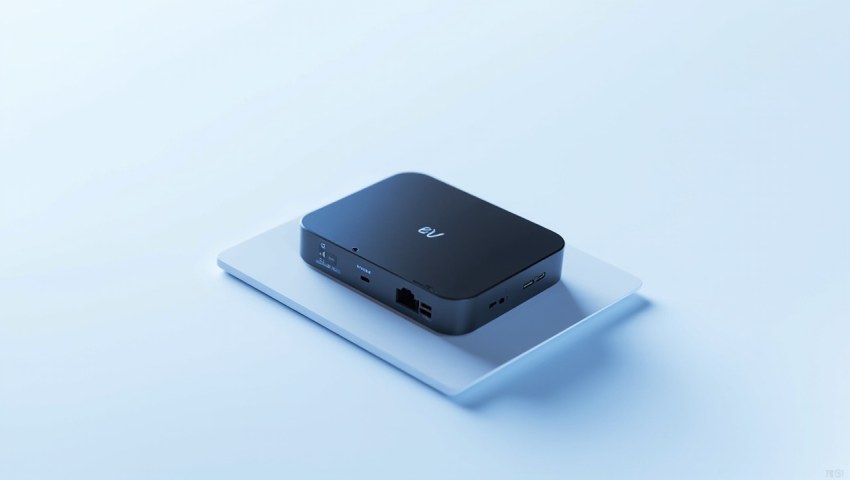
The procurement answer in one screen
| Acceptance level | What procurement proves | Engineering evidence |
|---|---|---|
| Catalog-level fit | A model appears suitable for the use case. | Published platform, memory, video, DRM and interface facts. |
| Configuration-level fit | The ordered SKU carries the required software and interfaces. | Configuration sheet, image identity, licence capability and port inspection. |
| Delivery-level fit | The production unit matches the approved build and validation record. | Golden-sample approval, pilot sign-off, traceability and change control. |
For this android tv box checklist, the decisive question is not whether a quotation mentions Google Play Store. It is whether the exact production SKU, firmware image, licensing state, regional compliance scope and output configuration are measurable and traceable. A catalog specification identifies the starting platform; an approved configuration converts it into a purchasable product; a signed pilot converts it into a repeatable delivery baseline.
The following table distinguishes the three questions that quotations often combine incorrectly.
| Quotation claim | Acceptable proof | Procurement action |
|---|---|---|
| “Android TV box with Google Play Store” | Exact build identity, Play Store availability method and accountable licensing documentation. | Do not release against a catalogue image or verbal assurance. |
| “Full Google TV” | Android TV certification status, image build, required applications, update route and device policy. | Obtain the applicable Android CDD/CTS evidence for the shipped configuration. |
| “4K” | Output and decode modes tied to the SoC, HDMI configuration, display timing and content path. | Test the required resolution, refresh rate and codec combination. |
| “DRM protected” | Key-system identity, security level, supported HDCP path and playback evidence. | Compare Widevine, PlayReady and HDCP as separate requirements. |
The short answer is to make the Google Play Store requirement, AOSP relationship, device certification, codec profile, DRM scope, connectivity and evidence package explicit in the RFQ. The canonical RK3568 Android Box Checklist for Procurement covers the broader SoC qualification sequence; this page isolates the Google Play Store and Android TV angle. DataMax models in the product family are AOSP platforms, so their published operating-system identity must not be silently equated with a Google-certified Android TV image.
Real DataMax platforms, field by field
The DataMax family provides four documented platform directions. The table reproduces only the supplied production facts; optional entries remain explicitly conditional.
| Model | Compute and OS | Memory options | Video and DRM | Interfaces |
|---|---|---|---|---|
| DM21P 4K IPTV / operator middleware set-top box | Amlogic S905Y4, quad Cortex-A35 AOSP Android 11 | 2GB / 8GB 4GB; 16/32/64GB optional | AV1 [email protected]; VP9/H.265 4K@60; H.264 4K@30 Widevine L1 / PlayReady / HDCP 2.2 optional | HDMI 2.0b out x1; USB2.0 x2; TF; S/PDIF; 3.5mm AV; RJ45 100M; Wi-Fi6 2x2 + BT5.4; DC 5V/2A |
| DM21S 4K Android TV box for IPTV/OTT white-label | Amlogic S905Y5, quad Cortex-A55 AOSP Android 14 | 2GB / 16GB 2/4/8GB; 16/32/64GB optional | AV1 / H.265 [email protected] 4K@60 Widevine L1 / PlayReady optional; Dolby Vision/DTS | HDMI 2.0b out; S/PDIF; AV; USB2.0 x2; TF; RJ45 100M (1G optional); Wi-Fi6 2x2 + BT5.4 |
| DM21T Premium UHD / cloud-gaming box | Amlogic S905X5, quad Cortex-A510 (ARMv9) AOSP Android 14 | 4GB / 64GB family options | H.266/VVC [email protected] 4K@120; AV1/VP9/H.265 4K@120; AVS3 4K@120; H.264 4K@60; inline AI-SR Widevine L1 / PlayReady optional | HDMI 2.0b out (no HDMI in); USB2.0 x1 + USB3.0 x1; TF; S/PDIF; AV; RJ45 100M (1G opt); Wi-Fi6 + BT5.4 |
| DM22Q Gaming-oriented Android TV box | Amlogic S905X5M, quad Cortex-A55 up to 2.5GHz AOSP Android 14 | 4GB / 64GB 2/4/8GB; 16/32/64GB optional | AV1/H.265 L5.1 4K@60; inline AI-SR (no NPU TOPS stated) Widevine L1 / PlayReady optional; Dolby Vision/DTS | HDMI 2.0b out; USB2.0 x2; TF; S/PDIF; AV; RJ45 100M (1G opt); Wi-Fi6 2x2 + BT5.4 |
The first distinction is operating-system identity. DM21P, DM21S, DM21T and DM22Q are documented as AOSP Android 11 or AOSP Android 14 platforms. An AOSP base can support development of a TV product, but it does not by itself prove that the ordered unit carries Google Play Store, Google Play Services, a Google-certified Android TV image, or a specific application distribution agreement. Those points require configuration-specific confirmation.
The second distinction is the requested workload. DM21P is oriented toward IPTV and operator middleware; DM21S toward IPTV/OTT white-label requirements; DM21T toward premium UHD and cloud-gaming workloads; and DM22Q toward gaming-oriented Android TV. These fit statements are product-positioning data, not evidence that one SKU has every certification, accessory, middleware build or commercial arrangement needed for a particular deployment.
The third distinction is conditional hardware. The RJ45 100M entry is common across the four models, while 1G is marked optional or “opt” for DM21S, DM21T and DM22Q. Widevine L1 and PlayReady are optional for DM21S, DM21T and DM22Q, while DM21P additionally lists HDCP 2.2 as optional. A quotation should name the selected option, not merely repeat that the family supports it.
The DM21T decoder list includes H.266/VVC [email protected] 4K@120 and several 4K@120 paths, but the supplied facts cap output and decode at 4K; no 8K output claim should appear. DM22Q is similarly documented at 4K@60. For any Google Play Store requirement, confirm the final image, region and licensing against the production datasheet before adding the device to a programme.
Definitions a buyer cannot outsource
“Google Play Store” is a distribution capability, not a processor feature or an interchangeable synonym for Android. The android tv box checklist must separate six definitions: the base OS, Google Play Services, the Play Store application, Android TV device certification, regional commercial licensing, and the customer-facing application catalogue.
| Layer | Question answered | Evidence | Release risk if omitted |
|---|---|---|---|
| Base OS | Which Android platform is present? | Build identity and OS version | Application and driver assumptions may be invalid. |
| Google Play Services | Are Google mobile services present and operational? | Version, build status and runtime verification | Some applications will not initialize correctly. |
| Play Store | Can users or fleet operators obtain applications? | Store access, policy and update procedure | Installation workflow fails or is unmanaged. |
| Android TV certification | Does the device meet the Android TV program requirements? | Applicable Android CDD/CTS and compatibility evidence | Google TV compatibility cannot be asserted. |
| Commercial rights | May the shipment include and activate the required Google components? | Authorisation and territory evidence | Deployment may lack a legitimate activation path. |
| Fleet policy | Who controls accounts, updates and applications? | Enrollment, recovery and update design | Units become difficult to support at scale. |
Android TV is not merely Android with a television-sized launcher. The device programme operates against the applicable Android Compatibility Definition Document and Compatibility Test Suite. A production release should connect the exact hardware, firmware and feature configuration to the applicable test evidence. A certificate for a reference design does not automatically cover a changed SoC, memory configuration, remote-control implementation, output path or image.
DRM also requires separate acceptance criteria. Widevine L1, PlayReady and HDCP 2.2 describe different protection mechanisms in the content chain. Widevine and PlayReady concern software licence handling; HDCP concerns protected output over the display path. A box can expose a required decoder yet fail to deliver the expected HDCP version, output timing or service path. Validate stream, licence server, display adapter and television together.
Video capability has three layers: decoder support, pipeline capability and display output. “AV1 4K@60” does not specify frame rate for every codec, colour format or HDMI mode. “4K@120” also requires the complete path to support 120 Hz, including source content, application, decoder, display timing and television. Use the model-specific codec list in the RFQ rather than a generic “4K capable” description.
For the application layer, the reviewer should also define network provisioning, DNS, captive-portal behaviour, VPN requirements, certificate handling, device owner mode or Android Management, remote support, recovery partition and update channels. The AOSP versus Google Android TV guide helps structure that distinction. An engineering sign-off should state which layer each requirement targets and where it will be tested.
Options placed by side
Three procurement options create different levels of control. They should not be compared as if “more requirements” automatically equals “more capable hardware”; they differ in how much ambiguity is removed before production.
| Decision | Entry tier | Commitment tier | Pilot sign-off tier |
|---|---|---|---|
| Software definition | Catalogue platform plus target application list. | Approved image, Play Store method and update policy. | Production-equivalent build with signed pilot record. |
| Hardware definition | Baseline published configuration. | Selected memory, Ethernet, DRM and interface options frozen. | Production bill of materials and approved golden sample. |
| Compliance | Requirement worksheet. | Certification and licensing evidence mapped to the SKU. | Release report covering the delivered configuration. |
| Commercial control | Quotation comparison. | Configuration-specific commercial schedule. | Traceability from component to shipment. |
| Operational readiness | Functional sample review. | Operator workflow and device-management rehearsal. | Field acceptance with controlled deployment record. |
The stage-readiness graphic below is an editorial planning aid. It ranks how progressively stronger evidence can reduce specification ambiguity and rework exposure; it is not measured factory performance.

The same figures, in searchable form:
| Option | Editorial score |
|---|---|
| Requirements only | 25 |
| Requirements plus target price | 46 |
| Approved golden sample | 74 |
| Pilot batch sign-off | 91 |
The practical difference appears in the RFQ. An entry-tier request can ask for catalogue specifications and one sample. A commitment-tier request should freeze the image, hardware options, Google Play Store method, account model, update policy, test protocol and change notification route. A pilot sign-off tier adds serial traceability, production-equivalent samples, test reports, packaging identity and acceptance signatures.
For an IPTV/OTT white-label programme, the DM21S baseline is tied to AOSP Android 14, Amlogic S905Y5 and 2GB / 16GB, with conditional memory, Ethernet and DRM choices. That baseline is useful for a structured comparison, but the “Google Play Store” line remains a configuration requirement until its implementation and authorisation are documented.
For a premium UHD or cloud-gaming workload, the DM21T presents Amlogic S905X5, quad Cortex-A510 (ARMv9), AOSP Android 14 and 4GB / 64GB in the supplied facts. Its listed decode envelope supports 4K@120 on selected modern codecs and 4K@60 for H.264. The decision must still connect those capabilities to the actual display, game engine, cloud client and output configuration.
For a gaming-oriented Android TV programme, the DM22Q is documented as Amlogic S905X5M, quad Cortex-A55 up to 2.5GHz, AOSP Android 14 and 4GB / 64GB, with AV1/H.265 L5.1 4K@60. The procurement advantage of the commitment tier is a common decision record across software, licensing, hardware options, application certification and acceptance.
The operator, the integrator and the venue
Buyer situations differ in who controls the user experience, who owns installation and who absorbs update failures. The same Google Play Store requirement can therefore produce three different engineering contracts.
| Situation | Dominant requirement | Model direction | Release evidence |
|---|---|---|---|
| Pay-TV or IPTV operator | Operator middleware, controlled updates, entitlement flow, stable LAN and predictable device management. | DM21P or DM21S direction | Middleware image, provisioning rehearsal, update rollback and operator workflow record. |
| Streaming or OTT product team | Application catalogue, DRM licensing, remote configuration and release governance. | DM21S direction | Store method, Play Services status, licence test, catalogue record and account-recovery procedure. |
| AV or IT integrator | HDMI, USB, audio, network and control interoperability across the venue installation. | Select by measured interfaces and workload; DM21P, DM21S or DM22Q directions may apply | Interface drawing, connected-device test and labelled port configuration. |
| Commercial venue deployment | Remote fleet control, recovery, kiosk behaviour, uptime and support ownership. | Confirm against the production datasheet before selection | Enrollment test, remote update test, recovery test and site acceptance. |
| Premium UHD or cloud-gaming venue | High-resolution/high-refresh output, game client performance and display compatibility. | DM21T direction | Required mode matrix, latency criteria, sustained-run result and television compatibility record. |
An operator may prefer a controlled application surface, device identity and middleware integration over unrestricted consumer-style installation. The engineer should specify whether the Play Store is installed, enabled, access-restricted, update-managed or omitted in the released image. That operational policy belongs in the software requirements, not in a generic marketing field.
An integrator’s risk is interface mismatch. A quotation listing “HDMI, USB and Ethernet” does not identify connector quantity, version, optional Ethernet speed, audio output or display features. The field trial should use the proposed remote, television, network, sound system and peripherals. For DM21T, the absence of HDMI input must be represented on installation drawings; it cannot be added by an integrator’s workaround.
A venue owner needs an operational answer: who recovers a failed enrollment, who replaces a device, how updates are scheduled, and how content or applications are authorized. Android Management may be relevant for managed deployments, but its use does not replace Play Store availability or application compatibility testing. Operator-tier Android TV box solutions provide a useful architecture starting point for device identity, provisioning and middleware boundaries.
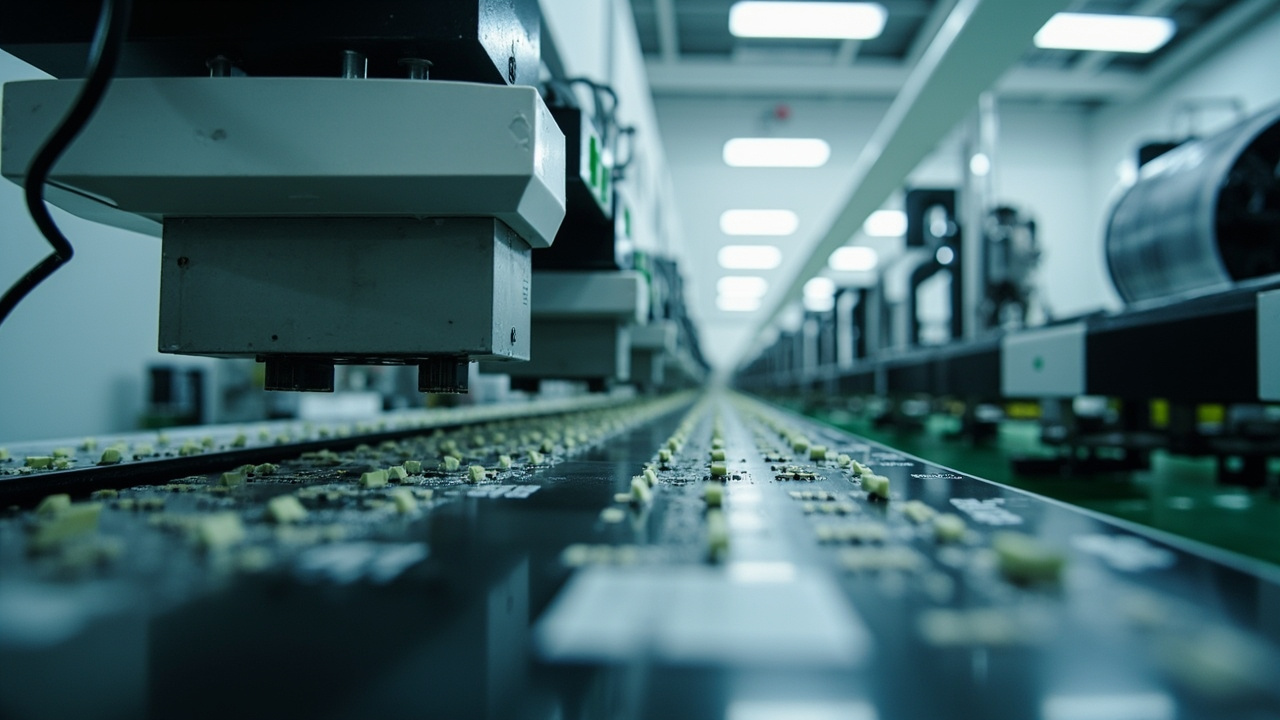
Photography of a real SMT line shows where configuration risk begins: component placement and board assembly precede the software image that an operator will eventually configure.
Where quotations quietly diverge
The largest divergence is usually hidden in software language. “Google Play Store” may refer to an AOSP build with the application preloaded, a separately licensed Google TV image, or an operator-controlled application update mechanism. Those are not equivalent. Request the exact image identifier, build fingerprint, preloaded application inventory, Play Services version, distribution method and upgrade owner.
Field trap
A catalogue phrase such as “Android 14 with Google Play Store” does not identify the shipped image. If the quotation does not bind the image identifier, preloaded applications, licensing arrangement and certification evidence to the SKU, a prototype approval can be followed by a production build with different software. That divergence creates installation failures, fleet-policy conflicts and avoidable rework.
A second divergence is between media capability and commercial output. Codec support is listed at the platform level, while the production configuration may use a different SoC revision, firmware image, HDMI adapter or television. A 4K label does not specify the required frame rate, colour format or HDR path. The acceptance test must name the exact source codec, profile, level, resolution, refresh rate, colour mode, application, display and duration.
Field trap
Optional DRM and Ethernet entries create another silent split. “Widevine L1 / PlayReady optional” does not mean either option is present. “RJ45 100M (1G optional)” does not mean 1G is fitted. Freeze the selected option in the configuration sheet and inspect the delivered hardware. A procurement database based on family-level claims can otherwise overstate stream support or network capability.
Other divergences occur in the commercial and logistics record. Memory configuration can be presented as a range rather than the ordered SKU. Regional compliance may be stated generically, without the destination market, radio variant or certification scope. A model may be offered with different branding, packaging, remote control, power supply or application catalogue without those changes entering the technical order.
Use a discrepancy log with four columns: quoted wording, contracted wording, production evidence and disposition. No “equivalent” field should be accepted without the exact replacement part number or firmware identity. This approach makes the **android tv box checklist operational: every ambiguous statement becomes an owner, a proof and a due point in the release sequence.
The same discipline applies to performance. The family includes inline AI-SR on DM21T and DM22Q, but the supplied facts do not state NPU TOPS. Procurement should not translate that feature into a throughput claim. Likewise, Android version and Cortex generation provide platform context, not proof of a particular application’s frame rate or thermal result.
Turning the question into a spec line
Convert the commercial request into a controlled sequence. The output should be a configuration line that an engineer, factory and customer can interpret identically.
- Define the device role State whether the unit is an operator set-top box, white-label IPTV/OTT endpoint, gaming-oriented Android TV box or premium UHD/cloud-gaming device. Record the applications, user model, controlled content and expected operating period.
- Separate platform from distribution Name the base OS, Google Play Services requirement, Play Store inclusion, Google Android TV certification requirement, commercial authorisation territory and application-update owner.
- Freeze the hardware SKU Select the DataMax model, exact RAM/ROM, Ethernet option, DRM option and required interfaces. Write the fitted configuration rather than the family maximum or an option list.
- Define the media matrix State required codecs, profiles, levels, resolutions, refresh rates, colour modes, output connector, display and playback applications. Keep decode claims separate from output claims.
- Define fleet behaviour Specify enrollment, identity, account ownership, recovery, update channels, staging, diagnostics, remote support, data retention and offboarding.
- Bind acceptance evidence Identify sample quantities, test procedures, required reports, golden-sample approval, pilot sign-off, labelling, packaging and the process for changes.
A pasteable RFQ line can take this form:
| Field | Example wording pattern |
|---|---|
| Model and role | [Approved model] configured for [operator middleware / IPTV-OTT white label / gaming / premium UHD] use. |
| Software | [Exact OS and image ID], with [Google Play Services status], [Play Store included/not included] and [Play Store update owner]. |
| Google requirements | [Android TV certification required/not required], supported by [applicable CDD/CTS and commercial authorisation evidence]. |
| Memory and options | [RAM]/[ROM], [Ethernet speed], [DRM option], and no unapproved fitted alternatives. |
| Media | Playback required for [codec/profile/level/resolution/refresh/colour] on [application] through [HDMI path] to [display class]. |
| Fleet control | Managed by [Android Management/operator mechanism], including enrollment, update, recovery and offboarding. |
| Acceptance | Production-equivalent sample, [test list], approved golden sample, pilot report and serial traceability before shipment release. |
The 4K 60 fps Android TV box guide helps convert a shorthand “4K” demand into codec, timing and display acceptance criteria. It should be used alongside, rather than as a substitute for, the model-specific datasheet.
Procurement should attach a separate deviation form. Any proposed substitution must identify whether it changes the SoC, memory, image, DRM path, interface, certification or approved sample. That prevents an equivalent-looking board from entering production without renewed testing. The **android tv box checklist is complete only when every required field has either an explicit value or a named verification method.
Verification you can ask for on paper
Factory evidence should connect the approved product to the delivered units. The requested trail is not a generic quality claim; it identifies how the hardware, image, configuration and test result are controlled.
- Incoming-material control Link the order line to approved component specifications and supplier records. Trace fitted memory, Ethernet, radio and other option-relevant parts through the production record.
- SMT and inspection evidence Request the process route, inspection records and defect disposition relevant to the line. Include SMT, AOI or equivalent inspection evidence where these controls form part of the released process.
- Configuration inspection Verify the selected RAM/ROM, port population, interfaces and optional DRM-related hardware against the approved configuration rather than the family catalogue.
- Software-image control Record the image identifier, build fingerprint, application inventory and flashing result for the production batch. Preserve the mapping from image revision to unit serial range.
- Functional and aging evidence Obtain the agreed functional test, burn-in or aging record, display/output test, network test and recovery result. Include duration and environmental conditions where defined in the approved plan.
- Dark-room and display-path evidence Where display output is in scope, request the defined dark-room inspection record, test image and acceptance rule. Keep a documented limit for cosmetic defects so the evidence can be interpreted consistently.
- Audit and release Complete the audit against the approved configuration, reconcile exceptions, document corrective action and obtain pilot sign-off before shipment release.
Request a redacted sample package containing: approved specification, exact BOM/configuration, image identity, relevant process inspection record, functional test template, aging record, dark-room inspection record, audit trail, corrective-action log, golden-sample approval and pilot sign-off. A production release should identify the batch and serial range covered by each record. DataMax factory capability can be reviewed through factory quality, while certification and compliance scope should be confirmed separately.
The audit should test the original **android tv box checklist, not a retrospective list created after defects appear. Confirm the model, fitted options, exact image, Play Store method, certification evidence, DRM configuration, codec matrix and fleet-management workflow. For future changes, require notification before image, component, firmware, packaging or production-route modification.
Evidence quality depends on linkage. A test report that names no model, configuration, date or batch provides limited acceptance value. A report linked to the approved golden sample, production configuration and serial range supports procurement decisions. Factory control closes the loop from requirement to shipment; it does not replace the customer’s content, display and device-management acceptance tests.
The RFQ should request engineering samples and a defined review route. For a new Google Play Store or Android TV configuration, send the first message to the inquiry team with the model direction, exact RAM/ROM, region, applications, required codecs, DRM requirements, interface count, fleet-management method and target pilot quantity. Sample requests can use order samples with the same configuration fields, so evaluation units remain comparable to the proposed production build.
Further reading
- RK3568 Android Box Checklist for Procurement Teams
- AV1 Android TV box guide
- AOSP vs Google TV guide
- HDR10+ Android TV box guide
- DTS:X Android TV box guide
- DataMax DM21P specifications and fit
- DataMax DM21S specifications and fit
FAQ
Does an AOSP Android 14 box automatically include Google Play Store?
No. AOSP Android 14 identifies the base operating-system platform, while Google Play Services, the Play Store application, Google Android TV certification and commercial authorisation are separate configuration matters. The exact image identity and shipped application inventory must be confirmed. This distinction is central to any **android tv box checklist.
What evidence proves Google Play Store support on the delivered units?
Require the production image identifier, Play Services version, Play Store installation state, update owner and applicable certification or authorisation evidence. Record the software version against the tested serial sample or production batch. A catalogue image or a statement that Google applications are preloaded is not sufficient.
Which DataMax model fits a 4K IPTV programme?
DM21P is the 4K IPTV and operator middleware direction, while DM21S is the 4K Android TV box for IPTV/OTT white-label use. Selection still depends on the exact memory, DRM, Ethernet, image and middleware requirements. Use the model direction as a starting point, then freeze the production configuration.
Is a 4K label sufficient for playback acceptance?
No. Acceptance should name codec, profile, level, resolution, refresh rate, colour mode, application, output path and display. Decode capability and output capability are not interchangeable. For cloud gaming or premium UHD, sustained-run behaviour and display compatibility may also need defined test limits.
What production evidence should accompany the quotation?
Request configuration control, inspection, functional, aging, audit and pilot records linked to the approved golden sample. Where display inspection is in scope, include the dark-room record and acceptance criteria. Also request software-image traceability so each shipped batch can be tied to the tested configuration.
How should optional Ethernet and DRM options be ordered?
State one fitted configuration in the purchase order and prohibit substitutions without written approval. For example, 100M versus 1G Ethernet and the presence or absence of Widevine L1 or PlayReady must be explicit. The production inspection record should verify the selected option against the approved bill of materials.