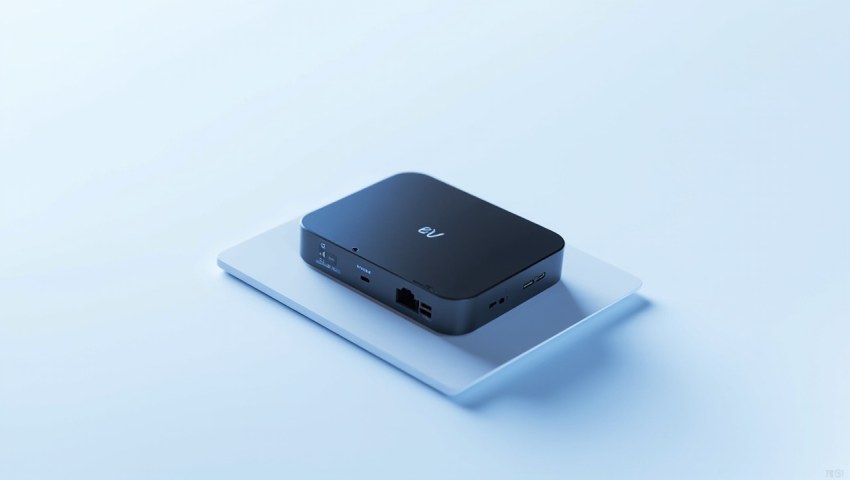
The short answer first: specify the runtime, not the storefront
An RFQ arrives with “Android TV box with Google Play Store” in the subject line and a spreadsheet listing display size, memory and the Google Play logo. The engineering answer is narrower: a storefront is only the visible layer. The device still needs an Android TV-compatible software baseline, a Google-certified distribution path, sufficient RAM and storage for updates, the required decoder and DRM path, and an interface design that survives actual operator use.
For android tv box procurement, treat “Google Play Store” as an acceptance criterion with four separate dependencies: Google-certified device identity, a licensed commercial distribution arrangement, an Android TV user experience, and an application set that can run on the selected platform. The application listing alone proves none of them. A screenshot of the Play Store proves still less.
This page covers the engineering angle only: how to turn that RFQ wording into testable hardware, software and process requirements. It does not repeat the broad buying guide; use the canonical Android TV box for ISPs for the wider operator selection context.
A defensible shortlist starts by separating AOSP Android TV devices from Google Android TV devices. The supplied DataMax platforms use AOSP builds, so the exact Google Play Store and Google services delivery path must be confirmed against the production datasheet and the proposed commercial software configuration. Do not infer certification from an AOSP label, a preloaded Play Store image or a distributor’s compatibility list.
The four DataMax platforms in scope occupy different engineering positions. The DM21P targets a 4K IPTV or operator-middleware set-top box; the DM21S targets 4K Android TV use for IPTV/OTT white-label programs; the DM21T targets premium UHD or cloud-gaming workloads; and the DM22Q targets gaming-oriented Android TV use. Their base RAM spans 2 GB and 4 GB, while Android versions and codec capabilities differ. Those variables affect update headroom, application density and media behavior, so the final RFQ must state the exact base SKU and every configured option rather than accepting a family name.
The procurement decision should therefore hinge on four documents: an Android software and certification declaration, a locked bill of materials, a media/DRM test report, and factory quality evidence tied to the production line. If a quotation cannot connect those documents to the delivered SKU, “Google Play Store” is an aspiration, not an acceptance criterion.
Buyer situations ranked by what they punish
An operator buying for managed IPTV generally punishes unsupported software drift, device-identity mistakes and inconsistent bootloader behavior. A white-label OTT buyer punishes an unverified Google distribution model, weak application-update control and branding gaps. A venue integrator may tolerate a different update cadence but will punish missing AV outputs, unsuitable network options and units that fail after repeated installation cycles. A cloud-gaming or premium-UHD buyer punishes insufficient media capability, input constraints and thermal or memory behavior that appear only under sustained load.
The procurement team should map the deployment to a measurable failure cost. An operator might lose an entire managed-service migration if boot signatures or firmware delivery fail; an integrator might have to visit every retail location if network adapters are mis-specified; a gaming program may fail acceptance when the declared video capability does not match the supplied configuration.
A modern SMT line can populate and inspect the board before software validation reaches final assembly.

| Situation | Requirement that dominates selection | Model direction |
|---|---|---|
| Managed IPTV or operator middleware | Stable firmware lifecycle, device identity and controlled updates | DM21P as the set-top-box baseline |
| IPTV/OTT white-label program | Android TV software baseline, commercial app distribution and configurable storage | DM21S |
| Premium UHD or cloud-gaming pilot | Higher base memory, specified 4K decode paths and interface constraints | DM21T |
| Gaming-oriented Android TV program | 4K media support, base memory and application workload headroom | DM22Q |
The matrix is directional, not a universal rank. A DM21P is not automatically unsuitable for white-label OTT, and DM21S is not automatically unsuitable for operator middleware. The matrix identifies which variable each buyer should test first. For example, an operator should obtain the signed software-release process before comparing port layouts. A gaming buyer should obtain decoder test vectors and sustained-load results before discussing cosmetic housing options.
For a venue vertical, the RFQ should also identify whether Ethernet, USB peripherals, analogue AV or digital audio are part of the installed design. The supplied platforms do not share identical interfaces. Some list 100M RJ45 while offering 1G as an option; some provide two USB 2.0 ports; DM21T has one USB 2.0 and one USB 3.0 port and no HDMI input. These are acceptance-level differences, not cosmetic footnotes.
The situation matrix should become part of the quotation response. Ask each supplier to identify the proposed model, base memory and storage configuration, exact software branch, licensed distribution mechanism, media certification status, network configuration and evidence package for the same SKU. A response that changes model names between pages, samples and PO should be treated as a configuration-control failure.
A decision path for the RFQ
Start with the application workload rather than the retail category. Name the applications, account model, launch method, update source, background services and video playback paths. An android tv box can display a storefront and still fail if the deployed application expects a different Android TV image, touch/remote navigation model, DRM service configuration or device form factor. The buyer should define whether the app is preinstalled, sideloaded during commissioning, installed by the end user or distributed through managed Google Play accounts.
Then lock the software baseline. Record the Android version, AOSP or Google Android TV designation, build security status, update mechanism, device certification identifiers, Google Play distribution terms and any regional or account restrictions. If a production image includes Google Play, the PO should require the supplier to state the authorized route by which that image is licensed and maintained. This is especially important because the DataMax product facts identify the listed operating systems as AOSP versions; they do not independently certify a Google Android TV build.
The hardware gate follows. Match RAM and storage to the actual application set, then test the media paths. Do not infer all codec or DRM behavior from the SoC family. Record output resolution and frame rate, audio routing, Ethernet speed, wireless configuration, USB topology and external storage support.
Next, define the acceptance test. It should boot the production image, pass provisioning, launch every required app, play representative streams, exercise DRM playback, complete an update cycle and connect the specified peripherals. Include a repeatable soak sequence only if the buyer can specify its duration and failure threshold. Otherwise, “stability test” becomes non-comparable across quotations.
Finally, request evidence from the same manufacturing configuration. A sample report on a different RAM tier or OS branch does not establish the delivered product. The production process needs traceability from board population through software flashing, burn-in or aging, final test and packing.
A buyer can paste this RFQ block into the supplier form:
Provide the proposed model and locked SKU; base RAM and storage; SoC; Android software branch; authorized Google Play distribution and device-certification status; update policy; decoder and DRM configuration; port and network configuration; boot, application, media, update and peripheral test reports; and SMT, AOI, aging, firmware-flash and final-test traceability for the production configuration. Identify every option by name and quantity.
The first message to DataMax engineering should contain the target application list, required Android version, codec and DRM obligations, interface list, expected configuration and any managed-update or operator middleware requirement. This gives the factory enough information to identify the correct evaluation path before samples are assembled.
The traps in this category
The first trap is treating a visible Google Play Store as evidence of a complete Google-certified product. A preloaded storefront can come from different software arrangements, and a successful store screen does not by itself establish certification status, commercial licensing, update ownership, background-service behavior or operator compatibility. Ask for the exact software baseline and certification evidence. “Compatible” is not an acceptance field.
Field trap
A quotation that says “Google Play supported” without naming the distribution model, certification status, update owner and tested app set has not defined a deliverable. The cost of resolving that ambiguity after tooling, branding or rollout can include a new image cycle, failed pilot acceptance or replacement of the entire shipped batch.
The second trap is comparing “4K” as though it were one specification. Frame rate, codec profile, color format, resolution, output path and DRM path all matter. DM21P declares AV1 [email protected], VP9/H.265 4K@60 and H.264 4K@30. DM21S declares AV1 and H.265 [email protected] at 4K@60. DM21T declares H.266/VVC [email protected] at 4K@120 and several other codecs at 4K@120, with H.264 at 4K@60. DM22Q declares AV1 and H.265 L5.1 at 4K@60. Neither DM21T nor DM22Q supports an 8K claim, despite marketing language associated with those names.
RAM configuration is another quotation trap. “Up to 4 GB” or “options available” does not identify the unit being purchased. A production PO should state the RAM and storage values separately, together with the model. The chart and table below use only base configurations; optional memory tiers must be fixed line by line.
Field trap
A family-level quotation can conceal a RAM mismatch, an RJ45 speed difference, an omitted USB generation or an optional DRM path. An acceptance label such as “4K Android TV box” cannot substitute for a line-by-line locked SKU.
Watch also for the interface discrepancies that appear after installation: the difference between 100M RJ45 and optional 1G, the presence or absence of HDMI input, and the number and type of USB ports. A product promising broad compatibility can still fail because the installer assumed a connector that the actual SKU does not contain.
Verification you can ask for on paper
Factory verification should connect three layers: physical production, software provisioning and final acceptance. SMT evidence establishes whether boards were assembled with the intended components; AOI evidence helps detect assembly defects; firmware-flash records connect the board identity to the correct image; aging or burn-in exposes early failures; and final test validates the functions promised in the RFQ.
- Incoming and BOM control Request the approved BOM, component revision and substitution rules for the quoted SKU.
- SMT and AOI Ask for the line record, inspection criteria and exception disposition for the production lot.
- Assembly and flash Require traceability from board serial or manufacturing identifier to the software image and flash result.
- Aging and functional test Specify the burn-in environment, exercised ports, boot checks and application or media tests, if performed.
- Final acceptance and packing Tie the test record to the finished unit and packaging configuration before shipment release.
The buyer should ask for evidence that is legible and dated. “Passed QC” is insufficient. A useful packet identifies the tested model and configuration, sample or lot coverage, test station or procedure, acceptance thresholds, defect codes, failed-unit disposition and the responsible quality gate. For software, the release record should identify image version, build target, boot result and update result.
Ask DataMax for a topic-specific evidence pack: SMT and AOI records, aging or burn-in procedures, firmware-flash traceability, final functional-test criteria and the configuration-controlled test report for the quoted android tv box. A factory-quality review or video audit can validate whether the documented process matches the production line.
Do not confuse a generic factory tour with acceptance evidence. A tour can show an SMT line, but it does not prove that the buyer’s board went through the stated inspection and that the delivered firmware matches the sample. The evidence chain should identify the order, SKU, lot or batch, and image release. Where a process step is not performed, the document should say so rather than leave the reader to infer coverage.
Software testing needs equally explicit inputs. Provide the app package identifiers, test account rules, representative media files, DRM test vectors, network profile, remote-control behavior and required peripherals. Freeze those inputs for the supplier’s pre-shipment test and the buyer’s incoming inspection. Otherwise, two labs can execute different tests and report incompatible results.
For new programs, validate a production-equivalent sample before the line starts. The sample should use the intended SoC, RAM, storage, OS image, application set, enclosure and interfaces. Software compiled against a development image may expose timing, thermal or memory behavior that the production build changes.
Entry tier versus commitment tier
The practical tiering is not “cheap” versus “premium”; it is a lower-configured platform with a controlled deployment scope versus a higher-configured platform committed to denser workloads and broader media obligations. The DataMax facts support that distinction without implying unstated performance levels.
DM21P and DM21S each have a 2 GB base RAM configuration. DM21T and DM22Q each have a 4 GB base configuration. Storage differs by model: DM21P is listed at 2GB / 8GB, with 4GB RAM and 16/32/64GB storage optional; DM21S is listed at 2GB / 16GB, with 2/4/8GB RAM and 16/32/64GB storage optional; DM21T is listed at 4GB / 64GB with family options; DM22Q is listed at 4GB / 64GB, with 2/4/8GB RAM and 16/32/64GB storage optional.
DM21P is the most direct set-top-box candidate in this set because its stated fit is a 4K IPTV or operator middleware set-top box. It runs AOSP Android 11, uses an Amlogic S905Y4 with quad Cortex-A35, and provides HDMI 2.0b output, two USB 2.0 ports, TF, S/PDIF, 3.5 mm AV, 100M RJ45, Wi-Fi6 2x2 with BT5.4, and 5V/2A input.
DM21S is the explicit 4K Android TV white-label candidate. It runs AOSP Android 14 on an Amlogic S905Y5 with quad Cortex-A55. Its stated fit is 4K Android TV for IPTV/OTT white-label applications, but its Google Play distribution path still requires commercial and technical confirmation.
DM21T is the premium-UHD or cloud-gaming direction, with a 4 GB base and a decode list extending to 4K@120 for several codecs. Its interface configuration is more specialized: one USB 2.0 port, one USB 3.0 port and no HDMI input. That is a deliberate architecture boundary for deployments needing capture or source ingestion.
DM22Q is the gaming-oriented option with a 4 GB base and AV1/H.265 L5.1 4K@60 decoding. It does not provide the 4K@120 decode coverage listed for DM21T. Gaming suitability therefore cannot be inferred from the category label alone.
| Tier | Platform | What changes | Procurement control |
|---|---|---|---|
| Entry deployment | DM21P | 2 GB base RAM; operator set-top-box positioning | Lock AOSP Android 11, storage, optional DRM and every port option |
| White-label Android TV | DM21S | 2 GB base RAM; Android 14 baseline | Define Google distribution, application set and RJ45 option |
| Premium media commitment | DM21T | 4 GB base RAM; broader 4K@120 decode list | Test media routes and the no-HDMI-in boundary |
| Gaming-oriented commitment | DM22Q | 4 GB base RAM; 4K@60 AV1/H.265 L5.1 | Lock storage, network option and DRM configuration |
The chart uses base RAM only. Optional RAM tiers can change the quoted configuration and must appear as separate PO lines.

The same figures, in searchable form:
| Platform | Base RAM |
|---|---|
| DM21P | 2 GB |
| DM21S | 2 GB |
| DM21T | 4 GB |
| DM22Q | 4 GB |
A tier decision becomes defensible only when the application count, update policy and content obligations are attached. Two 4 GB units can still have different acceptance outcomes because their decoder, DRM and interface lists differ. Compare the complete SKU, not only the RAM number.
The mechanism behind the spec
“Google Play Store” is the Android application distribution component of a broader stack. The device requires an Android runtime, a licensed Google application distribution mechanism, a Google Play Services integration where the applications require it, and a user interface suitable for Android TV. The distribution layer can be present without making the product equivalent to a Google-certified retail Android TV device. Certification, commercial licensing and update accountability must be documented separately.
Android TV also differs from a tablet-style Android build. The product facts identify AOSP Android 11 or AOSP Android 14 as the operating systems for these platforms. AOSP supplies the open-source platform base; it does not, by itself, establish the presence or licensing status of Google proprietary applications. The engineering team should request the precise AOSP-derived product build, application bundle, service integration and update process.
DRM is a separate chain. Widevine L1 and PlayReady indicate the declared DRM families, while HDCP protects the output path. A declaration that “Widevine L1” is present does not specify the tested resolution, service level operation, device-security provisioning or entitlement flow. HDCP 2.2 is optional on DM21P. Other listed DRM capabilities are optional on the remaining platforms. The buyer must specify the option and define a playback test that exercises the production device identity.
The codec list should be read at profile and level level. AV1 [email protected], H.265 L5.1 and H.266/VVC [email protected] are materially different conditions. HDMI 2.0b output identifies the physical output version, not the supported frame rate by itself. DM21T’s listed 4K@120 decode capabilities do not justify an 8K claim, and DM22Q’s datasheet maximum is 4K@60. Acceptance streams must preserve profile, level, pixel format and frame rate.
Networking and peripheral topology are architectural constraints. Wi-Fi6 2x2 with BT5.4 supports the stated wireless design, but an installer still needs the regulatory, antenna and coexistence evidence appropriate to the destination market. A 100M RJ45 can be acceptable for a managed IPTV service profile but may not suit a local installation path that expects 1G. That 1G option must be explicitly selected where offered.
Update architecture deserves equal attention. Define whether updates are OTA, operator middleware, device-management policy or manual image replacement. For fleet deployments, specify retries, rollback, staged rollout and the relationship between the base image, Google applications and operator applications. Without that chain, “Google Play Store” remains a static image rather than a maintainable service.
Finally, manufacturing verification is part of the mechanism, not paperwork beside it. Component substitutions, assembly errors, wrong flash images and mismatched test configurations enter through different gaps. A traceable SOP closes those gaps by linking the approved BOM, line execution, inspection result, flash record, aging record and final test to the delivered unit.
Which DataMax models actually sit here
The supplied DataMax facts identify four relevant platforms. Each has a distinct role, OS baseline and hardware configuration. The table reproduces the stated facts only; unspecified dimensions, thermal figures and other production details must be confirmed against the production datasheet.
| Model | Stated fit | Platform and software | Memory | Media and DRM | Interfaces |
|---|---|---|---|---|---|
| DM21P | 4K IPTV / operator middleware set-top box | Amlogic S905Y4, quad Cortex-A35; AOSP Android 11 | 2GB / 8GB; 4GB; 16/32/64GB optional | AV1 [email protected]; VP9/H.265 4K@60; H.264 4K@30; Widevine L1 / PlayReady / HDCP 2.2 optional | HDMI 2.0b out x1; USB2.0 x2; TF; S/PDIF; 3.5mm AV; RJ45 100M; Wi-Fi6 2x2 + BT5.4; DC 5V/2A |
| DM21S | 4K Android TV box for IPTV/OTT white-label | Amlogic S905Y5, quad Cortex-A55; AOSP Android 14 | 2GB / 16GB; 2/4/8GB; 16/32/64GB optional | AV1 / H.265 [email protected] 4K@60; Widevine L1 / PlayReady optional; Dolby Vision/DTS | HDMI 2.0b out; S/PDIF; AV; USB2.0 x2; TF; RJ45 100M (1G optional); Wi-Fi6 2x2 + BT5.4 |
| DM21T | Premium UHD / cloud-gaming box | Amlogic S905X5, quad Cortex-A510 (ARMv9); AOSP Android 14 | 4GB / 64GB; family options | H.266/VVC [email protected] 4K@120; AV1/VP9/H.265 4K@120; AVS3 4K@120; H.264 4K@60; inline AI-SR; Widevine L1 / PlayReady optional | HDMI 2.0b out (no HDMI in); USB2.0 x1 + USB3.0 x1; TF; S/PDIF; AV; RJ45 100M (1G opt); Wi-Fi6 + BT5.4 |
| DM22Q | Gaming-oriented Android TV box | Amlogic S905X5M, quad Cortex-A55 up to 2.5GHz; AOSP Android 14 | 4GB / 64GB; 2/4/8GB; 16/32/64GB optional | AV1/H.265 L5.1 4K@60; inline AI-SR; Widevine L1 / PlayReady optional; Dolby Vision/DTS | HDMI 2.0b out; USB2.0 x2; TF; S/PDIF; AV; RJ45 100M (1G opt); Wi-Fi6 2x2 + BT5.4 |
For an operator-led managed service, DM21P provides the clearest stated fit. For a white-label OTT program seeking an Android 14 baseline, DM21S is the direct starting point. DM21T is the relevant choice when the media plan specifically needs its listed 4K@120 decode coverage and the deployment accepts its interface boundaries. DM22Q addresses the gaming-oriented role with a 4 GB base and 4K@60 media declarations.
Google Play Store delivery, certification and licensing are not established by the supplied product facts for any of these AOSP platforms. Before ordering an android tv box with a Google storefront requirement, request the exact production software declaration and commercial arrangement. Confirm the final RAM, storage, Ethernet speed and DRM options against the production datasheet, then send the sample request with the locked test configuration.
Further reading
- Guide android tv box for isps
- RFQ checklist for device procurement
- Android TV boxes
- Rockchip Android TV boxes
- Edge computing boxes
- DataMax DM21P specifications and fit
- DataMax DM21S specifications and fit
FAQ
Does an AOSP Android TV box automatically provide Google Play Store?
No. The supplied DataMax models are identified as AOSP Android 11 or AOSP Android 14 platforms. AOSP is the open-source base; Google Play application delivery, Google Play Services, device certification and commercial licensing require separate confirmation. Require the supplier to state the exact production image, authorized distribution route and update responsibility before treating Google Play Store as an accepted feature.
Which DataMax model has the lowest base RAM?
DM21P and DM21S each have a 2 GB base RAM configuration. DM21T and DM22Q each have a 4 GB base configuration. These figures describe base SKUs only; optional RAM tiers exist and must be fixed as separate PO lines. Compare the complete locked configuration, including storage, OS image, codec, DRM and network options.
Is DM21T suitable for 8K output?
No. Its stated output and decode ceiling is 4K, including several codecs at 4K@120 and H.264 at 4K@60. Any quotation describing the unit as 8K-capable should be corrected against the production datasheet. HDMI 2.0b output and the listed decoder paths must be evaluated against the actual display and source equipment.
What evidence should accompany a volume quotation?
Request an approved BOM, SMT and AOI records, firmware-flash traceability, aging or burn-in results, final functional-test criteria and shipment-release records tied to the quoted SKU. For software, include image identifiers, boot results and update tests. A video factory audit can verify whether the documented process matches the line; ask for topic-specific evidence from DataMax manufacturing.
How should a buyer handle optional Ethernet and DRM configurations?
State the required values as individual PO lines and ask the supplier to confirm them on both the sample and production shipment. DM21S, DM21T and DM22Q list RJ45 100M with 1G optional. Widevine L1 or PlayReady is listed as optional across the applicable models, and DM21P lists HDCP 2.2 as optional. A platform-level feature statement is not enough to identify the delivered unit.