Before the terminology: make the Bluetooth decision explicit
The short answer is that “Bluetooth 5” is not an acceptance criterion. A supplier can fit a BT5.4 radio, expose the expected profile and still produce a set-top box that performs poorly in a hotel because of antenna placement, 2.4GHz interference, firmware integration or accessory pairing. Procurement should therefore turn android tv box checklist into a sequence of observable controls: chipset and OS baseline, radio specification, antenna implementation, paired-device behavior, coexistence testing, evidence retention and change control.
No third-party acceptance statistic is supplied for this topic, so this page does not manufacture one. The procurement problem is instead framed by a controlled production sequence. On DataMax’s editorial planning scale, requirements alone score 25/100, requirements plus target price score 46/100, an approved golden sample reaches 74/100 and pilot-batch sign-off reaches 91/100. These are qualitative planning scores, not measured defect-reduction data; buyers must validate the method against their program.
Four DataMax platforms provide the comparison baseline: DM21P, DM21S, DM21T and DM22Q. Every supplied platform lists BT5.4, but that common radio label does not remove model-level decisions around decode workload, Ethernet, interface population, Android version and deployment profile. The result is a practical android tv box checklist for engineers and buyers: specify the radio and firmware behavior first, select the hardware second, then verify the production unit against an approved sample.
For operators and distributors, the central question is repeatability across batches. An accepted sample is useful only if production evidence links radio-module settings, antenna configuration, software image, pairing results and RF results to the same hardware revision. For integrators, the criterion is deployment behavior: the required controller, headset or peripheral must pair reliably, reconnect appropriately and operate without degrading the operator’s primary video or network path.
This page covers the Bluetooth-specific angle rather than the complete platform qualification. For the broader hardware and software assessment, use the RK3568 Android box checklist for procurement and add the radio, coexistence, accessory and antenna controls defined here. That division keeps the RFQ specific without allowing a valid Bluetooth result to conceal gaps elsewhere in the set-top-box acceptance program.
Five production SKUs compared field by field
The five positions below are four supplied DataMax platforms plus a fifth configuration position. The fifth position represents selectable variants of those products; it does not imply a fifth model. Every stated specification comes from the supplied product facts, while unstated specifications must be confirmed against the production datasheet.
| Position | Platform and fit | SoC and OS | RAM / ROM | DRM and decode | Connectivity and I/O |
|---|---|---|---|---|---|
| 1 | DM21P: 4K IPTV / operator middleware set-top box | Amlogic S905Y4, quad Cortex-A35; AOSP Android 11 | 2GB / 8GB; 4GB and 16/32/64GB optional | AV1 [email protected]; VP9/H.265 4K@60; H.264 4K@30; Widevine L1 / PlayReady; HDCP 2.2 optional | HDMI 2.0b out x1; USB2.0 x2; TF; S/PDIF; 3.5mm AV; RJ45 100M; Wi-Fi6 2x2 + BT5.4; DC 5V/2A |
| 2 | DM21S: 4K Android TV box for IPTV/OTT white-label | Amlogic S905Y5, quad Cortex-A55; AOSP Android 14 | 2GB / 16GB; 2/4/8GB and 16/32/64GB optional | AV1 / H.265 [email protected] 4K@60; Widevine L1 / PlayReady optional; Dolby Vision/DTS | HDMI 2.0b out; S/PDIF; AV; USB2.0 x2; TF; RJ45 100M with 1G optional; Wi-Fi6 2x2 + BT5.4 |
| 3 | DM21T: premium UHD / cloud-gaming box | Amlogic S905X5, quad Cortex-A510 (ARMv9); AOSP Android 14 | 4GB / 64GB family options | H.266/VVC [email protected] 4K@120; AV1/VP9/H.265 4K@120; AVS3 4K@120; H.264 4K@60; inline AI-SR; Widevine L1 / PlayReady optional | HDMI 2.0b out, no HDMI in; USB2.0 x1 + USB3.0 x1; TF; S/PDIF; AV; RJ45 100M with 1G optional; Wi-Fi6 + BT5.4 |
| 4 | DM22Q: gaming-oriented Android TV box | Amlogic S905X5M, quad Cortex-A55 up to 2.5GHz; AOSP Android 14 | 4GB / 64GB; 2/4/8GB and 16/32/64GB optional | AV1/H.265 L5.1 4K@60; inline AI-SR; Widevine L1 / PlayReady optional; Dolby Vision/DTS | HDMI 2.0b out; USB2.0 x2; TF; S/PDIF; AV; RJ45 100M with 1G optional; Wi-Fi6 2x2 + BT5.4 |
| 5 | Configuration variants of the four supplied platforms; no additional fifth model is implied | Confirm against the production datasheet | Select only a listed memory option; confirm against the production datasheet | Confirm DRM licensing and decode entitlement for the exact order | Confirm antenna, RJ45, USB and BT5.4 implementation against the production datasheet |
The first engineering distinction is Android generation. DM21P runs AOSP Android 11, while the other three supplied platforms run AOSP Android 14. Bluetooth behavior must therefore be accepted on the actual production image. An Android 11 result does not validate an Android 14 release, even when both product records carry a BT5.4 label. The applicable android tv box checklist should identify the image build, middleware branch and permission configuration rather than refer only to the OS family.
The second distinction is workload. DM21T supports the broadest supplied decode set, including H.266/VVC [email protected] 4K@120 and AV1/VP9/H.265 4K@120. DM22Q’s supplied maximum is AV1/H.265 L5.1 4K@60. DM21T also specifies no HDMI input. Neither platform should be described as 8K output; confirm against the production datasheet if output resolution is commercially disputed.
The fifth position is procurement hygiene, not a new product. A buyer may compare a 100M Ethernet DM21S with its 1G option, or a 2GB / 16GB memory line with another listed option. That changes the bill of materials and acceptance configuration. It does not change the core rule: the RFQ must identify the exact ordered configuration, software image, BT5.4 implementation and antenna revision.
A production acceptance package should add six identifiers beyond the table: serial number, PCB revision, enclosure revision, Android build, accessory identifier and test result. For example, “DM22Q, BT5.4” is insufficient; “DM22Q, 4GB / 64GB, 100M RJ45 configuration, AOSP Android 14 build under approval, production antenna revision X, controller model Y” provides the basis for a repeatable comparison. The values for revision X and controller Y must come from the approved project record.
The first engineering review should compare the supplied product facts with the quotation line by line. A mismatch in SoC, Android baseline, RAM / ROM, Ethernet speed, DRM configuration or interface inventory may indicate that the supplier is quoting a different production variant. Use the sample order workflow to request the proposed configuration, and state that the first message must identify the target model, exact configuration, Android image, required BT5.4 accessory, deployment environment and required evidence.

The same figures, in searchable form:
| Stage | Editorial score |
|---|---|
| Requirements only | 25/100 |
| Requirements plus target price | 46/100 |
| Approved golden sample | 74/100 |
| Pilot batch sign-off | 91/100 |
These figures are not product specifications or acceptance thresholds. They rank the relative readiness of procurement stages. A model decision can therefore be supported by the table while the 25/100, 46/100, 74/100 and 91/100 editorial scores remain separate from supplier test results. A buyer should require an actual golden-sample approval and pilot-batch record rather than treating the editorial sequence as evidence that any unit has passed.
The operator, the integrator and the venue
Bluetooth requirements emerge from different operating models. An operator may use the radio for service diagnostics or a controlled peripheral; an integrator may need a gaming controller, headset or room-control device; a hospitality venue may need predictable availability without visible antennas or cables. The hardware choice must follow the actual accessory and room behavior.
| Situation | Requirement | Model direction |
|---|---|---|
| Pay-TV or IPTV operator | Stable operator middleware, controlled software image, defined accessory support and reproducible release acceptance | DM21P for operator middleware deployments; use the specified AOSP Android 11 baseline and verify the production image |
| IPTV/OTT white-label project | Android 14 baseline, operator branding, optional Ethernet speed, DRM and BT5.4 accessory validation | DM21S; specify the exact memory and 100M or 1G Ethernet option |
| AV integrator using a Bluetooth controller or headset | Defined accessory list, stable pairing, reconnect behavior and controlled coexistence with Wi-Fi6 and Ethernet | DM21T where high-frame-rate decode and the gaming use case justify it; otherwise match the exact peripheral requirement |
| Gaming-oriented room or venue | Controller latency acceptance, sustained operation, firmware stability and clear HDMI/USB constraints | DM22Q as a candidate; confirm controller support and accept only the supplied 4K@60 capability set |
| Hotel room behind a wall-mounted display | Hidden-box RF placement, 2.4GHz interference control, accessory pairing at the bedside and recovery after a restart | Compare all four candidates by room mock-up; the supplied facts do not establish one universally superior radio implementation |
A modern hotel room is the practical stress case: the television may be wall-mounted, the compact box may be concealed, and the user may pair a controller, keyboard, headset or service device from a bedside desk. The acceptance environment should reproduce that geometry. A bench test with the enclosure open cannot validate the installed configuration. The operator should state whether the guest is expected to pair, whether a headset is stocked in the room and whether support staff can repair a failed pairing without replacing the box.

For operators, the more important boundary may be controlled access to Bluetooth settings. IPTV deployments can require an operator-managed middleware image, stable boot behavior and a controlled update channel. A generic Android 14 profile does not itself prove that a Bluetooth peripheral is authorized, enrolled or recovered correctly after an image update. The acceptance plan should identify the user interface that exposes pairing, the application that consumes accessory data and the policy applied when an unknown device requests access.
For integrators, the accessory list is part of the specification. “BT5.4” does not identify whether a gamepad, keyboard, headset, presenter remote or BLE sensor is required. Each accessory needs an explicit pass criterion: pairing, range in the installed position, reconnection after standby, response after reboot, simultaneous Wi-Fi operation and behavior around another Bluetooth device. For a BLE sensor, specify the data expected during a defined interval. For a headset, specify routing and control behavior. For a gamepad, specify button mapping and sustained-session stability.
For venue operators, failure has an operational cost. A guest who cannot pair a headset creates a support request; an integrator who receives units with different antenna behavior faces site rework. The acceptance plan should therefore record serial number, hardware revision, firmware build, accessory identifier and test result. It should also define who owns re-pairing after a service visit and whether the production image preserves pairing records after a restart.
A useful android tv box checklist must also separate qualification from field support. The factory can establish that a named unit paired under a defined condition; the operator owns the procedure for guest re-pairing, battery replacement and accidental unpairing. These are separate acceptance owners even when they use the same accessory. If the venue permits users to add peripherals, the security policy should state whether persistent pairing is permitted and who can clear the device list.
How to choose, step by step
Start with the accessory, not the Bluetooth version. Name each device class, chipset where known, controller model, operating system and expected usage. If the requirement is a BLE sensor rather than an audio headset, define the service data, notification behavior and wake-up expectation. If a gamepad is required, define input mapping, reconnection and sustained-session behavior. This converts an ambiguous RFQ line into a repeatable test.
Next, select the platform using the supplied DataMax facts. DM21P is positioned for 4K IPTV and operator middleware. DM21S is positioned for 4K Android TV deployments for IPTV/OTT white-label work. DM21T is positioned for premium UHD and cloud-gaming use cases. DM22Q is positioned for gaming-oriented deployments. The model decision should not be made from BT5.4 alone, because the OS, memory, decode profile, Ethernet option and physical interface set influence the overall acceptance envelope.
The RFQ should contain copyable lines. For example: “The approved model shall provide the supplied BT5.4 implementation and Wi-Fi6 capability; the exact radio module, antenna and enclosure revision shall remain fixed after golden-sample approval.” Add: “The system shall pair with each listed accessory in the supplied test environment and shall reconnect after standby and reboot.” Add: “Bluetooth and Wi-Fi coexistence shall be verified with the accessory connected while the specified network traffic is active.” Add: “Production units shall be sampled under the agreed AQL plan; unstated sampling levels and test methods shall be agreed in writing.”
Then define the environment. Include radio coexistence sources, approximate accessory distance, room geometry, network load, power source and enclosure state. A test conducted at one metre on an open bench is not equivalent to a bedside pairing test with the box behind a display. If the operator cares about service access, specify whether Bluetooth settings remain visible, whether pairing records persist and whether an application can trigger a defined recovery action.
Define the pass criterion before the quotation is evaluated. For discovery, state the interval and expected appearance. For pairing, state the required accessory and number of attempts. For operation, define the duration, data exchange or input behavior. For recovery, state whether standby, reboot and accessory power-cycle must reconnect automatically. For coexistence, identify the Wi-Fi traffic, channel conditions, Ethernet state and expected service. Without those fields, a report saying “pass” cannot support a fair comparison.
The final selection step is evidence quality. Ask for the production datasheet, software build identifier, radio configuration record, sample test report, pilot-batch result and change-control procedure. Request that the test report identify the accessory list and environment rather than presenting an unqualified “pass.” Confirm against the production datasheet for any module, antenna, connector or accessory fact absent from the supplied product record.
A procurement team can send the model and requirement set for an engineering RFQ. The first message for this topic should contain the target DataMax model, exact ordered configuration, Android baseline, accessory list, expected installation geometry, required coexistence tests and the evidence format for golden-sample and pilot approval. For a broader platform comparison, the android tv box checklist remains the governing document, with Bluetooth lines appended rather than embedded as an unmeasurable marketing claim.
The traps in this category
The central trap is linguistic. Bluetooth 5 can describe a radio-generation family, while 5.4 appears in each supplied DataMax specification. Neither tells the buyer whether the intended accessory works in the enclosure, with the shipped firmware, under concurrent Wi-Fi6 use or after a cold boot. Acceptance must use behavior language tied to a named accessory and environment.
Field trap
Do not write “Bluetooth 5.4 certified” unless the quotation defines the certification scope and evidence. The supplied facts establish the BT5.4 label, not the module identity, qualification status or system-level certification. The wrong assumption can cause an RFQ to accept an unqualified radio assumption and reject a production design during review.
The second trap is assuming that pairing success proves range, stability or recovery. A device may pair once on a bench and still fail when the installed box is concealed, a 2.4GHz network is busy, or the box reboots after a software update. The test record should capture the accessory identifier, initial pairing, active-session behavior, standby reconnection, reboot reconnection and recovery after disconnection. A result without the accessory identifier cannot demonstrate that the intended device was tested.
Field trap
Do not equate Wi-Fi6 capability with resolved coexistence. The buyer must define traffic type, duration, channel conditions, accessory mode and the expected service during the test. Without those variables, “Bluetooth and Wi-Fi work simultaneously” has no repeatable meaning and cannot support a supplier dispute.
Hardware configuration drift is a third trap. The supplied platforms have listed memory options, Ethernet options and optional DRM combinations. For DM21S and DM22Q, RJ45 100M is standard in the facts and 1G is optional. For DM21T, the facts also list RJ45 100M with 1G optional. An RFQ that says only “DM22Q, BT5.4” leaves important production variables open, including whether the Ethernet path affects the chosen test or installation.
The fourth trap is promotional resolution language. DM21T’s supplied decode capabilities reach 4K@120 for several codecs, but its HDMI output is specified as HDMI 2.0b and there is no HDMI input. DM22Q reaches 4K@60 in its supplied AV1/H.265 capability statement. Neither should be represented as 8K output; confirm against the production datasheet. Mixing a Bluetooth qualification claim with an inaccurate resolution claim also weakens the credibility of the whole acceptance record.
The fifth trap is changing the test unit after approval. A golden sample is useful only if its antenna, enclosure, PCB, module, software build and accessory set are controlled. If engineering validation uses an exposed engineering unit and production uses an enclosed production unit, the comparison has a physical variable. Record the hardware revision and require notification before changes.
The final trap is accepting a sample but leaving production acceptance undefined. A quotation can diverge from the sample through component substitutions, altered SDK versions, different peripherals or undocumented factory settings. Every production acceptance line should point back to the approved configuration, test method, sample and revision identifier. The android tv box checklist should therefore contain a closed-loop disposition rule: failed unit, failed step, serial number, software build, accessory identifier, measured condition, engineering decision and approved retest.
How the factory controls the variable
Factory control begins before SMT. Freeze the schematic, radio module and antenna selection, mechanical enclosure, Android image, middleware branch and permitted test accessory list. Any unreleased field should be treated as “confirm against the production datasheet,” not filled by assumption. The approved golden sample becomes the visual and functional reference for production, subject to an agreed revision-control process.
The factory sequence should then connect manufacturing evidence to engineering evidence. SMT records confirm that the correct radio-related components and matching antenna network were placed. AOI provides visual inspection of assembly quality. Functional test confirms firmware startup and the expected interface inventory. Aging exposes thermal, stability and intermittent issues under sustained operation. Dark-room or RF-focused testing records radio behavior under controlled conditions. An audit verifies that line operators followed the released work instruction and that test equipment and software versions were controlled.
- Freeze configuration Issue the exact model, memory and Ethernet option, SoC, OS image, radio implementation, antenna, enclosure and accessory list as one controlled configuration record.
- Build to revision Trace each production lot to the released BOM, PCB revision, Android build and factory test station configuration.
- Perform line inspection Use SMT records and AOI results to detect placement defects, missing RF components and assembly deviations before functional test.
- Run functional and RF acceptance Verify boot, BT5.4 discovery, named-accessory pairing, reconnect behavior, coexistence and installed-position performance using the released test method.
- Age and stress the unit Apply the agreed thermal and operating profile, then repeat critical pairing and network tests to detect drift or intermittent failures.
- Audit and retain evidence Reconcile serial numbers, line records, test logs, nonconformance dispositions and firmware identifiers before batch release.
DataMax factory-quality practice should connect the RFQ, golden sample, production revision and acceptance report into one evidence trail. The engineering team can review that chain through factory quality documentation, while compliance obligations remain a separate review item under compliance processes.
The production test must use the same accessory classes as the field. For BLE devices, include discovery and data exchange. For headsets, include call-control or audio routing requirements. For controllers, include button mapping and reconnect behavior. For keyboards, include input text and wake behavior. Each requirement needs a measurable result, an environment and a failure disposition. Where the product record does not state a supported profile, the requirement owner must confirm support against the production datasheet before writing a pass criterion.
Sampling and acceptance levels should be agreed contractually because they were not included in the supplied product facts. Record the sampling plan, defect classes and rerun rules. A failed unit should identify the failed step, serial number, software build, accessory identifier and measured condition. A repeated failure should trigger engineering review, not an undocumented firmware tweak. The same rule applies if the failure occurs only after the device has run video, network traffic or a defined temperature profile.
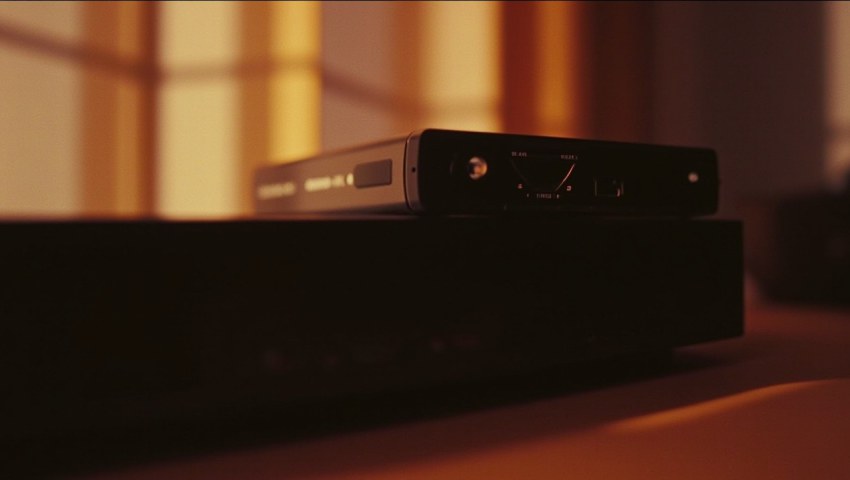
The photograph of a concealed hotel-room box represents the final environmental check. Factory RF results cannot substitute for an installed mock-up when the acceptance case includes furniture, walls, a television, power adapters and concurrent Wi-Fi traffic. Use both levels: controlled line test for every sampled unit and application-level validation on the approved installation prototype. Record the box position, television position, accessory distance, network state and any obstruction because “installed position” without geometry is not reproducible.
A production evidence folder should contain the released configuration, golden-sample approval, firmware identifier, factory test method, sampling plan, serial-number log, anomaly list, disposition record and change notices. This folder is the practical output of an android tv box checklist: it demonstrates whether the factory can reproduce the approved Bluetooth behavior rather than merely assemble a device carrying the BT5.4 label.
Two routes, one bill of differences
Buyers often face two routes: define only the visible product requirement and accept later, or define the radio, software, environment and production evidence before committing. The bill of differences is not merely documentary. It changes what the factory can substitute, what engineering must test and what a site operator can diagnose.
| Decision item | Entry route | Commitment route | Procurement consequence |
|---|---|---|---|
| Requirement | Model name plus BT5.4 | Named accessories, user journey, environment and pass criteria | The first can only demonstrate radio availability; the second can demonstrate intended service |
| Configuration | Selected model and nominal storage | Exact memory, Ethernet, OS image, radio, antenna and enclosure revision | Reduces quotation drift and production substitution risk |
| Reference | Catalog sample | Approved golden sample plus revision record | Creates a repeatable comparison point |
| Testing | Bench pairing check | Pairing, reconnect, coexistence, installed-position and post-reboot testing | Aligns lab behavior with field behavior |
| Factory evidence | Basic functional pass | SMT/AOI, functional, aging, RF/dark-room and audit records linked to serials | Supports both release decisions and failure investigation |
| Change control | Informal notification | Written approval before radio, antenna, firmware or enclosure changes | Prevents an approved sample from becoming unrepresentative |
| Outcome | Faster initial quote, wider interpretation risk | More definition work, tighter production traceability | Choose by deployment risk rather than document volume |
The qualitative bars reinforce the route distinction. “Requirements only” scores 25/100. “Requirements plus target price” reaches 46/100. “Approved golden sample” reaches 74/100, and “Pilot batch sign-off” reaches 91/100. These values are editorial planning scores on a 0–100 scale, not audited or measured rework data; they show why a commercially complete request still lacks a physical production reference.
The commitment route is especially valuable where a small interface difference affects deployment. A 100M rather than 1G RJ45 selection, a different memory option, a changed enclosure or a different Android image can alter boot behavior, service flow and test duration. These differences belong on the quotation and inspection plan, not in an informal email assumption. The same applies to the BT5.4 implementation: a model identifier without the radio and antenna revision leaves a critical bill-of-differences field open.
A staged compromise can reduce initial engineering effort without returning to the entry route. Require a written requirement baseline and a golden sample before pilot acceptance, while postponing detailed line sampling only if the manufacturing and test method are contractually agreed. That compromise preserves control over what changes between sample and production. It also makes the residual risk visible to the procurement authority instead of transferring it silently to the factory.
For teams comparing platform classes, the 4K 60fps Android TV box guide helps determine whether decode performance should influence platform selection alongside Bluetooth. For OS-specific decisions, the AOSP versus Google Android TV guide clarifies the software baseline. Neither guide replaces the accessory-specific acceptance plan. The final comparison should place platform fit, software baseline and Bluetooth evidence in separate columns so one strong result does not conceal an unverified variable.
How the requirement actually works
“Bluetooth 5” identifies a standards generation; “BT5.4” identifies the version stated in the four supplied DataMax product records. The actual system requirement should identify more layers: the Bluetooth controller or module, the host software and Android integration, the antenna and enclosure, the user accessory, the network environment and the acceptance method. If any layer is absent, the quotation can remain technically true while the deployment fails.
The Android integration determines what the user and application can do with the radio. AOSP Android 11 on DM21P and AOSP Android 14 on DM21S, DM21T and DM22Q create different software baselines. The engineer should verify device discovery, permission behavior, pairing state, profile exposure, reconnect behavior and the recovery path after reboot or update. The product facts do not specify a Bluetooth profile set, so profile support must be confirmed against the production datasheet.
The physical implementation determines radio behavior. Antenna location, matching, enclosure material, USB-space allocation, power-supply noise, TV metalwork and nearby Wi-Fi devices all affect the installed product. A BT5.4 label on the platform cannot substitute for an antenna review. For a hidden box, a tabletop protocol test should be followed by an installed-position test with the actual television, furniture and network environment.
The protocol path should be written as a sequence:
- Discovery and selection The intended accessory appears during the defined discovery interval.
- Authentication and pairing The specified device completes the required bonding or pairing workflow.
- Service operation Data, audio, input or control behavior meets the application requirement.
- Idle and recovery Standby, disconnection and reboot produce defined reconnect or re-pair behavior.
- Coexistence Wi-Fi6 and Ethernet traffic continue within the specified service expectation.
- Production record The result is linked to serial number, hardware revision, Android build and test environment.
The engineer should distinguish Class of Device from claimed throughput or range. The supplied product facts contain the BT5.4 label but no radio-class, sensitivity, conducted-output, range or profile data. Those details should be requested as controlled technical fields and confirmed against the production datasheet; they should not be inferred from the chipset model or from a Wi-Fi6 label.
The buyer also needs an error taxonomy. A failure can occur in the hardware radio, Android framework, middleware, accessory firmware, RF environment or user workflow. Without that separation, a factory may be asked to fix an accessory defect, while an operator may dismiss a genuine integration defect as a rare pairing issue. The acceptance protocol should capture logs, radio state, firmware identifiers and reproduction steps. A failed accessory can be replaced during diagnosis, but its identity and replacement must remain visible in the record.
The mechanism turns android tv box checklist into an engineering control system rather than a feature list. The radio version establishes the advertised baseline; the acceptance chain establishes whether that baseline works in the ordered configuration and deployment. Once that chain is complete, the buyer can review DataMax manufacturing capability or request technical contact with the exact model, configuration and accessory evidence attached.
Further reading
- RK3568 Android Box Checklist for Procurement Teams
- 4K 60fps Android TV box guide
- Rockchip Android TV box guide
- Dolby Vision Android TV box guide
- RFQ checklist for device procurement
- DataMax DM21P specifications and fit
- DataMax DM21S specifications and fit
FAQ
Does BT5.4 mean every DataMax Android TV box supports the same accessories?
No. The supplied facts list BT5.4 on DM21P, DM21S, DM21T and DM22Q, but they do not specify a common Bluetooth profile set or accessory matrix. Specify each required accessory, its expected function and the relevant pairing or reconnect behavior, then confirm profile support against the production datasheet.
Can a successful Bluetooth pairing test be accepted for a hotel installation?
Not by itself. Pairing proves only the tested device and environment. A hotel acceptance should add installed-position range, nearby 2.4GHz interference, Wi-Fi coexistence, standby reconnection, reboot recovery and the production enclosure used in the installation.
Which DataMax platform should an IPTV operator select for Bluetooth accessories?
Start with the fit and operating requirement rather than the radio label. DM21P is positioned for operator middleware set-top-box work, while DM21S is positioned for Android 14 IPTV/OTT white-label deployments. Compare the exact middleware, memory, Ethernet, DRM and accessory requirements before selecting the production configuration.
Is Android 11 acceptance evidence valid for the Android 14 platforms?
No. DM21P runs AOSP Android 11, whereas DM21S, DM21T and DM22Q run AOSP Android 14. Pairing, permissions, profile exposure and recovery behavior must be retested on the exact Android image proposed for each platform because framework and integration behavior cannot be transferred automatically.
What evidence should a pilot batch contain?
The pilot record should link serial numbers to hardware revision, Android build, factory test results and Bluetooth accessory tests. It should also document the RF environment, coexistence conditions, reconnect or reboot behavior, anomalies, disposition and approval authority. The record must distinguish a factory pass from an installed-environment result.
Who should approve changes to the radio, antenna or Android image?
The buyer and the engineering authority named in the acceptance plan should approve changes against the golden sample and revision baseline. A radio-module substitution, antenna change, enclosure change or software-image change can alter the validated result and should trigger an agreed retest before release.