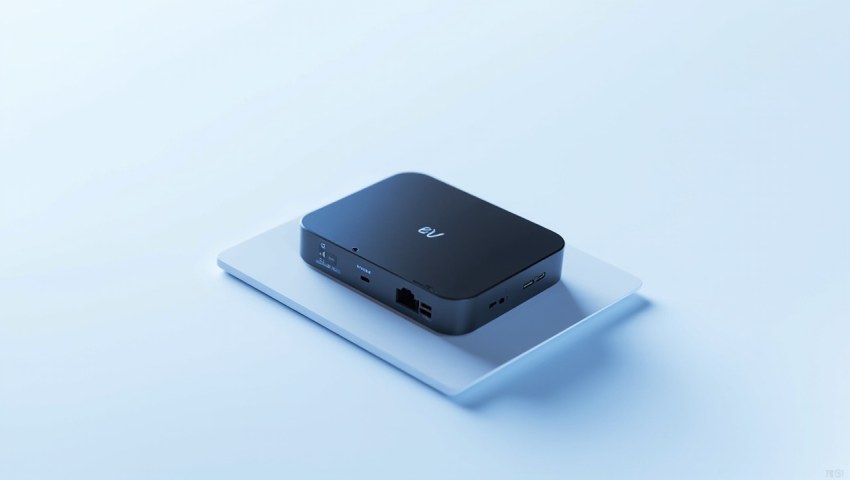
The short answer first
If the device must ship with Google Play Services and GMS certification, specify a certified SKU and verify its certificate against the exact production configuration. If the buyer only needs a general Android TV box for operator middleware, branded OTT applications, or managed distribution without Google Play certification, a non-certified AOSP configuration may be technically adequate.
Most buyers asking about a android tv box fall into the second group: operators and product teams evaluating hardware for IPTV or OTT, while assuming “Android” automatically means Google Play, GMS, Netflix certification, and a finished retail application store. Those are separate controls. A GMS-certified build is only the first gate.
The short decision is:
- Require Google Play and GMS: order a GMS-certified AOSP SKU; verify the model, OS build, device fingerprint, and certificate status.
- Do not require Google Play: consider a non-GMS AOSP build, but document application distribution, update ownership, security controls, and third-party certification separately.
- Require Netflix or another streaming service: request service-specific device certification; do not substitute a GMS certificate for it.
- Require AV1: confirm both hardware decode capability and the application or service path that exercises AV1.
A GMS certificate does not by itself establish Widevine security level, Netflix approval, HDCP support, operator middleware readiness, AV1 playback, or regulatory compliance. Those provisions must be confirmed against the production datasheet and ordered SKU. DataMax can support operator-oriented qualification and evidence collection, but the certificate status belongs to the exact SKU delivered.
A practical procurement example separates the two routes. An ISP asking for Google Play, a branded retail channel, and an application updated through the intended store should request the certified route. A managed IPTV project that installs its own middleware, controls its own update channel, and does not need Google Play can use general AOSP if the application and security requirements are accepted. A project needing both Google Play and Netflix should request two separate evidence paths rather than treating one certificate as a substitute for the other.
The distinction affects more than the initial bill of materials. A certified route introduces build-governance requirements: substitutions, firmware changes, regional images, and hardware revisions can affect the conformity record. The operational decision is therefore binary but the acceptance process is not.
The traps in this category
The first trap is treating “GMS certified,” “Google Play enabled,” and “certified for Netflix” as interchangeable labels. GMS certification covers a defined Google Mobile Services configuration and device build. Netflix device certification is a separate approval process. A box may meet one requirement and not another. A quotation that says “certified Android TV” without naming the certification body, certificate identifier, covered model, and build scope is not an acceptance-grade specification.
Field trap
Do not accept a catalogue-page badge as the compliance record. A buyer can incur rework when the production ROM, firmware, hardware revision, or regional certification differs from the demonstrated unit.
The second trap is accepting chipset capability as proof of deployed playback. “AV1 capable” identifies a decode path, not the complete service chain. The streaming application, media framework, DRM configuration, output mode, display capability, and certification status can each determine whether the user sees the expected picture. For a 4K IPTV launch, specify the source format, target resolution, frame rate, output interface, audio path, and required streaming-service validation in the acceptance test.
A third trap is quoting a generic laboratory report. A report with no traceable model number, firmware version, test date, laboratory identity, sample serial range, or result appendix cannot prove conformity for the production order. Generic test reports may support broad quality or regulatory work, while a standard-specific report ties test evidence to the named requirement. A public registry lookup adds a distinct verification step, but only where the issuing scheme provides the relevant registry.
Field trap
A quotation that says “certified Android TV” without naming the certification body, certificate identifier, covered model, and build scope is not an acceptance-grade specification.
The cost of these errors appears late: certification mismatch, blocked application deployment, rejected retail packaging, duplicated destructive testing, or a field update that removes the service the project depends on. The procurement control is therefore simple: bind every compliance claim to a model code, hardware revision, build ID, and evidence package before purchase order release.
Another failure mode is confusing a qualification sample with a production unit. The sample may carry a controlled firmware image, a specific regional GMS package, and test credentials. If mass production uses a different build channel, the conformity relationship can be lost. The purchase order should identify the approved image and the process used to release later updates. It should also state whether a component substitution requires written approval, test rerun, or a new certificate review.
A related trap is leaving application qualification implicit. Suppose the model has Widevine L1 in its quoted configuration, but the selected media path does not exercise protected playback, or the content partner requires a different device classification. The correct response is not to infer success from the chipset list. It is to request the exact service requirement, test content, display mode, output-protection setting, and application version used during qualification.
Region, account, and update policy can also alter the result. A buyer should specify the operating country, required Google applications, signed release process, recovery image, and long-term update ownership. “Factory certified” without those fields describes a moment, not a controlled product configuration. For a volume programme, a change-notification clause is more useful than a one-time certificate download because the production line remains exposed to firmware and component drift.
How the factory controls the variable
Factory control begins before final assembly. The production unit must match the certified design: SoC, memory configuration where relevant, Android build, firmware image, boot configuration, device identity, radio options, and regional software package. Small substitutions can invalidate the evidence trail. The process below treats certification as a configuration-control problem rather than a document-upload task.
- Freeze the build definition Record the exact model, SoC, Android version, GMS package, firmware branch, hardware revision, and intended region. Prevent substitutions outside the approved configuration.
- Verify SMT and assembly Use SMT inspection, AOI, component traceability, and configuration checks to confirm that the assembled unit matches the controlled bill of materials.
- Run software and boot checks Validate image identity, boot result, system properties, application packages, services, network functions, and recovery behavior on the production firmware.
- Execute functional and aging tests Combine heat, burn-in, reboots, network recovery, display, decoding, USB, and selected accessory checks under representative load.
- Complete dark-room and output validation Record display, audio, IR, connectivity, and applicable operator middleware behavior with traceable sample identifiers.
- Audit the evidence trail Match certificates, test reports, firmware hashes, build records, sample identities, audit findings, and corrective actions before shipment release.

Evidence rule: a certificate is useful only when its scope can be reconciled with the delivered configuration. DataMax should be asked to confirm the certificate and DRM or security provisions for each ordered SKU rather than relying on a general catalogue statement.
SMT inspection and AOI detect assembly faults; they do not, by themselves, establish GMS conformity. Aging tests expose thermal and reboot instability; they do not prove Google or streaming-service approval. Dark-room checks reveal display, remote-control, audio, and lighting-dependent defects; they are not a substitute for network certification. The buyer should require an evidence index that states which control proves which requirement.
A practical document set may include a build-release note, firmware identification, hardware revision, certificate record, model-specific test report, audit summary, corrective-action log, serial-number traceability, and packing list. The RFQ should define the required evidence before the factory commits to a shipment window. DataMax factory-quality documentation is a relevant starting point, but the acceptance wording must still identify the exact order.
The evidence index can be divided into four columns: requirement, controlled object, test method, and retained artifact. For “GMS-certified AOSP,” the controlled object is the model, hardware revision, Android build, and regional image; the retained artifact includes the certificate scope and release record. For “operator middleware stability,” the controlled object is the middleware version and hardware configuration, with the artifact being the soak-test report and defect log. This structure makes gaps visible: a certificate with no firmware identity, or a stability report with no middleware version, is incomplete evidence.
Production sampling should also be stated. The factory can define which checks run on every unit and which checks run on a controlled sample from each batch. The buyer should then identify the unit identifier linking the sample to the relevant test result. If a batch fails, the corrective action should include containment, root cause, affected serial range, retest scope, and release approval. Without those fields, a test report documents a past event rather than preventing recurrence.
A change-control record completes the loop. It should identify who may approve a firmware update, SoC substitution, memory change, radio-module replacement, boot-image change, regional package change, or middleware revision. It should also specify whether the change requires certificate review or only internal regression testing. For an Android TV box programme, this prevents an apparently small production optimization from becoming an unmanaged compliance deviation.
Two routes, one bill of differences
The category contains two commercially distinct routes. A GMS-certified non-Google-TV configuration suits operators or retailers that need Google Play Services while retaining AOSP-based product control. A general AOSP route suits projects that need operator middleware, white-label applications, or managed distribution without Google Play as a mandatory storefront.
The comparison is not “certified versus uncertified” in a simple quality ranking. It is a difference in software governance, commercial dependencies, application distribution, and evidence obligations.
| Decision area | GMS-certified AOSP route | General AOSP route |
|---|---|---|
| Primary fit | Operators and retailers requiring a Google-certified non-Google-TV SKU | IPTV, OTT, or white-label projects not requiring Google Play certification |
| Application distribution | Use the intended Google Play pathway after verifying the certified build | Define managed distribution or sideloading policy explicitly |
| Evidence focus | Certificate scope, device identity, build consistency, and service qualification | Software release, security, application lifecycle, and application-specific testing |
| Streaming service approval | Verify separately where required | Verify separately where required |
| DRM and output security | Confirm exact Widevine, PlayReady, and HDCP provisions for the SKU | Confirm the same provisions independently of GMS status |
| Operational burden | Manage build changes because they can affect certification scope | Manage application distribution and update ownership directly |
| Retail onboarding | Align packaging, accounts, preinstalled applications, and region with the certified configuration | Define the operator or integrator installation and service-access process |
| Failure impact | Build deviation can block a required Google service or application workflow | Distribution, update, security, or support failure can block deployment |
The quoted commercial difference should therefore include engineering effort, not only the per-unit category. The GMS route adds certification governance and potential commercial dependencies, but can remove the need to own a Play-distributed application channel. The AOSP route may simplify device identity for an operator-controlled ecosystem, but shifts application distribution and update accountability to the project.
One project example shows the trade-off. A national IPTV operator with a proprietary middleware, controlled devices, and no retail application store may prefer a general AOSP route. A consumer-brand launch requiring Google Play, branded storefront distribution, and a retailer’s application compliance checks has a stronger reason to use the GMS-certified route. A hybrid project can still use Google Play but must define who owns account provisioning, application review, update policy, and regional packaging.
The selected route also changes the acceptance document. The certified route should reconcile certificate scope with the production build. The general AOSP route should provide signed image identity, application installation policy, update-control rules, security configuration, and third-party service evidence. Neither route removes the need to test the actual operator middleware or streaming application.
A Netflix detail reinforces why this separation matters. Netflix reported that 88% of large-screen devices submitted for certification during 2021–2025 supported AV1, but the population was devices submitted for certification, not all devices shipped.

The same figures, in searchable form:
| Certification population | Share |
|---|---|
| Supported AV1 | 88% |
| No AV1 support | 12% |
Source: Netflix Technology Blog, AV1 — Now Powering 30% of Netflix Streaming (2025-12-01)
This metric indicates how significant AV1 has become in Netflix’s certification population. It does not prove that any particular box is Netflix-certified, nor that all certified devices use AV1. Both facts must be checked against the intended service and model.
The mechanism behind the spec
GMS certification operates at the intersection of Android configuration, Google Mobile Services, device identity, and the submitted test scope. For a set-top box, the technical question is not simply whether an AOSP image contains Google applications. The submitted device must match the certified product configuration, and the buyer must understand which regional services and software assumptions are included.
The android tv box term can also be confused with Google TV. The relevant DataMax route here is explicitly a GMS-certified AOSP product. Google TV is a distinct product experience and software layer. If a project requires Google TV rather than GMS on AOSP, that is a different specification line and must be confirmed against the production datasheet.
Third-party streaming certification adds another control plane. A service provider evaluates submitted hardware and software for playback, DRM, output protection, application behavior, and service-specific requirements. A Widevine level, for example, is an important conditional for protected content, but the exact configuration must be confirmed for the ordered SKU. The presence of “Widevine,” “HDCP,” or “AV1” in a quotation does not establish the complete service approval.
For a general explanation of operating-system choices, use the canonical android tv box for ISPs guide. For this angle, the mechanism is controlled qualification:
- Service baseline GMS package, region, account, and update policy
- Media baseline decoder, HDMI output, display mode, audio, and DRM
- Application baseline operator middleware, launcher, playback, remote control, and network services
- Evidence baseline certificates, reports, audits, and production traceability
Buyer education must remain precise. “Android-compatible” says little about an application. “AV1 capable” does not define output timing or service certification. “GMS-certified” does not prove Netflix approval. “HDCP 2.2 optional” means the exact ordered configuration must define the option; it is not an unconditional capability statement.
The relevant architecture for procurement is a traceability chain. Requirement → model and build → test sample → evidence document → shipment record. Each arrow needs an identifier. That chain prevents a development sample, a certification sample, and a production shipment from being treated as the same object.
The media path illustrates why separate controls are necessary. A source stream may use AV1, but the end-to-end path includes container parsing, software demuxing, hardware decode, scaling, display timing, color handling, output protection, and the selected receiver or television. A service can also impose application, device-class, firmware, and licensing conditions. The buyer should therefore define the exact test stream and reference display rather than asking for a general “4K AV1” result.
The same separation applies to managed applications. A GMS-certified image can still require middleware permissions, launcher configuration, account handling, network access, and update policy. A general AOSP image can still support a Play-distributed application through an approved pathway, but that possibility does not create a certified SKU. The required platform route should be written in the RFQ before the model is proposed.
This mechanism explains why catalogue-level descriptions are insufficient. A catalogue can identify an operating system family, but it may omit region, build, revision, package, certificate scope, and test status. For procurement, the deliverable is not a badge but a reconciled evidence set attached to a controlled production definition.
Which DataMax models actually sit here
Only one listed DataMax model is expressly positioned as the GMS-certified non-Google-TV SKU. The other models serve related operator, OTT, and premium-use cases but must not be described as GMS-certified without model-specific confirmation. This distinction prevents a buyer from selecting by chipset or AV1 capability alone.
| Model | Platform and OS | Media and DRM | Interfaces | Procurement fit |
|---|---|---|---|---|
| DM21RTD | Realtek RTD1325; GMS-certified AOSP | AV1 capable | Not stated in the provided facts; confirm against the production datasheet | Operators and retail requiring a Google-certified non-Google-TV AOSP+GMS SKU |
| DM21P | Amlogic S905Y4, quad Cortex-A35; AOSP Android 11 | AV1 [email protected]; VP9/H.265 4K@60; H.264 4K@30; Widevine L1 / PlayReady / HDCP 2.2 optional | HDMI 2.0b out x1; USB2.0 x2; TF; S/PDIF; 3.5mm AV; RJ45 100M; Wi-Fi6 2x2 + BT5.4; DC 5V/2A | 4K IPTV / operator middleware set-top box |
| DM21S | Amlogic S905Y5, quad Cortex-A55; AOSP Android 14 | AV1 / H.265 [email protected] 4K@60; Widevine L1 / PlayReady optional; Dolby Vision/DTS | HDMI 2.0b out; S/PDIF; AV; USB2.0 x2; TF; RJ45 100M, 1G optional; Wi-Fi6 2x2 + BT5.4 | 4K Android TV box for IPTV/OTT white-label |
| DM21T | Amlogic S905X5, quad Cortex-A510 (ARMv9); AOSP Android 14 | H.266/VVC [email protected] 4K@120; AV1/VP9/H.265 4K@120; AVS3 4K@120; H.264 4K@60; inline AI-SR; Widevine L1 / PlayReady optional | HDMI 2.0b out, no HDMI in; USB2.0 x1 + USB3.0 x1; TF; S/PDIF; AV; RJ45 100M, 1G opt; Wi-Fi6 + BT5.4 | Premium UHD / cloud-gaming box |
DM21RTD is the direct selection when the RFQ requires a Google-certified AOSP, non-Google-TV configuration. The supplied facts list its SoC as Realtek RTD1325, its OS as GMS-certified AOSP, and its decode capability as AV1 capable. Its broader hardware and regional details remain to be confirmed against the production datasheet.
DM21P, DM21S, and DM21T provide different media and interface baselines for operator or OTT projects. Their supplied OS descriptions are AOSP versions without a stated GMS-certified designation. A buyer may still require GMS on a project, but the provided facts do not establish it. For those models, request confirmation of whether a certified configuration is available.
An Android TV box buyer should also keep option fields tied to the ordered configuration. DM21P has 2GB / 8GB as its stated RAM/ROM configuration, with 4GB RAM and 16/32/64GB storage marked optional. DM21S has 2GB / 16GB, with 2/4/8GB RAM and 16/32/64GB storage options. DM21T has 4GB / 64GB within its family options. These are configuration-selection fields, not proof that every memory combination has the same certification scope.
The documentary strength requested by a buyer also varies. The following editorial ranking is useful for comparing evidence types, not for measuring a supplier or certifier.

The same figures, in searchable form:
| Evidence option | Editorial score |
|---|---|
| Supplier claim | 15/100 |
| Generic test report | 42/100 |
| Standard-specific report | 70/100 |
| Certificate with public registry lookup | 94/100 |
Source: DataMax editorial team, qualitative planning scale (0-100), not audited or measured data.
The scores rank evidence categories for procurement planning; they are not measured performance, and a public registry is available only for schemes that operate one. Use them to set the evidence request, not to score a named product.
Deployment scenarios and the spec each needs
The right specification follows the operating model. An operator may need long-running IPTV middleware, managed firmware, and predictable interfaces. An integrator may need broad display, control, and installation compatibility. A venue operator may prioritize centralized management and stable playback. A retail product needs the commercial and application controls expected by the storefront.
| Situation | Primary requirement | Model direction | Evidence to request |
|---|---|---|---|
| Operator IPTV launch | Middleware integration, 4K playback, managed updates, stable Ethernet | Evaluate DM21P; consider DM21S where Android 14 and white-label operation fit | Exact build, middleware test report, interface test, DRM configuration, update plan |
| Retail device with Google Play requirement | GMS-certified non-Google-TV SKU and matching production evidence | DM21RTD is the direct listed fit | Certificate scope, build identity, regional package, public lookup where available |
| AV integrator for hospitality or signage | HDMI output, remote/control operation, install resilience | Evaluate DM21S or DM21T against display and workflow | Output timing, control protocol, reboot recovery, aging and environmental evidence |
| Premium UHD or cloud-gaming venue | High-frame-rate 4K media and premium media feature set | Evaluate DM21T | Application-path decode test, output-mode report, service certification where relevant |
| White-label OTT without Google Play | Application distribution, launcher control, OTA ownership | Evaluate DM21S or DM21P, subject to OS and interface requirements | Signed release, update policy, application security, DRM and media test results |
| Operator bundle with a 4K IPTV baseline | HDMI 2.0b output, Ethernet, AV1-class decoding, optional protected playback | DM21P is the listed 4K IPTV direction | Memory configuration, output test, codec-profile test, exact DRM option |
| White-label 4K product on Android 14 | AOSP Android 14, AV1 and H.265 4K@60 capability, optional DRM | DM21S is the listed direction | Application path, output mode, optional 1G Ethernet, Dolby Vision/DTS status |
For an operator IPTV programme, the buyer should separate hardware acceptance from service acceptance. Hardware acceptance covers boot, Ethernet, HDMI, remote control, decoding, stability, and middleware integration. Service acceptance covers content authorization, DRM, catalogue applications, and any third-party certification. Passing one does not prove the other.
An integrator’s risk profile differs. A device can meet its declared decoder specification but fail at the television because of display mode, color format, audio routing, control protocol, or scaler compatibility. The deployment specification should name the reference display, preferred mode, EDID behavior, audio output, remote-control system, and recovery procedure.
For a retail product, the compliance file is part of the shipping configuration. If packaging, preinstalled applications, accounts, region, and firmware differ from the submitted device, the evidence chain breaks. The release note should identify the production firmware and approved image.
The scene also determines the acceptance workload. A telecom lab bench can combine repeated boots, network reconnects, middleware launches, HDMI checks, RF measurements, and playback monitoring against a controlled reference display. That approach catches interaction faults that isolated decoder tests may miss. The resulting report should identify the application version, firmware build, content source, output mode, and observed failure criterion.
A venue deployment adds fleet management. Before approval, define whether the operator controls reboots, logs, updates, and application recovery. A digital-signage or hospitality unit may run unattended for long periods, so a restart after network loss must be measured rather than assumed. The Android TV box may then need a remote update channel, stable launcher behavior, and an integration report rather than a GMS certificate.
Before sending an RFQ, review the certification evidence or compliance route. State that certificates and DRM or security provisions are confirmed for the ordered SKU, not inferred from a catalogue page.
Turning the question into a spec line
Convert the commercial question into a traceable sequence. The buyer should identify the service dependency first, then the platform route, then the hardware baseline, then the evidence and acceptance criteria. This order prevents a chipset-led decision when the actual constraint is GMS or application certification.
- Name the service dependency Write “Google Play required,” “Netflix certification required,” “Widevine L1 required,” or “no Google Play dependency” as separate lines.
- Select the platform route State “GMS-certified AOSP, non-Google-TV” when applicable; otherwise identify the managed application-distribution method.
- Freeze model and build Add model code, SoC, Android version, RAM/ROM, hardware revision, region, firmware release, and connectivity options.
- Define media and interfaces State codec profile, maximum resolution, frame rate, HDMI output, Ethernet speed, wireless configuration, USB, storage, and audio outputs.
- Bind evidence to the SKU Request certificate scope, model-specific reports, sample traceability, audit evidence, and public registry information where available.
- Define acceptance and change control State sample quantities, test content, application version, soak duration, reboot criteria, defect thresholds, and notification rules for component or firmware changes.
A paste-ready RFQ can use this form:
Supply the listed model and production build for operator evaluation. State whether the delivered configuration is GMS-certified and provide the certificate scope and registry evidence where applicable. Confirm the Android release, hardware revision, memory configuration, region, connectivity, media profiles, output modes, DRM configuration, and third-party service-certification status separately. Provide model-specific test reports, firmware identity, traceability from qualification samples to shipment, and the proposed evidence index. Confirm certificates and DRM/security provisions for the ordered SKU, not as a catalogue-level statement.
Then attach a separate acceptance sheet. For a 4K IPTV box, for example, include the reference network, television model, preferred output mode, operator middleware build, application build, test streams, and reboot/recovery procedure. Avoid bundling all conditions into one sentence; separate them into platform, hardware, media, compliance, and test paragraphs so a change in one area can be assessed.
The RFQ’s first message should contain the intended Google Play or non-Google-Play route, target model, deployment scenario, operating region, required service certifications, RAM/ROM, connectivity, and output format. That is enough for an initial engineering response. Add the inquiry form or sample-order route with those fields. A good factory response will identify missing specifications rather than silently substitute them.
A qualification line should also define what happens when a requirement cannot be met. The buyer can request an equivalent approved configuration, a documented limitation, or an alternative model. That gives the engineering team a controlled decision point and stops the quotation from implying that every requested capability has been accepted.
For example, an RFQ for a Google Play retail product should identify the GMS route, target model, region, required memory, connectivity, 4K output, and service certifications. The response should then separate confirmed facts from options and missing data. For DM21RTD, the stated fit, SoC, OS, and AV1 capability can be requested by name; unlisted RAM, ROM, ports, and regional details should be left for the production datasheet rather than inferred from another model.
Further reading
- Guide android tv box for isps
- AOSP vs GMS solution notes
- Telecom and pay-TV operator solutions
- Certifications and test evidence
- Amlogic Android TV boxes
- DataMax DM21RTD specifications and fit
- DataMax DM21P specifications and fit
FAQ
Is every Android TV box GMS-certified?
No. GMS certification applies to a specific submitted device and software configuration. A device may run AOSP without Google Play or GMS certification. Buyers should state the Google Play requirement explicitly and request evidence for the exact ordered SKU.
Does GMS certification guarantee Netflix certification?
No. GMS certification and streaming-provider device certification are separate processes. A buyer that requires Netflix approval must request service-specific evidence for the model and firmware build. Confirm certificates and DRM or security provisions for the ordered SKU.
Which DataMax model directly matches a GMS-certified AOSP requirement?
DM21RTD is the listed fit for operators and retail requiring a Google-certified non-Google-TV AOSP+GMS SKU. Its supplied facts specify Realtek RTD1325, GMS-certified AOSP, and AV1 capability. Other specifications should be confirmed against the production datasheet.
Does AV1 capability mean the device is Netflix-certified?
No. AV1 capability identifies decoder support, while Netflix certification assesses a device and software build against service requirements. The two conditions should be written separately in the RFQ and verified through separate evidence.
Can an operator choose a non-GMS AOSP model?
Yes, when the application ecosystem is managed directly and Google Play is not required. For the listed DM21P, DM21S, and DM21T platforms, the supplied facts do not state GMS certification. Confirm against the production datasheet before including Google Play in the acceptance criteria.
What evidence should accompany an order?
Request the certificate scope, model-specific test reports, firmware identity, hardware revision, sample traceability, audit records, and registry lookup where the certification scheme provides one. Generic supplier claims alone are not enough for configuration-controlled procurement.