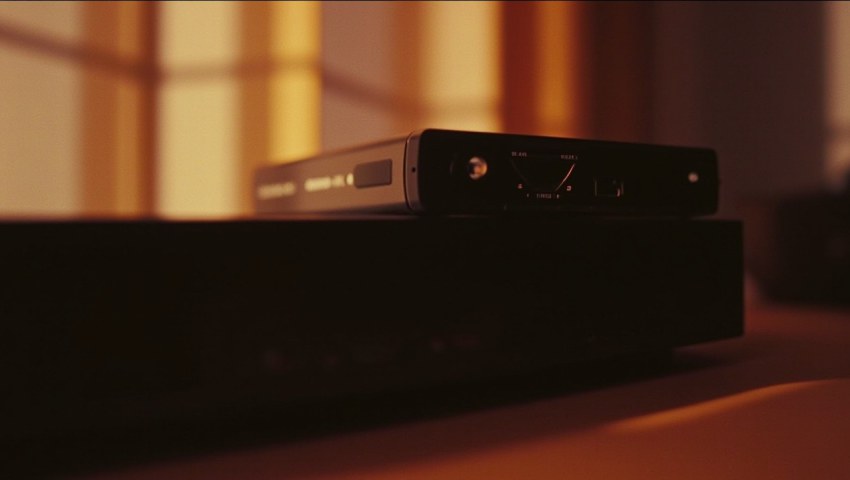
A cruise cabin or offshore accommodation is one of the most demanding environments a television endpoint can be installed in. Specifying a maritime cabin TV box is therefore an engineering exercise in power tolerance, edge caching, multi-language UX and fleet management, not a consumer electronics purchase. This guide walks procurement and technical decision teams through the engineering choices that separate a credible maritime endpoint from a consumer box with a marine brochure.
The Maritime Cabin Environment
A cruise cabin or offshore accommodation is one of the most demanding places a television endpoint can be installed. Power is generated onboard rather than supplied from a stable grid, humidity and salt-laden air are constant, network capacity is purchased by the megabyte over satellite, and the same hardware must serve guests of a dozen nationalities who embark and disembark every week. A consumer streaming box, designed for clean mains power, unlimited home broadband and a single household language, cannot meet these conditions. A maritime cabin box is specified against them from the start.
For a procurement engineer comparing an Android TV box configured on Amlogic S905X5M with a consumer streaming device, the failure modes are predictable: brownouts during thruster operation, connector corrosion inside twelve months, runaway satellite bills, and a support call per cabin per month. The relevant question is not "does it run Android" — almost everything does — but how the device behaves when the power dips, the link degrades and the guest changes twice in seven days.
Power Stability and Corrosion Handling
Shipboard power can dip, surge and vary in frequency, particularly during thruster operation and generator changeovers. Cabin endpoints therefore use a wide-voltage input range with internal stabilization so that a brownout does not corrupt storage or force a technician visit at the next port. Wide-range stabilized input tolerant of generator variation, graceful behaviour on sudden power loss without storage corruption, humidity and salt-atmosphere appropriate construction, and fanless form factors to eliminate moving-part failure at sea are the four baseline engineering choices.
Fans fail at sea long before they fail onshore. The combination of salt, vibration and continuous duty kills bearings in months, so a sealed, fanless chassis is the only credible answer for passenger cabins, crew mess rooms and offshore accommodation. Conformal coating on the main board and marine-grade connectors on power and HDMI are the second pair of choices that separate a maritime specification from a consumer one.
A box that quotes only "12 V DC" without a wide-range input, a brownout recovery test, and a salt-fog specification is not a maritime device — it is a consumer box with a marketing page.
Power-adaptation testing and input-range evidence for the named configuration are typically provided under NDA during qualification (status pending M03-03 in the project plan). Treat any vendor that does not offer a documented input range and a sudden-loss recovery test as not yet engaged with the maritime use case.
Edge-Cached VOD Over Low-Bandwidth Satellite
Streaming thousands of Hollywood titles simultaneously over a satellite link is prohibitively expensive and technically impossible during heavy weather or open-ocean segments. The maritime solution is edge caching: the VOD catalogue is pre-positioned on shipboard storage during port calls, over cheaper shore connections or scheduled low-cost satellite windows, and served to cabins from the local network.
Guests see a normal VOD experience with start-over, pause, resume and trick-play, while the satellite link carries only billing, telemetry, live channels and a rotating refresh of new releases. Adaptive streaming and progressive download both operate from the edge, so playback is unaffected by link degradation. The pattern is the same caching model that digital signage players use for offline content, scaled to a per-vessel media library.
The satellite budget becomes a planning variable rather than a runaway cost: one scheduled low-cost window per week can refresh a curated subset, while the bulk of the library stays onboard. For a procurement engineer, this turns bandwidth from a CAPEX line item into a predictable OPEX one — exactly the same procurement logic that ISP-grade Android TV boxes are sold against on land.
| Service layer | At-sea delivery | Refresh point |
|---|---|---|
| VOD film catalogue | Served from shipboard edge cache | Port call or scheduled satellite window |
| Live satellite television | Direct from onboard headend | Continuous over satellite reception |
| Guest interface and EPG | Rendered locally on the cabin box | Language and schedule updates |
| New-release titles | Progressive cache rotation | Low-cost satellite window |
| Billing and consumption data | Deferred over the management link | When link capacity allows |
| Firmware and configuration | Staged on the shipboard server | Authorized fleet maintenance window |
The table makes the procurement case clear: the satellite pipe is reserved for content that genuinely requires real-time delivery or that needs to land in batches (billing, telemetry, new-release rotations). All playback sits on the local network, which is cheap, predictable and unaffected by weather.
Multi-Language Cabin Interface and Privacy Reset
Cruise passengers board from many countries in a single voyage. The cabin interface must offer a language selector covering the operator's core source markets, with localized film metadata, subtitle and audio-track selection presented at first switch-on and remembered for the voyage. The final language set is defined per fleet — translation packages are typically scoped against the boarding demographics and gated per market.
On disembarkation the device resets to a neutral state for the next guest: language selection, viewing history and any saved credentials are cleared, the cabin interface returns to the welcome screen, and the next guest starts from a clean slate. This is the same room-reset discipline applied in the hotel TV box supplier context, but applied to a moving fleet where every turnaround happens in port and a missed reset is a brand-damage event rather than a housekeeping complaint.
Two procurement implications follow. First, the platform must support multiple language packs and per-vessel configuration without a manual site visit. Second, the reset has to be deterministic and verifiable from shore. Devices running a current Android TV build such as the DataMax DM21S on Android 14 give translation teams a familiar surface to localize without retraining, and the reset can be triggered by a fleet-management command rather than a physical interaction.
Fleet Management Across Vessels
A cruise line may operate dozens of vessels on different itineraries, each out of reach for days at a time. Every cabin box is therefore managed as a fleet asset. Configuration, content policy and firmware are versioned per vessel; updates are staged to shipboard servers and applied during defined maintenance windows; health and playback telemetry returns over the deferred management link. The discipline is identical to the enterprise device licensing model used for managed Android estates, extended across water.
A vessel arriving in port reconciles its status automatically: missed-firmware deltas, content-policy changes and operator updates are pulled from shore during the cheaper port connection, applied during the next port-call maintenance window, and confirmed in the fleet dashboard. Shore-side engineering sees one consolidated fleet view rather than a support call per ship.
Voyage-aware updates
Fleet management is not just "push the same firmware to everyone". It is per-vessel rings: lead vessel validates first, sister ships follow on the next maintenance window, and rollback ships last. Operators who have lived through a bad firmware across a six-ship class do not deploy any other way.
Staging, rollback and signing are non-negotiable. No firmware should ever be pulled directly over the constrained guest satellite link, because a bad build pulled over satellite cannot be undone without a physical visit. Updates are signed, staged on the shipboard server, applied during an authorized window and automatically rolled back if the post-update health check fails. The same management path can reach a 4K TV box with SIM slot on a smaller crew-vessel deployment via a management VLAN without ever touching the guest satellite budget.
Procurement Checklist for a Maritime Project
A maritime project is scoped against the vessel, not against a generic spec sheet. To produce an accurate architecture and BOM, the OEM typically needs vessel count, cabin count per vessel, satellite plan and port rotation, required language set and content catalogue scope, content rights territory and offline-cache rules, PMS or fleet-management system integration target, and maintenance-window cadence with rollback requirements.
OEMs that can publish evidence on wide-range power testing, salt-fog exposure, fleet-management tooling and update rollback on qualified SKUs shorten the qualification path. Generic Android box feature lists are not the relevant comparison — Android at the OS level is well understood; the procurement value is in the maritime-specific QA programme, not the chipset. Spec sheets should name the chassis, the connector family, the input voltage window and the fleet-management protocol, and they should identify which certifications are held by which SKUs.
Offshore Accommodation: Same Hardware, Different Catalogue
Offshore accommodation rigs, FPSOs and crew-transfer vessels reuse the same hardware design with a different content catalogue and language set. Crew welfare films, training modules and operational safety briefings replace Hollywood titles; the language set collapses to two or three working languages; live satellite TV is replaced by IPTV from the platform's VSAT link.
Because the power, humidity, edge-caching and fleet-management requirements are identical, the same satellite set-top box design point applies, just with a different rights territory and a smaller refresh window. Operators that tender cruise and offshore against the same qualified SKU reduce their SKU count and earn back engineering time on every maintenance visit.
Decision Framework at a Glance
The visuals below convert the criteria discussed above into a simple scoring view you can reuse with your own requirements. Weightings are illustrative defaults for this buying scenario, not measured performance data.
Wide-range power tolerance
18 · 100% of max
Edge caching depth
16 · 88.9% of max
Fleet management tooling
15 · 83.3% of max
Corrosion resistance
14 · 77.8% of max
Multi-language UI support
12 · 66.7% of max
Fanless reliability
10 · 55.6% of max
Suggested weighting of selection criteria when scoring a maritime cabin TV box. Illustrative values for planning; not measured benchmark data.
| Cached VOD playback at sea | 45 percent of satellite pipe | 45% | |
|---|---|---|---|
| Live satellite TV channels | 25 percent of satellite pipe | 25% | |
| Cache refresh windows | 12 percent of satellite pipe | 12% | |
| Billing and telemetry | 10 percent of satellite pipe | 10% | |
| Firmware and config sync | 8 percent of satellite pipe | 8% |
Typical allocation of a ship's satellite bandwidth across guest and operational services. Illustrative values for planning; not measured benchmark data.
Frequently Asked Questions
Can the boxes handle unstable shipboard power?
Yes. Cabin endpoints use a wide-range stabilized input designed for onboard generation and behave gracefully on sudden power loss, completing writes or rolling back journaled storage rather than corrupting it. Full input-range and power-adaptation evidence for the named configuration is provided under NDA during qualification, with the formal report currently scheduled against milestone M03-03.
How does VOD work when satellite bandwidth is limited?
The VOD catalogue is pre-positioned on shipboard edge storage during port calls or scheduled low-cost satellite windows, then served to cabins over the local network. The satellite link only carries live channels, billing, telemetry and the rotating new-release refresh, which keeps playback smooth even when the link degrades.
Does playback continue in bad weather?
Yes for cached VOD, because the film is served from the shipboard server rather than the satellite link. Live satellite channels remain subject to reception conditions just like any onboard satellite service; the cached catalogue is not affected by rain fade or open-ocean link drop-outs.
What happens between guest voyages?
The device resets to a neutral state at disembarkation, clearing the previous guest's language selection, viewing history and any saved credentials so privacy is protected and the cabin interface is ready for the next guest without a site visit.
Are the boxes suitable for offshore platforms as well as cruise ships?
Yes. The same power, humidity, edge-caching and fleet-management characteristics suit offshore accommodation rigs, FPSOs and crew-transfer vessels. The content catalogue and language set are rescaled to the crew population — welfare films, training and safety briefings in two or three working languages.
Next Steps
Ready to turn this guide into a procurement plan? Review the full technical overview for this topic, browse the DataMax Buying Guides library, or contact DataMax engineering with your target configuration, volume and destination market for a scoped RFQ response and sample plan.