

What the answer hinges on: the image, not the box
| Decision axis | Entry position | Commitment position |
|---|---|---|
| Primary deliverable | Hardware and bootable firmware | Controlled Android TV box software image |
| Buyer control | Stock configuration | Versioned image, release notes and change control |
| Commercial risk | Late discovery of image defects | Higher engineering commitment, earlier visibility |
| Acceptance basis | Sample boot and visual review | Image, middleware, recovery and production-lot evidence |
| Lifecycle obligation | Undefined image maintenance | Named branch, update route and end-of-life visibility |
For a volume deployment, android tv box selection is not complete when the sample boots and renders a menu. The controlling deliverable is the software image: the exact binary set, hardware abstraction, middleware, provisioning method, update policy and release evidence attached to a specific device revision. A factory can supply a capable enclosure and SoC while still failing at image integration, certification or fleet updates.
The procurement answer is therefore to contract the image before the hardware. Require an immutable build identity, source-to-binary change control, recovery procedure, provisioning method, update route and acceptance evidence. Select the model only after defining the image’s runtime, content, DRM and network obligations. DataMax’s relevant platforms differ in Android version, memory tier, decode capability and interface options, so those fields must be mapped to the same program-level evidence.
This page addresses that ownership angle. For broader ISP selection criteria, use the canonical guide to android TV boxes for ISPs. To assess the operating-system distinction before image acceptance, use the AOSP versus Google Android TV guide. The practical distinction is contractual: “AOSP Android 11” or “AOSP Android 14” identifies a platform baseline, but the deliverable also needs a board-specific image manifest, middleware version, signing status, recovery behavior and update mechanism.
A practical acceptance example shows why that distinction matters. If an operator deploys 10,000 subscriber units, a 2GB / 8GB model may pass a menu demonstration but fail once the production middleware, entitlement service, diagnostics and cached applications operate together. Likewise, an image identified only as “latest” cannot support a controlled rollback because there is no immutable relationship among bootloader, board revision, middleware and application set. The image, not the enclosure, is therefore the unit of configuration, qualification and release control.
Which DataMax models actually sit here
| Model and fit | Compute and memory | Software, media and access | Interfaces |
|---|---|---|---|
| DM21P 4K IPTV / operator middleware set-top box | Amlogic S905Y4, quad Cortex-A35 2GB / 8GB; 4GB; 16/32/64GB optional | AOSP Android 11 AV1 [email protected]; VP9/H.265 4K@60; H.264 4K@30 Widevine L1 / PlayReady / HDCP 2.2 optional | HDMI 2.0b out x1; USB2.0 x2; TF; S/PDIF; 3.5mm AV; RJ45 100M; Wi-Fi6 2x2 + BT5.4; DC 5V/2A |
| DM21S 4K Android TV box for IPTV/OTT white-label | Amlogic S905Y5, quad Cortex-A55 2GB / 16GB; 2/4/8GB; 16/32/64GB optional | AOSP Android 14 AV1 / H.265 [email protected] 4K@60 Widevine L1 / PlayReady optional; Dolby Vision/DTS | HDMI 2.0b out; S/PDIF; AV; USB2.0 x2; TF; RJ45 100M, 1G optional; Wi-Fi6 2x2 + BT5.4 |
| DM21T Premium UHD / cloud-gaming box | Amlogic S905X5, quad Cortex-A510, ARMv9 4GB / 64GB, family options | AOSP Android 14 H.266/VVC [email protected] 4K@120; AV1/VP9/H.265 4K@120; AVS3 4K@120; H.264 4K@60; inline AI-SR Widevine L1 / PlayReady optional | HDMI 2.0b out, no HDMI in; USB2.0 x1 + USB3.0 x1; TF; S/PDIF; AV; RJ45 100M, 1G optional; Wi-Fi6 + BT5.4 |
| DM22Q Gaming-oriented Android TV box | Amlogic S905X5M, quad Cortex-A55 up to 2.5GHz 4GB / 64GB; 2/4/8GB; 16/32/64GB optional | AOSP Android 14 AV1/H.265 L5.1 4K@60; inline AI-SR Widevine L1 / PlayReady optional; Dolby Vision/DTS | HDMI 2.0b out; USB2.0 x2; TF; S/PDIF; AV; RJ45 100M, 1G optional; Wi-Fi6 2x2 + BT5.4 |
The table separates platform facts from program decisions. DM21P is the only supplied platform on AOSP Android 11, which may align with an existing operator middleware baseline, while the other 3 models use AOSP Android 14. That does not make the older image technically preferable; it makes migration and qualification scope different. Confirm the production datasheet for any detail not shown here.
Memory selection also changes the evidence burden. A 2GB / 8GB configuration can make a laboratory demo pass while leaving little room for middleware, applications, cached content and diagnostic services. A 4GB / 64GB configuration provides a different qualification baseline, but storage capacity alone does not guarantee update capacity or acceptable application performance. Test with production middleware, target applications and the agreed image.
The supplied decode fields also establish hard output boundaries. DM21T supports the listed 4K@120 formats and has no HDMI in; neither fact should be expanded into an undocumented input or resolution capability. Likewise, its inline AI-SR is not stated as an NPU performance claim. For DM21P and DM21S, optional DRM and network entries must be frozen in the order line because “optional” is not an accepted delivery configuration.
The image evidence is as important as the model row. The lifecycle contract shown below is an editorial planning comparison, not a measured DataMax performance score.

The same figures, in searchable form:
| Contract position | Editorial score |
|---|---|
| Undocumented | 20 |
| Warranty period only | 45 |
| Named firmware branch | 70 |
| EOL notice plus spares window | 92 |
Source: DataMax editorial team, qualitative planning scale (0-100), not audited or measured data.
The chart does not establish a DataMax service entitlement. It shows why an RFQ should distinguish an undocumented image from a named branch and, ultimately, an end-of-life notice backed by a spares window. If an operator needs to reconstruct a failed unit during field service, the contractual chain must identify the image lineage, board revision and recoverable artifact. A model number alone cannot supply that chain.
Selection examples should remain concrete. An IPTV operator maintaining an Android 11 middleware baseline can evaluate DM21P, subject to compatibility testing. An OTT white-label programme seeking an Android 14 baseline can evaluate DM21S. A premium UHD service that requires the listed 4K@120 decode path can assess DM21T, but must not infer HDMI input from its “premium” positioning. A gaming programme requiring 4GB / 64GB and listed 4K@60 AV1/H.265 support can assess DM22Q, while treating latency and application performance as separate qualification subjects.
The procurement record should also freeze the model, hardware revision, memory population, optional network speed, DRM arrangement, decoder expectation and exact image identifier. This prevents a sample based on one configuration from becoming the fleet reference for another. Where a BOM substitution could alter drivers or partition layout, request advance notification and a controlled requalification route rather than silent substitution.
The mechanism behind the spec: controlling the Android TV box image
An Android TV box image is a versioned collection of boot components, kernel and device-tree configuration, hardware abstraction, framework services, middleware, applications, configuration data and provisioning logic. In production, the image must also be bound to a board revision and a defined peripheral configuration. A build identifier alone is insufficient if the same label can refer to different component versions.
AOSP is the upstream Android platform foundation used to build the supplied device software. The programme determines the downstream middleware, launcher, applications, device configuration and update mechanism. A buyer needs a software bill of materials or equivalent component manifest, a build recipe, a signed release artifact and a documented version relationship between image and hardware. For deeper platform selection, the AOSP and Google Android TV comparison helps identify which distribution obligations belong in the RFQ.
The image’s boot path should remain recoverable. A production process should define approved bootloader and recovery behavior, partition layout, image verification, first-boot provisioning, factory reset behavior and the treatment of corrupt or interrupted updates. Over-the-air delivery must also state the update source, authentication model, rollout policy, rollback behavior and reporting mechanism. TR-069 may be used for managed CPE functions where selected, but it does not replace an Android image’s package update and recovery design.
DRM is a service relationship, not a checkbox. Widevine L1 and PlayReady entries identify requested licensing capabilities; a deployed service also depends on the device integration, key delivery path, account policy and playback application behavior. HDCP 2.2 on DM21P is optional and should be treated as a purchasable configuration. A lab demonstration of protected content does not establish the fleet image, licence server and account provisioning that operators require.
Network behavior is equally image-dependent. The supplied RJ45 100M baseline and optional 1G arrangement, together with Wi-Fi6 2x2 on applicable models, must be matched to the actual image driver, captive portal, DNS, multicast, proxy, VPN, authentication and telemetry configuration. Where IPTV traffic depends on multicast, the acceptance test should include the operator’s actual topology rather than a generic throughput test.
Finally, the image needs observability. Define log collection, health reporting, crash visibility, remote configuration and support diagnostics without exposing subscriber credentials. Each release should link image identifier, hardware revision, bootloader version, middleware version and application set. That relationship turns an opaque firmware file into an auditable production asset.
Several architectural decisions belong in the software requirement specification. A launcher policy determines whether the subscriber can leave the operator’s application environment. A device-provisioning identity links a serial number to an account, entitlement and network profile. A permissions model controls access to camera, microphone, storage, local network and diagnostics. A partition strategy determines whether A/B or another recovery mechanism can preserve a working state after a failed package update. None of these choices can be inferred reliably from the SoC name.
The middleware interface also needs version discipline. The middleware may depend on specific framework APIs, launcher intents, DRM plugins, tuner behavior or update permissions. The RFQ should identify middleware version and compatibility constraints, then require regression evidence after an Android baseline change. Migrating from DM21P’s AOSP Android 11 platform to a DM21S, DM21T or DM22Q AOSP Android 14 baseline can alter framework behavior, permissions, media integration and update handling. The commercial model decision therefore carries a separate engineering migration task.
For operators, remote management is a decisive image layer. It should cover device inventory, staged rollout, failure reporting, log collection, configuration changes and recovery commands. The control plane must distinguish a failed download, a failed installation, a failed post-update health check and a device that is merely offline. Without those states, rollout reporting may show “100% attempted” while leaving actual service restoration unmeasured.
Entry tier versus commitment tier: compare the bill of differences
| Criterion | Entry tier | Commitment tier |
|---|---|---|
| Image ownership | Preconfigured image used as supplied | Buyer-specified image with versioned component baseline |
| Change control | Release notification rather than approval gates | Change request, review, regression and release record |
| Middleware | Generic middleware suitability | Operator middleware integrated and tested against the image |
| Provisioning | Local or factory setup | Documented serial, account and network provisioning path |
| Updates | Manual file replacement | Signed OTA, rollout policy, rollback and reporting |
| Acceptance | Sample visual and boot check | Soak, network, DRM, reboot, recovery and upgrade evidence |
| Commercial exposure | Defects surface after deployment | Defects are assigned before pilot approval |
| Documentation | Basic connection or setup material | Release notes, component manifest, recovery guide and known-issues log |
| Field support | Hardware-focused diagnosis | Hardware, image, middleware and service-path correlation |
The entry tier reduces initial engineering involvement, but it transfers image risk into deployment. The commitment tier adds integration work and evidence gates before shipment. That cost is justified when middleware, subscriber provisioning, protected playback or OTA behavior differentiates the service.
Model selection should follow the program. DM21P fits a 4K IPTV or operator middleware set-top box and carries AOSP Android 11, which may reduce divergence from an established Android 11 baseline. DM21S targets 4K IPTV/OTT white-label programs on AOSP Android 14 and includes listed Dolby Vision/DTS options. DM21T addresses premium UHD or cloud-gaming use cases with its 4K@120 decode list and 4GB / 64GB baseline. DM22Q is oriented toward gaming on AOSP Android 14 with 4GB / 64GB and 4K@60 AV1/H.265 capabilities.
These are different directions, not simple good-better-best tiers. A 100M RJ45 installation may suit DM21P’s stated interface baseline; a program requiring the supplied optional 1G configuration must order and test that variant. A peripheral-driven HDMI-in requirement does not align with DM21T’s explicitly stated “no HDMI in” configuration and therefore points elsewhere or requires a different product decision.
A useful RFQ requests two levels of quotation: one for validated stock configuration and one for the committed image programme. The comparison should identify development inputs, evidence gates, release responsibilities and any commercial exclusions. If the supplier cannot state which artifact is delivered, the quotation is not comparable.
Cost the transition, not only the unit. An entry-tier launch may require fewer engineering changes before shipment but can incur later integration, certification rework, pilot replacement, field service and fleet-update failure costs. A commitment-tier programme may require middleware adaptation, regression environments and release governance before production. The correct commercial comparison depends on the operator’s service risk: a controlled enterprise pilot can start with a stock image if the recovery and update path remain controlled; a subscriber-scale IPTV rollout needs the image contract before pilot approval.
Define responsibilities at the component level. The hardware supplier may own board bring-up, bootloader integration and manufacturing tests; the middleware owner may own application behavior; the operator may own entitlement and service endpoints. The RFQ must identify who signs off boot, protected playback, multicast, OTA and recovery. Shared language without named acceptance owners creates a gap between a successful engineering demonstration and a deployable fleet.
Where this matters in a deployment: match the scene to controls
| Situation | Controlling requirement | Model direction |
|---|---|---|
| IPTV operator retaining an Android 11 middleware baseline | Image lineage, middleware integration and predictable recovery | DM21P; confirm Android 11 compatibility against production middleware |
| OTT or IPTV white-label launch | Android 14 image baseline, launcher and application control, 1G option where ordered | DM21S; confirm production datasheet for selected options |
| Premium UHD or cloud-gaming service | 4K@120 decode path, 4GB / 64GB baseline and controlled application performance | DM21T; test display, source and network chain |
| Gaming-oriented retail or service channel | 4K@60 AV1/H.265, 4GB / 64GB and image-level input-latency validation | DM22Q; do not infer performance from platform label |
| Hotel, retail or signage deployment | Remote provisioning, device identity, image reset and fleet update control | Select the model only after middleware and management workflow validation |
| Operator fleet refresh | Backward compatibility, staged update, rollback and end-of-life visibility | Model fit follows the image and lifecycle contract, not vice versa |
| Retail demonstration wall | Repeated power cycling, protected content recovery and controlled image reset | Evaluate DM21S or DM22Q against the actual application and content path |
| Hospitality room deployment | Fast provisioning, deterministic launcher, network recovery and remote support | Use a model whose production image includes the operator workflow |
For an IPTV operator, the decisive scene is usually the head-end and middleware team jointly validating the set-top box image. A factory audit that proves component assembly does not prove that the subscriber-facing middleware starts, receives entitlement, handles network failures and survives reboot. The acceptance environment should use the live middleware branch, production DRM account workflow, representative stream profiles and the intended update channel.
For an AV or IT integrator, the risk shifts to site configuration. Digital-signage players may need fixed launch behavior, kiosk mode, remote configuration and controlled application updates, while hospitality deployments may depend on local network integration and device recovery. The model selection must follow those workflows. The relevant operator-tier Android TV box solution provides a useful adjacent framework for separating platform, middleware and lifecycle decisions.
The physical scene is where model claims meet board-level reality.
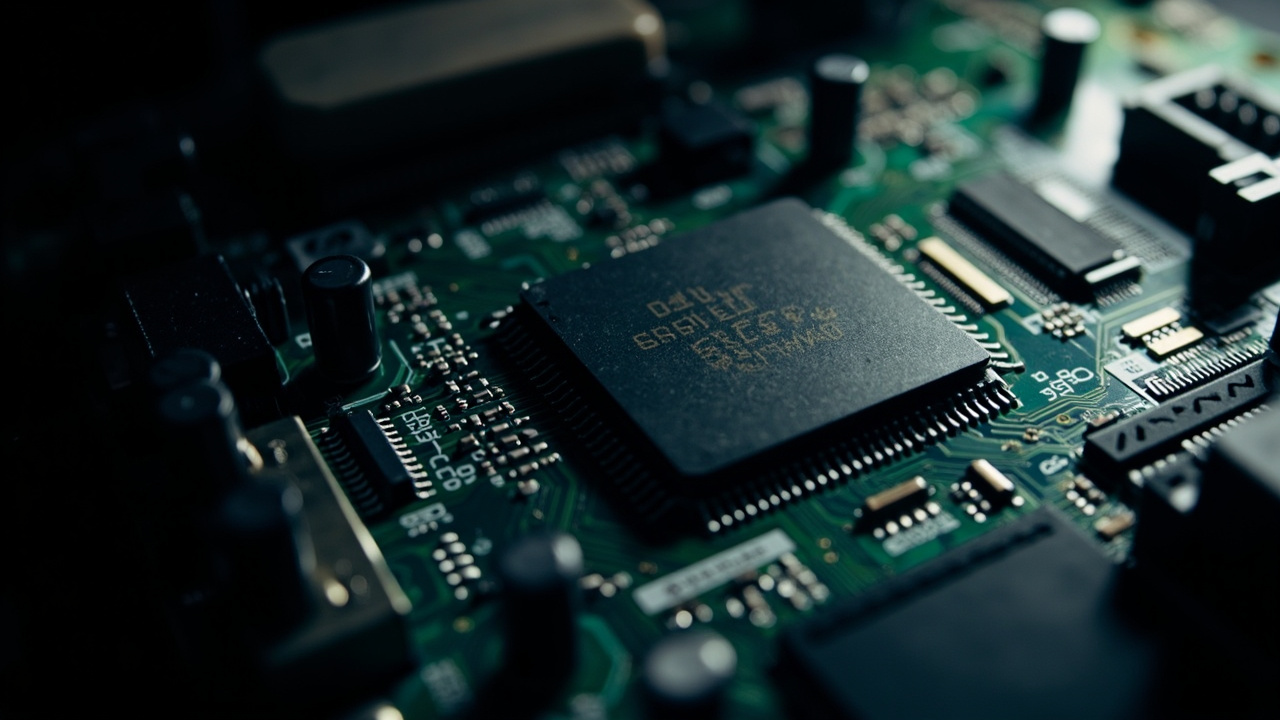
Around that mainboard, buyers should validate the selected SoC, memory configuration, Ethernet path, wireless module and output interfaces against the ordered hardware revision. The photographed component is illustrative and carries fictional markings only; production evidence must be tied to the actual BOM and test records, not a visual inference from a macro photograph.
Venue-scale deployment adds another constraint: image reproducibility across batches. A pilot assembled from one production run is not a fleet image if the next run changes the display adapter, tuner, wireless module, bootloader or partition map. The RFQ should bind the image to those part identities and require notification before substitutions.
A cloud-gaming or premium UHD programme further separates declared decode formats from end-to-end delivery. DM21T’s listed 4K@120 formats require a matching source, display, link and application path. DM22Q’s listed 4K@60 formats need separate validation. In both cases, run the actual production image and service rather than relying on a vendor demonstration build.
A hotel deployment exposes a different failure sequence. Staff may power on a room unit before the backend account is active, then replace the unit while the service identity is still attached to the previous serial number. The image acceptance test should therefore remove and restore network access, provision a new account, reset the device and confirm that entitlement follows the intended policy. A single successful sign-in does not establish repeatability across room turnover.
For retail display, the useful test is sustained operation rather than feature discovery. Record repeated reboot, screen reconnection, USB service behavior and network loss during a representative business period. If the display sleeps, wakes or changes input mode, the production image must preserve the selected application path without an operator navigating menus. This requirement can disqualify a model even when its listed decoder and memory configuration appear sufficient.
The traps in this category: where quotations diverge
Field trap
A sample booting from a developer image does not establish the production image identity. Ask for the exact image hash, component manifest, hardware revision, signing status and installation method. Otherwise, field failures may be attributed to hardware when the actual cause is an unreleased bootloader, middleware build or provisioning mismatch.
The first common trap is treating “AOSP Android 11” or “AOSP Android 14” as a complete software specification. The version selects a platform baseline, not the launcher, middleware, applications, device configuration, update mechanism or content protection arrangement. A quotation listing only the Android version leaves the main commercial deliverable undefined.
The second trap is treating “optional” as included. Widevine L1 / PlayReady, HDCP 2.2, Dolby Vision/DTS and 1G Ethernet appear conditionally in the supplied facts. Each optional item needs a configuration code, hardware revision, test evidence and price impact in the approved configuration, subject to the RFQ process. “Confirm against the production datasheet” is safer than assuming parity across models.
Field trap
Do not convert codec marketing labels into output claims beyond the supplied datasheets. DM21T is listed at 4K@120 for specified codecs and DM22Q at 4K@60; the production datasheet controls. A quotation that turns an unsupported marketing description into an 8K obligation creates acceptance, display and contractual risk without evidence.
A third trap is accepting a one-time golden sample as the fleet reference. Golden samples can validate intent, but not production variation. The acceptance package should include revision-controlled units, image checksums, factory test results, component substitutions and a documented route for reproducing defects.
A fourth trap is under-specifying lifecycle. The contract may cover hardware support without defining firmware branch ownership, security update responsibility, Android baseline, middleware compatibility, image archive location, OTA service duration or end-of-life notification. These omissions shift engineering work to the buyer after deployment.
Finally, do not assume the interface list proves application behavior. HDMI 2.0b output, Ethernet speed, Wi-Fi6 and USB counts describe hardware connections; they do not certify HDR mode handling, HDCP paths, multicast reception, USB peripheral compatibility or update bandwidth. Test these functions against the selected image and physical environment.
Quotation divergence also occurs at the boundaries between engineering responsibility and operational responsibility. One bidder may include integration in one image release while another treats middleware changes as a customer task. A third may quote the same decoder and memory line but exclude the production application, source qualification or update service. The commercial schedules should therefore use identical requirement wording and define deliverables, exclusions, evidence and approval responsibilities in parallel columns.
Another trap is assuming that a later image is automatically safer. Newer Android versions can introduce middleware migration work, permission changes, framework behavior differences and updated device-certification requirements. Conversely, retaining Android 11 solely for familiarity can retain an image whose update path or service integrations no longer meet the operator’s requirement. The correct decision uses workload compatibility and lifecycle evidence, not the version number alone.
The cost of each omission appears late: replacement stock, pilot rework, failed certification, failed protected playback or a fleet update that cannot roll back. The most expensive quotation error is often a missing definition rather than a wrong price.
A decision path for the RFQ: turn requirements into evidence
- Define the operating profile State subscriber or venue use, middleware owner, Android baseline, network topology, stream formats, DRM, update channel, recovery policy and expected service period. Do not name a SoC before these constraints exist.
- Create the software baseline Require the image identifier, component manifest, board and peripheral mapping, signing method, partition layout, build reproducibility rule and documentation index. Name the production source, not a demo image.
- Map workloads to hardware Compare application memory, storage retention, decode and display path, Ethernet option and required interfaces with the candidate model. Use the DM21P, DM21S, DM21T and DM22Q fields as inputs, not as automatic recommendations.
- Freeze optional configuration Convert DRM, HDCP, Dolby Vision/DTS and 1G entries into explicit order lines. Require identification of the configuration in the image manifest and on the test report.
- Run production-like qualification Test cold start, reboot, factory reset, network attach, DNS, authentication, multicast where used, protected playback, local playback, OTA interruption, rollback and recovery on the exact candidate image.
- Define release governance State who approves changes, how the build is rebuilt, which regressions run, how field telemetry is reviewed and when an end-of-life or security notice is issued. Require archived images and reproducible release notes.
- Connect factory evidence to the image Bind AOI, aging, dark-room and audit records to hardware revision and shipment lot, then verify that the acceptance unit and production units share the same image and component baseline.
A pasteable RFQ line should state: “The delivered android tv box shall be supplied with a versioned production image, immutable image identifier, hardware-revision mapping, signed release artifact, documented first-boot provisioning, approved OTA and rollback mechanism, and a release evidence package.” Add: “Optional connectivity and content-protection features shall be identified by configuration code and verified in the report.”
A second line should make the acceptance environment explicit: “Qualification shall use the production middleware branch, operator DRM account path, target network services, approved display and source equipment, and the candidate production hardware revision.” This prevents a generic demo from being accepted as the programme reference.
The RFQ should also request exception reporting. Any missing driver, unsupported middleware dependency, omitted test case, component substitution or delayed evidence package should be recorded rather than silently accepted. For an engineering RFQ, the first message should contain the target model candidates, Android baseline, memory configuration, middleware owner, stream and DRM requirements, network topology, update policy, expected production environment and required evidence package. To evaluate a physical configuration first, use sample ordering and specify the image and revision that each sample must contain.
Add a sample-data sheet to keep responses comparable. It should identify the hardware revision, RAM and storage, Ethernet option, wireless option, selected DRM, image identifier, middleware branch, production board revision and intended display equipment. The supplier should flag any item not available for the requested configuration rather than substituting an equivalent without approval.
Add an evidence schedule as well. For every acceptance item, name the test method, sample quantity, environmental condition, pass criterion, evidence format and approving party. For OTA, include interrupted downloads, insufficient storage, failed post-install checks and restoration to the prior working version. For provisioning, include first boot, account expiry, entitlement denial, network loss and factory reset. These cases convert broad promises into repeatable observations.
The final RFQ gate should require no unresolved production blocker. Open engineering questions may remain, but each must have an owner, due point, risk assessment and evidence needed before shipment release. A programme can tolerate a controlled exception; it cannot tolerate an undocumented exception entering the fleet.
The evidence trail from SMT to shipment: preserve what was built
- SMT and board identity Record the production lot, board revision, SoC and memory population, PCB configuration and approved component substitutions. Link each lot to the release record rather than attaching an image only to the order.
- AOI and inspection Retain inspection results for the assembled board, including exceptions and dispositions. AOI evidence confirms assembly quality; it does not certify Android image compatibility.
- Burn-in or aging Record the defined stress profile, duration, sample coverage and failure disposition. Use the programme’s approved procedure rather than inventing a universal aging condition from a marketing statement.
- Dark-room or display validation Capture the required visual, interface and boot results for the production image and the selected hardware revision. Associate each captured result with its image identifier and device serial.
- Final software-image verification Verify the flashed image identifier and configuration, boot to the approved application path, exercise network and recovery checks, and record the outcome before packing.
- Audit and shipment release Review nonconformances, substituted parts, open deviations and image deviations. Release only the lots whose evidence matches the accepted configuration.
Evidence linkage: Use a common key across the production order, board revision, hardware and memory configuration, image hash, firmware release, test record and shipment lot. Without that key, factory QA proves that a board passed and the software team proves that an image worked, but neither proves that the shipped unit contains their intersection.
DataMax’s factory process should be evaluated against this chain rather than described as a generic quality statement. The factory quality page provides the appropriate starting point for the manufacturing evidence review. Compliance and certification artifacts should be evaluated separately through the compliance and certifications resources; confirm scope against the production model and applicable market.
The image archive should remain usable after a shipment. Preserve the signed artifact, source or reproducible build recipe, configuration overlays, dependency manifest, release notes, test results, known issues and rollback instructions. Define access control and retention responsibility. A factory may correctly build the image without becoming the long-term system of record; that responsibility needs an owner.
For custom image work, distinguish platform adaptation from complete application development. The custom development capability can be evaluated against a precise scope, while the manufacturer profile should establish how DataMax coordinates engineering, sourcing, production and quality controls. The programme should not accept an image as complete merely because the boot animation works.
At shipment, the packing list should identify the model, hardware revision, selected configuration and image identifier. Service teams can then trace a returned unit to its lot and release. That linkage reduces the most common ambiguity in fleet incidents: whether the issue belongs to hardware, image, middleware, network configuration or subscriber service.
A practical evidence index can use 6 record types: board inspection, aging result, final image verification, release note, shipment lot and nonconformance disposition. Each record should carry the same common key. For example, if a wireless-module substitution changes the production image’s driver requirement, the substitution record must trigger image revalidation before shipment release. If it does not affect the image, the decision still needs to be recorded so the next service investigation does not repeat the question.
Software loading must also be controlled as a production operation. The RFQ should state whether images are flashed at SMT, after assembly or through a controlled provisioning station. It should identify the authorized tool, authentication method, failed-flash handling, retry policy and reconciliation process between the intended image and the installed image. A final boot alone does not prove that the correct signed artifact was applied.
Change control closes the trail. Any approved hardware substitution, middleware patch, Android security patch or launcher revision should create a new release record stating its effect on the image, affected hardware revisions and completed regressions. The factory archive, operator update service and service-repair workflow should then reference the same release identity. This is the practical point at which an android tv box becomes an auditable production asset rather than an unidentified firmware load on a board.
Further reading
- Guide android tv box for isps
- AV1 Android TV box guide
- AOSP vs Google TV guide
- HDR10+ Android TV box guide
- DTS:X Android TV box guide
- DataMax DM21P specifications and fit
- DataMax DM21S specifications and fit
FAQ
Is an AOSP Android TV box automatically suitable for IPTV?
No. AOSP identifies the platform foundation, while IPTV suitability also depends on the middleware, drivers, provisioning, network services, DRM workflow, update mechanism and device configuration. A buyer must test the production image with the target middleware, accounts, streams and recovery procedures.
Which DataMax model starts from Android 14?
DM21S, DM21T and DM22Q are supplied with AOSP Android 14. DM21P is supplied with AOSP Android 11. Confirm Android version, hardware revision and selected options against the production datasheet before issuing a purchase order.
Does Widevine L1 mean every model is ready for protected streaming?
Not automatically. A DRM entry indicates the stated capability, while deployment also requires the correct configuration, production licensing, account entitlement and playback application. HDCP 2.2 on DM21P is optional, and other optional DRM arrangements must also be frozen into the ordered configuration.
What proof should a buyer request for the production image?
Request the immutable image identifier, component and configuration manifest, hardware mapping, signing details, build procedure, release notes, boot and recovery results, provisioning procedure, OTA and rollback evidence, and a trace to the approved production lot. A demonstration image alone is insufficient.
Can a 2GB / 8GB model support an operator middleware deployment?
The supplied DM21P configuration is 2GB / 8GB, with other storage options listed, but suitability depends on the actual middleware and application workload. Run the production image under representative functions, including applications, caching, diagnostics and updates, then approve a specific configuration against measured acceptance criteria.
How should lifecycle support be specified?
Name the responsible party, firmware branch or image baseline, security-update process, release approval route, artifact archive, change-notification period and end-of-life notice requirements. A hardware warranty statement alone does not define image maintenance, update availability or spare-parts planning.


