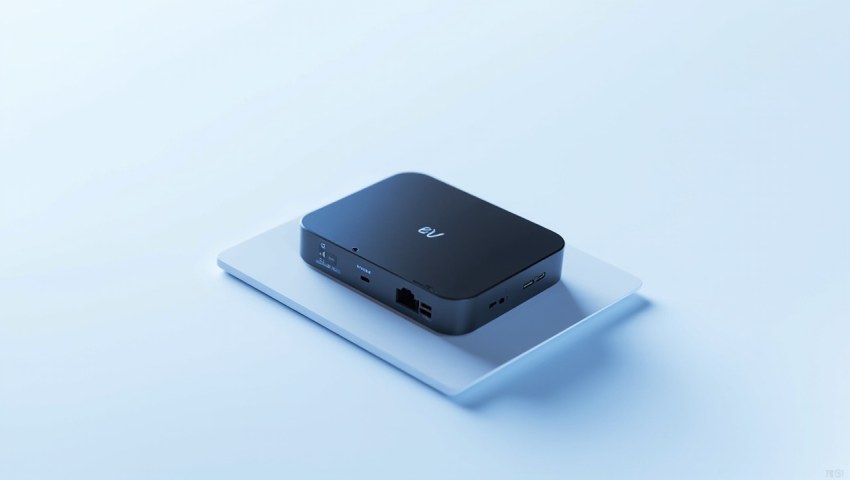
Telecom operators do not pick a set-top platform because it is fashionable; they pick it because it boots fast, behaves deterministically and stays in the field for years. Linux/RDK remains the mainstream choice for managed IPTV fleets on those grounds, and selected hardware platforms can also ship with AOSP for head-to-head evaluation. This guide walks procurement engineers through the trade-offs, the metrics that actually matter, and the scoping checklist that should accompany any operator enquiry.
Why Linux and RDK Persist in Operator Fleets
Telecom operators do not buy set-top boxes for novelty; they buy them to deliver a managed service at scale, predictably, for years. A purpose-built Linux stack carries exactly the components the service needs and nothing that runs uninvited in the background. That keeps memory use, boot behaviour and the attack surface tightly controlled across the entire fleet. RDK — the Reference Design Kit — codifies this discipline into a set of reusable components so operators and suppliers can build to a common architecture instead of reinventing the platform every time.
Press coverage tends to focus on Android, but a significant population of managed IPTV fleets continues to run Linux/RDK for sound engineering reasons: smaller memory, faster boot, deterministic middleware behaviour and a smaller maintained surface on modest hardware. "Managed" here means a defined service: a specific channel line-up, a defined middleware, a remote-management workflow and a long service life. Hardware is procured once and kept in homes for many years, during which the software has to behave predictably across firmware updates, network changes and seasonal load. These are the characteristics a procurement engineer should anchor an evaluation against, not brand familiarity or consumer-side feature lists.
RDK Architecture at a High Level
RDK is organised in three layers. Close to the device, hardware-adaptation components handle silicon bring-up, peripherals and I/O. Above that, shared system and media components cover networking, codecs, conditional access and management. On top, an application framework hosts the operator's user experience, which may be HTML-based, an app-framework renderer or a hybrid of both. Profiles are maintained for different device classes — IPTV, broadcast and media-player environments — so the same architecture can serve a satellite STB, a fibre IPTV box and an OTT media player without rewriting the stack.
The component model is what makes this practical: an operator keeps its chosen applications and system experience while reusing common components for media, networking and fleet management, all aligned with standard remote-management workflows. The layered approach also matters for procurement: a component that lives at the system layer can be updated independently of the application layer, which means middleware upgrades do not force an operator to re-validate the entire user experience every time. Conversely, the application framework can evolve to match new UI requirements without touching the lower layers. Access to the code and technical documentation is governed through the RDK community's own processes rather than through any individual supplier, and operators evaluating Linux/RDK alongside carrier-grade Android TV boxes for telco IPTV or IPTV-operator set-top boxes should confirm community membership and profile access early in the scoping phase.
Linux/RDK vs AOSP: Trade-offs, Not Winners
Neither stack is universally better. The right choice follows the service architecture and the application strategy. The table below summarises the dimensions that matter most in operator procurement.
| Dimension | Linux / RDK | AOSP |
|---|---|---|
| Footprint | Compact; runs well on modest configurations | Larger framework; typically needs more memory |
| Boot behaviour | Fast, deterministic boot into the operator UI | Longer framework start-up |
| Application model | Operator-controlled, often web/app-framework based | Broad Android application ecosystem |
| Flexibility | High control, narrower application range | High flexibility, large developer pool |
| Typical fit | Standardised managed IPTV services | App-rich services and self-managed Android strategies |
| Hardware tiers | Modest SoCs sufficient | Higher memory and storage typical |
Procurement rule: choose the stack from the service architecture, not from the most familiar platform in the press. Both Linux/RDK and AOSP are supported on selected hardware, including 4K IPTV boxes and GMS-certified AOSP boxes that share a common platform.
For operators balancing broadcast and OTT services, a similar logic applies to DVB-C hybrid TV boxes and multi-stream satellite set-top boxes — the platform choice must follow the middleware, not the other way around.
Boot Time and Footprint: What Procurement Can Rely On
Linux/RDK builds are consistently characterised by short boot sequences and low idle memory use relative to a full Android framework on comparable hardware. That is why operators favour them in services where "the television must work immediately" is a service-level commitment, and why boot performance dominates the weighted criteria in operator procurement.
Measurement definitions matter
Precise figures vary with the platform, the component set, the launcher and the measurement definition — cold boot to kernel, to first frame or to fully interactive are three different numbers — and unverified seconds or megabytes are not published here. On qualified SKUs, both Linux/RDK and AOSP are measured against the same criteria: cold-boot time to first frame, wake-from-standby time and idle memory footprint. The numbers are repeatable on the same hardware and firmware build, but they are not interchangeable between SoCs or between RDK profiles. Project-specific measured values are provided against a named configuration during evaluation. For general context on what "fast" means in operator IPTV, the fastest IPTV box guide discusses measurement methodology and the trade-offs between a lean stack and a richer framework.
Dual-OS Evaluation on Common Hardware
Operators comparing stacks do not need to run the exercise on two different products. Selected hardware platforms can be supplied with Linux/RDK builds and with AOSP builds, allowing the same physical box to be evaluated under both operating systems. Middleware behaviour, application strategy, management tooling, boot experience and maintenance expectations can then be compared on identical silicon — which removes "different hardware" as a variable from the decision.
What changes between the two stacks
What changes is the software image: component set, launcher, media framework, application framework and management agent. What stays the same is the SoC, the memory configuration, the storage, the chassis and the RF and network interfaces. The final fleet standard is chosen from evidence rather than from a marketing comparison, and the two tracks can coexist across different service tiers when appropriate. This is also why ISP-grade Android TV boxes and Linux/RDK platforms often share a common silicon base during evaluation: the goal is to compare software on the same hardware, not to compare two unrelated boxes.
Building the Linux/RDK Operator Enquiry
A well-scoped enquiry shortens evaluation cycles and avoids mid-project surprises. The information below should be included in any initial request for a Linux/RDK or dual-OS project.
- Target platform or performance tier — output resolution, codec requirements (HEVC, AV1 on qualified SKUs), HDR support and any broadcast tuner requirements.
- Software profile — RDK profile (IPSTB, BMG), required components, middleware version and the application framework.
- Management environment — TR-069, SNMP, RDK's management stack or a proprietary provisioning platform, and the firmware delivery mechanism.
- Expected fleet life — typical operator expectations are five to seven years, with security updates across that window.
- Dual-OS requirement — whether the same hardware must also boot AOSP for head-to-head comparison.
- Volume and destinations — initial deployment volume, expected annual replenishment, target markets and any regional certification needs.
Finally, ask about certification status per SKU: RDK profile compliance, Widevine or other DRM levels where applicable on qualified SKUs, and any operator-specific conformance tests. These vary by programme and by destination market, so the right answer is usually "on qualification" rather than a universal yes/no. Technical discussions and any profile-specific documentation are handled under NDA as appropriate. Operators also looking at adjacent categories — for example branded TV boxes for streaming resellers — should treat the Linux/RDK enquiry as a separate track, because the requirements, profiles and certifications differ significantly between a managed operator deployment and a reseller programme.
Decision Framework at a Glance
The visuals below convert the criteria discussed above into a simple scoring view you can reuse with your own requirements. Weightings are illustrative defaults for this buying scenario, not measured performance data.
Boot determinism
25 · 100% of max
Memory footprint
20 · 80% of max
Operator UX control
18 · 72% of max
Long-term support
15 · 60% of max
Hardware tier cost
12 · 48% of max
App ecosystem reach
10 · 40% of max
Weighted selection criteria for a Linux/RDK operator set-top box. Illustrative values for planning; not measured benchmark data.
| Boot and wake tests | 30 percent of effort | 30% | |
|---|---|---|---|
| Middleware integration | 25 percent of effort | 25% | |
| Management and OTA | 20 percent of effort | 20% | |
| Application framework | 15 percent of effort | 15% | |
| Long-tail support plan | 10 percent of effort | 10% |
Evaluation effort composition during a dual-OS set-top trial. Illustrative values for planning; not measured benchmark data.
Frequently Asked Questions
Is RDK the same thing as Linux?
RDK is a componentised software platform built on a Linux-style foundation, governed through the RDK community. A supplier may also provide a proprietary purpose-built Linux stack that is not RDK. The two terms are related but not identical, and the applicable track is identified at scoping. Operators should not assume that "Linux" on a datasheet means RDK, or vice versa, without confirming the profile.
Why would an operator choose Linux/RDK over Android?
For a compact footprint, fast and deterministic boot into the operator experience, tight control of the user interface, and a smaller maintained surface on modest hardware. These are the characteristics of a standardised managed IPTV service where consistency, security and long fleet life matter more than a broad third-party application catalogue or consumer app store access.
Can RDK boxes run standard Android applications?
Not natively. RDK uses its own application frameworks, typically HTML-based or app-framework-based under operator control. Services that depend on a broad Android application catalogue or Google Play access are better matched to an AOSP or GMS-certified AOSP platform, not to a Linux/RDK track, and the trade-off should be explicit at scoping.
How fast does an RDK box boot?
Linux/RDK builds boot faster than a full Android framework on comparable hardware in general, but exact seconds depend on the platform, the component set, the launcher and the measurement definition. Values are provided per named SKU during evaluation rather than published as a generic figure applicable to every configuration or SoC family.
Can the same hardware run both RDK and AOSP?
On selected platforms, yes. Dual-OS sample builds allow direct comparison on identical silicon before the fleet standard is chosen. This is often the most efficient way to compare middleware behaviour, application strategy and management tooling, because the hardware is held constant across both software images.
What should the first enquiry include?
Target platform or performance tier, the operator's RDK software profile or middleware version, the management and provisioning environment, expected fleet life, whether an AOSP comparison on the same hardware is required, plus estimated deployment volume and target markets. Anything missing from this list typically forces a second round of clarification and delays the evaluation.
Next Steps
Ready to turn this guide into a procurement plan? Review the full technical overview for this topic, browse the DataMax Buying Guides library, or contact DataMax engineering with your target configuration, volume and destination market for a scoped RFQ response and sample plan.